Big Island Snorkeling: 9 Best Spots and How to Pick One
Big Island snorkeling compared by entry, depth, and skill level, from Two Step and Kahalu'u to Kealakekua, Mauna Kea, and Hapuna, with rules and timing.
On this page
Big Island snorkeling works because the west coast offers so many different kinds of water within an hour or two of Kailua-Kona: shallow lagoons behind old breakwaters, lava shelves you step off, and a marine sanctuary reachable mainly by boat. The trade-off is that the easiest entries draw crowds, while the quiet, clearest sites demand a hike, a paddle, or a boat seat. Match the spot to your group's comfort in the water first, and the scenery follows.
Morning is the reliable window almost everywhere on this coast, since the ocean tends to lie down before the afternoon wind picks up and visibility improves with calm surface conditions. Whatever you choose, plan to arrive early for parking as much as for the water, because several of the best entries have small lots that fill quickly.
Why the Kona and Kohala Coasts Suit Snorkelers
The island's volcanic shoreline is the reason so many entries work: old lava flows created flat shelves and protected coves where sand accumulates and reef grows close to shore. Kona's bays sit south of town along Ali'i Drive and Highway 160, while the Kohala Coast north of the airport spreads out resort beaches backed by white sand and rocky points. Clear water is the norm on calm days, and the bays around Kealakekua and Honaunau are known for exceptional visibility.
That geography dictates how you plan a day. Southern Kona spots cluster within about 35 minutes of Kailua-Kona and pair naturally with each other, while Kohala beaches are a separate northward run. Pick one coast per day rather than zigzagging, and you spend more time in the water than in the car.
Honaunau Bay (Two Step)
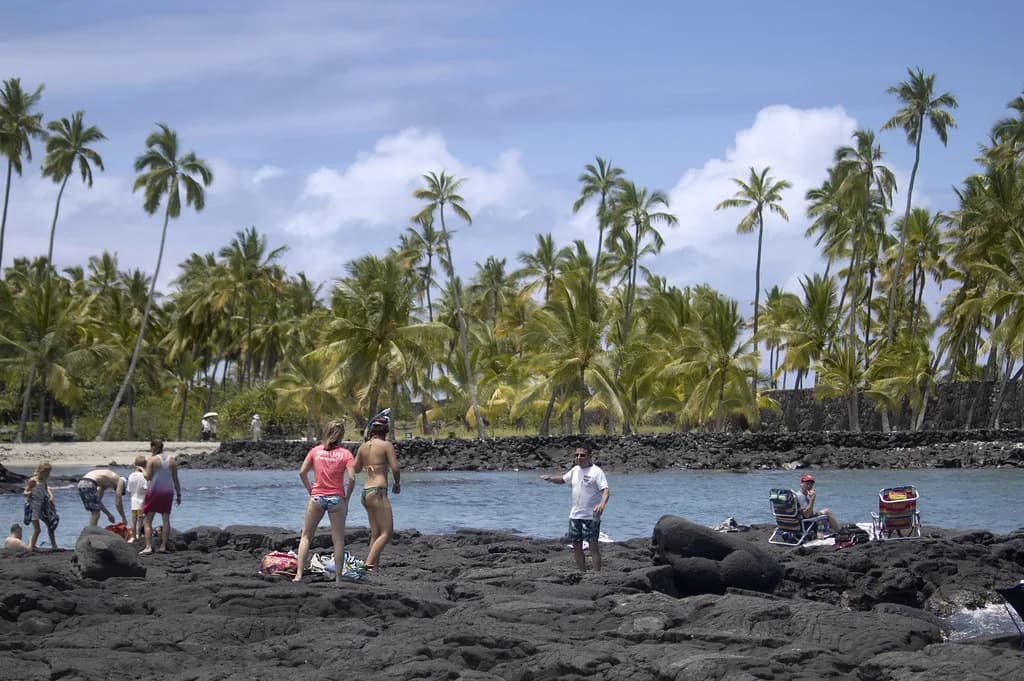
Two Step takes its name from the flat lava shelves on the right side of the bay that form a natural staircase into the water, which is why it is the most popular shore dive and snorkel entry on the south Kona coast. The reef begins within a few feet of the entry and slopes into deeper water, so beginners can stay shallow while stronger swimmers work outward. Water shoes help on the surrounding lava rock, and timing matters as small swells wash over the shelf.
Close to shore the water is typically calm, but the outer reef carries stronger current that can challenge less confident swimmers. Expect yellow tang, pufferfish, triggerfish, and wrasse among the coral, with occasional reef sharks, manta rays, and spinner dolphins passing through. Keep a respectful distance from anything you meet.
This is a public park used mainly as a boat launch, with portable toilets and a handful of picnic tables, and no lifeguards on duty. Free parking runs along the road just before the Pu'uhonua o Honaunau National Historical Park gates, about a tenth of a mile from shore, while the church across the street charges five dollars cash. Arriving before nine in the morning is the practical way to find a space.
Kealakekua Bay and the Captain Cook Monument
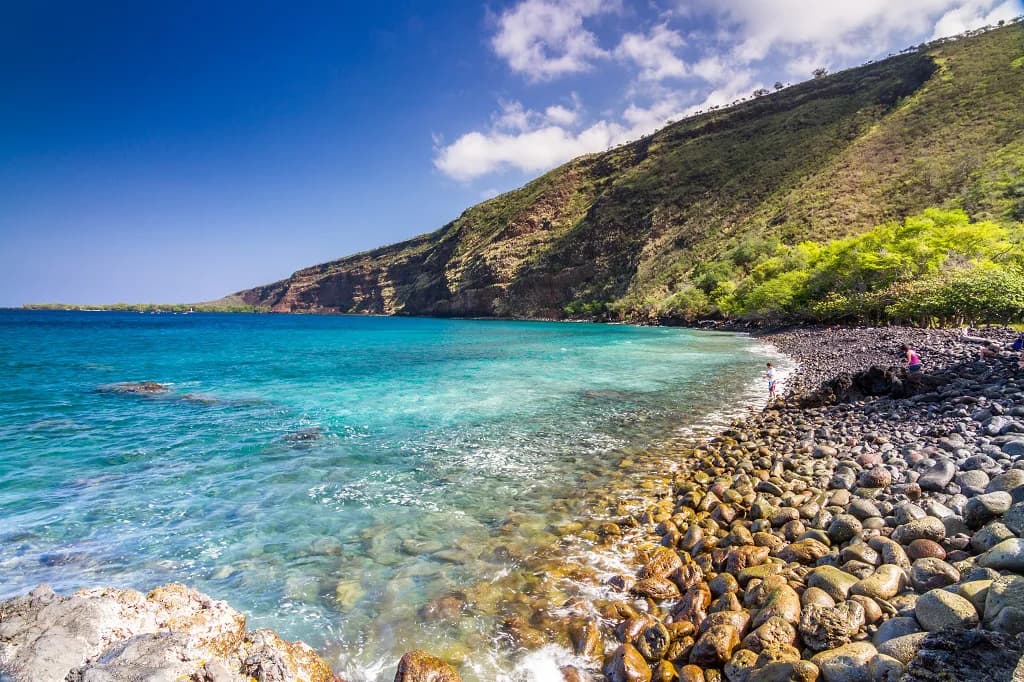
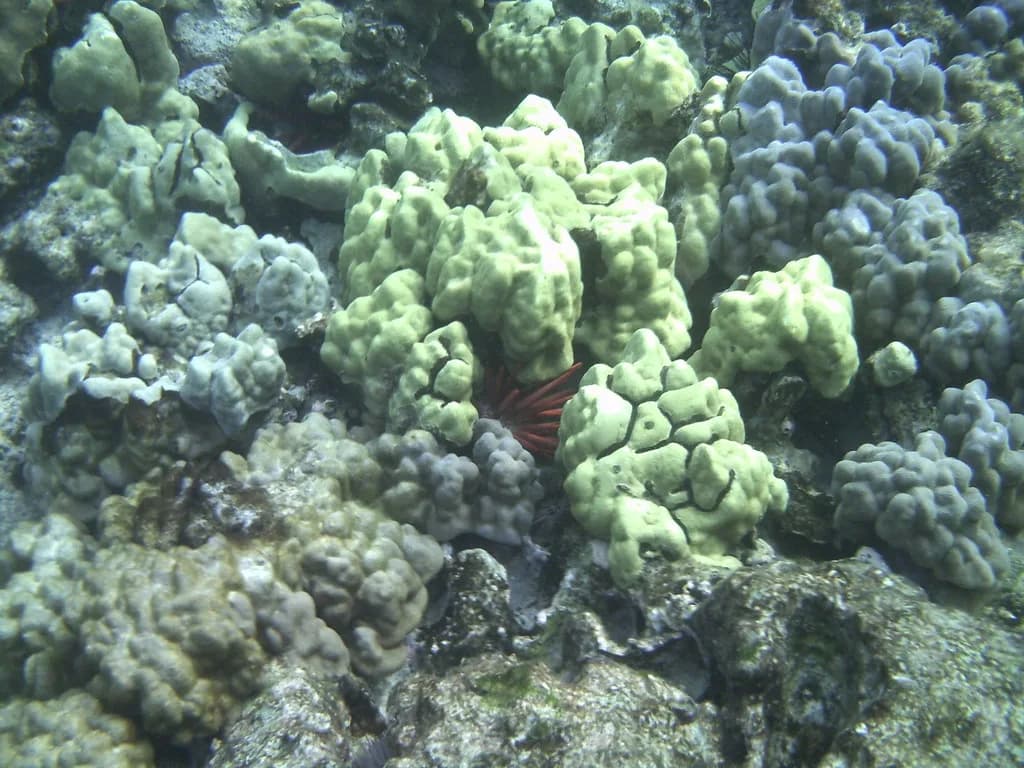
Kealakekua Bay is Hawaii's only underwater state park and a protected marine sanctuary, and the snorkeling near the Captain Cook Monument on the northern shore is the reason it tops most lists. Visibility can reach 100 feet, with coral gardens, parrotfish, angelfish, and yellow tangs, plus green sea turtles and spinner dolphins that use the bay. The calm, sheltered water suits a range of skill levels once you are in it.
Getting there is the real decision. The monument area is not reachable by car, so most visitors join a licensed boat tour from Kona or rent a kayak, though landing a kayak at Ka'awaloa near the monument requires a permit. The alternative is the Ka'awaloa Trail, a steep, rocky 3.8-mile round trip that demands sturdy footwear, plenty of water, and a reasonably fit group.
Tours from Kona often combine the bay with other south coast stops, and operators run morning departures that reach the monument before the day's wind builds. For a full breakdown of entries, rules, and timing, see the dedicated guide covering snorkeling at the Captain Cook Monument.
Kahalu'u Beach Park
Kahalu'u is the family pick on the Kona coast, a shallow lagoon behind an ancient stone breakwater that keeps the inner bay calm even when surf builds outside. Green sea turtles feed on the seaweed here and reef fish are dense in very shallow water, so children and first-timers see plenty without swimming far. The flip side is heavy use, especially midday, so an early slot pays off twice. The Kahalu'u Beach Park snorkeling guide covers the entry points and the lagoon layout in detail.
Facilities are the best of any south Kona snorkel site: lifeguards, restrooms, outdoor showers, picnic tables, and a concession stand renting gear and lessons. Non-residents pay a parking fee for four-hour intervals between 7 a.m. and 7 p.m. daily, and the lot fills fast. The Keauhou-Kona Trolley stops at the park, which removes the parking problem entirely.
Volunteers from the Kahalu'u Bay Education Center are often on site to explain reef etiquette, and rangers and signage mark where you should and should not stand. Treat the shallow coral as off-limits and keep the published ten-foot distance from turtles.
Kailua-Kona Town Beaches
If you have an afternoon rather than a full day, Kamakahonu Beach beside the Kailua Pier puts you in the water within minutes of downtown hotels and restaurants. The small sandy cove has a gentle entry, and the rocky areas nearby hold butterflyfish, yellow tangs, and Moorish idols. Swimming north from the beach toward the pier is the usual approach, staying well clear of boat traffic lanes.
Convenience is the whole point here. Gear rentals, lessons, and food are steps away, and morning gives clearer water before the afternoon wind and crowds arrive. Parking means meters or paid lots, so bring coins or a card.
Mauna Kea Beach (Kauna'oa Bay)
Kauna'oa Bay is a white-sand crescent on the Kohala Coast where the snorkeling sits at the rocky points at either end rather than straight off the beach. The southern end, to your left facing the ocean, tends to be calmer and has coral gardens close to shore, while the sandy middle is better for swimming than fish-watching. Water shoes help at the rocky entries.
Public access is deliberately limited: a small number of free parking passes are issued at the Mauna Kea Beach Hotel security gate on a first-come, first-served basis, and once they are gone day visitors are turned away. Plan to arrive before 8 a.m. Winter swells can stir the bay, so a calm-morning forecast is worth waiting for.
Hapuna Beach
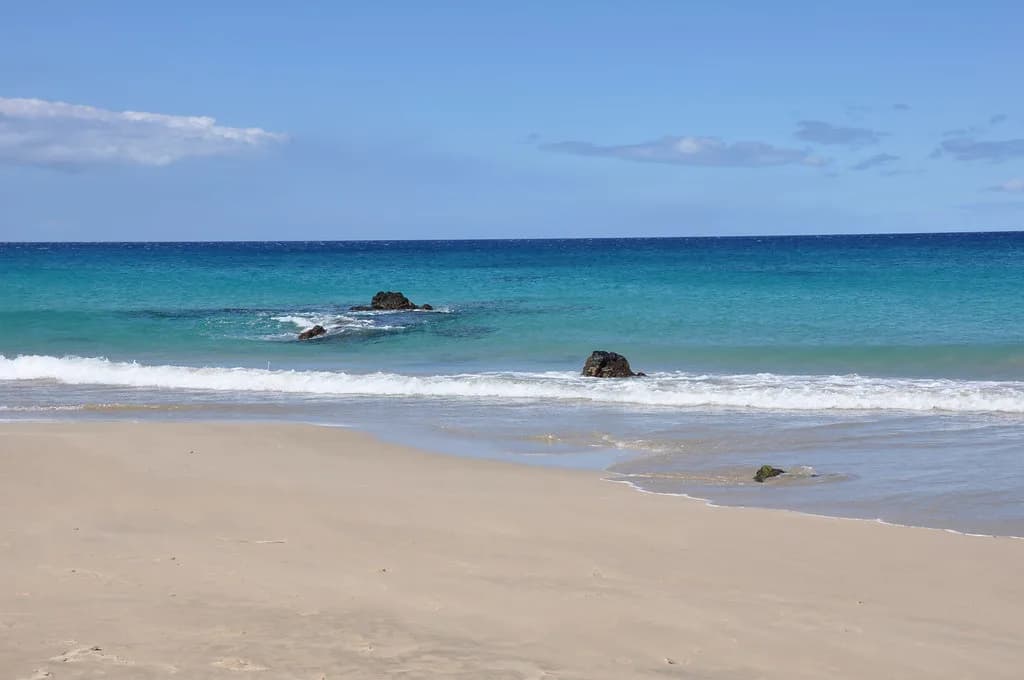
Hapuna is a half-mile of white sand managed as a state recreation area, and the snorkeling concentrates at the northern rocky point where lava rock replaces sand and larger fish gather. Jacks, goatfish, and wrasses are the likely sightings on calm days, and visibility drops when surf churns the shallows. Enter from the sand near the rocks for the easiest route.
This is the Kohala spot to choose when your group wants a beach day with snorkeling as one part of it. Lifeguards are on duty, the paved lot is large, and non-residents pay an entrance fee at an automated kiosk, so bring a credit card. Ask the lifeguards about conditions near the rocks before you head out.
Pauoa Bay at the Fairmont Orchid
Pauoa Bay is a shallow, protected resort bay on the Kohala Coast with easy entry and calm water, making it one of the gentlest places on the island for children and new snorkelers. Fish, eels, turtles, and the occasional spotted eagle ray turn up close to shore, and stronger swimmers can head into deeper water offshore. The bay does not have a lifeguard on duty.
Hawaii beaches stay open to the public, but if you want to use resort chairs or restrooms, secure a day pass; food and drink come at resort prices. Visitors not staying at the hotel typically park at nearby Holoholokai Beach Park and walk south along the shoreline trail. Guests at the Fairmont Orchid get an hour of snorkel equipment rental daily as part of the resort fee.
How to Choose by Skill Level
First-timers and families with young children should default to Kahalu'u, where the breakwater lagoon, lifeguards, and shallow reef remove most of the variables, or to Kamakahonu Beach for a quick, low-commitment swim. Pauoa Bay suits beginners who want calm water without the crowd pressure of a public park. All three keep you in waist-to-chest depth if you stay inside the protected zone.
Confident swimmers and free divers get more from Two Step's outer reef, Kealakekua Bay by boat or kayak, and the rocky points at Mauna Kea and Hapuna, where the terrain is more interesting and the fish larger. Kealakekua demands the most planning because access is by water or a steep trail. Build in a rest day between big swims rather than stacking them. If you are weighing this island against another, our guide to snorkeling in maui covers the same decision at a different destination.
Best Time of Day and Season
Morning is consistently the best window on both coasts: calmer surface, better visibility, and smaller crowds at the popular entries. Afternoon wind and swell are the usual reason a good day turns murky, and winter swells can close out exposed north and west-facing beaches entirely. Reserve an early start for Kealakekua or Mauna Kea, where access is the bottleneck.
When a north swell is running, the sheltered southern bays around Honaunau and Kealakekua usually hold up better than open Kohala beaches, so keep the flexible option in your plan. Hawaii's water stays warm enough for long swims most of the year, but a rash guard or short wetsuit helps on repeat sessions.
Wildlife Rules on the Big Island
Hawaii protects the animals you are most likely to meet. State law prohibits touching, feeding, or disturbing sea turtles, and you must stay at least ten feet away from them on land and in the water. For Hawaiian spinner dolphins, federal rules make it illegal to swim with, approach, or remain within 50 yards, because the bays they rest in during the day are critical to their survival.
Coral is a living animal and is easily broken, so keep fins and hands off the reef and stand only on sand or bare rock. If a dolphin or turtle approaches you, hold your position or back away rather than following it. Hawaii also restricts sunscreen ingredients that harm reefs, so choose a mineral-based product before you get in the water.
Gear and Reef-Safe Sunscreen
Shore-entry spots on this coast generally do not rent gear, so bring a well-fitted mask and snorkel or pick up a weekly rental package from a Kona dive shop before you head south. Kahalu'u is the exception, with a concession stand at the beach offering rentals, lessons, and reef-safe sunscreen. Avoid full-face masks, which have been linked to dangerous carbon dioxide buildup.
A rash guard cuts sunscreen use, and water shoes make lava-rock entries at Two Step, Mauna Kea, and Hapuna far more comfortable. If you join a boat tour, snorkel gear is often included, which saves luggage space on a shorter trip.
Combining Spots in One Day
The most efficient south Kona pairing is Two Step with Pu'uhonua o Honaunau National Historical Park next door: snorkel early, then walk the grounds once the parking lot clears. Kahalu'u fits neatly on the drive back to Kailua-Kona, and the town beaches work for a late-afternoon dip. Keep the day to two water sessions rather than three.
On the Kohala side, Hapuna and Mauna Kea are close enough to split across a morning and early afternoon, with Waialea Beach nearby as a backup if parking passes run out. Both northern beaches reward an early start for reasons of parking as much as conditions.
Night Manta Snorkeling at Keauhou Bay
Manta rays gather after dark in Keauhou Bay, about 15 minutes south of Kailua-Kona, drawn by plankton in the water lit by tour boats' custom light boards. The concentration of mantas around Kona makes a sighting likely on most nights, but this is not a shore snorkel: darkness and heavy boat traffic make going without an operator unsafe.
Operators run short boat rides from Keauhou and Kailua-Kona, and many provide shorty wetsuits, which matter when you float still in the water for half an hour. Book ahead, and confirm departure points and what is included directly with the operator.
Plan Your Big Island Snorkel Day
Build your trip around one coast per day: south Kona for Two Step, Kealakekua, and Kahalu'u, or Kohala for Hapuna, Mauna Kea, and Pauoa Bay. Start early for calm water and parking, carry your own gear to shore entries, and treat the wildlife distances as firm rules rather than suggestions.
Before you drive out, look at the morning surf report for the specific bay and check in with the on-duty lifeguard where one is posted. Conditions shift quickly on this coast, and a bay that was flat yesterday can be surging today. The best snorkel day here is the one that matches the water to your group's ability, not the one with the longest drive.
Explore more Big Island snorkeling
- Kahaluʻu Beach Park Snorkeling
- Kealakekua Bay Snorkeling
- Manta Ray Night Snorkel in Kona
- Beach 69 Snorkeling
- Big Island Snorkeling Tours
- Kona Snorkeling
- Two Step Snorkeling at Honaunau Bay
- Big Island Snorkel Report
- Hilo Snorkeling
- Keauhou Bay Snorkeling
- Kua Bay Snorkeling at Maniniʻowali Beach
- Magic Sands Beach Snorkeling
- Makaiwa Bay Snorkeling on the Big Island
- Mauna Kea Beach Snorkeling at Kaunaʻoa Bay
- Pawai Bay Snorkeling
- Puako Snorkeling on the Big Island
- Snorkel Rental on the Big Island
- Snorkeling Hapuna Beach
- Waikoloa Snorkeling
Frequently Asked Questions
Which month is best for snorkeling on the Big Island?
Morning conditions matter more than the month, since the ocean is typically calmest before the afternoon wind builds. Winter brings larger swells to exposed west and north-facing beaches, which can reduce visibility or close out entries on the Kohala Coast. Sheltered southern bays such as Honaunau and Kealakekua generally hold up better during those swells, so check the forecast for the specific bay before committing.
Which beach is best for beginner snorkelers?
Kahalu'u Beach Park is the easiest introduction, with a shallow lagoon behind an old breakwater, lifeguards, restrooms, showers, and a concession stand renting gear. Kamakahonu Beach in Kailua-Kona offers another gentle sandy entry close to town. Pauoa Bay is calm and shallow too, though it has no lifeguard on duty.
Do you need a tour to snorkel Kealakekua Bay?
You do not have to join a tour, but access is limited. The monument area is not reachable by car, so options are a licensed boat tour, a kayak rental with a permit to land at Ka'awaloa, or the steep, rocky Ka'awaloa Trail, a 3.8-mile round trip. Most visitors choose a boat for the easiest entry and gear included.
Is Two Step suitable for beginners?
Yes, with care. The lava-step entry on the right side of Honaunau Bay leads into calm, shallow water close to shore, so beginners can stay where they are comfortable. The trade-off is the entry itself, where small swells wash over the rock and water shoes help, and the stronger current on the outer reef that less confident swimmers should avoid.
Can you snorkel at the Fairmont Orchid?
Pauoa Bay sits within the Fairmont Orchid and is calm, shallow, and easy to enter, with fish and turtles close to shore. Hawaii beaches remain open to the public, but a day pass is recommended if you want to use resort chairs or restrooms. Guests staying at the hotel receive an hour of snorkel gear rental daily as part of the resort fee.
What are the rules for sea turtles and spinner dolphins?
Hawaii state law prohibits touching, feeding, or disturbing sea turtles, and requires staying at least ten feet away on land and in the water. Federal rules make it illegal to swim with, approach, or remain within 50 yards of Hawaiian spinner dolphins, whose daytime rest in protected bays is critical to their survival. If an animal approaches you, hold your position or move away.
Where can you rent snorkel gear on the Big Island?
Kahalu'u Beach Park has a concession stand renting gear, lessons, and reef-safe sunscreen right at the beach. Kona dive shops offer rental packages, including weekly options for longer stays. Most shore-entry spots along the south and Kohala coasts have no rentals on site, so pick up gear before you drive out.
Can you snorkel with manta rays without a tour?
No. The night manta snorkel at Keauhou Bay depends on operator light boards that attract plankton, and the combination of darkness and heavy boat traffic makes going without a guide unsafe. Book a tour from Keauhou or Kailua-Kona; check what gear and wetsuits are included.
Sources
Snorkeling notes for your next trip
Optional updates to our snorkeling guides.
You might also like
Continue reading
More guides you'll find useful