Kahaluʻu Beach Park Snorkeling: Entry, Turtles and Tips
Snorkel Kahaluʻu Beach Park on the Kona coast, a shallow sheltered bay with a lava-rock entry where green sea turtles graze in the shallows.
On this page
Kahaluʻu Bay is the Kona coast's most dependable easy-access snorkel: a small cove ringed by a shallow reef that holds back most open-ocean swell, so the inside stays calm enough for a first-timer. Green sea turtles graze and rest here in numbers, and fish crowd the sandy entry points before you have even put your face in the water. It suits families with older kids and teens, tentative beginners, and anyone who wants a short walk from car to coral rather than a boat ride.
The trade-off is popularity. The bay sits right off Aliʻi Drive about five miles south of Kailua-Kona, the lot is small, and the entry crosses slippery lava rock rather than open sand. Plan around a weekday morning, bring water shoes, and treat the reef as the living, protected thing it is.
Why Kahaluʻu Bay Suits First-Time Snorkelers
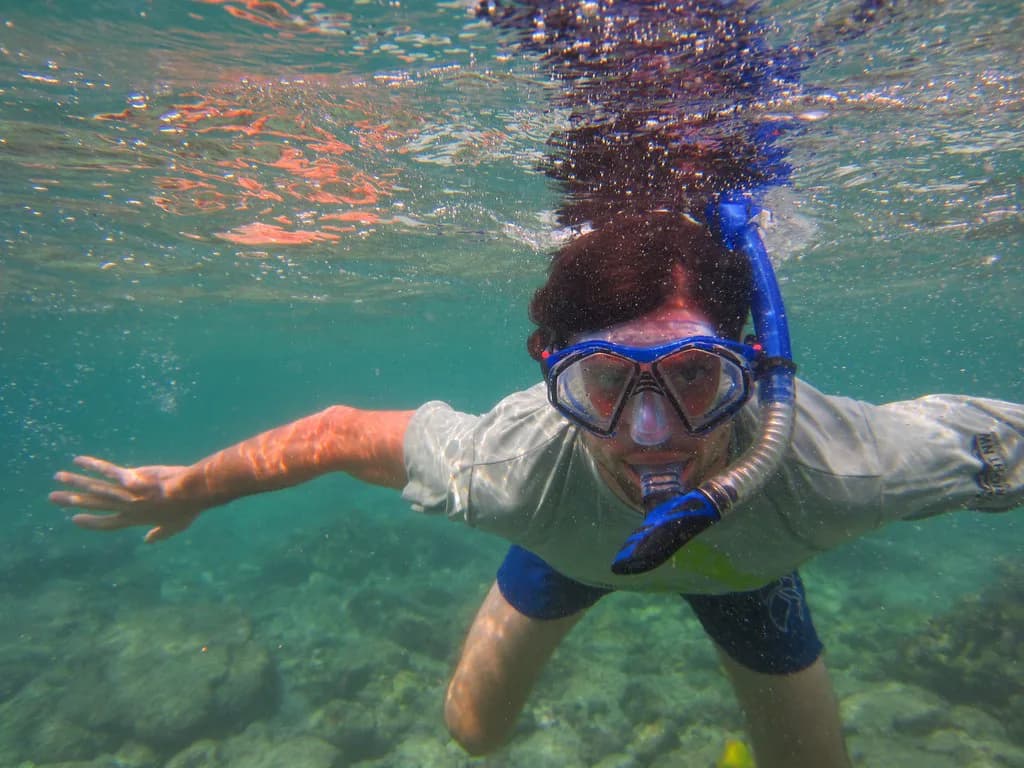
The reef does the work. A partially submerged rock wall almost encircles the cove, keeping the larger waves out while gentler current still flows through and feeds the coral and fish inside. Much of the cove is shallower than neck deep, and the deepest water barely passes ten feet even at high tide, so sunlight reaches the bottom and the coral stays healthy.
That shallowness is also the main caution. You will be floating over coral in water where standing feels natural, so keep your feet up and your fins level. Lifeguards are posted daily in the tower at the water entry, and the beach is one of the better places on the island for a first snorkel or a first surf lesson.
Where the Park Sits on Aliʻi Drive
Kahaluʻu Beach Park is on Aliʻi Drive, roughly five miles south of Kailua-Kona town, which puts it inside a short drive of most Kona hotels and condos. Most people arrive by car, but the Kona Trolley, a bike, or a walk along Aliʻi Drive all work depending on where you are staying. Coming from the airport takes about twenty minutes by road.
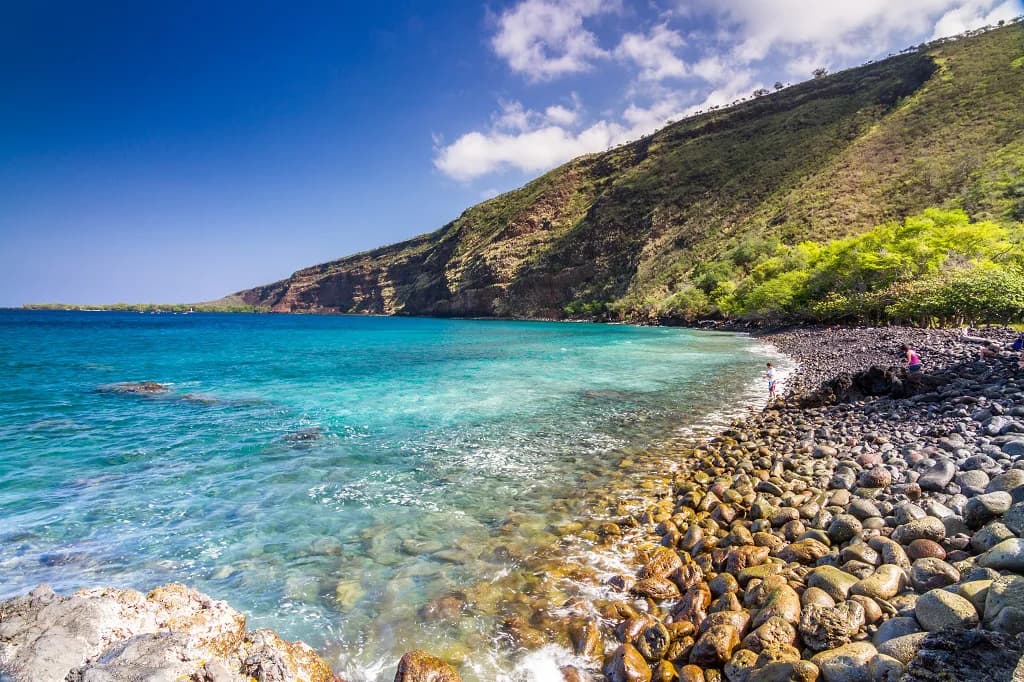
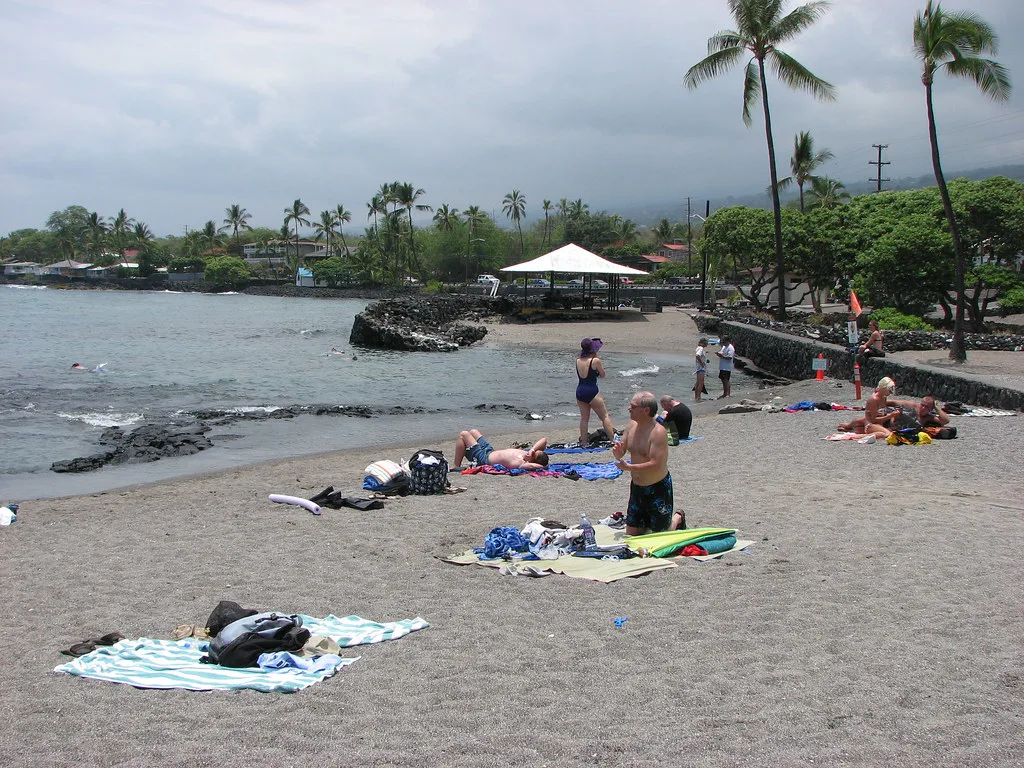
The bay splits into two personalities. Snorkelers use the south side, near the bathrooms and the first lifeguard tower, while surfers work the north-end break off to the right as you face the water. Park on the south side for snorkeling and walk in with your gear rather than crossing the whole beach.
Getting In Over the Lava Rock
The best entry is the channel in front of the lifeguard tower, which puts you over lava rock before you reach a shallow sandy patch where you can stand and sort out your gear. The rock is slippery and rough on bare feet, so water shoes, neoprene surf socks or tabis make the walk far more comfortable. Carry your mask, snorkel and fins in one hand and keep the other free to break a fall, then sit or stand in the sand to put the gear on.
Several small sand patches break up the lava-rock shoreline, and entering through one lets you sit down to fit your fins instead of balancing on wet rock. At low tide the rock flats turn into shallow tide pools worth a look, but seaweed makes the wet rock genuinely slick, so move slowly and watch your step.
Exit the same way you came in. A banner at the entry asks snorkelers to float over the reef rather than stand on it, and the ReefTeach volunteers on the sand will point you toward the safe path and mark the fragile reef edge with orange buoys. Check in with them when you arrive.
Depth and Layout of the Bay
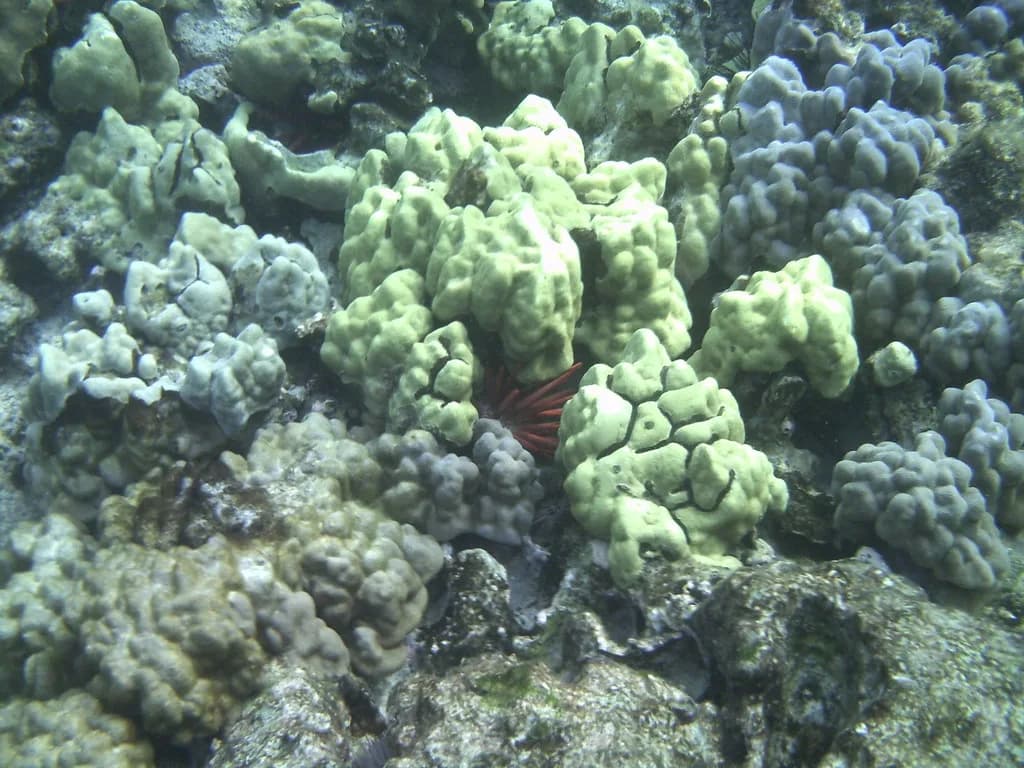
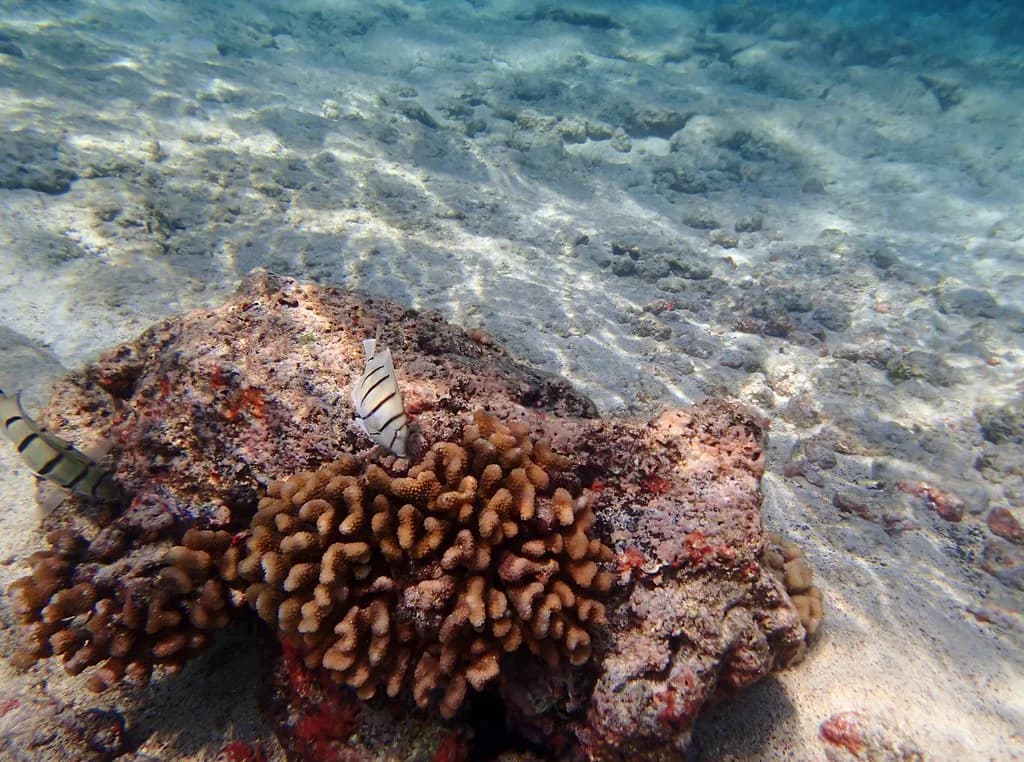
The bottom is a base of lava rock and coral with scattered sand patches, and the water stays shallow across most of the cove before deepening slightly toward the middle. That middle section holds the larger coral heads, where the shy fish hide and the light is best for photos. Swim out slowly over the coral or simply stop and float, and let the fish come to you rather than chasing them.
The sandy entries near shore get cloudy from swirling sand and kicking fins, so say hello to the greeting schools there and then head for the center of the bay where the water clears. A second lifeguard tower stands near the middle of the bay; treat it as the outer limit and do not swim beyond it, because past that line you are in the surf zone.
What You Will See
Green sea turtles are the headline: they feed on seaweed in the shallows and haul out to rest on the warm rocks, where their shells blend into the lava so well that people nearly walk into them. Keep a respectful distance on land and in the water, and never block a turtle's path to the sea. Alongside them you will find octopus, sea urchins and eels tucked into the coral.
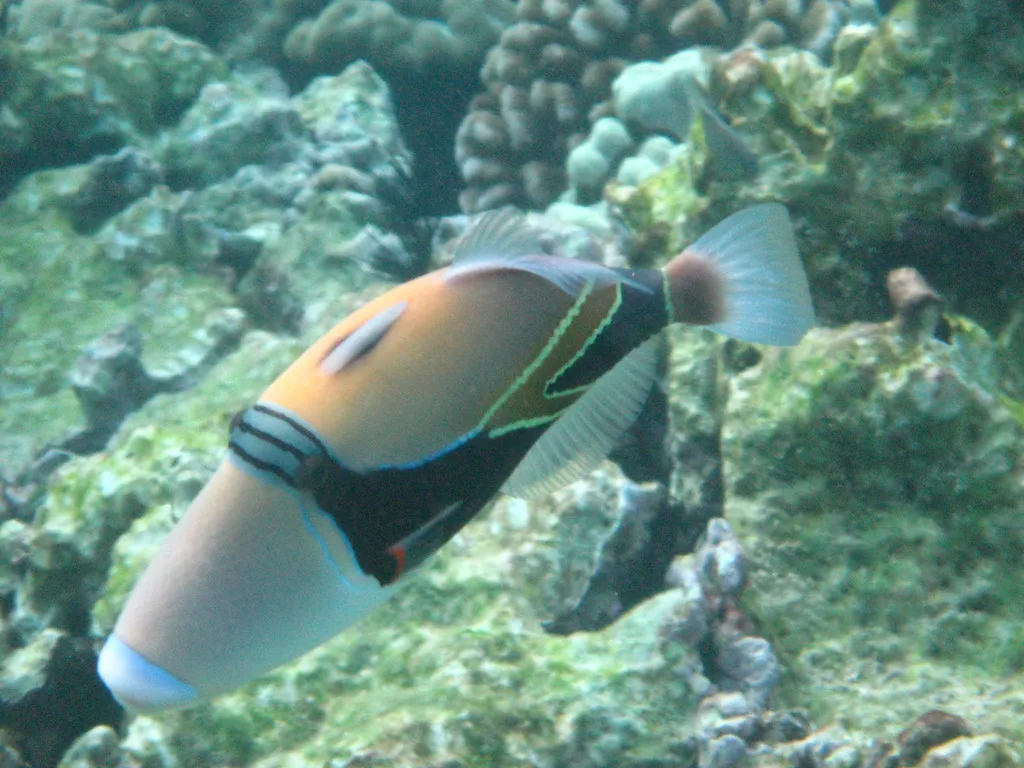
Fish life is unusually dense for a bay without fishing restrictions. Expect schools of surgeonfish and tangs around the entry, plus bullethead parrotfish, raccoon butterflyfish, Moorish idol, orangespine unicornfish, Hawaiian spotted boxfish and yellow tang across the coral heads. The humuhumunukunukuapuaa, Hawaii's state fish, turns up here too.
Skill Level, Kids and the Current
Beginners and competent swimmers get the most out of Kahaluʻu, and families with older kids and teens fit the bay well because the inside stays shallow and sheltered. The current flows north and out to sea; it is usually mild in the snorkeling area but picks up with a big swell. Lift your head periodically to check your position and adjust rather than drifting toward the second tower.
Lifeguards are on duty daily from 9:30 a.m. to 4:45 p.m., and their announcements about surf conditions are worth listening to even if the water looks flat. If you are in distress, raise one hand above your head; that is the signal the guards watch for. Outside those hours, call 911 and give your location as Kahaluʻu Beach Park snorkel beach.
Best Time to Go
Weekday mornings are the sweet spot: the bay is busy but manageable, the light is good, and the small lot still has space. Weekends and midday fill the parking area first, and the sandy entry gets murkier as more fins churn the bottom. Arrive early enough to be in the water when the lifeguards start their day.
Tide and swell change the entry more than anything else. Low tide exposes more slippery rock on the approach, while a big north swell strengthens the current and pushes surge into the cove. The inside reef keeps most open-ocean swell out, which is why the bay works on days when other Kona shores are rough.
Surf Sharing the Bay
The north end of the bay is a surf break, a mostly small right-hand wave that builds to four to six feet on the outside sets when swell arrives. From the beach, surfers sit off to the right and snorkelers stay left inside the reef, so the two groups rarely mix. If you want a first surf lesson instead of a snorkel, group lessons run two hours for ages eleven and up and should be booked at least twelve hours ahead.
Surfers enter near the small blue church, St. Peter's by the Sea, on a flat rock surface that was once an ancient canoe landing. If you are snorkeling, stay on the south side and leave the north entry and its wave to the surfers.
Rental Gear Across the Road
If you flew in without gear, Kahaluʻu Bay Surf and Sea across the road rents full snorkel sets for $18 a day or $40 for the week. Pick up your set at the shop between 9 a.m. and 4 p.m., and drop returns overnight if that suits your schedule better. Reserving ahead saves a wasted trip on busy mornings.
Parking and Fees
Nonresident parking at the beach park runs $12 for four hours, from 7 a.m. to 7 p.m. daily, paid through ParkMobile in zone 13300 by app or by scanning the QR code on the sign. International visitors can pay by cash or card at the parking and bay information tent instead. Hawaii residents and visitors with disabilities register with the attendant for a free pass, and the fees go toward protecting the bay.
For snorkeling, aim for the lot on the south side of the bay next to the bathrooms, which puts you closest to the lifeguard-tower entry. On busy days overflow parking runs up Makolea Street across from the lot entrance or along the mauka side of the road. Arriving early beats circling the small lot.
Facilities and Reef Etiquette
The park has restrooms, outdoor showers, a covered pavilion, picnic tables and palms for shade, with the snorkeling bathrooms and showers right beside the beach and first lifeguard tower. No soap is stocked on purpose because the runoff drains straight into the bay. Two free mineral sunscreen dispensers sit at the pavilion, available 9 a.m. to 3 p.m. daily.
Signs along the seawall ask swimmers to cover up or use mineral sunscreen, and reef-safe formulas rely on zinc oxide or titanium dioxide rather than the chemicals linked to coral bleaching. In the water, never touch or step on coral, and keep your fins off the reef. Kahaluʻu is not a marine preserve, but the reef is stressed by sheer visitor numbers, so the etiquette matters more here than the rules alone suggest.
Turtle Viewing Rules
Green sea turtles are protected in Hawaii, so give them space rather than crowding or chasing them, and never try to touch or feed one. On the rocks, watch where you step; resting turtles are so still and so lava-colored that they are easy to miss. If a turtle is heading for the water, stay back and let it pass.
Combining Kahaluʻu With Other Kona Snorkels
Kahaluʻu makes a natural half-day stop on a Kona coast itinerary. Pair it with a morning at Two Step Beach or a boat trip out of Honokohau Harbor, and use the rest of the day for the coffee farms and historic sites along Aliʻi Drive. Our big island snorkeling guide maps these spots by drive time so you can build a sensible loop. If you are island-hopping and weighing a second island's coves against these Kona bays, our guide to snorkeling in Maui covers that comparison.
For a bigger-water day, kealakekua bay snorkeling offers a deeper bay reached by boat or a long hike, and Honaunau Bay adds a marine reserve with its own entry rules. Both reward stronger swimmers than Kahaluʻu does.
After dark, the Manta Ray Night Snorkel in Kona runs out of Honokohau Harbor and pairs well with a Kahaluʻu morning. Check operator departure times directly, since they shift with the season.
Plan Your Visit
Kahaluʻu rewards an early start: pay for parking in the app, walk your gear to the lifeguard-tower channel, and put your fins on in the sand rather than on the rock. Stay inside the second tower, float over the coral and give the turtles room, and the bay delivers one of the easiest, most reliable snorkels on the island.
Bring water shoes, a rash guard and mineral sunscreen, and keep a hand free on the entry. Check the Hawaii Beach Safety page for current ocean conditions before you drive down Aliʻi Drive.
Frequently Asked Questions
Is Kahaluʻu Beach Park good for snorkeling?
Yes, for beginners and families in particular. A shallow reef rings the cove and holds back most open-ocean swell, the inside stays calm most of the year, and the water is shallow enough to stand in across much of the bay. The entry crosses slippery lava rock, so water shoes help.
Where do you enter the water at Kahaluʻu?
Use the channel in front of the lifeguard tower, then continue to a shallow sandy patch where you can stand and put on your fins. Carry your mask, snorkel and fins in one hand so the other stays free to steady yourself on the rock.
Can you swim at Kahaluʻu Beach Park?
Swimming is fine inside the reef, but stay on the snorkeling side and do not go beyond the second lifeguard tower, which marks the edge of the surf zone. A current flows north and out to sea; it is usually mild inside but strengthens with big swell. Lifeguards are on duty daily from 9:30 a.m. to 4:45 p.m.
Will you see sea turtles at Kahaluʻu?
Green sea turtles feed on seaweed in the shallows and rest on the rocks, and they are commonly seen here. Sightings are never guaranteed, so scan the rocks and the sandy patches slowly. Keep your distance and never touch, chase or feed them; they are protected in Hawaii.
Where can you rent snorkel gear near Kahaluʻu Beach Park?
Kahaluʻu Bay Surf and Sea, across the road from the park, rents full snorkel sets and sells surf lessons. Pick up gear during shop hours; check current rates and the return policy when you book.
Is there a fee to park at Kahaluʻu Beach Park?
Nonresident parking is paid through ParkMobile using the zone posted on the lot signs, and fees fund bay protection. Hawaii residents and visitors with disabilities can register with the parking attendant for a free pass. Check the posted rate when you arrive before you pay.
When is the best time to snorkel Kahaluʻu Bay?
Weekday mornings give you the best odds on parking and the clearest water at the sandy entries. Weekends and midday fill the small lot first, and the foot traffic stirs up sand near shore. Tide and swell also shape the entry, so time your visit around calmer conditions.
What else can you do near Kahaluʻu Beach Park?
Combine a morning snorkel with a drive south to Kealakekua Bay or Honaunau Bay for deeper water and a marine reserve, or head to Honokohau Harbor for an evening manta ray snorkel. The rest of Aliʻi Drive offers coffee farms and historic sites within a short drive.
Sources
Snorkeling notes for your next trip
Optional updates to our snorkeling guides.
You might also like
Continue reading
More guides you'll find useful