Snorkel Gear: How to Choose Mask, Snorkel and Fins
Build a snorkel kit that fits: how to size a mask skirt and seal, pick a dry or semi-dry snorkel, choose full-foot fins, and decide what to buy versus rent.
On this page
A good snorkel kit starts with one piece that seals to your face and two that move you comfortably through the water. Most disappointing days on the reef trace back to a leaking mask or fins that cramp your feet, not to the fish. Get the fit right and the rest of the decision gets easier.
This guide walks through the four pieces most snorkelers carry: mask, snorkel, fins and a layer of sun protection. It explains what published specifications actually tell you, how bundled sets differ from buying separates, and where renting is the smarter call.
What a complete snorkel kit includes and which pieces matter most
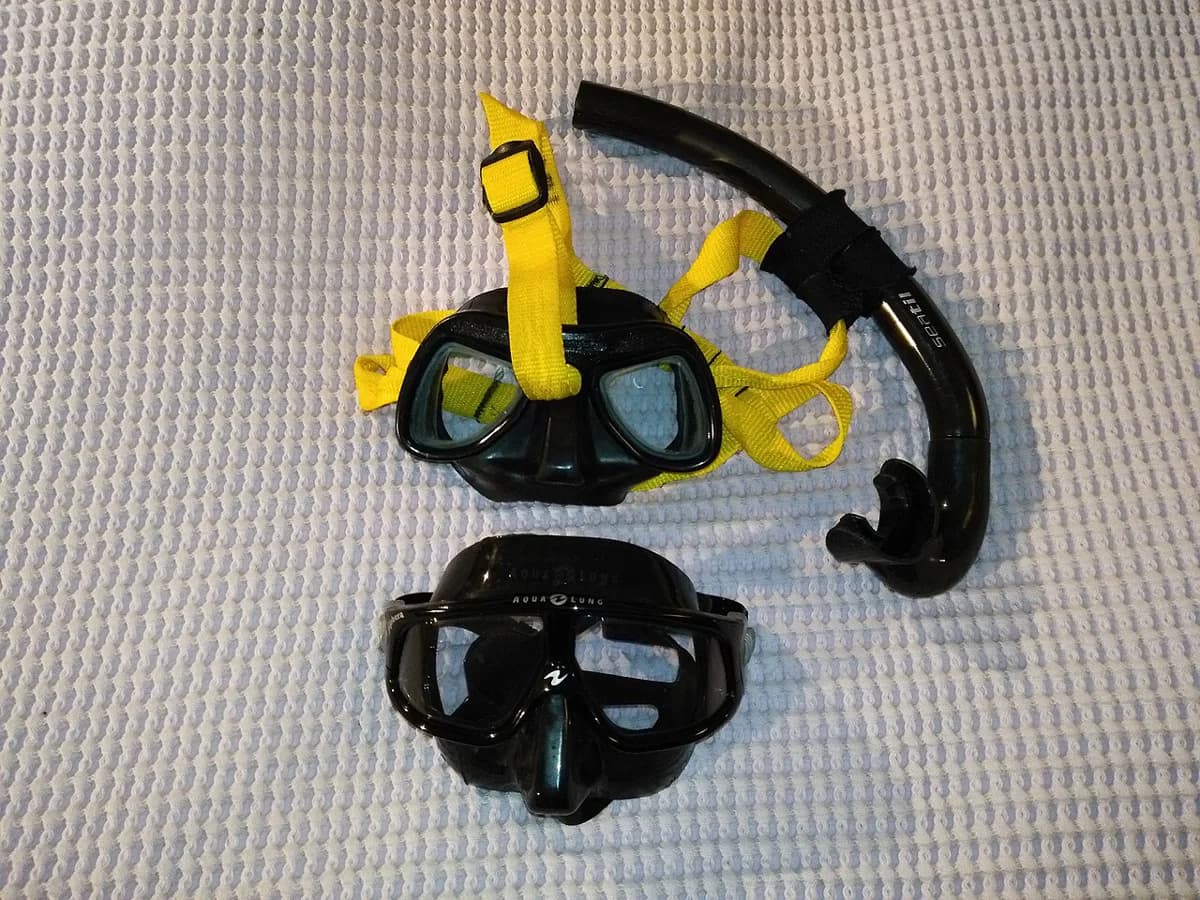
A workable kit is a mask, a snorkel, a pair of fins and something to wear in the water. Retailers group these as sets or combos, and the category pages show masks, snorkel tubes, fins, vests and full outfits sold separately as well as together. The mask deserves the most attention because a poor seal ruins every minute you spend face-down.
Seat the mask on your face without threading the strap and inhale gently through your nose.
The snorkel is a close second, since it decides how much water reaches your mouth when a wave washes over the top. Fins matter for distance and leg fatigue, and a rash guard or swim shirt handles sun exposure. If you only invest in two items, make them the mask and the snorkel.
Snorkel vests and flotation aids appear in the same catalogs as the rest of the kit, and they help swimmers who want to float at the surface without treading water. Choose one that fits snugly and does not ride up when you put your face in. Everything else in a kit is comfort and convenience; these four items are the core.
Mask fit and seal: skirt shape, nose pocket, tempered glass lenses
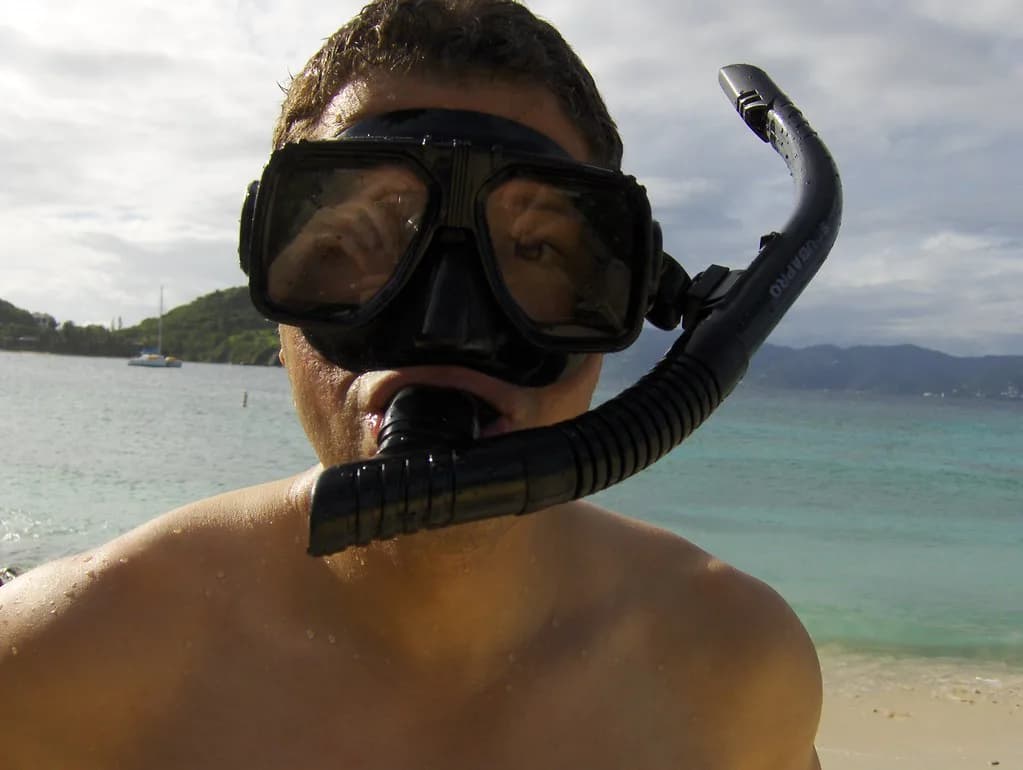
A mask seals because the silicone mask skirt presses flat against your face, not because the strap is tight. Hold the mask to your face without threading the strap and inhale gently through your nose; if it holds for a few seconds and lets go when you stop, the seal is working. Silicone skirts flex and hold up better than older rubber types, so look for silicone by name.
The nose pocket needs enough room for your nose to sit without pressing against the lens, and the skirt should clear your cheekbones and upper lip. A mask that pinches the bridge of your nose will leak no matter how you adjust the strap. Tempered glass lenses resist scratching and are the standard choice for anything beyond pool use.
Check the width of the skirt too. A wide skirt on a narrow face leaves gaps at the temples, while a small skirt on a broad face rides up over the eyebrows. How to Choose a Snorkel Mask comes down to face shape rather than brand, so try several models before deciding a mask is the wrong size.
Mask styles compared: single-lens, dual-lens, low-volume, prescription options
Single-lens masks give an uninterrupted view and tend to sit lower on the face, which makes them popular with freedivers and divers. Dual-lens masks use a frame between the eyes, accept corrective lenses in some designs, and are easy to fold flat for travel. Neither style is universally better; pick the one that fits your face and the way you like to look around.
Low-volume masks put the lens closer to your eyes, which widens the field of view and makes clearing easier. The trade-off is less room around the nose, so swimmers with a larger nose may find them tight. If you wear glasses, a prescription snorkel mask with a pop-in corrective lens or an optical insert lets you see clearly without contact lenses.
A full face snorkel mask covers the eyes and nose in one piece and lets you breathe through your nose and mouth, but it is a different piece of equipment with its own fit and safety considerations. Read the maker's sizing guidance before buying one, and check how the mask behaves if water enters. They suit some swimmers and frustrate others.
Snorkel types: open, semi-dry, dry-top, and when a plain tube wins
An open snorkel is a simple tube with a mouthpiece and no valve at the top. Water comes in when you dip below the surface, so you clear it with a sharp exhale when you come back up. It is the lightest and least complicated option, and experienced swimmers often prefer it for exactly that reason.
Semi-dry snorkels add a splash guard or angled top that sheds some water in choppy conditions. Dry-top snorkels close a valve when you submerge and reopen when you surface, which helps beginners who dive under to look at something. The trade-off is a heavier top and more parts to rinse and maintain.
Whichever type you choose, check that the mouthpiece is soft silicone and the tube is wide enough to breathe through without effort. A purge valve at the bottom saves you from blowing out a mouthful of water but adds a failure point. If you plan to snorkel in calm bays and stay at the surface, a plain tube does the job.
Fins: full-foot versus open-heel, blade stiffness, and how fit affects leg fatigue
Full-foot fins slip over bare feet or thin neoprene socks and are light, compact and easy to pack. Open-heel fins use an adjustable strap and are worn with booties, which adds warmth and protection on rocky entries. For warm-water travel, full-foot fins are the simpler choice; for cold water or shore entries over rock, booties and open-heel fins earn their space in the bag.
Blade stiffness changes how hard your legs work. A stiff blade pushes more water per kick but tires the ankles and calves, while a softer blade suits casual snorkelers and long, slow swims. Snorkeling fins are typically shorter and softer than scuba fins, which makes them easier to walk in and less likely to clip the reef.
Fit matters as much as blade type. A fin that slips off mid-swim is a hazard, and one that squeezes the toes will end your day early. Try fins with the foot pocket you intend to wear, whether bare or with a sock, and check that your heel sits fully inside the pocket without pressure points.

Sets versus separates: what a bundled set saves and what it compromises
Bundled sets are convenient and often the cheapest way to equip a family, since one purchase covers mask, snorkel and fins. The compromise is that the set is assembled around one price point, so at least one piece usually fits less well than a separately chosen item. A set with a great mask and mediocre fins is common, and so is the reverse.
Sets split into two broad types: mask-and-snorkel pairs, which leave you free to choose fins, and full sets that include fins as well. The pair is often the smarter buy for adults who already own fins or who want to spend their budget on a better mask. Full sets make sense for occasional snorkelers and for children who will outgrow the gear.
If you buy a set, swap out the weakest piece. A leaking mask can be replaced while keeping the fins, and a mouthpiece that does not fit can be changed on many snorkels. Look at the specifications for each component rather than the package as a whole, then decide whether the bundle is still worth it.
Youth and small-face sizing: why adult masks leak on kids and smaller faces
An adult mask is built for an adult face, so on a child it usually spans too wide across the temples and rides up over the brow. The result is a leak that no amount of strap tightening fixes, and a child who gives up on snorkeling after ten minutes. Youth and small-face masks use a narrower skirt and a shorter nose pocket to match smaller features.
Age labels are a rough guide, not a measurement. The reliable test is the same one adults use: seat the mask without the strap, inhale gently and see whether it holds. A mask that seals on a nine-year-old's face is the right mask, whatever the packaging says. Retailers list kids' sizes separately from adult sizes, which makes the comparison easier.
Children also need fins that fit their feet, since an oversized foot pocket will twist or fall off. Check that the heel strap adjusts far enough and that the blade is soft enough for small legs. Pair the gear with a properly fitted flotation vest and stay within arm's reach in the water.
What to wear: rash guards, swimwear, and no-contact guidance
A long-sleeve rash guard protects your back and arms from sun during the long hours you spend floating face-down. Swimwear underneath should be snug, since loose fabric drags in the water and can catch on gear. Boardshorts with pockets collect sand and add drag, so save them for the beach.
Avoid dangling jewelry, loose drawstrings and anything that trails in the water; they snag on gear and can be mistaken for food by curious fish. Cotton T-shirts soak up water, get heavy and offer little sun protection once wet. A purpose-made swim shirt dries fast and blocks more UV.
In the water, keep your hands to yourself. Do not touch coral, do not chase or ride turtles, and give seals, rays and dolphins room to move away on their own terms. Stay horizontal and keep your fins off the bottom; a single fin kick can break coral that took decades to grow.
Reef-safe sunscreen and sun protection for long hours on the water
Snorkeling means hours with your back exposed to the sun, and reflection off the water raises the dose. Choose a mineral reef safe sunscreen built around non-nano zinc oxide or non-nano titanium dioxide, which stay on the skin and are less likely to wash off into the water. Reapply on the beach rather than in the sea.
Some destinations restrict which sunscreens can be sold or worn in marine areas, so check the local rule before you travel and pack a compliant product. A rash guard, a wide-brim hat and sunglasses cover more skin than lotion alone and need no reapplying. Carry a small tube for your face and hands and leave the large bottle at the rental.
Remember the backs of your legs and your ears, which burn easily while you float. If you shave or have sensitive skin, test a new sunscreen before the trip rather than on the boat. Sun protection is part of the kit, not an afterthought.
Buy versus rent: when a personal mask is worth owning first
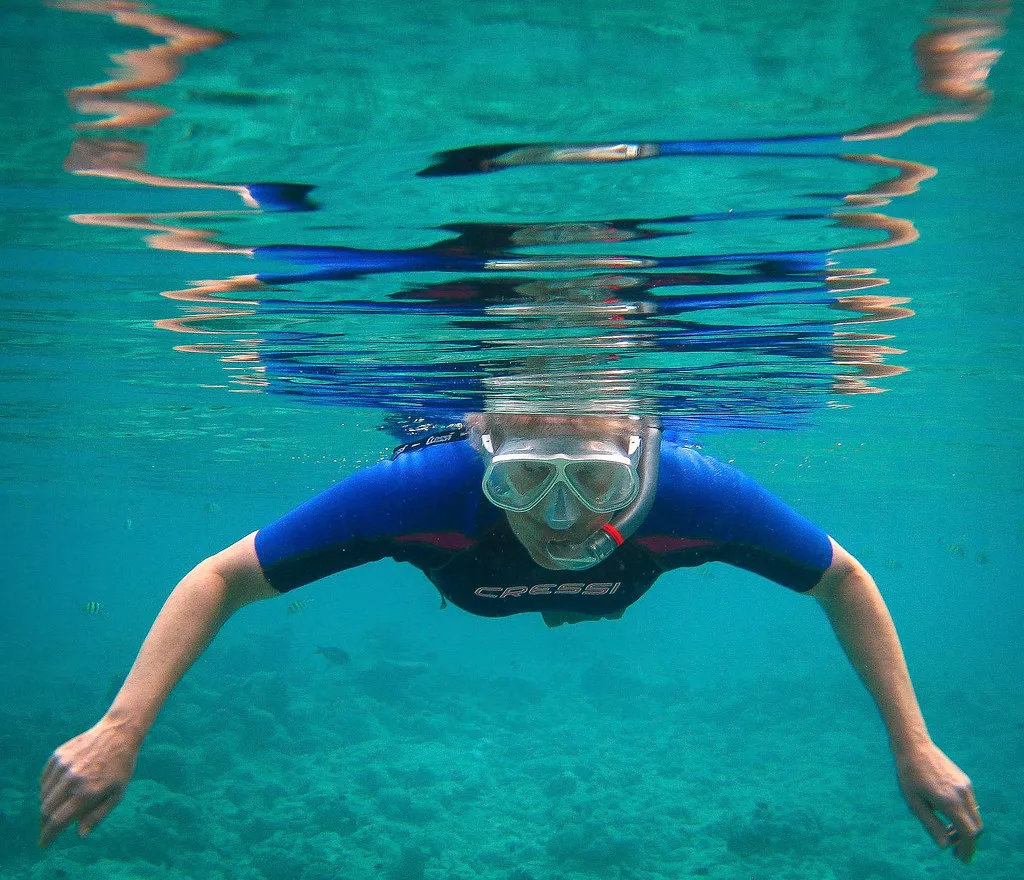
Rent when you snorkel once or twice a year on vacation and do not want to carry gear. Rental shops supply mask, snorkel and fins, and many destinations have outfitters near the main beaches. The trade-off is fit: a rental mask that leaks will spoil your day, and rental fins may not match your foot size.
Buy a personal mask first, even if you rent everything else. A mask that seals to your face is the one piece rental gear cannot reliably provide, and a mask is small enough to pack in carry-on luggage. Add your own snorkel next, then fins once you know you will snorkel regularly; if you are still weighing destinations, our snorkeling in Key Largo guide shows where that kit will get the most use, and our snorkeling in Maui guide covers the same kit decisions at a shore-and-boat destination.
Owning fins pays off if you travel to snorkel often or want a predictable fit. If you fly with only a carry-on, full-foot fins take up real space, so consider renting fins at the destination while bringing your mask and snorkel. Weigh the cost of a few rentals against the gear you would buy.
Care and packing: defog, rinse, dry storage, and travel packing
Rinse your mask, snorkel and fins in fresh water after every saltwater session, since dried salt crystals scratch lenses and stiffen silicone. Dry everything in the shade rather than direct sun, which degrades silicone and plastic over time. Store the mask in a rigid box so the lens does not press against anything hard in transit.
New mask lenses carry a thin film from manufacturing, and defog works best once that film is removed with a gentle, non-abrasive cleaner recommended by the maker. After that, a drop of purpose-made defog or a quick spit-and-rinse before each swim keeps fog at bay. Avoid touching the inside of the lens once it is clean.
Pack fins flat rather than folded, and keep the snorkel's mouthpiece away from sharp objects. A mesh bag lets gear drain and breathe, while a sealed dry bag protects electronics. Label your mask if you rent or travel in groups, since identical models get mixed up on the beach.
What not to do: touching wildlife, chasing turtles, standing on coral
Wildlife viewing rules in US marine areas generally require you to keep a distance and let animals approach on their own. Sea turtles, monk seals, manatees and dolphins are protected, and harassment can carry penalties. Never feed fish or other animals, and never try to ride or hold a turtle.
Coral is a living animal, and standing, kneeling or dragging gear across it causes damage that takes years to recover. Keep your body and fins horizontal and well above the reef, and use sandy channels to move between coral heads. In no-take marine reserves, collecting shells, coral or fish is prohibited.
If an animal approaches you, stay still and let it pass; back away slowly if it seems agitated. Report injured or entangled wildlife to the local wildlife agency rather than intervening yourself. Good snorkelers leave the reef exactly as they found it.
Plan Your Snorkel Kit
Start with the mask, because the seal decides whether the day works. Test the fit on your face without the strap, choose tempered glass and a silicone skirt, then pick a snorkel type that matches how you swim. Fins come last, chosen for your foot and the kind of water you snorkel.
A bundled set is fine for occasional use and for children, but check each piece against the specifications before you buy. If you snorkel often, buy your own mask and snorkel and rent fins at the destination. Rinse everything in fresh water after every swim, and the gear will last for years.
Explore more Snorkel Gear snorkeling
- Full-Face Snorkel Mask
- How to Choose a Snorkel Mask
- Reef Safe Sunscreen
- Dry Snorkel vs Wet Snorkel
- Prescription Snorkel Mask
- Snorkel Fins
- Snorkel Gear Rental
- Snorkel Vest Guide
- Underwater Camera for Snorkeling
- How to Defog a Snorkel Mask So It Stays Clear Underwater
- Rash Guard for Snorkeling
- Snorkel Bag Guide
- Snorkel Buoy
- Snorkel Gear for Beginners
- Snorkel Mask Strap Cover
- Snorkel Mouthpiece
- Snorkeling Gloves
- Snorkeling Wetsuits
- Water Shoes for Snorkeling
Frequently Asked Questions
How do I know if a snorkel mask fits my face?
Seat the mask on your face without threading the strap and inhale gently through your nose. If the mask holds for a few seconds and drops away when you stop inhaling, the skirt is sealing. Check that the nose pocket clears your nose and that the skirt does not press on your upper lip or temples. Repeat with a few models, since fit varies by face shape rather than by brand.
Should I buy a snorkel set or separate mask, snorkel and fins?
Buy separates when fit matters most and you snorkel often, because you can put your budget into a mask that seals and fins that suit your legs. A bundled set is a reasonable buy for occasional vacation use or for children who will outgrow the gear, but check each component against its listed specifications before you commit. If a set's mask leaks, replace the mask and keep the fins.
Does a snorkel let me breathe underwater?
A snorkel lets you breathe at the surface while your face stays in the water, which is what makes long, relaxed viewing possible. The top of the tube must stay above the surface; once it dips under, water enters and you clear it with a sharp exhale. Dry-top designs close a valve on submersion, but no snorkel supplies air while you are fully under.
What should I not wear when snorkeling?
Skip cotton T-shirts, which soak up water, get heavy and lose most of their sun protection once wet. Leave dangling jewelry, loose drawstrings and anything that trails in the water at the beach, since they snag on gear. Choose a snug swimsuit or purpose-made swim shirt and avoid boardshorts with pockets that fill with sand.
What causes a mask to fog, and how do I deal with it?
Fog forms when warm, moist air from your skin meets a cooler lens. New lenses carry a manufacturing film that needs gentle removal with a non-abrasive cleaner before defog works well. After that, apply purpose-made defog or a quick spit-and-rinse before each swim, and avoid touching the inside of the lens once it is clean.
Sources
Snorkeling notes for your next trip
Optional updates to our snorkeling guides.
You might also like
Continue reading
More guides you'll find useful