How to Choose a Snorkel Mask: Fit, Style and Features
Learn how to choose a snorkel mask by fit, lens style, and skirt design. Compare two-lens, low-volume, and full-face masks for beginners and kids.
On this page
A mask that leaks or fogs turns a calm bay into a constant stop-and-clear routine, and that happens long before the reef does. The right mask is the one that seals against your face, sits comfortably under your nose, and matches how you actually snorkel: short surface swims, long floats, or dives to the sand. This guide is for anyone buying a first mask, replacing a worn one, or outfitting a family before a warm-water trip.
Fit comes first and style second, because no lens shape or strap design rescues a skirt that gaps at the cheeks. Once the seal is right, the remaining choices, single versus two lenses, low-volume versus standard, and a separate snorkel versus a full-face design, are trade-offs you can weigh on paper. The sections below take each part in turn and end with a packing list for US snorkel days.
Mask Anatomy: What Each Part Does
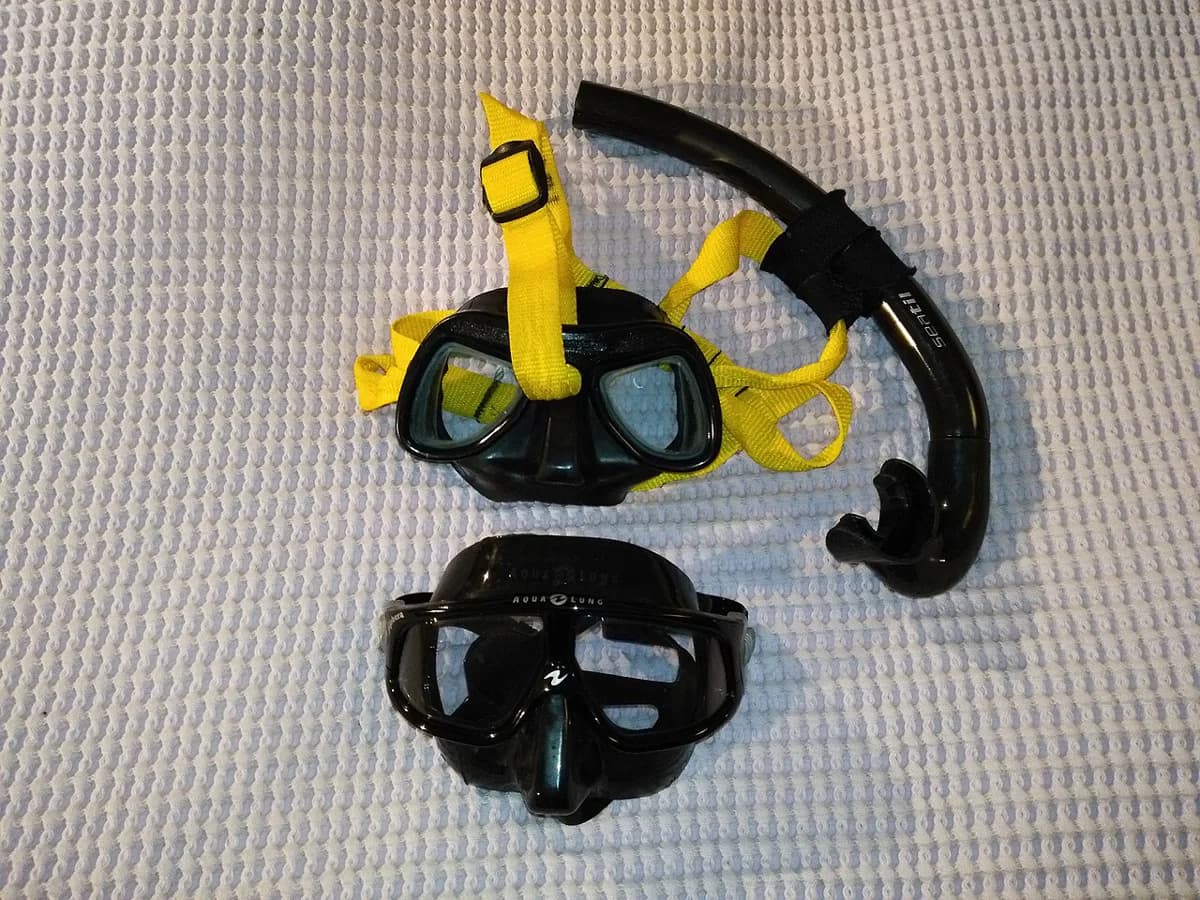
A snorkel mask is built from four parts that matter for comfort: the lens, the skirt, the frame, and the strap. The lens is what you look through, the skirt is the soft seal that touches your face, the frame holds the lens and anchors the skirt, and the strap keeps the whole assembly in place without needing a tight squeeze. Understanding which part causes a problem tells you whether to adjust, swap sizes, or choose a different style.
The best mask is the one that seals against your face with light suction.
The skirt does most of the work. Silicone skirts are the standard on quality masks because they stay supple and seal with light pressure, while stiff or poorly trimmed edges create the small gaps that let water trickle in at the upper lip or beside the nose. When you compare masks, look at the skirt's width and shape more than the color or logo, since a wide, soft skirt forgives more face shapes.
The frame and strap are about stability. A rigid frame keeps the lens from flexing, and a split or adjustable strap spreads tension around the back of the head instead of pulling at one point. Retail catalogs show how varied these builds are: mask-and-snorkel combos from U.S. Divers alone span adult and kids models with different frame and strap designs, so the same brand can feel very different across its lineup.
The Seal Test: Check Fit Before You Buy
The seal test is simple and takes under a minute. Place the mask against your face without threading the strap, inhale gently through your nose, and let go. A mask that stays put for a few seconds with light suction has a workable seal; one that drops immediately has a gap you will feel in the water. Repeat it a couple of times, because a seal that holds once but slips on the second try usually means the skirt shape is wrong for your face.
Pay attention to where the mask sits vertically. The skirt should rest on the upper lip and clear the eyebrows, so no hair or brow ridge breaks the seal and the lens stays below eye level. If the mask pinches the bridge of your nose or presses on the cheeks, size up or try a different skirt profile rather than tightening the strap to compensate.
Test before you travel, not at the beach. A pool, a calm shallow stretch of shore, or even a bathtub lets you confirm the seal and practice breathing through the mask without wasting a snorkel morning. If the mask leaks in the tub, it will leak in the ocean.
Two-Lens vs. Single-Lens Masks
Single-lens masks give an uninterrupted field of view, which many snorkelers prefer for spotting fish off to the side without turning the head. The trade-off is bulk: a wide single lens needs a larger frame, packs less compactly, and often costs more than a comparable two-lens model. If your priority is a panoramic view on long surface floats, a single lens earns its space in the bag.
Two-lens masks split the view with a narrow bridge, which some snorkelers find distracting and others stop noticing within minutes. Their real advantages are packability and corrective options, since each lens can be swapped or fitted independently. They also tend to sit lower on the face, which suits snorkelers with narrower features.
Neither style is better in absolute terms. Decide by how you snorkel: a traveler packing light with a day bag gains from a compact two-lens mask, while a snorkeler who spends an hour drifting over a reef may value the wider single-lens view enough to accept the extra bulk.
Low-Volume Masks: Who Benefits
Low-volume masks place the lens closer to your eyes and reduce the air space inside the mask. That smaller pocket is easier to clear after a dive, and it sits closer to the face for a streamlined profile. Snorkelers who duck under regularly, or who free-dive between surface intervals, often prefer them for exactly that reason.
The trade-off is field of view. A low-volume mask trades some peripheral vision for a tighter package, and the lens sits nearer the eyes, which can feel cramped to snorkelers used to a roomier mask. Beginners on calm surface floats rarely need the smaller air pocket and may find a standard-volume mask more comfortable for long, relaxed sessions.
Fit still overrides volume. A low-volume mask that seals poorly is worse than a standard mask that seals well, so run the same seal test on both before deciding.
Full-Face Masks: Airflow Design and Fit
A full-face mask covers the eyes and nose together and lets you breathe through the nose or mouth, which removes the mouthpiece that some new snorkelers find awkward. The design difference that matters is airflow: quality models use separate channels or valves for inhaling and exhaling, while some low-cost versions route both through a single valve. Published comparisons single out the Tribord Subea Easybreath and the Ocean Reef Aria as examples built around dual airflow systems.
Fit is harder to judge on a full-face mask because the seal runs around the whole face, not just the nose and cheeks. Sizing guides in product descriptions matter more here than with a standard mask, and a poor seal shows up as water at the chin or forehead rather than a slow trickle. Read the manufacturer's sizing range against your face measurements before ordering.
Treat a full-face mask as a different tool rather than an upgrade. It suits relaxed surface viewing for snorkelers who dislike mouthpieces, and it is a poor match for anyone who plans to dive or who wants the option of clearing a mask the standard way.
Pairing a Mask With a Dry, Semi-Dry, or Open Snorkel
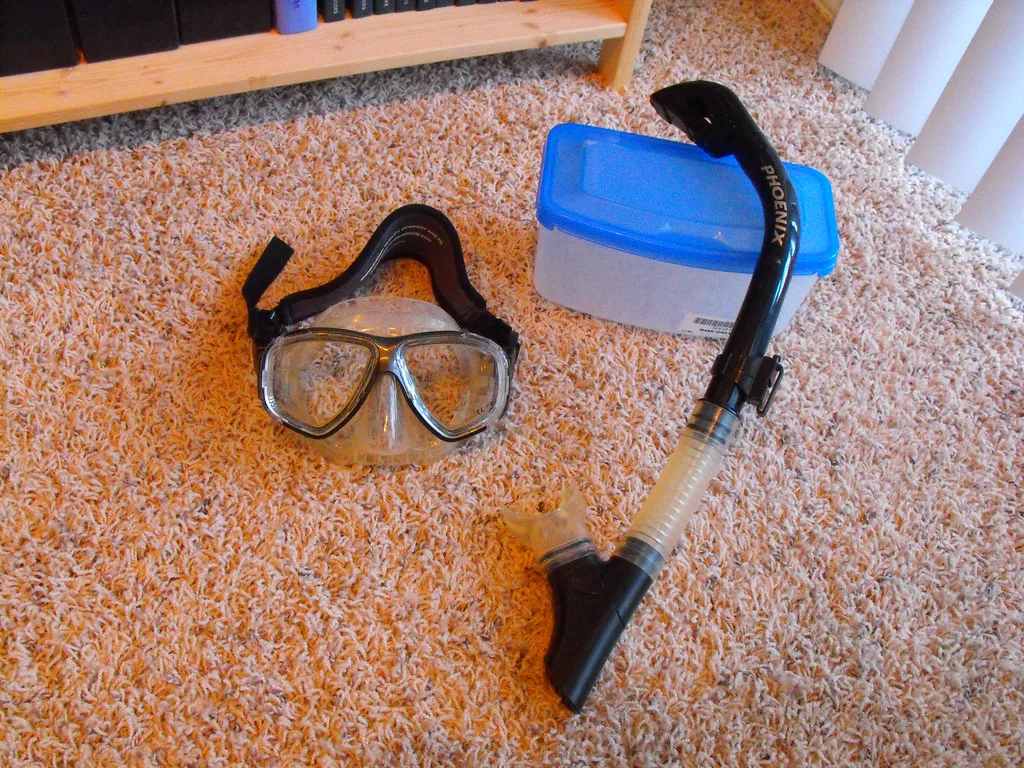
The snorkel is a separate decision, and the three common types behave differently at the surface. A dry snorkel has a valve that closes when you submerge, a semi-dry snorkel uses a splash guard and purge, and an open snorkel is a plain tube. On calm days the differences are modest; in chop or with frequent dives, the sealing design earns its keep.
Most masks accept any standard snorkel through a clip on the strap, so you can buy them separately and replace one without the other. Buying a matched combo saves the clip-fitting step and often suits kids or occasional snorkelers, but it locks you into the manufacturer's pairing. Compare the two snorkel types before you commit to a set.
Check that the clip holds the snorkel upright and slightly off-center from your mouth, and that the mouthpiece reaches comfortably without pulling the mask. A snorkel that drags on the strap can break the seal you worked to get right.
Fit for Kids and Smaller Faces
Children need a mask sized for a narrower face, not an adult mask cinched tighter. Kids' combos are built on smaller frames and skirts, and manufacturers list them separately from adult models precisely because the proportions differ. Look for a dedicated kids or junior size range rather than adjusting an adult mask.
Run the same seal test with your child, and let them hold the mask themselves so you can see whether it stays without strap tension. A mask that fits an adult's hand pressure but falls off a child's face is the wrong size. Supervision in the water matters regardless of fit, and a mask that seals well makes that supervision easier.
Avoid buying a kids' mask to grow into. An oversized skirt gaps at the cheeks, and a child who spends the swim clearing water will not enjoy the day. Replace the mask as the face grows rather than starting too large.
Prescription and Corrective Lenses
Snorkelers who wear glasses have two common paths: a mask with optional corrective lenses or an optical insert fitted by a specialist. Two-lens masks suit this best because each lens can be replaced independently, which is one reason they remain popular with divers who need correction.
Plan lead time. Corrective lenses and inserts are usually ordered to your prescription and take longer to arrive than an off-the-shelf mask, so start the process well before a trip rather than in the final week. Confirm the return policy on prescription items before ordering, since customized lenses are often handled differently from stock masks.
Materials and Published Specs
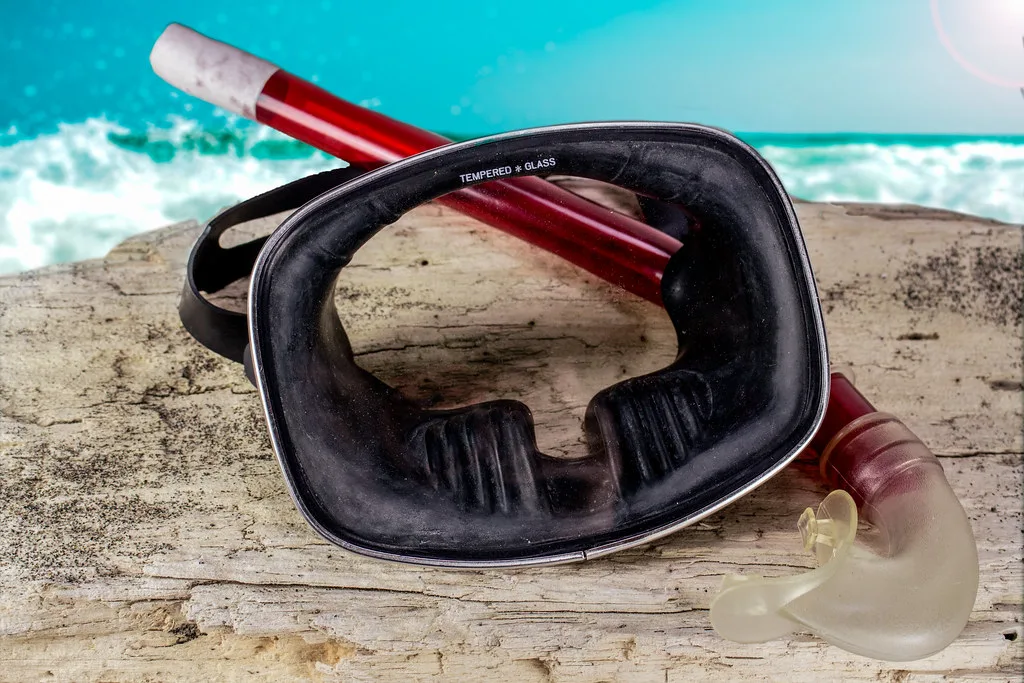
Two material choices tell you most of what you need about build quality: a silicone skirt and a tempered glass lens. Silicone stays flexible and seals with light pressure, and tempered glass resists scratching and stands up to pressure changes better than plastic. Product pages list both, so read the spec line rather than relying on the photo.
Published specs also tell you the lens count, the size range, and whether the mask is sold alone or as a combo. Dive-retail catalogs organize masks by frame style and face size, and they separate kids' models from adult ones, which makes cross-shopping between brands easier. U.S. Divers lists its combos with model names and color options, so you can match a spec sheet to a specific product before comparing.
Treat published features such as anti-fog coatings as a starting point, not a guarantee. A coating helps, but fit and preparation still determine whether the lens stays clear on a given day.
Cleaning, Anti-Fog, and Storage
New masks often carry a thin manufacturing film on the lens that causes fogging until it is removed. A gentle wash with a mild soap and a soft cloth, followed by a thorough rinse in fresh water, clears the film without scratching the glass. Avoid abrasive cleaners on both the lens and the silicone skirt.
For anti-fog, a light coating of dish soap rubbed on the inside of the lens and rinsed gently can help, leaving a thin film rather than a scrubbed-clean surface. Spit works in a pinch, but soap is more consistent. Reapply as needed rather than relying on a single treatment for a whole trip.
Store the mask dry, loosely packed, and away from direct sun, which degrades silicone over time. Keep it out of a hot car and avoid stacking heavy gear on the lens. A simple mask box or a soft pouch protects the frame and skirt between trips.
What to Pack for a US Snorkel Day
Pack your mask, snorkel, and fins first, then add the small items that make a shore day work: a rash guard for sun and abrasion, a towel, and a mesh bag that drains. A spare mask strap or clip costs little and prevents a trip-ending failure if the original breaks.
Sun protection matters as much as the mask. Choose a reef safe sunscreen formulated with non-nano zinc oxide or non-nano titanium dioxide, and apply it before you get in the water so it has time to absorb. Confirm the rules for the specific beach or reserve you plan to visit, since some areas publish their own sunscreen requirements.
If you are flying, pack the mask in your carry-on so it does not get crushed, and leave liquids that exceed security limits at home or in checked baggage. A mask that arrives with a cracked frame wastes the trip.
Choose Fit, Then Style
Start with the seal test on any mask you are considering, whether it is a two-lens, single-lens, low-volume, or full-face design. Once the seal holds and the skirt clears your brow and rests on your upper lip, choose the lens style and snorkel pairing that match how you snorkel. If your first outing is a boat trip, our Maui Snorkeling for Beginners: Boat vs Shore Guide covers the same boat-versus-shore decision for your first mask in open water.
Buy the mask ahead of the trip, test it in shallow water, and pack it protected. A mask that fits converts a day of clearing water into a day of watching the reef.
Frequently Asked Questions
What kind of mask is best for snorkeling?
The best mask is the one that seals against your face with light suction. A silicone skirt and tempered glass lens are the standard build, and single-lens versus two-lens comes down to field of view versus packability and corrective options. Run the seal test before you buy.
What is the purpose of a snorkel mask?
A snorkel mask creates an air pocket over your eyes and nose so you can see underwater clearly while breathing through a snorkel at the surface. The skirt seals against your face, and the lens gives you a clear view below.
Can you go fully underwater with a snorkel mask?
You can duck under with a standard mask, but water will enter unless you clear it, and a snorkel will fill unless it has a sealing valve. Full-face masks are designed for surface viewing rather than diving. Practice clearing a mask in shallow water before attempting it in open water.
What is the best snorkel mask for beginners?
Beginners do well with a standard two-lens or single-lens mask that seals easily and a dry or semi-dry snorkel. A mask with a wide, soft silicone skirt is more forgiving of face shape. Fit matters more than any feature list.
How do I know if a snorkel mask fits?
Place the mask on your face without the strap, inhale gently through your nose, and let go. If it stays put for a few seconds, the seal is workable. The skirt should rest on your upper lip and clear your eyebrows without pinching.
Is a full-face snorkel mask right for me?
Full-face masks suit relaxed surface snorkelers who dislike mouthpieces. They use separate airflow channels on quality models, and fit is harder to judge because the seal runs around the whole face. They are a poor match for snorkelers who plan to dive.
Should kids use a full-face mask?
Children do better with a mask sized for a narrower face, and dedicated kids and junior sizes exist for that reason. Run the seal test with your child and provide close adult supervision in the water. A mask that gaps will spoil the day regardless of style.
Can I use a prescription mask?
Yes. Two-lens masks accept corrective lenses or an optical insert, which is one of their main advantages. Order well before your trip, since prescription lenses take longer than stock masks, and confirm the return policy on customized items.
Sources
Snorkeling notes for your next trip
Optional updates to our snorkeling guides.
You might also like
Continue reading
More guides you'll find useful