Snorkel Mask Defog Guide: Snorkel Gear Care Routine
Learn how to defog a snorkel mask with a clean lens, the right defog film and a quick pre-swim routine, plus how to handle fog and leaks in the water.
On this page
A foggy mask is the most common reason a good snorkel day turns into a squint. The fix is not a secret product but a sequence: strip the factory residue off a new lens once, keep the inside clean, apply the thinnest possible defog film before every swim, and make sure the mask actually seals so salt water does not wash that film away.
The routine below separates the one-time job of preparing a new mask from the per-swim job of defogging it, because blending the two is where most people go wrong. It also covers coated and plastic lenses, which need gentler treatment than bare tempered glass.
Why a Snorkel Mask Fogs
Fog is condensation: moisture in the warm air trapped between your face and the lens condenses into tiny droplets on the inside of glass that is cooler than that air. Those droplets scatter light in every direction, which is the cloudy film you see. Oils, sunscreen residue and manufacturing film on the lens give the moisture more to cling to, so a dirty lens fogs faster and more stubbornly than a clean one.
A purpose-made mask defog applied as a thin film over a clean lens is the most predictable option, and it is the right choice for rental or shared gear.
Defog does not dry the lens. It leaves a water-attracting layer that flattens droplets into one continuous, transparent sheet instead of letting them bead up. That distinction matters for the whole routine, because a lens you have deliberately kept slightly wet will stay clear longer than one you have polished dry.
Temperature swings also matter. When you lift your face into the sun and then put it back into cool water, the inside of the lens warms and then cools quickly, and condensation forms fast. Turning your back to the sun while you talk or adjust gear reduces that cycle without any product at all.
Mask Fit Comes Before Any Defog Product
No defog survives a leaking mask. Every trickle of water inside the lens dilutes and rinses away the thin film you applied, so you end up re-clearing the mask every few minutes and wondering why the product failed. If your mask keeps fogging after a proper application, test the seal before you buy a different defog.
A quick fit test at home settles most of it: rest the mask on your face without the strap, inhale gently through your nose, and see whether it holds suction for a moment. If it drops away, the skirt shape does not match your face, and no strap tension will fix that. Strapping a mask tighter than it needs to be distorts the silicone and usually makes leaks worse.
If you wear a dry-top snorkel or any snorkel with a valve, check that the mouthpiece is not pulling the mask out of position when you bite down. A snorkel that drags on the frame can break the seal on one side. Pairing a well-fitted mask with the right snorkel is covered in the broader snorkel gear guide.
Preparing a New Mask
New masks often carry a silicone film from manufacturing on the inside of the lens, and it attracts moisture. That is why a brand-new mask can fog worse than an old one no matter how carefully you apply defog. Removing that film is a one-time job, done before your first swim.
Read the maker's care instructions first, because lens materials differ and a technique that is fine on bare tempered glass can ruin a coated or polycarbonate lens. PADI's guidance summarized by Banyan Tree Divers supports non-whitening toothpaste or a purpose-made cleaner for traditional glass, while some modern masks explicitly warn against abrasives. Cleaning a new mask walks through that check in more detail, including how the lens type changes the method.
For an uncoated tempered-glass lens, the standard approach is a small amount of paste toothpaste, not gel, worked over the inside with a soft toothbrush rather than a finger, then rinsed thoroughly. Repeat it several times before the first use, since one pass rarely strips the film completely. Keep the abrasive away from the silicone skirt and from any anti-fog coating.
Should You Burn a New Mask
You may have seen divers pass a flame over a new lens to burn off residue. PADI's guidance, as summarized by Banyan Tree Divers, holds that only someone experienced with the technique should attempt it, because excess heat can crack the lens, scorch the skirt or damage lens treatments. For most people the safer route is a manufacturer-approved cleaner used repeatedly, or having a dive shop do the work.
Never apply heat to a plastic or polycarbonate lens, to a lens with a factory anti-fog film, or to a full-face mask with a bonded window. Those surfaces are easy to ruin and expensive to replace, and the cleaning product route costs far less than a new mask.
Cleaning a Tempered-Glass Lens Without Coatings
Between swims, the inside of the lens needs only a gentle wash with mild soap and fresh water to remove skin oils and dried salt. What it does not need is fingers. Oils from your hands reintroduce exactly the contamination you just washed away, so handle the inside with clean hands only when you must.
If a lens that used to stay clear starts fogging again, the usual cause is buildup rather than worn-out defog. A fresh scrub with toothpaste or a dedicated lens cleaner, followed by a thorough rinse, restores the surface. Do this at home, not on the beach, so you can rinse properly and let the mask dry.

Coated, Plastic and Full-Face Lenses
Coated and plastic lenses need dish soap and a very soft brush or cloth instead of abrasive paste, since scratching the inside makes fogging worse permanently. Rinse thoroughly and avoid scrubbing in circles with force. The coating is the fog-fighting surface, so protect it rather than polish it.
Full-face masks fog too, despite marketing that suggests otherwise. The airflow across the window helps, but the lens still needs cleaning and defog, and it needs gentler handling because the windows are almost always plastic. If you are weighing one against a standard mask and snorkel, read up on full face snorkel mask safety before you commit.
Applying Defog: Thin Film, Full Coverage
Start with a clean, dry lens, then apply the smallest amount of defog that will cover the entire inside surface in overlapping passes. More product is not better; excess leaves gooey patches that interfere with the water sheet and can sting if it reaches your eyes. Let it sit for a minute or so to bind before you get in.
Commercial defog is the most predictable choice, and purpose-made products are the better option for shared or rental gear. Follow the label for how long to leave it and whether to rinse. Choosing a defog is less important than applying it correctly and keeping the inside of the lens untouched afterward.
If you use a spray bottle, a mild soap solution works, but rinse it properly before the mask goes on your face and keep it out of your eyes. Divers Alert Network has documented an eye injury from shampoo used as mask defog, so a purpose-made product is the safer habit, especially with children.
The Pre-Entry Routine
At the water's edge, wet your face and dunk your head so the skin and mask start at similar temperatures. Dip the mask, lift it out and let it drain, which leaves a thin sheet of water clinging to the treated lens instead of a dry surface. Then strap it on while breathing in gently, letting air pressure seat the skirt evenly rather than pushing it down with your hands.
Keep the mask on once it is seated. Taking it off and putting it back on lets moisture and salt water in, and every removal costs you some of the film. Turn your back to the sun while you adjust, and shake out any loose drops before the skirt touches your face.
Saliva, Baby Shampoo or Commercial Defog
Saliva is the traditional fallback and DAN recognizes it as an effective option for your own mask when nothing else is available. Spit in the lens, spread it around, rinse briefly and put the mask on. It is free and always with you, but it is not the choice for rental or shared equipment.
Diluted baby shampoo is another long-standing method, mixed weak enough that it does not sting if a little reaches your eye. Rinse the excess away, because a soapy residue can irritate. For a family kit or a group, a commercial defog removes the guesswork about dilution and rinsing.
Whatever you choose, the common mistake is rinsing too hard and washing the treatment off entirely. A quick dip and drain is enough. You want a thin film and a water sheet, not a spotless dry lens.
Foggy Mask at the Reef: The In-Water Fix
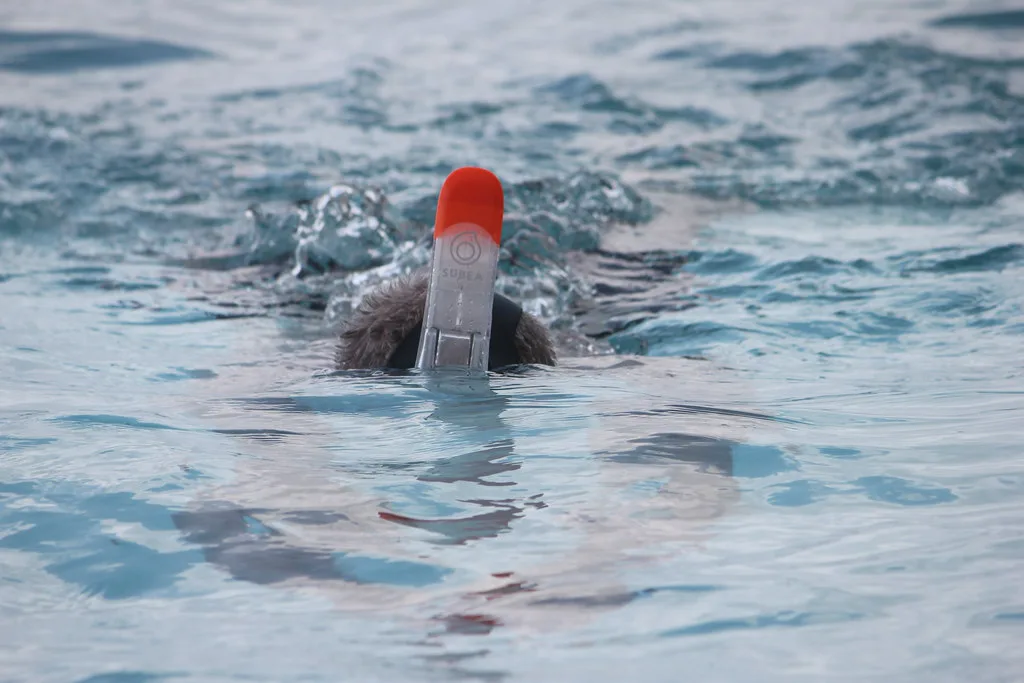
If fog creeps in mid-swim, lift the skirt slightly, let a little water in, and swish it around the lens before clearing the mask. That buys clear vision for a while, but needing it every few minutes means the preparation failed somewhere, most often a leak or too much defog.
With no defog on hand, saliva applied in the water works as an emergency measure: spread it over the lens, rinse once and reseat the mask. Do not rub the inside with your fingers, since the oils undo the treatment. This is a patch, not a substitute for a proper pre-swim routine.
Troubleshooting Fog That Keeps Coming Back
If fog returns within minutes every time, work through the causes in order: a leaking seal, oily contamination inside the lens, leftover factory residue, or a defog that was rinsed away. Start with the leak, because it explains most cases and costs nothing to fix. A mask that fits well and seals needs far less defog to stay clear.
Sunscreen is a quiet culprit. Apply it before you handle the mask, wash your hands, and keep lotion away from the inside of the lens. If you are choosing a product for the day, look at reef safe sunscreen options that are formulated for water use and won't leave a heavy film on your gear.
If your lens still fogs after cleaning, sealing and a careful application, the mask may simply be the wrong shape for you. A poorly fitting mask will keep letting water in, and no amount of defog can compensate. Trying several models at a shop, ideally with your own snorkel in place, is the fastest way to a mask that stays clear.
After the Swim: Rinse, Dry and Store
Rinse the mask in fresh water after saltwater use, inside and out, and let it air-dry away from direct sun. Salt crystals and dried residue left on the lens shorten the life of the defog film and the silicone. Store the mask so the skirt is not crushed or folded, which can distort the seal over time.
Keep the lens off rough surfaces and avoid leaving the mask on a hot car dashboard. Heat warps silicone and can damage coatings. Before your next swim, a quick wash with mild soap and fresh water is usually all the lens needs before you reapply defog.
Build a Routine You Repeat
A clear mask is a habit rather than a purchase. Prepare a new lens once according to its material, keep the inside clean and untouched, apply a thin film before every swim, and seal the mask properly before you put your face in the water.
Take a moment to check the day's surf and any posted advisories with the lifeguard agency at your beach before you gear up, since conditions decide more about your swim than any defog product. If you are planning a freshwater day instead, the same mask routine applies to snorkeling in Florida springs, where clear water makes a fogged lens even more frustrating. Then keep the routine short and repeatable, and it will hold up for the whole session.
Frequently Asked Questions
What is the best thing to use to defog a snorkel mask?
A purpose-made mask defog applied as a thin film over a clean lens is the most predictable option, and it is the right choice for rental or shared gear. Saliva and diluted baby shampoo are traditional alternatives that work for your own mask, but rinse either carefully and keep soap residue out of your eyes.
How do I stop my snorkel mask fogging up every few minutes?
Frequent fog usually points to a leak or contamination rather than a weak defog. Check that the mask seals without the strap, keep sunscreen and fingers away from the inside of the lens, and make sure you leave a thin film rather than rinsing it all off.
Can I use toothpaste to defog a snorkel mask?
Toothpaste is for preparing a new uncoated tempered-glass lens, not for daily defogging. Paste, not gel, worked over the inside with a soft brush strips manufacturing residue, then gets rinsed away completely. Skip it on coated, plastic or polycarbonate lenses, where it can scratch.
Is baby shampoo safe for defogging a mask?
Diluted baby shampoo is a long-standing method, but no-tears does not guarantee it is non-irritating when trapped against the eye inside a mask. Divers Alert Network has documented an eye injury from shampoo defog, so rinse thoroughly or use a purpose-made product, especially with children.
How do you defog a mask once you are already in the water?
Lift the skirt slightly, let a little water in and swish it around the lens, then clear the mask. If you have no defog, saliva spread over the lens, rinsed once and reseated, will usually restore vision for a while. Needing this often means the pre-swim prep needs work.
Why does my mask fog even after I apply defog?
The usual causes are a leaking seal, oils or sunscreen on the inside of the lens, leftover factory residue on a new mask, or rinsing the defog away before the mask goes on. Work through them in that order, starting with the seal.
Should I burn a new snorkel mask?
Treat a flame as a last resort. PADI guidance holds that only someone experienced with the technique should try it, since heat can damage the lens, the skirt or lens treatments. Repeated cleaning with a manufacturer-approved product, or letting a dive shop do the work, is safer for most people.
Sources
Snorkeling notes for your next trip
Optional updates to our snorkeling guides.
You might also like


Continue reading
More guides you'll find useful