Best Springs to Snorkel in Florida: 8 Clear-Water Picks
Plan a Florida spring snorkel day with picks like Ichetucknee, Rainbow River, Ginnie and Alexander Springs, plus entry points and wildlife tips.
On this page
A handful of Florida springs work beautifully for snorkelers: shallow basins and slow spring runs where the bottom stays in view and the water holds a steady temperature year-round. The best picks cluster in spring country north and west of Orlando, around Gainesville, Ocala and Crystal River, and each has a different way in, from a sandy basin to a drift line down a river.
The trick is sorting the genuine snorkel sites from the caverns and cave systems that belong to certified divers. This guide separates the two, gives you the entry logistics for each spring, and pairs nearby sites so you can build a full day around one base town rather than driving the state.
Why Florida Springs Suit Snorkelers
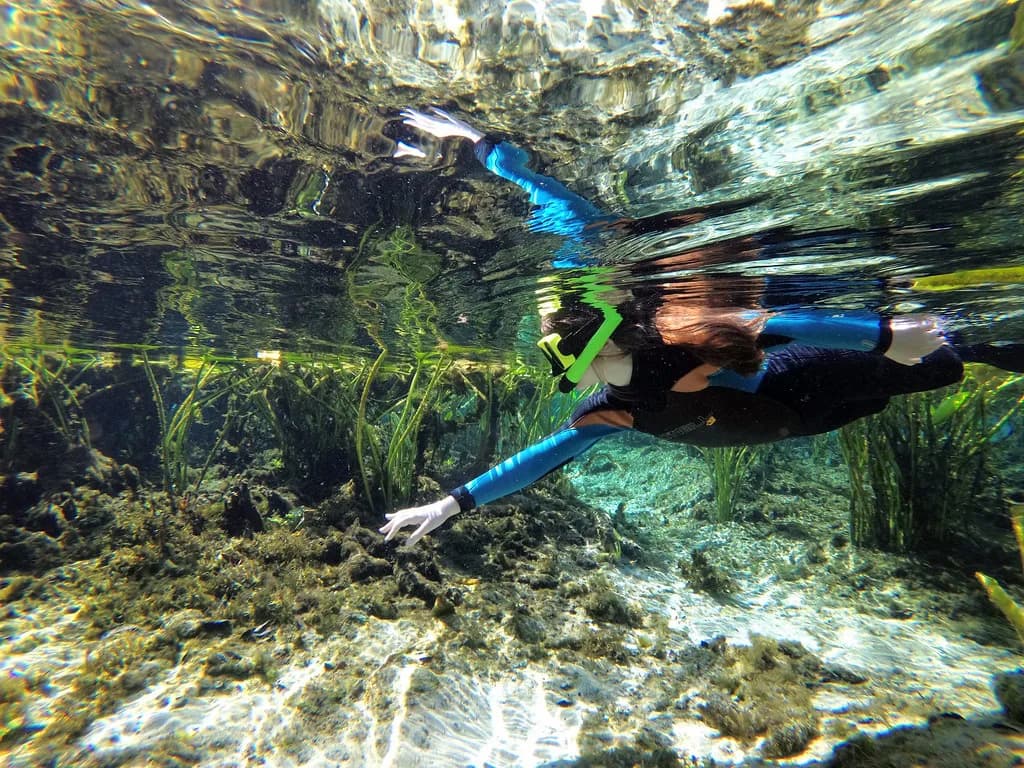
Spring water pushes up from the limestone aquifer at a near-constant temperature, which is why the springs read as cold on a hot July afternoon and mild on a January morning. That steadiness keeps visibility reliable and makes a mask, snorkel and a thin wetsuit the core of your kit rather than a full dive setup.
The wildlife is freshwater, not reef: turtles, gar and other river fish over eelgrass and sand, plus birds working the surface. Manatees move into several spring systems in the colder months, and alligators live in the same rivers, so you stay alert at the surface and give animals room rather than swimming toward them.
Ichetucknee Springs: The Pristine Spring Run
Ichetucknee is the classic spring-run float, and snorkelers who get there at opening get the water before the tube traffic builds. The run is often described as the most pristine in the state, with clear water over a sandy, grassy bottom and birds working the foggy morning surface.
Plan the day around an early start rather than an afternoon slot, because Florida summer storms build after midday and being caught mid-float in lightning is the real risk. Bring a mask and fins for the upper stretch where the water is calmest, and treat the lower run as a float if the current picks up with tube releases.
Rainbow River from KP Hole Park: Drift Snorkeling
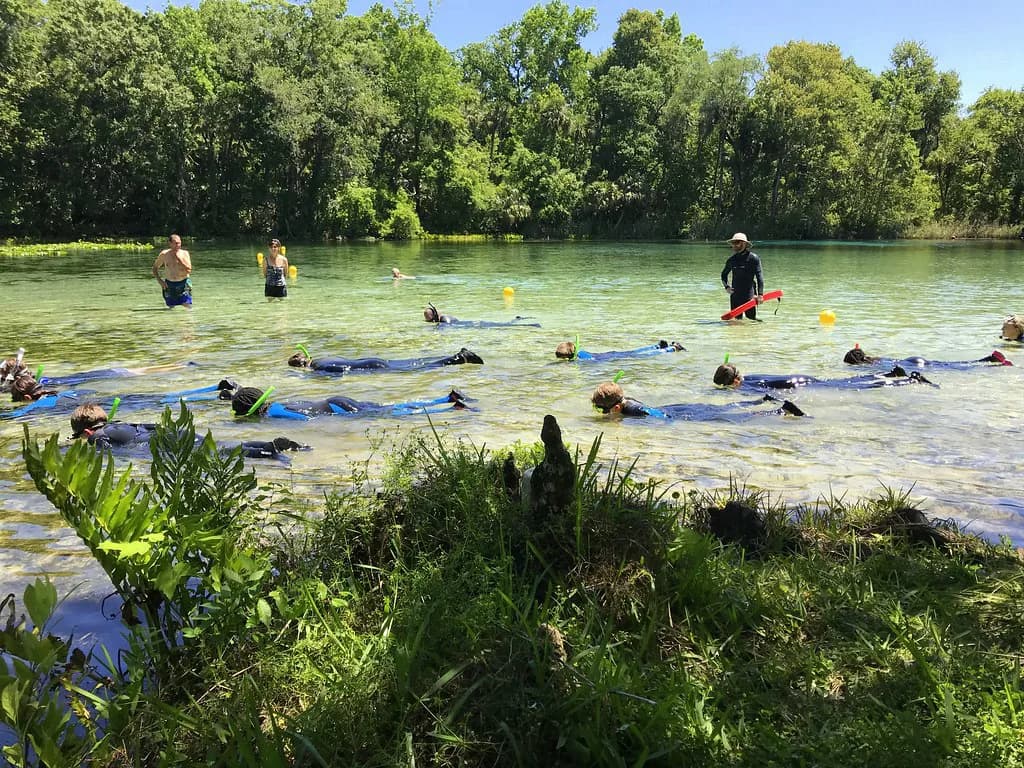
Rainbow River is the state's best drift snorkel: you launch at KP Hole Park in Dunnellon, let the gentle current carry you downstream, and watch grass beds slide past with turtles and fish working through them. If you have no boat, a water taxi drops you upstream so you can float the clear section without a shuttle car at both ends.
Entry at KP Hole is charged per person and does not include the water taxi, so budget for both, check Marion County's current park fee before you go, and arrive early to beat the afternoon crowd. Visibility can top 100 feet on a good day, which makes this the most photogenic freshwater swim on the list for a snorkeler with a mask and no tank.
The same river is popular for tubing, so a snorkeler hugging the grass beds on the inside of the bends stays out of the tube lane. Pair the float with a second spring in the Dunnellon area if you want a full day, and rinse gear between sites to keep from carrying sediment into the next basin.
Ginnie Springs: Basin Depth and the Cavern Below
Ginnie Springs, near High Springs, gives snorkelers a wide, shallow basin roughly 15 feet deep with a 150-foot channel connecting it to the Santa Fe River. The cavern mouth sits at the bottom of the basin, and you can watch divers' bubbles rise along the rocks from the surface without entering the overhead.
Diver admission is set separately from swimmer entry, and the site is privately owned with strict diving rules, so snorkelers pay at the gate, check the current rate sheet at the entrance and stay in open water. Summer weekends here draw a party crowd, while a weekday visit reads calm and quiet.
If you want the Ginnie water without the gate fee, paddlers launch from nearby Gilchrist Blue Springs and drift down to it, though Ginnie itself has no true kayak launch and requires carrying a boat down stairs. For a pure mask-and-fins session, the basin and the nearby Devil's system are worth separate days.
Alexander Springs in Ocala National Forest
Alexander Springs is the beginner pick: a shallow basin inside Ocala National Forest with a maximum depth around 28 feet, clear water and plenty of fish and aquatic plants to follow at eye level. A small cavern about 10 feet down gives confident swimmers something to peer into without committing to an overhead environment.
Entry is $8 per person on weekdays and $11 on weekends, with a concessionaire and campground on site for anyone staying over. The spring has closed periodically after alligator sightings, so check the forest's own notices before you drive out.
Because the basin is shallow and enclosed, it suits kids and new snorkelers who want to stand up and reset, and the surrounding forest makes a good half-day base if you are combining springs near Ocala.
Three Sisters Springs at Crystal River: Winter Manatees
Three Sisters Springs sits inside the Crystal River National Wildlife Refuge and is the winter destination for West Indian manatees drawn to the constant 71-degree water. In the cold months the spring itself closes to kayakers because of the number of animals inside, and paddlers instead work the river outside the entrance.
Kayaks are allowed inside the spring from April 1 to November 14. The boardwalk and shuttle approach is the better winter option for viewers, since it puts you above the manatees rather than in the water with them, and the clear spring water makes the animals easy to see from the rail.
Outside manatee season the spring opens to paddlers and snorkelers who want the blue water to themselves, and Crystal River makes a practical base for combining this with other Gulf-coast spring days. Keep your distance from any manatee you meet and let the animal choose the gap.
Silver Springs: Boats, Wildlife and a Paddle
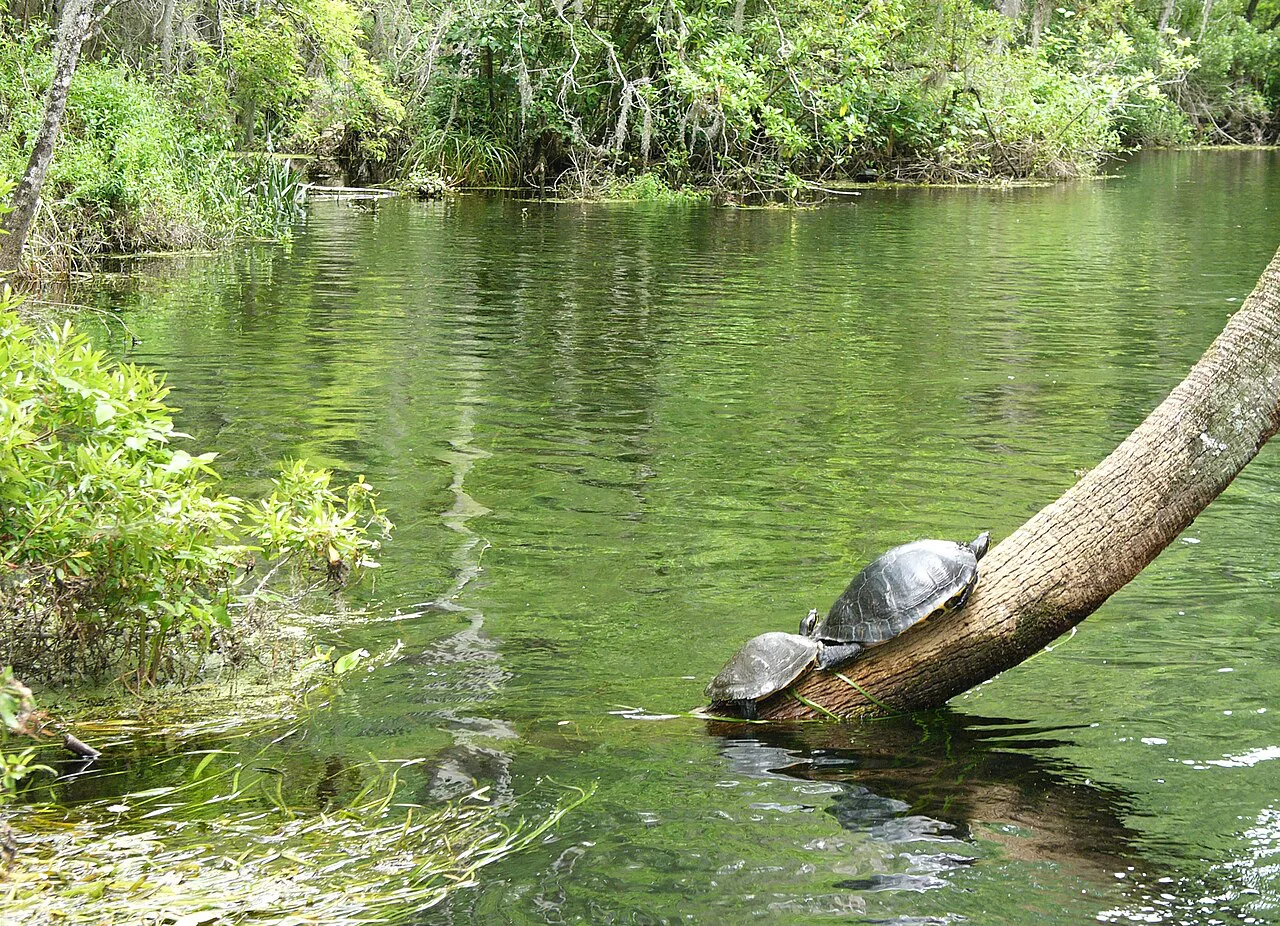
Silver Springs, east of Ocala, is the wildlife-heavy river on this list, with alligators, turtles and birds along a clear run that you can paddle or view from a glass-bottom boat. The boat tours suit anyone who wants the view without getting wet, while a kayak or snorkel session puts you over the same bottom at your own pace.
Because alligators share the water here, snorkeling means staying in the clearest open sections with a buddy and avoiding weedy edges where visibility drops. Hiking trails around the spring give non-swimmers in your group something to do while you are in the water.
Manatee Springs: Headspring and Distance Rules
Manatee Springs, on the Suwannee River side of the state, has a headspring with a strong current and a separate sink called Catfish Hotel across from it, and the walk from the parking area to the water is considerable. Plan to carry gear rather than suit up at the car, and use the boardwalk approach to the spring.
Park entry is $6 with no extra diving fee, and divers show certification at the entrance; entry runs first-come, first-served, with glamping available for longer stays. In winter, manatees move into the warmer headspring, and the published rule is to keep at least 50 feet from them.
Snorkelers should treat the headspring as a viewing site in manatee season rather than a swim-through, and stay clear of the duckweed-covered Catfish Hotel surface where visibility is poor. Nearby Troy Springs, with a boardwalk entry and a broad basin, makes an easy second stop.
Troy Springs and Royal Springs: Easy Add-Ons
Troy Springs opens into a broad basin about 70 feet wide with a boardwalk entry a couple of minutes from parking, and the sunken steamship Madison rests at the bottom as the site's historic draw. Entry is $5 per vehicle and the site suits all certified skill levels, with no equipment rental on site.
Royal Springs is the quiet option: a basin roughly 160 feet across that drops to around 42 to 50 feet, with a submerged tree and an underwater platform. Admission is free, there is no rental, and the visibility is the weakest of this group, so treat it as a short add-on rather than a destination day.
Devil's Den and Paradise Springs: Divers Only
Devil's Den near Williston is a cavern dive inside a dry cave, reached by a staircase, with water around 72 degrees, a maximum depth near 54 feet and fossil beds in the walls. It is a scuba site, not a snorkel pool, and a Grim Reaper sign marks the limit for anyone without full cave certification; reservations are required and current diver and snorkeler rates are posted on the operator's own site. If you want the full layout of that staircase entry and the overhead environment, our guide to devils den snorkeling lays out what a mask-only visitor can and cannot do there. Paradise Springs is stricter still: certified divers only, cash entry, a main light and backup required, and closed Mondays and Tuesdays.
Rainbow River is the one drift site on this list where a snorkeler can join a diver in the same water, since the clear run is shared by swimmers and tubers. For a full breakdown of the launch, shuttle and float timing, see Snorkeling the Rainbow River before you book a taxi.
Water Temperature and What to Wear
Most Florida springs hold around 72 degrees year-round, which feels bracing after twenty minutes of floating even on a hot day. A 5mm wetsuit is the common choice for spring dives, and snorkelers who chill easily should add a hood, booties and thin gloves rather than shivering through a second hour.
Rentals exist at some sites and not others: Ginnie has equipment rental, while Manatee, Troy, Royal and Paradise do not. If you are renting, test the mask seal and fin fit before you get in the water so a leaky mask does not ruin a drift.
Best Time of Day and Season
Early morning is the snorkeler's window at every spring on this list: the water is calmest, the light is best, and the tube and dive crowds have not arrived. Ichetucknee rewards the opening bell with fog on the run and spider webs across the banks, while Rainbow River's crowds build through the afternoon.
Summer afternoons bring Florida thunderstorms, so a morning session keeps you out of the water before lightning builds. Winter is the season for manatees at Crystal River and Manatee Springs, but it is also when spring water feels coldest to a snorkeler in a thin suit.
Spot-by-Spot Pairing and Where to Base
Base in Gainesville for Ginnie, Devil's Den, Troy and Ichetucknee, all within an easy drive of High Springs and the Santa Fe and Suwannee rivers. Base in Ocala for Alexander, Silver Springs and the Ocala National Forest sites, and use Crystal River for Three Sisters and the Gulf-coast manatee springs.
A practical two-spring day pairs a morning drift or float with an afternoon basin: Rainbow River early, then a short drive to a spring basin for a mask-and-fins session. Keep each stop short and rinse gear between sites so you do not carry sediment from one spring into the next.
If you are weighing springs against the coast, our broader guide to snorkeling in florida covers the ocean side, and Blue Spring State Park is another winter manatee option worth comparing on the same trip.
Rules and Wildlife Distance
Springs sit on public land and in wildlife refuges, so the rules are about restraint: do not touch or remove fossils, artifacts or rock formations, and never touch, feed or chase wildlife. At Manatee Springs the published manatee distance is at least 50 feet, and at Crystal River the winter closure of the spring to kayaks exists to keep people out of the manatees' resting water.
Leave nothing behind, including food scraps that draw fish and birds into unnatural behavior, and use reef-safe sunscreen where it is sold locally since spring water flows into drinking supplies. Small group sizes and quiet finning keep the bottom from silting up and cut your impact on the run.
What to Bring and What to Leave Behind
Bring a mask that fits, fins, a rash guard or thin wetsuit, a dry bag and water; leave behind single-use plastic where a park bans it, as Weeki Wachee does. A dive flag or bright float helps in rivers shared with boats and tubers, and a buddy keeps the drift safe.
Skip the tank and the cave light unless you are certified for the overhead environment, and skip the cooler of glass on spring runs where tubes and bare feet share the water. Check posted conditions with the managing state park or national forest office before you drive out, particularly after heavy rain when tannin stains the water brown.
Plan Your Spring Snorkel Day
Pick one spring run and one basin rather than trying to tick off the whole map: Ichetucknee or Rainbow River for a drift, Alexander or Ginnie for a shallow basin, and Three Sisters or Manatee Springs in winter for manatees. Book your base near Gainesville, Ocala or Crystal River, start at opening, and pack a thin wetsuit for the 72-degree water.
Confirm the day's status with the managing state park or national forest office before you drive, especially for seasonal closures and alligator advisories, and keep your distance from every animal you meet.
Explore more Florida springs snorkeling
- Snorkeling Devil's Den Spring in Williston, Florida
- Blue Spring State Park Snorkeling
- Salt Springs Snorkeling
- Snorkeling Alexander Springs
- Snorkeling at Weeki Wachee Springs
- Snorkeling Ginnie Springs
- Snorkeling Ichetucknee Springs
- Snorkeling Juniper Springs
- Snorkeling Silver Glen Springs in Ocala National Forest
- Snorkeling the Rainbow River
- Snorkeling at Wekiwa Springs State Park
- Snorkeling Near Orlando
- Snorkeling Silver Glen Springs
- Snorkeling in Key Largo
- Snorkeling in Biscayne National Park
Frequently Asked Questions
Which Florida spring is best for snorkeling?
Ichetucknee and Rainbow River are the strongest picks for a pure snorkel, since both are clear spring runs where you float over grass beds and watch turtles and fish. Alexander Springs is the easiest shallow basin for beginners, and Ginnie Springs offers a wide basin with a cavern below for confident swimmers.
Can you snorkel at Ginnie Springs?
Yes, the basin is wide and about 15 feet deep with a channel to the Santa Fe River, so snorkelers can watch the cavern mouth from the surface. The site is privately owned and charges admission, and summer weekends are busy, so a weekday visit is calmer.
Do you need a wetsuit to snorkel Florida springs?
Most springs hold around 72 degrees year-round, so a rash guard works for a short swim while a 5mm wetsuit keeps you comfortable for an hour or more. Add a hood and booties if you chill easily.
When can you see manatees at Three Sisters Springs?
Manatees gather in the constant 71-degree water during the colder months, when the spring itself closes to kayakers. Kayaks are allowed inside from April 1 to November 14, and the boardwalk and shuttle give viewers a dry winter view.
Is Ichetucknee Springs good for snorkeling?
Yes, the spring run is clear and often described as the most pristine in the state, with turtles and birds along the float. Arrive at opening to beat the tube crowds and afternoon storms.
How cold is the water in Florida springs?
Most springs sit around 72 degrees year-round, which feels cold after twenty minutes even on a hot day. A thin wetsuit makes a long session comfortable.
Which Florida springs are best for beginners?
Alexander Springs has a shallow basin with a maximum depth near 28 feet and easy access, and Rainbow River's drift lets the current do the work. Both suit new snorkelers, while cavern sites like Devil's Den and Paradise Springs are for certified divers.
Sources
Snorkeling notes for your next trip
Optional updates to our snorkeling guides.
You might also like
Continue reading
More guides you'll find useful