Wekiwa Springs Snorkeling: Your Florida Springs Guide
Snorkel the clear spring pool at Wekiwa Springs State Park near Apopka, Florida. See how the pool is laid out, where the vent drops, and how to plan entry.
On this page
Wekiwa Springs gives you something rare near a big city: a broad, clear spring pool where a mask and snorkel are genuinely worth packing. The swim area is shallow enough for wading families, yet the main vent drops away for stronger swimmers, so one group can spread across both. It suits a half-day trip from Orlando more than a full expedition, and it slots easily into a wider Florida Springs snorkeling guide if you are comparing pools.
The park sits around 30 minutes north of downtown Orlando in Apopka, and the swimming area is a short walk from the main lot past concrete paths and wooden footbridges. Plan the day around a reservation rather than a spontaneous drive-up, because day-use entry is booked in advance.
Where Wekiwa Springs Is and How You Reach the Water
The park address is 1800 Wekiwa Circle, Apopka, roughly 20 to 30 minutes north of Orlando depending on traffic. From the entrance station you drive to the day-use lot, then walk a short paved route to the spring pool and the grassy amphitheater lawn that overlooks it.
That walk is easy enough for carrying fins and a dry bag, and the concrete walkways and footbridges keep you off uneven ground until you reach the water. Set up on the lawn rather than crowding the pool edge, then move down when you are ready to get wet.
Entry and the Swimming Area Lay-Out
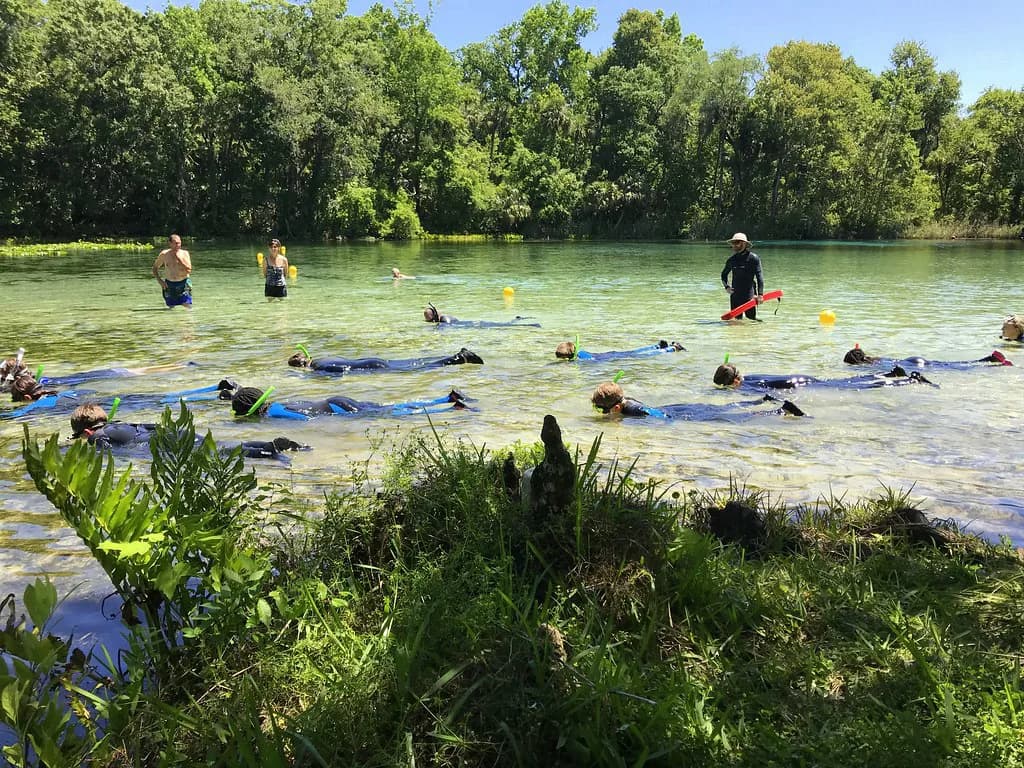
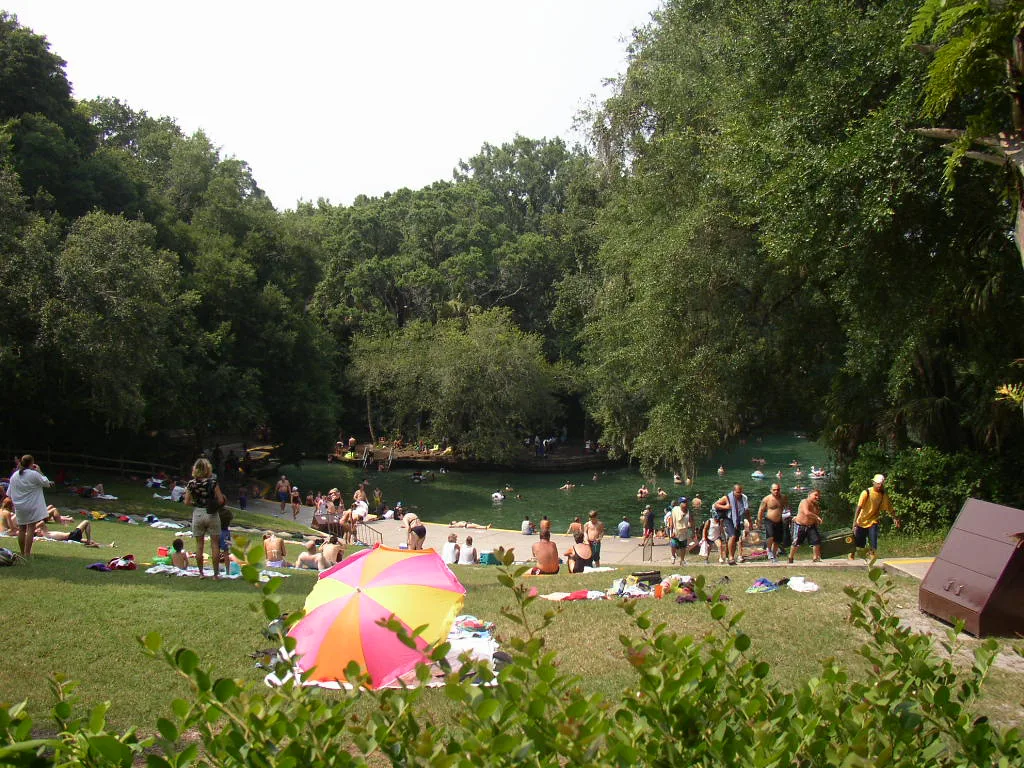
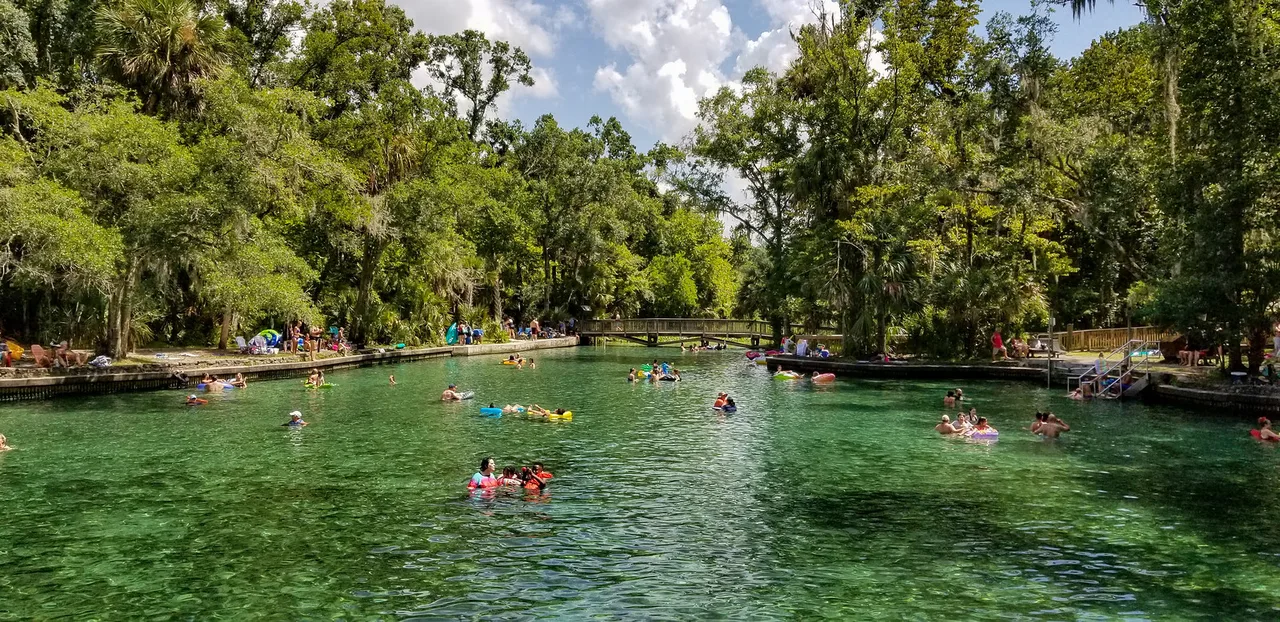
You enter the pool from the maintained edge, where a retaining wall and walkways frame an oval basin about 200 feet by 100 feet. The main swim area runs mostly 2 to 5 feet deep, which makes it comfortable to stand, wade and practice breathing through a snorkel before heading for deeper water.
A staff-operated chair lift is available for visitors who need it, and the park asks that children stay with an adult. Because the shallow shelf is so wide, most beginners never need to leave it, but the clearer view of the vents sits further out.
Depth and the Main Spring Vent
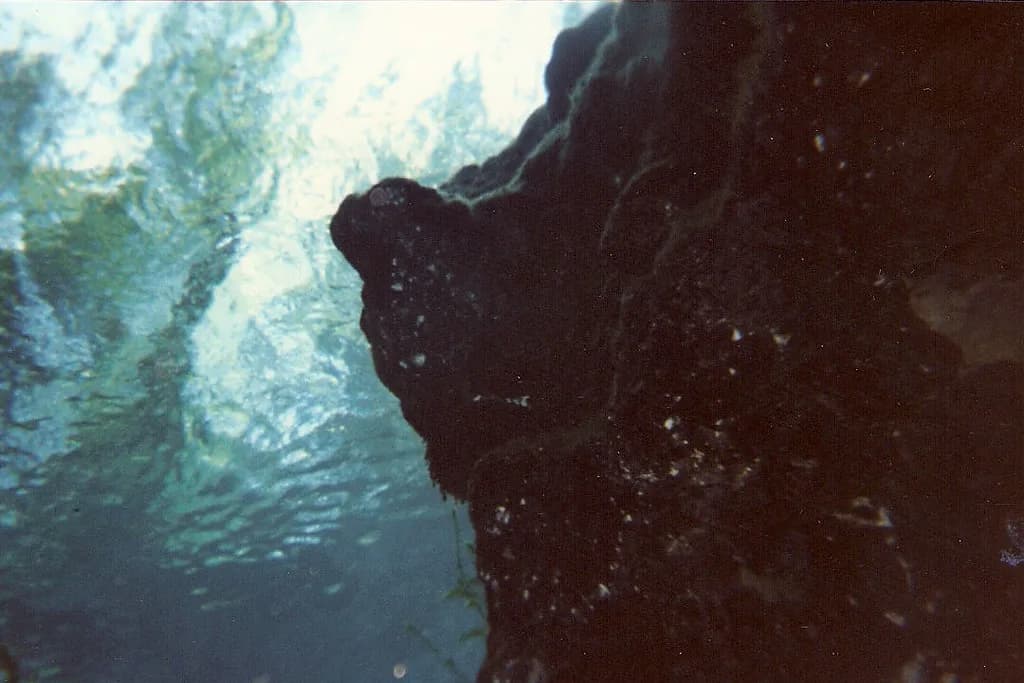
Two vents feed the pool, one noticeably larger than the other, and the main vent plunges well below the wading shelf, roughly 15 to 20 feet by estimate. Flow pushes out of the vent at a strong rate, so a snorkeler who ducks down should expect to work against moving water rather than glide in still water.
The gap between rocks near the vent can feel tight, which is a good reason to snorkel the rim and the open water above it rather than pressing into the opening. Stay on the surface, watch your fins near other swimmers, and treat the drop-off as a view rather than a challenge.
What You Will See in the Spring Pool
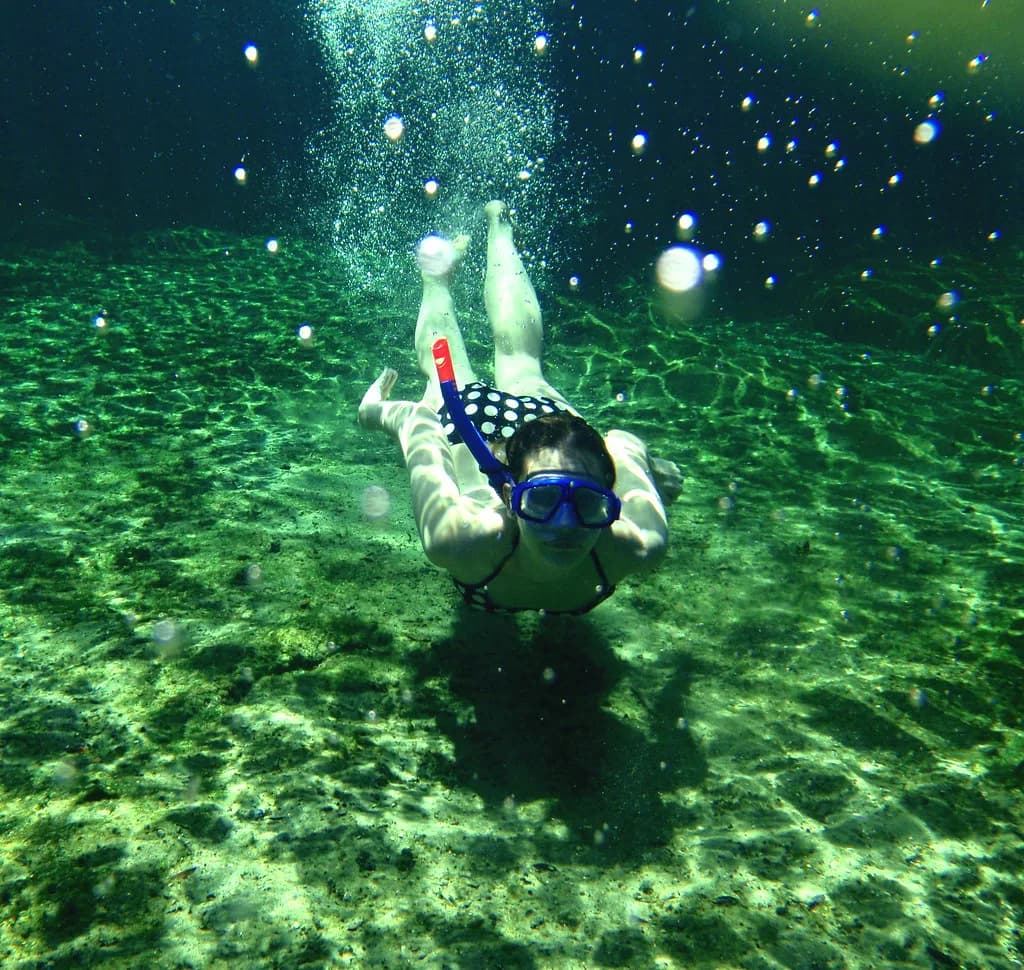
The water is clear enough to read fish at a distance, and the reliable sight is huge schools of mosquitofish, numbering in the thousands, plus Plecostomus crowding under the metal retaining wall. Turtles and aquatic plants round out a typical swim, while the blind Orlando cave crayfish is a rare, endangered resident of only a few local sites.
Snorkeling the wall edge and the shallow shelf gives you the closest, calmest look at fish without fighting current. Nothing here is guaranteed, so treat a turtle or crayfish as a bonus and keep your hands off the animals and the rock surfaces they hide in.
Skill Level: Beginners, Kids and Confident Swimmers
Beginners and children fit the 2 to 5 foot shelf well, since you can stand and reset your mask without swimming to an exit. Confident swimmers get the more interesting water out at the vent, where depth and outflow reward steady kicking and a relaxed surface posture.
No lifeguards are on duty in the spring pool, so each group swims at its own risk and adults need to stay within arm's reach of weaker swimmers. If you want a supervised or guided experience, book a paddling or snorkel outing with the on-site concession instead of relying on posted patrols.
Posted Rules: Where You Can Swim and What Is Off Limits
Swimming and snorkeling are confined to the designated spring pool; the park states that swimming is not permitted in Wekiwa Springs Run, Rock Springs Run or the Wekiva River. Diving and jumping are prohibited in the shallow basin, and the cavern turning into a cave is strictly closed to diving.
Read those rules as trip-shaping rather than bureaucratic: they mean your mask time happens inside one oval of water, with the river reserved for paddlers. Keep the cave and cavern out of your plan entirely.
Best Time of Day and Season for Clear Water and Fewer People
Fall and winter, roughly September through February, bring smaller crowds, less active bugs and the same cool, constant spring water, which makes those months the most comfortable for a long snorkel. Early morning is best for walking trails and wildlife, while evening swimming usually means a thinner crowd at the pool edge.
Summer is peak season, when the water is most appealing and reservations can fill weeks ahead, especially for weekend Saturdays. Weekdays from Tuesday to Thursday see the lightest attendance year-round if your schedule is flexible.
Parking, Entrance Fee and Day-Use Reservations
Entrance runs $6 per vehicle or $2 per pedestrian, paid when you book, and annual passholders still need a day-use reservation. Reservations open up to 60 days in advance through the Florida State Parks system, and same-day slots exist only until the daily limit is reached.
Park hours run 8 a.m. to sundown each day, and buying a tour with Wekiwa Springs Adventures has exempted tour guests from the day-use entry fee. One earlier visitor paid the per-vehicle rate on arrival, and some travelers report the pedestrian rate as the cheaper route for a solo swim.
If you leave mid-day, ask the ranger for a re-entry pass before you drive out. Choose your entry window deliberately: an 8 a.m. slot pairs a snorkel with a morning hike, while a late-afternoon slot gets you quieter water and cooler air on the lawn.
Rentals, Food and Facilities on Site
On-site rentals for kayaks, canoes and paddleboards come through Wekiwa Springs Adventures, with rentals starting at 8 a.m. and the last rental departure at 6 p.m. Only non-motorized vessels can launch from the park, so the spring pool and the launch stay quiet for swimmers.
The concession area includes a food spot and gift shop, and the Nature Center opens on weekend afternoons. Bring your own mask, snorkel and fins, since the concession lends boats rather than snorkel gear, and plan a re-entry pass if you want lunch outside the gate.
Nearby Springs and River Paddling to Combine
Wekiwa anchors the Wekiva system, where Rock Springs Run and the Emerald Cut from Kings Landing offer the clearest paddling water in the area, and Kelly Park's Rock Springs is about 15 minutes away for a tubing float. Pairing a morning paddle with an afternoon snorkel covers both sides of the same river, and the Best Springs to Snorkel in Florida picks help you rank the alternatives.
If you want a second underwater day rather than a paddle, Blue Spring State Park sits about 30 minutes northeast and the Rainbow River lies further afield for drift snorkeling. Alexander Springs gives you a shorter, easier day if you have small children, and it keeps you within an hour of Apopka. Beyond the springs, snorkeling in Florida widens the comparison to shore spots and boat trips across the state.
For a very different snorkel setting in the same region, the cavern at Devil's Den offers an enclosed, spring-fed swim that appeals to confident snorkelers. The Devil's Den Snorkeling Guide covers how that entry works, so you can book it alongside your Wekiwa day when assembling a multi-spring itinerary.
What to Bring for a Spring Snorkel
Pack a mask and snorkel, a swimsuit, towels, mineral sunscreen, and shoes you can walk down to the spring in, such as sandals. The water stays cool year-round, so a rash guard helps on long swims, and bug spray matters on the trails where the sandhills have little shade.
Leave alcohol, glass containers, and drones at home, as the park does not allow them. Bring drinking water for the hiking trails too, since heat exposure on the sandy stretches builds faster than you expect.
Plan Your Wekiwa Springs Snorkel Day
Reserve your day-use slot as early as you can, choose a weekday or a cooler month for thinner crowds, and arrive ready to split your time between the shallow shelf and the vent. Bring your own mask and snorkel, plan for no lifeguard, and keep the cave out of your itinerary.
If you have a second day, add a paddle through the Emerald Cut or a float at Rock Springs to see the Wekiva system from the water. Two short outings beat one rushed one.
Frequently Asked Questions
How deep is the Wekiwa Springs pool for snorkeling?
The main swimming area is typically 2 to 5 feet deep, shallow enough for wading and for children to stand. The main spring vent drops much deeper, estimated at 15 to 20 feet, with strong outflow and rocks that make it tight. Snorkelers who stay on the surface see plenty without descending into the vent.
Do you need a reservation to get into Wekiwa Springs State Park?
Yes. Day-use reservations are required and can be booked up to 60 days ahead through the Florida State Parks system, with entry paid at booking. Same-day slots may exist but fill quickly in summer, and annual passholders still need a reservation. Weekend summer slots often go weeks ahead.
Can you snorkel anywhere besides the spring pool at Wekiwa Springs?
No. Swimming and snorkeling are limited to the designated spring pool, and the park does not permit swimming in Wekiwa Springs Run, Rock Springs Run or the Wekiva River. The river and runs are for paddling, so plan a boat day if you want to see more of the Wekiva system from the water.
Are there lifeguards at Wekiwa Springs?
No lifeguards are on duty in the spring pool, so you swim at your own risk and adults must supervise children. A staff-operated chair lift is available for visitors with mobility needs. If you want a supervised outing, book a tour with the on-site concession.
What fish will you see snorkeling Wekiwa Springs?
The reliable sights are large mosquitofish schools, sometimes numbering in the thousands, and Plecostomus crowding under the metal retaining wall. Turtles, plants and small fish round out a typical swim. The blind Orlando cave crayfish is a rare, endangered resident, so treat a sighting as a bonus, never a promise.
Does Wekiwa Springs State Park have manatees?
Manatees occasionally appear in the wider Wekiva River system, and winter is the likeliest window. The spring pool itself does not offer guaranteed sightings, so plan your snorkel for the clear water and fish rather than a manatee encounter. Follow posted wildlife distance rules if one appears.
Is Wekiwa Springs good for beginner snorkelers and kids?
It works well for both. The 2 to 5 foot shelf lets beginners stand, reset their mask and build confidence, and the whole family can share one pool. Stronger swimmers head for the vent, while beginners stay near the edge with an adult close by. No jumping or diving is allowed in the shallow basin.
Sources
Snorkeling notes for your next trip
Optional updates to our snorkeling guides.
You might also like
Continue reading
More guides you'll find useful