Rainbow River Snorkeling: State Park vs. KP Hole Drift
Plan a Rainbow River snorkel day: swim the headsprings at Rainbow Springs State Park or drift from KP Hole, with depth, water taxi logistics and wildlife.
On this page
Rainbow River is one of Florida's longest and clearest spring runs, and it offers two distinct snorkel experiences: a calm headsprings swim area and a downstream drift that starts two miles away at KP Hole County Park. Families and new snorkelers gravitate to the state park's natural swimming area, while confident swimmers and certified divers take the water taxi upstream and float back. The choice changes your entry, your depth, your exit and how much gear you carry.
Where the Rainbow River runs
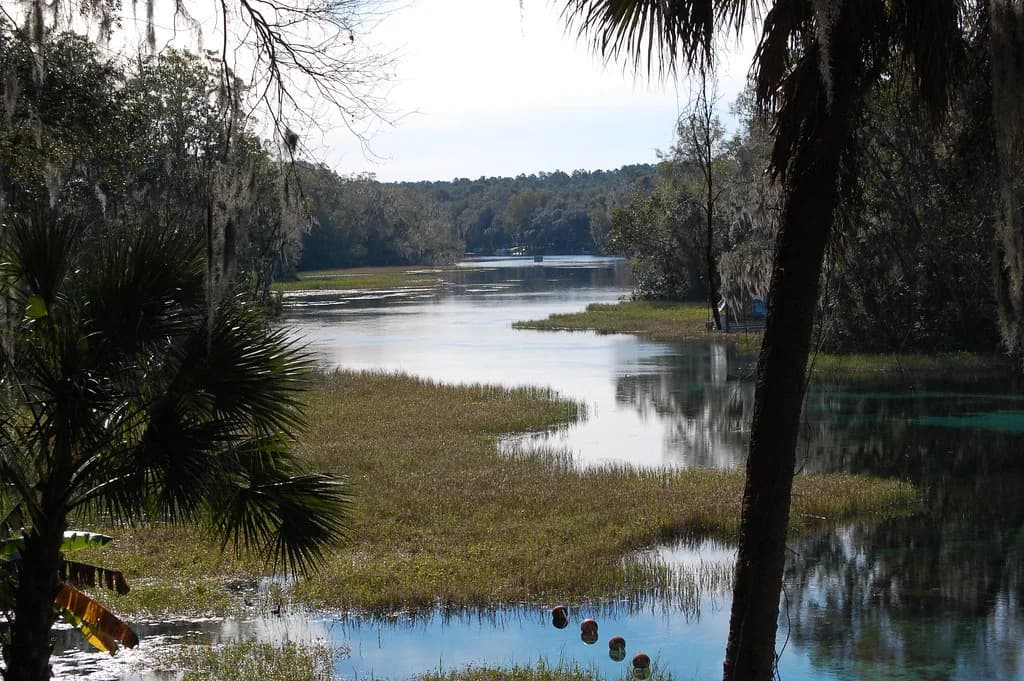
The river begins at Rainbow Springs State Park and flows about six miles to the Withlacoochee River. KP Hole County Park sits roughly two miles downstream of the headsprings, and the town of Dunnellon is farther along the run. That geography matters because the state park and KP Hole are not the same put-in, and the distance between them sets up the drift.
Two ways in: headsprings swim area vs. KP Hole drift
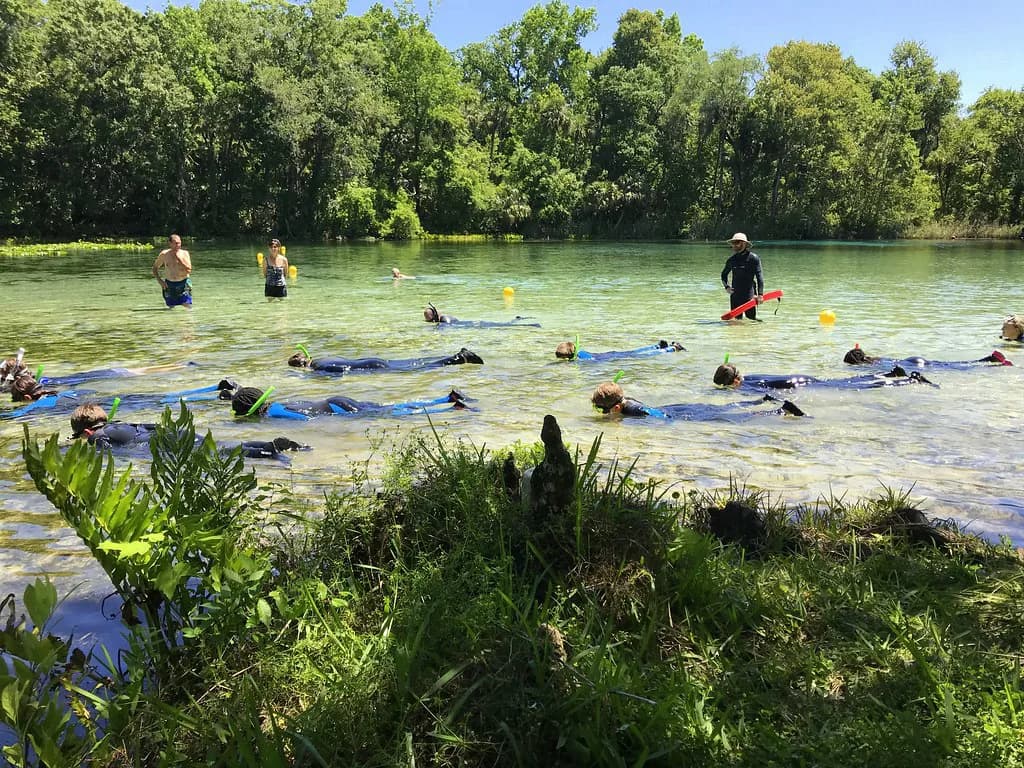
At Rainbow Springs State Park you snorkel inside a designated natural swimming area with a sand-and-shallow entry, staying within the park's boundaries. At KP Hole you board an independently operated water taxi that runs you a mile or more upstream, then you enter the water and drift back down to the KP Hole boat ramp and docks. The state park is a stay-put swim; the drift is a one-way float with a fixed exit.
Snorkeling the headsprings swim area
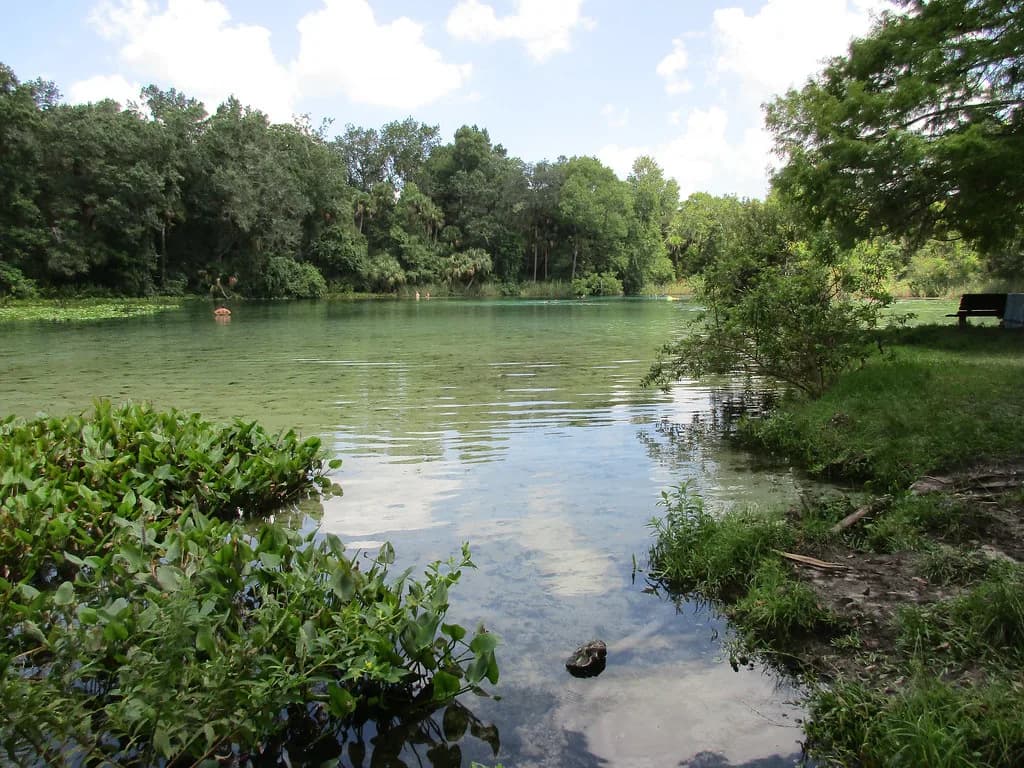
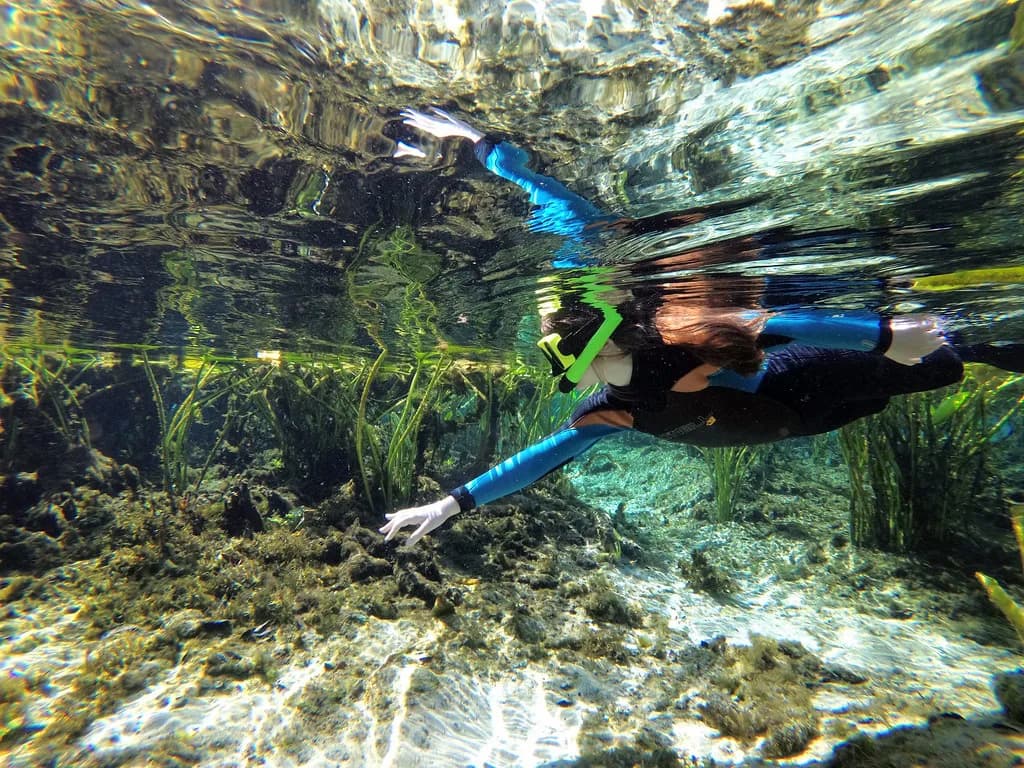
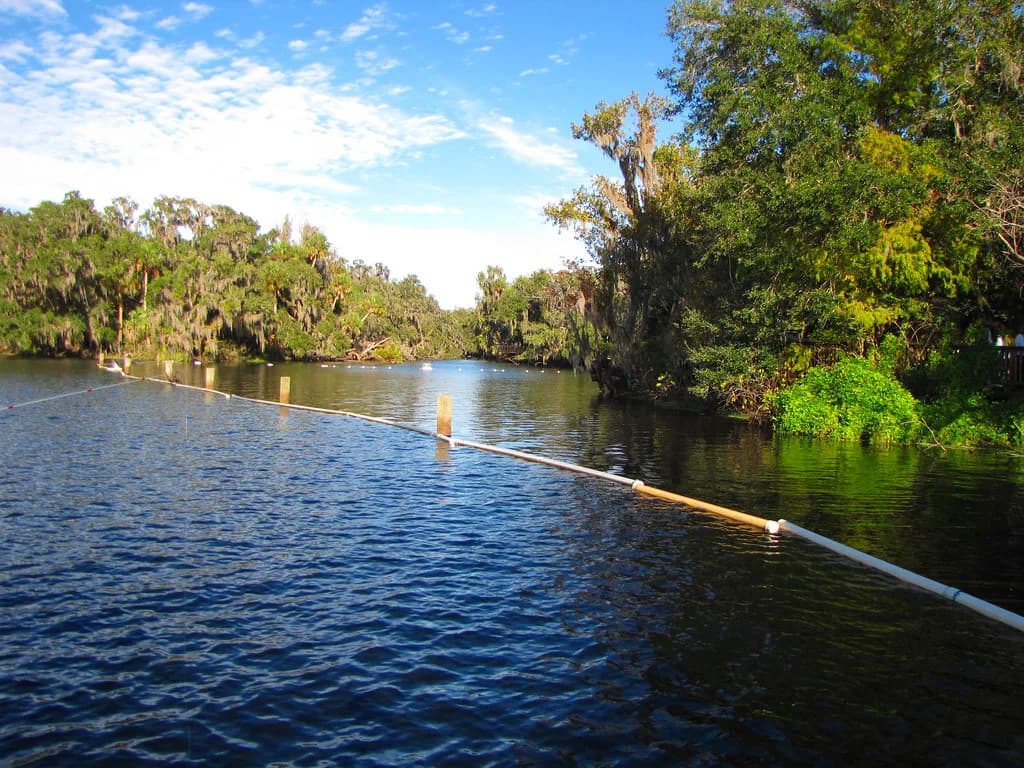
The natural swimming area at the headsprings averages 5 to 18 feet deep, with clear water over aquatic grass beds. Entry is from sand and shallow ledge, which makes it manageable for kids and first-timers who want to stand or rest. You are likely to see turtles, fish and forests of aquatic grass that shelter small creatures, though sightings are never guaranteed.
The KP Hole drift
The KP Hole drift works like this: park and pay admission at the county park, board the Rainbow Water Taxi for a ride a mile or more upstream, then enter the water and float back to the KP Hole ramp. Because the taxi drops you and leaves, everything you bring must go in the water with you. Both banks of the spring run are private property, so you cannot get out mid-drift—miss the KP Hole exit and you would drift another four miles to Dunnellon.
What you will see
In the headsprings swim area, look for turtles, fish and dense aquatic grass beds that provide food and habitat for the river's creatures. On the drift, you pass a variety of fish and other aquatic animals, plus geologic oddities such as patches of sand that appear to boil as spring water pushes up through them. Treat every sighting as a possibility rather than a schedule.
Depth and water temperature
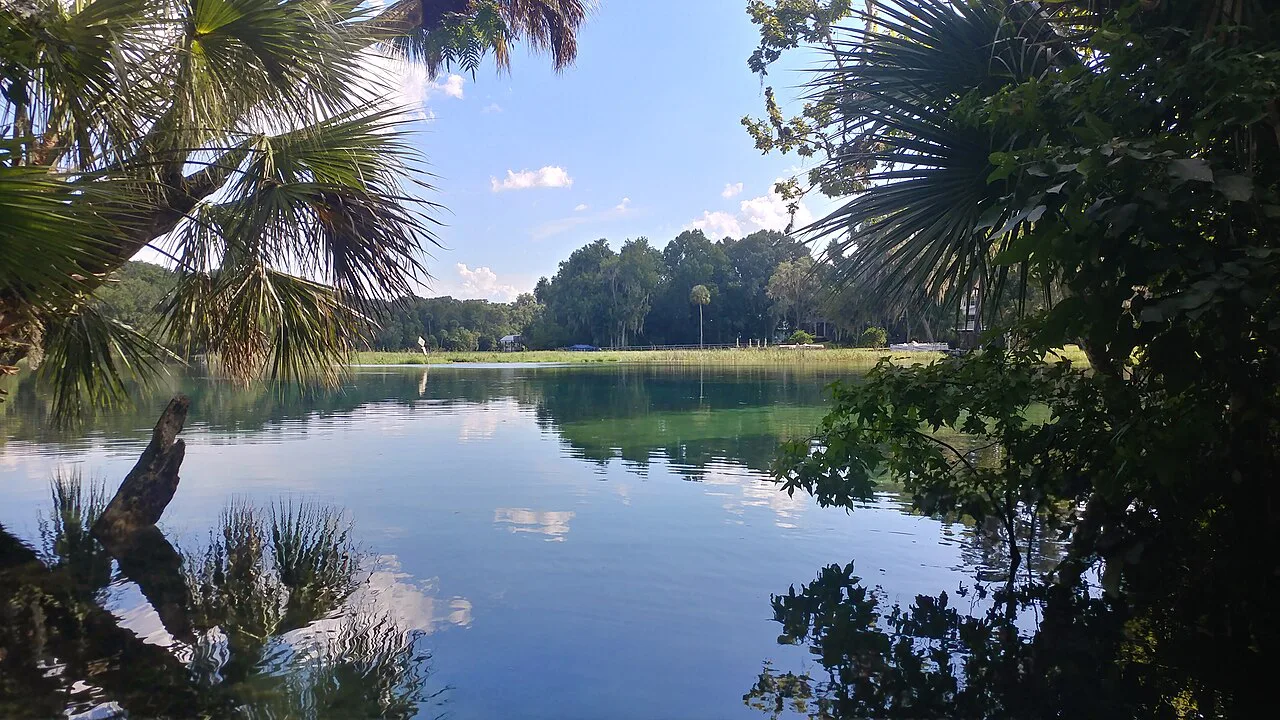
The drift reaches a maximum depth of about 25 feet, but most of the run is shallow—typically six to seven feet—with occasional pockets over 20 feet. The headsprings swim area runs 5 to 18 feet. Water temperature averages 72 degrees year-round, so a thin rash guard or swim shirt is usually enough for a long snorkel.
Skill level and who each option fits
The headsprings swim area suits families, kids and new snorkelers because you stay inside a sheltered zone and can exit whenever you like. The KP Hole drift is better for confident swimmers and certified divers who are comfortable with a one-way float, boat traffic and a fixed exit. If you are introducing someone to snorkeling, start at the state park; if you want distance and current, take the drift.
Boats, flags and staying together on the drift
Boat traffic on the spring run can be heavy, and a dive flag is required to enter the water on the drift—you cannot get in without one. The water taxi has a few loaner flags but cannot guarantee one is available, so bring your own. Keep every member of your group within ten feet of the person towing the flag, and listen to the captain's briefing on how to recognize the KP Hole boat ramp and docks that mark your exit.
Best time to go
Time the drift around water-taxi loads so you are not waiting at the dock with your gear in the sun. Midday light reaches deepest into the grass beds, which makes the headsprings swim area best after the morning cool burns off. On the drift, an earlier drop gives you more margin before afternoon boat traffic builds. Check the National Weather Service forecast and any posted advisories from Florida State Parks or Marion County before you commit.
Parking, admission and fees
KP Hole County Park charges an admission fee at the gate before you board the water taxi, and the taxi is operated separately, so budget for both. The state park has its own entrance arrangement at the headsprings. Look up current admission and parking rates on the Florida State Parks page for Rainbow Springs and the Marion County page for KP Hole before you go, since the figures change.
Rules on the river
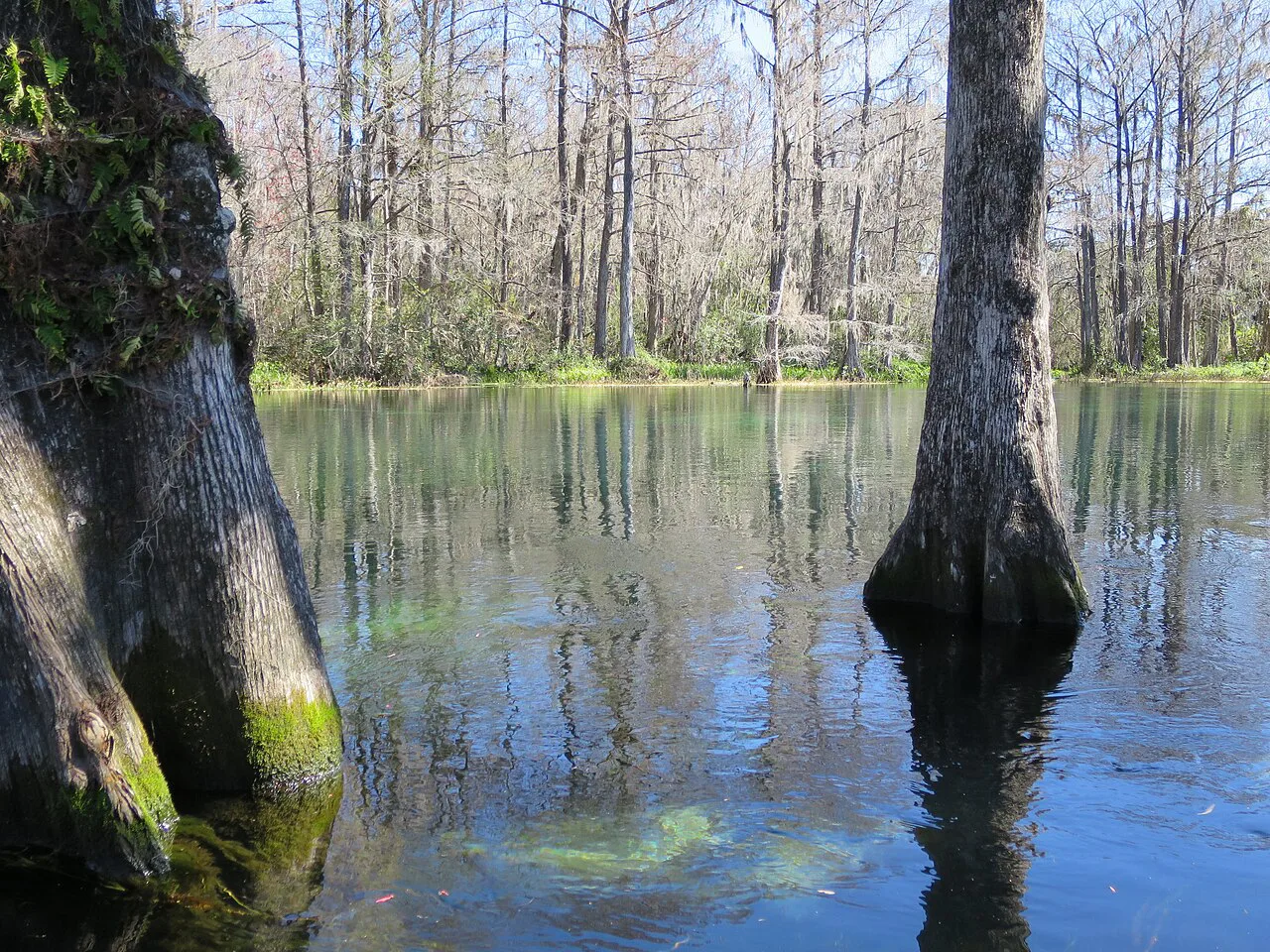
You can snorkel at the state park's swim area but not scuba dive there; diving access happens downstream at KP Hole. On the drift, everything on both banks is private property, and once you enter the water you cannot get out until you reach KP Hole. Follow the taxi captain's briefing on the exit, and keep wildlife distance—do not touch, feed or chase turtles or fish.
Nearby springs and dive sites to combine
Blue Grotto Dive Resort sits about 40 minutes south of Rainbow River, making it a natural add-on for a dive-focused trip. Devil's Den Spring in Williston is another cavern dive in the same corner of the state, and the wider list of best springs to snorkel in florida covers alternatives when the river is busy. If you want a second day in the water, pair the Rainbow River drift with Snorkeling Devil's Den Spring in Williston, Florida and compare depth and overhead environments. For a coastal change of pace, our guide to snorkeling in Florida covers shore versus boat options beyond the springs.
What to bring for a spring run
For the headsprings, pack a mask, snorkel, fins and a rash guard, and leave valuables in the car—there is no gear rental at the swim area itself. For the drift, add a dive flag on a reel, a dry bag that clips to you, and nothing you cannot carry in the water, since the taxi leaves after drop-off. A thin wetsuit top or swim shirt helps on long floats in 72-degree water.
Plan Your Rainbow River Snorkel Day
Choose the headsprings swim area if you have kids or new snorkelers and want a stand-and-rest entry with a sheltered zone. Choose the KP Hole drift if you are a strong swimmer or certified diver who wants a one-way float with a fixed exit and can manage a dive flag. Whichever you pick, confirm admission and taxi details on the Florida State Parks and Marion County pages, then check the National Weather Service forecast the morning you go.
Frequently Asked Questions
Can you snorkel at Rainbow Springs State Park?
Yes. Rainbow Springs State Park has a natural swimming area at the headsprings where snorkeling is allowed over sand and shallow ledge, with average depths of 5 to 18 feet. Scuba diving is not permitted there; dive access happens downstream at KP Hole County Park.
What is the difference between snorkeling the headsprings and drifting from KP Hole?
The headsprings swim is a stay-put session inside a sheltered natural swimming area with a sand-and-shallow entry, best for families and new snorkelers. The KP Hole drift is a one-way float: you take the Rainbow Water Taxi a mile or more upstream, enter the water and drift back to the KP Hole boat ramp and docks, which suits confident swimmers and certified divers.
How deep is the Rainbow River?
The KP Hole drift reaches a maximum depth of about 25 feet, but most of the run is typically six to seven feet with occasional pockets over 20 feet. The headsprings natural swimming area averages 5 to 18 feet.
Do you need a dive flag on the Rainbow River drift?
Yes. A dive flag is required to enter the water on the KP Hole drift, and you cannot get in without one. The water taxi has a few loaner flags but cannot guarantee one is available, so bring your own and keep your group within ten feet of the person towing it.
How much does it cost to get into Rainbow River?
KP Hole County Park charges an admission fee at the gate, and the Rainbow Water Taxi is operated separately, so budget for both. The state park has its own entrance arrangement. Current rates are published on the Florida State Parks page for Rainbow Springs and the Marion County page for KP Hole.
What will I see snorkeling the Rainbow River?
In the headsprings swim area, look for turtles, fish and aquatic grass beds. On the drift, expect a variety of fish and other aquatic animals plus patches of sand that appear to boil as spring water pushes up. Sightings are possibilities, not guarantees, and you should never touch or chase wildlife.
Sources
Snorkeling notes for your next trip
Optional updates to our snorkeling guides.
You might also like
Continue reading
More guides you'll find useful