Full-Face Snorkel Mask: How to Choose One That Breathes
Full-face snorkel masks trade easy nose-and-mouth breathing for limits on depth and fit. Learn what to look for, who they suit, and how to use one safely.
On this page
A full-face snorkel mask earns its place on calm, shallow water where you want to float face-down and breathe without holding a mouthpiece between your teeth. It suits first-timers, kids old enough to follow instructions, and casual surface snorkelers who never plan to dive. If you want to duck under repeatedly or hold your breath along a reef wall, a traditional mask and snorkel remains the right tool.
The decision comes down to three things you can actually compare before buying: how the mask moves air, whether the seal holds on your face, and whether the design is built for the surface only. Brand names matter less than those three, though a few established models show what good design looks like.
What a Full-Face Snorkel Mask Actually Is
One lens covers your eyes and nose, and a built-in tube at the top handles breathing. You breathe naturally through your nose or mouth instead of clenching a mouthpiece, which removes the most common beginner complaint. The trade-off is bulk: a full-face mask is heavier and larger than a standard mask, so it packs awkwardly and needs its own space in a bag.
They are good at one job: letting you breathe through your nose or mouth while floating face-down at the surface in calm water.
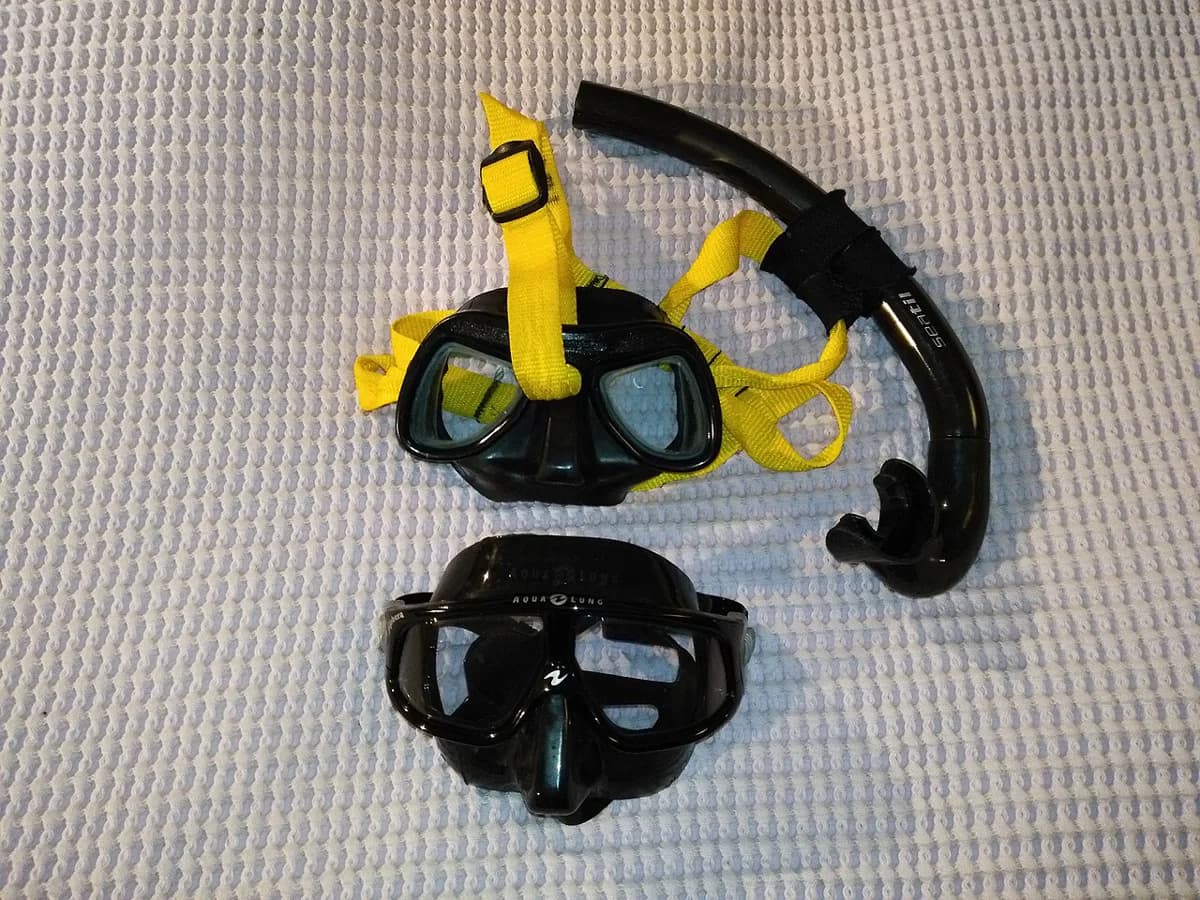
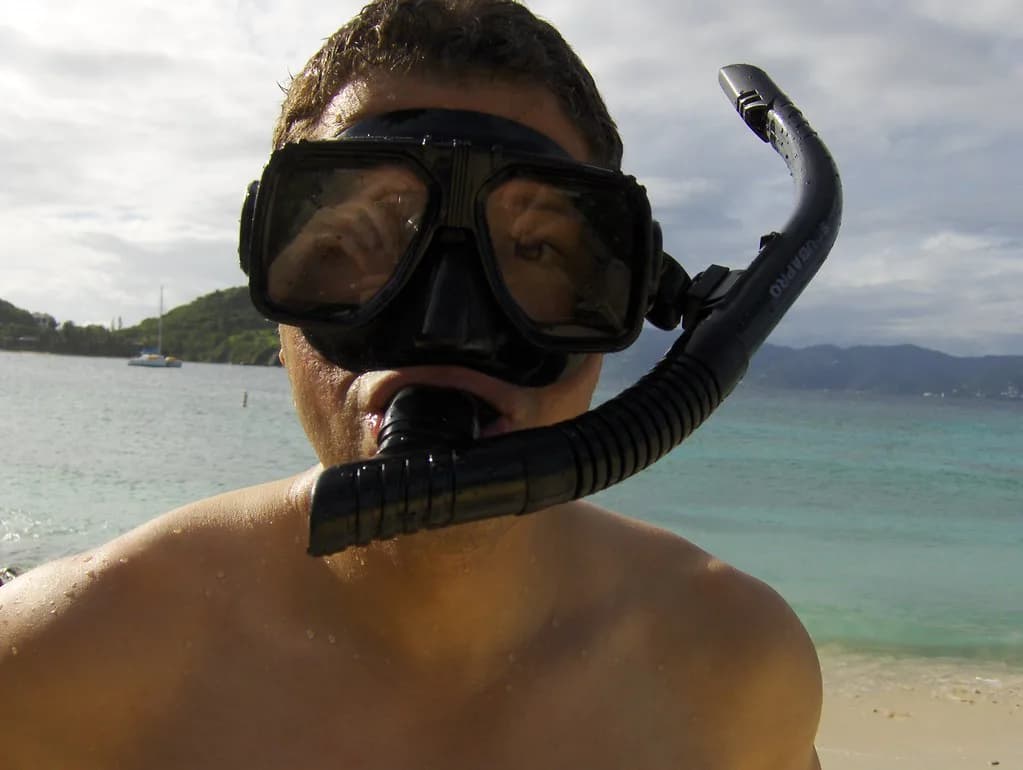
A traditional setup separates the two jobs: a mask seals over your eyes and nose, and a snorkel tube sits in your mouth. That separation lets you equalize, clear the tube, and swap parts cheaply. If you are still weighing the two formats, the wider snorkel gear guide covers masks, fins and snorkels as a system, including how a dry-top snorkel behaves when a wave washes over it.
A full-face model typically includes a polycarbonate lens, a silicone face seal, adjustable straps and a drain valve at the chin. Some add a camera mount. Seaview lists its V3 with a polycarbonate lens and frame, medical-grade silicone, adjustable straps with quick-release safety buttons, an auto-drain system and a GoPro mount, at 1.4 pounds | 0.62 kg.
Who These Masks Suit, and Who Should Skip Them
Choose a full-face mask if your goal is relaxed surface viewing in calm water and you dislike the feel of a mouthpiece. Nervous swimmers often relax once breathing feels ordinary, and the wide view helps them keep orientation. Families with older children tend to like them for the same reasons, provided each mask is sized to the individual face.
Stay with a traditional mask if you freedive, equalize often, or snorkel in choppy water where you need to duck under swells. Full-face masks are not built for breath-hold diving, and their volume makes clearing and equalizing harder. Strong swimmers who cover distance will also find a low-volume mask and a slim snorkel less tiring.
Cost is a poor way to decide between the formats. A well-fitted inexpensive traditional mask beats a poorly sealed full-face mask every time, and the reverse is also true. Decide by how you will use the mask, then set your budget inside that format.
How the Airflow Design Works
Better full-face masks separate the inhale path from the exhale path, so fresh air comes in through one channel and exhaled air leaves through another. That separation is the core design feature to look for. Masks with a single shared valve for both directions are the ones to avoid, since stale air can collect inside the enclosure.
Work of breathing is the number worth comparing, because it describes how much effort each breath takes through the tube. Seaview frames it as a critical factor in a safe experience and states that its V3 was tested against competing full-face masks with up to 600 percent better work of breathing, verified by the company and third parties. Treat that as a manufacturer claim, but do treat breathing effort as the spec that matters.
Two models show the pattern. The Tribord Subea Easybreath, sold under Decathlon's Subea brand, uses dual airflow with one valve for inhaling and another for exhaling, and the Ocean Reef Aria likewise separates inhale and exhale channels. Both are widely available and both hinge on fit rather than features, so try the sizing guidance before choosing between them.
Buy from established manufacturers rather than unbranded listings that copy the shape. Cheap versions often skip the dual-channel design, and the savings are not worth a mask that breathes poorly. A recognized brand with published specs gives you something concrete to compare.
Surface Only: What These Masks Are Not For
Full-face masks are designed for floating and calm breathing at the surface. Seaview states plainly that its V3 is intended for surface snorkeling and that full-face masks are not recommended for free diving. Take that as the operating limit for the category, not a suggestion.
In practice, that means you keep your face in the water and your body at the surface, watching the reef from above. You do not duck under ledges or hold your breath to look into holes. If a turtle or ray passes beneath you, watch it from where you float.
The mask also carries a rule that is easy to forget: take breaks. Seaview's instructions advise resting periodically and following the buddy rule, and the quick-release clips on the straps let you pull the mask off fast if you feel light-headed from overexertion. Plan your session in short stretches with rest on the beach between them.

Fit and Seal: The Make-or-Break Factor
A full-face mask only works if the silicone edge seals against your face without gaps. Seaview offers its V3 in small, medium and large, and the right size depends on face shape rather than age or height. Read the sizing chart for the specific model and measure rather than guessing. If you are comparing traditional masks as well, the guide to how to choose a snorkel mask walks through skirt fit and seal testing in the same way.
Facial hair is the most common reason a seal fails. Seaview advises shaving facial hair that interferes with the seal, since hair breaks contact between silicone and skin and lets water in. A beard, mustache or even a few days of stubble at the seal line can turn a good mask into a leaking one.
Adjust the straps with the mask off your face, then put it on and check for pressure points around the brow and cheeks. Seaview's instructions specify pulling the straps over your head, then loosening or tightening them off the face if the fit is too tight or too loose. Keep your chin slightly up in the water for the easiest breathing.
Test the seal in a pool or a calm, shallow stretch of beach before your trip. Seaview recommends checking for debris or damage on arrival and pretreating the lens with a light baby shampoo to support the anti-fog materials. A bathtub works for a basic seal check, but only open water confirms how the mask behaves when you float face-down.
Fogging, Draining and Daily Care
Fog forms when warm, moist air meets a cool lens, and every full-face mask fights it with coatings or venting. A light film of dish soap wiped on the inside of the lens and gently rinsed, leaving a thin layer behind, is a common field trick to boost clarity. Rinse rather than scrub so you do not strip the coating.
Water that sneaks past the seal does not end the session on a well-designed mask. On the Seaview V3, the dry top keeps water out of the tube, and if water enters the mask you lift your head and it drains through the chin valve without removing the mask. Check that your chosen model has a drain of this kind before you buy.
After each session, rinse and soak the mask in tap water with a small amount of detergent, wipe it with a microfiber or non-abrasive cloth, and let it air dry. Store it away from direct sunlight and black rubber, which can stain the silicone insert, and keep it out of the sand when not in use. These habits protect the seal and the lens between trips.
Lens Options and Accessories
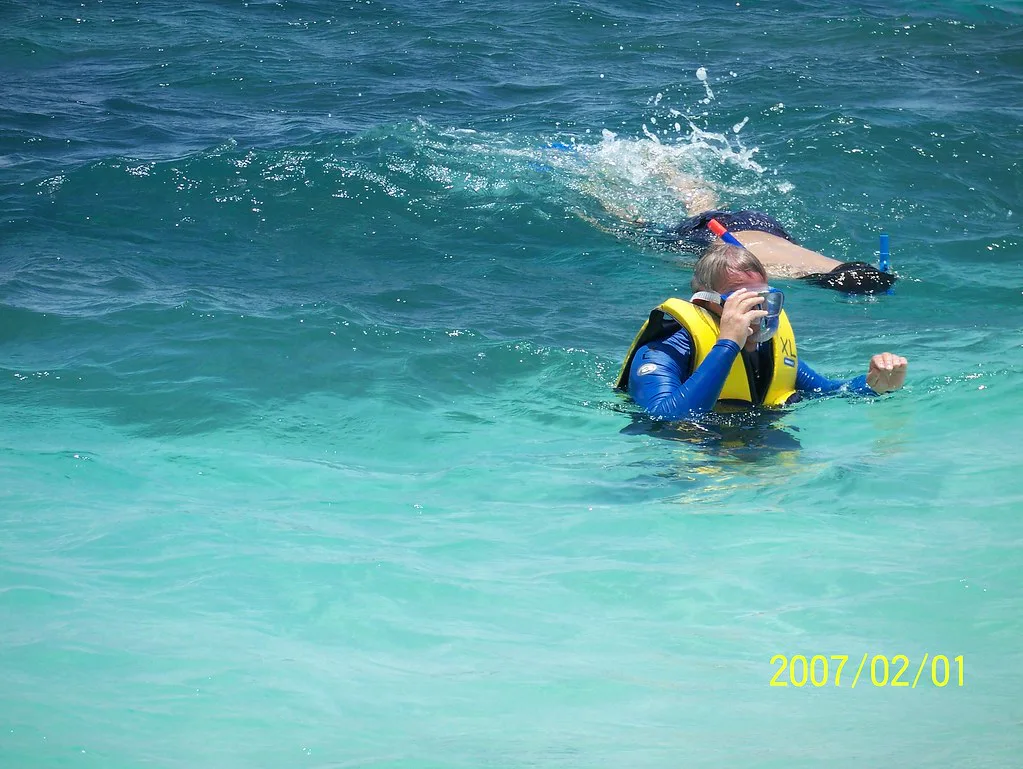
Snorkelers who wear glasses have two routes: a prescription snorkel mask with bonded lenses, or a full-face model that leaves you dependent on contact lenses. If you are choosing between them, a prescription snorkel mask with a pop-in corrective lens or a custom optical insert keeps your vision corrected without contacts. Full-face masks generally do not accept corrective lenses.
A camera mount is a small but useful extra if you film your snorkels. The Seaview V3 includes a GoPro mount, which keeps your hands free for swimming and lets you record without a separate tray. Weigh that against the added bulk, which matters if you travel with carry-on luggage only.
Replacement tubes and parts are worth checking before you commit to a model. A mask whose tube can be reordered separately lasts longer than one that becomes unusable when a valve wears out. Seaview, for example, sells replacement tubes for its current and previous models.
What to Pair With Your Mask
A full-face mask covers your face but leaves your back, shoulders and the back of your legs exposed while you float. Cover those areas with a rash guard or swim shirt, or use reef safe sunscreen on the rest. Choose a formula built on non-nano zinc oxide or non-nano titanium dioxide, which are the mineral filters most commonly recommended for reef areas.
Fins make surface snorkeling much easier, because you cover ground with your legs instead of your arms. Short travel fins pack well and are enough for calm bays; longer fins suit open water and stronger swimmers. Match fin size to your leg strength rather than to the longest blade on the shelf.
Choosing Your Mask
Pick a full-face mask if you want relaxed surface snorkeling with natural breathing, and pick a traditional mask if you plan to dive, equalize or cover distance. Whichever format you pick, it is worth matching the mask to the water you will actually snorkel; snorkeling in Oahu, for example, pairs calm, shallow bays with heavier surf, so plan for both. Within the full-face category, compare work of breathing first, confirm the seal on your own face second, and check that the model has a chin drain and replacement parts available.
Buy from an established brand with published specifications rather than an unbranded copy, size it to your face, and test the seal in shallow water before your trip. Treat it as surface equipment, take breaks, and snorkel with a buddy. That combination gets more out of a full-face mask than any single feature on the box.
Frequently Asked Questions
Are full-face snorkel masks any good?
They are good at one job: letting you breathe through your nose or mouth while floating face-down at the surface in calm water. First-timers and casual snorkelers who dislike a mouthpiece get the most from them. They are a poor fit for freediving, breath-hold work, or rough water where you need to duck under swells.
Is there a safe full-face snorkel mask?
Safety in this category comes down to design and fit rather than a single certification. Choose a mask with separate inhale and exhale channels, a proper drain valve, and quick-release strap clips, and make sure the silicone seals against your face without gaps. Manufacturers such as Seaview publish work-of-breathing figures for their models; those are manufacturer claims, so compare the design features for yourself.
Can you go fully underwater with a full-face snorkel mask?
No. These masks are designed for surface snorkeling, and Seaview states that full-face masks are not recommended for free diving. Duck-diving and breath-hold descents call for a low-volume traditional mask you can equalize and clear. Keep a full-face mask at the surface and watch the reef from above.
What is the best full-face snorkel mask?
The best one is the model that seals to your face and breathes with the least effort. Compare masks that separate inhale and exhale airflow, such as the Tribord Subea Easybreath, the Ocean Reef Aria, or the Seaview V3, then choose by fit and published specs. Face shape decides more than brand, so check the sizing chart for each model before buying.
Do full-face snorkel masks work with a beard?
Often poorly. Facial hair breaks the contact between the silicone seal and your skin, which lets water in. Seaview advises shaving facial hair that interferes with the seal for an optimal fit. If you keep a beard, test the mask in shallow water before relying on it, and expect a tighter strap adjustment to compensate.
How do I stop my full-face mask from fogging?
Start with the lens preparation the manufacturer specifies, such as a light baby shampoo pretreatment, and add a thin film of dish soap rinsed gently before wearing. Rinse rather than scrub so the anti-fog coating stays intact. Store the mask away from direct sunlight, and let it air dry fully between sessions.
Sources
Snorkeling notes for your next trip
Optional updates to our snorkeling guides.
You might also like
Continue reading
More guides you'll find useful