Reef Safe Sunscreen: Snorkel Gear Label Guide
Reef safe sunscreen isn't a regulated term, so read the active ingredients. Learn which filters to look for, which to avoid, and where bans apply.
On this page
On a snorkel day, sunscreen is the one product you apply directly before entering the water, and a meaningful share of it rinses off within minutes. Choosing a mineral formula built on non-nano zinc oxide or non-nano titanium dioxide is the practical move for reef areas and for your own skin. Pair it with a rash guard and you carry less product into the water in the first place.
The confusing part is the shelf itself: dozens of tubes promise reef-friendly protection, but the phrase is marketing language rather than a regulated standard. The reliable test takes ten seconds and happens on the back of the tube, where the active ingredients are printed. Read that panel before you read the front.
What Washes Off When You Swim
Sunscreen is designed to sit on your skin, and the fraction that does not bind tightly comes off in the water. One frequently cited estimate puts global sunscreen discharge into reef environments at 8,000 to 16,000 tons a year, a figure driven by how many people swim in warm coastal water at once. That is why the ingredient question matters more at a crowded snorkel beach than in your bathroom mirror.
Look for products whose active ingredients are non-nano zinc oxide or non-nano titanium dioxide and that avoid oxybenzone, octinoxate, octocrylene, homosalate, avobenzone, and octisalate.
Reef-safe formulas are not automatically pleasant to wear. Mineral filters sit on the surface, so many leave a visible white cast and feel thicker than the chemical lotions that soak in clear. The trade-off is real: you accept a chalkier finish in exchange for filters that do not dissolve readily into the water around you.
Snorkeling adds salt water, mask straps, and repeated dunking to the equation, so reapplication is not optional. A product that stays put through a mask fit and a shore entry will do more for both your skin and the reef than a perfect label applied once at the hotel.
What Reef Safe Actually Means
There is no government or FDA definition of reef safe or reef friendly, so brands apply the words freely. Consumer guides that have audited the category report that roughly half of sunscreens carrying a reef-safe claim still contained filters of concern. The label tells you what a marketer wants you to feel; the active-ingredients panel tells you what is in the tube.
Third-party marks such as EWG Verified, NATRUE, and Protect Land + Sea are useful shortcuts, but they are a starting point rather than a guarantee. The final read is still the ingredient list, and it takes less time than comparing SPF numbers.
If a tube lists only mineral filters on the active line and avoids the chemical UV blockers below, treat it as a candidate. If the front says reef safe but the back lists oxybenzone or octinoxate, the front lost the argument.
The Filters Worth Buying
The two filters that show up again and again in reef-safe guidance are non-nano zinc oxide and non-nano titanium dioxide. They are mineral blockers that sit on the skin's surface, and the FDA recognizes both as safe and effective UV filters for human use. Look for them spelled out on the active-ingredients line rather than buried in a blend.
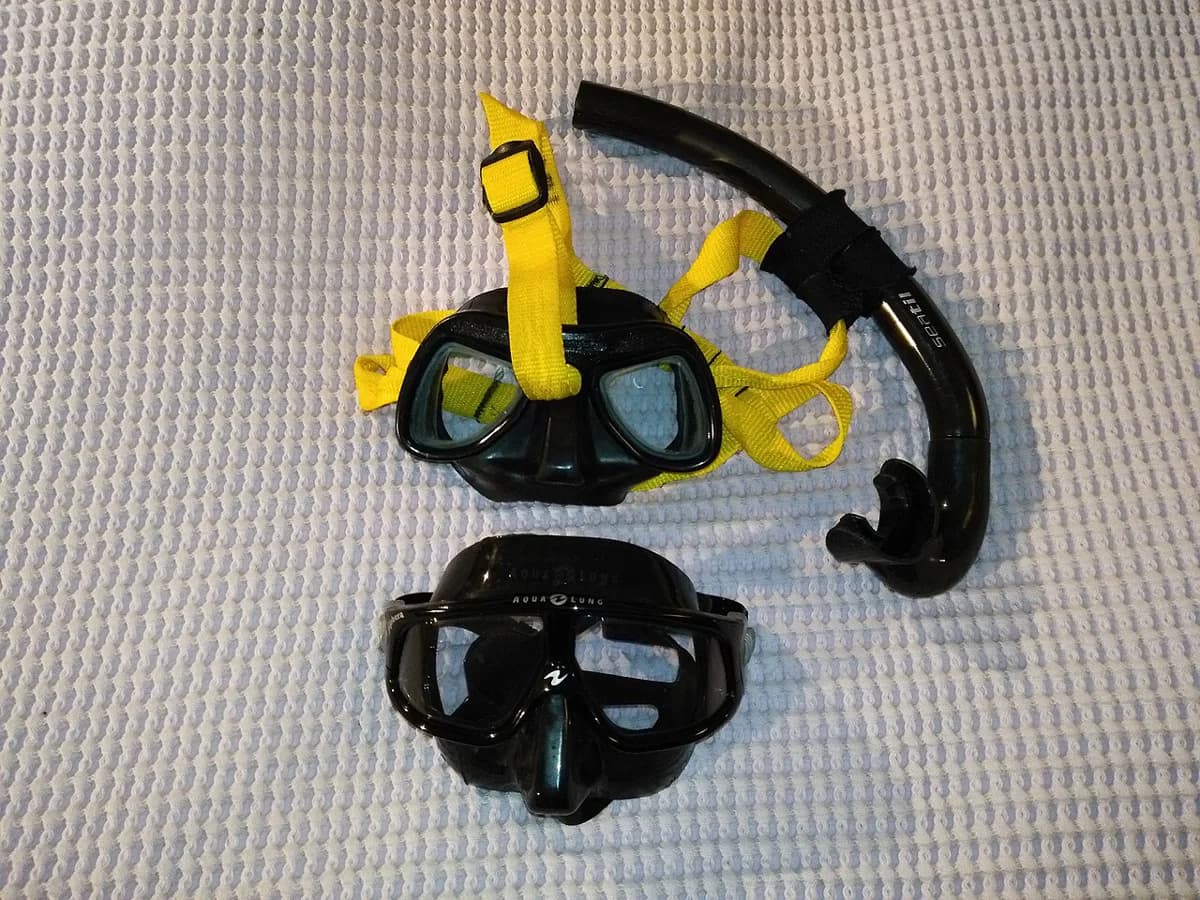
Aim for broad-spectrum SPF 30 or higher and check that the formula is water-resistant, since you will be submerged rather than strolling. SPF 30 blocks roughly 97 percent of UVB rays and SPF 50 roughly 98 percent, so the gap between them is smaller than the gap between applying carefully and applying once. Carry the tube in your snorkel bag alongside your snorkel mask and other snorkel gear so a mid-session reapply is easy.
The Avoid List
The chemical UV filters most consistently flagged for reef harm are oxybenzone, octinoxate, octocrylene, homosalate, avobenzone, and octisalate. Guidance built from NOAA's harmful-chemicals list and a 2025 review of 111 studies also names PABA, parabens, triclosan, and microplastics or exfoliating beads. Flip the tube and scan for any of those names before you buy.
Oxybenzone is the one to know by name. Research summarized in reef-sunscreen guides links it to coral bleaching, deformities in young coral, and disrupted reproduction in fish. Even tiny concentrations have been shown to stress coral larvae, which is why so many destination rules target this single ingredient.
You do not need to memorize the whole list to shop well. If the active line reads as a string of long chemical names rather than zinc oxide or titanium dioxide, put it back and move on.
Nano vs. Non-Nano Minerals
Particle size is the detail most shoppers miss. Nano-sized zinc or titanium particles are small enough to behave differently in water, while non-nano minerals stay in larger clusters. Reef-sunscreen guides recommend choosing non-nano versions for that reason, and many brands print the distinction on the front of the tube or on their website.
The practical tell is texture. A mineral lotion that rubs in completely clear and leaves no trace is often nano-based, while a formula that leaves a faint white film usually is not. If the packaging does not say micro-sized or non-nano anywhere, choose a different product rather than guessing.

Lotion, Spray, or Stick
Lotion gives you the most control over dose and coverage, and it is the format most reef-sunscreen guides recommend for water use. Sprays lose a meaningful share of product to the air and sand, where it can wash toward the water with the tide, and inhaled titanium dioxide is a concern. If you prefer a spray for reach, apply it on land, out of the wind, and rub it in.
Sticks are excellent for the face, ears, and the strip of skin under a mask strap, where you want precision rather than volume. A workable kit is a lotion for the body, a stick for the face, and a UV shirt covering what neither needs to touch. Pack them with your snorkel mask so the routine is one bag, one stop.
Where the Rules Apply
Hawaii passed the first statewide ban on oxybenzone and octinoxate sunscreens in 2018, and Palau, Bonaire, and Aruba followed with restrictions of their own. Key West also moved to ban those two filters, though the measure has faced legal pushback. If your snorkel trip lands in one of these places, the ingredient list is not just a preference.
Rules vary by jurisdiction, and some marine parks in Mexico and the Caribbean require biodegradable sunscreens while cenotes prohibit sunscreen entirely. Check the specific park or reserve website for your destination rather than assuming one island's rule covers the region. Snorkelers heading to Hawaii should also read up on snorkeling in Oahu and its bay-specific entry rules, and those planning a Maui trip can compare island rules in this guide to Maui snorkeling. A mineral lotion that meets the strictest common standard travels well.
Kids and Sensitive Skin
Mineral sunscreens built on non-nano zinc oxide are widely recommended for children because they protect against both UVA and UVB and tend to suit sensitive skin. The old complaint about thick white paste has softened as brands have reformulated, and tinted versions help on faces that resist the pale look.
For a snorkeling child, warm the lotion in your hands first and apply in small sections so it spreads evenly instead of clumping. A long-sleeve swim shirt covers the back and shoulders that are hardest to reach on a wriggling kid, which cuts both the dose needed and the fuss.
How to Apply for a Full Snorkel Session
Use about one ounce for the whole body, roughly a shot glass, or a quarter-sized dollop per limb. Apply 15 to 20 minutes before you get in so the formula can set, and shake mineral lotions well because they separate in the tube. Reapply every two hours and again after swimming or heavy sweating.
Build the reapply into your session rhythm: one coat before the first entry, one at the surface interval, and one before the last swim. Keep the tube in the shade rather than on hot sand, where formulas can thin and leak.
Do not forget the places snorkelers burn: the back of the neck, the tops of the ears, the backs of the hands, and the part line. A mask strap rubs sunscreen off the cheekbones, so touch up there before you pull the mask on again.
Protection That Does Not Wash Off
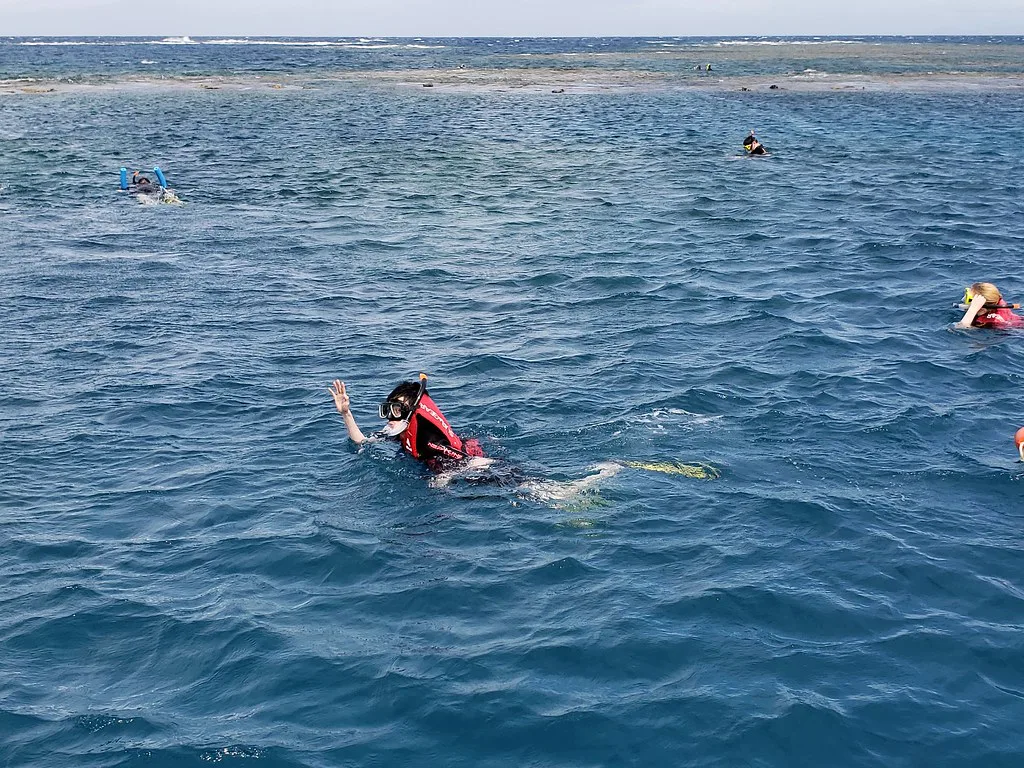
A long-sleeve rash guard, swim leggings, and a brimmed hat cover large areas that would otherwise need sunscreen, and they work whether or not you remembered to reapply. UPF-rated swimwear is the most reliable layer in the water because it does not degrade with each dunk. Add polarized sunglasses for glare off the surface between swims.
Time your session for lower sun angles where your itinerary allows, and use shade on the beach between entries. Sunscreen is one layer of a plan that includes clothing, timing, and hydration, not a substitute for any of them.
Buying Checklist
On the back of the tube, confirm non-nano zinc oxide or non-nano titanium dioxide as the active filter, SPF 30 or higher, and broad-spectrum coverage. On the front, ignore reef-safe claims as proof and check for a water-resistance note. If the brand publishes its full ingredient list online, read it before you order, since online listings often show only the marketing panel.
Buy one lotion for the body and one stick for the face rather than a cabinet of half-used tubes. Travel sizes are convenient for a carry-on, but check the active line on the small format too, because some brands use different formulas across sizes. A single verified product you actually reapply beats three you leave in the room.
What Sunscreen Cannot Do
No sunscreen keeps you from burning through a four-hour session in the tropics if you skip shade, clothing, and reapplication. And sunscreen is only one piece of reef protection, alongside the bigger pressures on reefs from warming water, runoff, and physical contact with coral. Keep your fins off the bottom and your distance from wildlife, and the sunscreen choice is one part of a responsible day.
Treat reef-safe sunscreen as the baseline, not the badge. The reader who reads the active line, wears a rash guard, and reenters the water with a fresh coat is doing the thing the label promised.
Plan Your Snorkel Day
Build your kit around one verified mineral lotion, a face stick, and a long-sleeve swim shirt, then reapply on a two-hour rhythm through your session. Before you travel, check the park or reserve website for your destination to see whether specific filters are restricted where you plan to swim.
The back label is the whole game. Non-nano zinc oxide or non-nano titanium dioxide on the active line, no oxybenzone, octinoxate, or the other flagged chemical filters, and a format you will actually use. That is a reef-safe choice you can verify in the aisle, though it is worth checking current formulations and park rules before you travel.
Frequently Asked Questions
Which sunscreens are actually reef-safe?
Look for products whose active ingredients are non-nano zinc oxide or non-nano titanium dioxide and that avoid oxybenzone, octinoxate, octocrylene, homosalate, avobenzone, and octisalate. Because the reef-safe label is not regulated, the active-ingredients panel is the reliable test rather than the front of the tube.
Is there a difference between reef-safe and reef-friendly sunscreen?
Not in any regulated sense. Both terms are marketing language without a government or FDA definition, so brands can use either even when a formula contains filters of concern. Read the ingredient list regardless of which phrase appears on the packaging.
Does reef-safe sunscreen actually work?
Mineral filters such as non-nano zinc oxide and titanium dioxide are recognized by the FDA as safe and effective UV blockers. They protect your skin when applied generously and reapplied every two hours and after swimming. No sunscreen replaces shade, clothing, or sensible timing in strong tropical sun.
Which drugstore sunscreen is reef-safe?
Store brands vary by formula, so the shelf position does not tell you much. Flip the tube and check that the active line lists only non-nano zinc oxide or non-nano titanium dioxide, then confirm there is no oxybenzone, octinoxate, or other flagged chemical filter in the ingredient list.
Is reef-safe sunscreen required in Hawaii?
Hawaii passed a statewide ban on sunscreens containing oxybenzone and octinoxate in 2018, and several other destinations have adopted similar restrictions. Because rules and enforcement vary, check the state or park website for your specific destination before you travel.
Sources
Snorkeling notes for your next trip
Optional updates to our snorkeling guides.
You might also like
Continue reading
More guides you'll find useful