Snorkeling Wetsuit Guide: Choosing Thickness and Fit
A snorkeling wetsuit keeps you warm and protected when water drops below 75°F. Learn thickness, fit, zip style and where buoyancy matters.
On this page
A snorkeling wetsuit is the piece of kit that decides whether a long session ends with you comfortable or shivering on the beach, and it earns its place fastest in water below 75°F, on multi-day trips with several entries a day, and for snorkelers who want sun and sting protection over arms and legs. It matters most for adults who run cold, families with kids who stay in for hours, and anyone snorkeling temperate destinations such as California or the Florida Keys in winter.
The choices come down to four decisions: how thick the neoprene needs to be, whether you want a fullsuit, a shorty or a two-piece, where the zipper sits, and whether you accept neoprene's added flotation or choose a neutrally buoyant alternative. Each one has a real trade-off, and the right answer depends on your water temperature, your session length and how often you duck-dive.
Why Snorkelers Wear a Wetsuit
A wetsuit traps a thin layer of water against your skin and warms it with your body heat, so it delivers insulation, protection from sun and jellyfish stings, and a buffer against scrapes on rocky entries. Neoprene also adds buoyancy, which helps you float more easily on the surface but works against you the moment you want to dive down for a closer look at a fish or a coral head.
Not always.
That combination of warmth, skin protection and flotation is why snorkelers in genuinely warm water still wear at least a thin top when they plan to stay in for hours. A rash guard covers sun protection, but it does not trap warmth or add float, so the two pieces solve different problems.
Water Temperature Guide
Published guidance puts the practical line at roughly 80°F: above that, a full-body rash guard is often enough, unless you personally run cold. As water dips toward 75°F, extra warmth starts to make sense, and a 2mm to 3mm suit covers most tropical situations comfortably.
Session length changes the calculation more than a single temperature reading does. If you plan three or four entries a day of up to two hours each, a wetsuit is worth wearing regardless of how warm the water feels on the first plunge, because your body loses heat gradually and does not recover fully between swims.
Running cold is personal, and so is natural insulation. Two snorkelers in the same 78°F water may dress completely differently, so treat published thresholds as a starting point and adjust after your first session of the trip.
How Thick a Snorkeling Wetsuit Should Be
Suits are labeled by neoprene thickness, so a 2mm suit has roughly 2mm panels and a 3/2mm suit pairs thicker core panels with thinner arms and legs for mobility. A 1.5mm to 2mm top or shorty handles warm tropical water and packs small, while 3mm and up suits cold water, long sessions and snorkelers who chill easily.
Buyers choosing among snorkeling wetsuits will find 1.5mm, 2mm, 2.5mm and 3mm options covering men, women and kids, with one-piece suits, shorties, zip vests and separate pants in the mix. The catalog structure is useful as a mental map of the category even if you shop elsewhere: thickness first, then suit type, then gender and size.
Thicker is not automatically better. A 4mm or 5mm suit keeps you warmer in cold water and on long days, but it is heavier, bulkier in a suitcase and slower to dry, so a dedicated travel suit usually lands in the 2mm to 3mm range.
Fullsuit vs Shorty vs Two-Piece
Fullsuits give the most coverage and protect arms and legs against cold, abrasions and stings, which is why they suit long sessions and rougher entries. Shorties are quicker to get on and off and cooler in hot climates, but they leave forearms and lower legs exposed to sun unless you wear a reef safe sunscreen or a long-sleeve rash guard underneath.
Two-piece suits, with a separate top and pants, are easier to get into and more convenient for bathroom breaks, and the top alone works on warmer days. A one-piece is slightly warmer because it has fewer openings, so the trade-off is convenience against a little insulation.
If you are choosing a suit for a family, shorties and two-piece sets tend to work better for kids who need help dressing and undressing on a windy beach. Pair the suit with a properly fitted snorkel mask so the hood or strap does not interfere with the seal.
Front Zip vs Back Zip vs No Zip
Zipper placement is largely about neck comfort and how much shoulder mobility you have. Back-zip suits open wider and are easier to step into, but they can press on the front of the neck, especially when you sit down, and they are harder to zip alone. Front-zip suits can be harder to pull on but often sit more comfortably once closed.
No-zip and pull-over tops rely on stretch and a snug cut instead of a closure, which removes zipper pressure entirely but demands a very accurate fit. If you have limited shoulder flexibility, try the suit on before buying rather than ordering blind, and check that the collar does not ride up when you turn your head to breathe.

Neoprene-Free and Neutrally Buoyant Options
Snorkelers who want to duck-dive for photos or freedive lightly have a specific problem: neoprene floats, so you need a weight belt to counteract it. Neoprene-free suits built from recycled fishing nets are designed to be neutrally buoyant, offering warmth roughly comparable to a 2mm neoprene suit without the added lift.
These fabric suits are machine washable, which is a genuine advantage over neoprene, but they take a long time to dry and can be awkward to pull on without a rash guard underneath. They also come as vests, tops, leggings and full suits, so you can build warmth in layers rather than committing to a single thickness.
Lavacore and Sharkskin offer similar neoprene-free constructions, with the thicker versions claimed to match the warmth of neoprene suits several millimeters heavier. Treat those equivalencies as manufacturer claims and judge them against the water temperature you actually expect.
Fit: How Snug a Wetsuit Should Feel
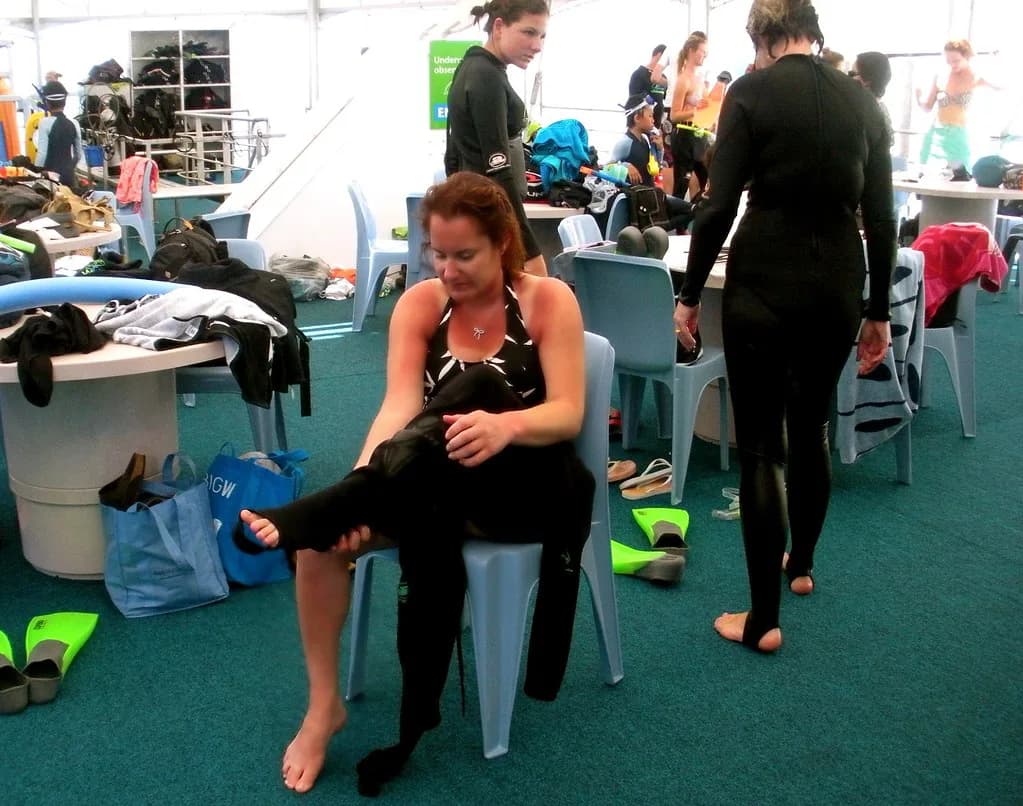
A wetsuit has to fit like a second skin, snug enough to feel slightly unusual, with no baggy pockets or gaps at the wrists, ankles or lower back. Those gaps let cold water flush through, which defeats the insulation no matter how thick the neoprene is. It should still let you raise your arms and turn your head without strain.
Sizing between brands varies, and thickness labels are not tightly regulated, so the same nominal 3mm from two makers can feel quite different. Buy from brands with published size charts and clear return policies, and try the suit on with the swimsuit you plan to wear underneath.
Open-Cell vs Closed-Cell Neoprene
Open-cell neoprene has a raw inner surface rather than fabric lining, which makes it warmer because less water reaches your skin, but it is more delicate and harder to put on. The standard workaround is to lubricate the inside of the suit with a diluted shampoo mix or conditioner before stepping in, paying attention to ankles and wrists.
Because whatever you use goes into the ocean, choose a biodegradable, reef-friendly shampoo or conditioner rather than a conventional product. Closed-cell suits with fabric lining are easier to don and more durable inside but trade away some warmth.
Buoyancy and the Duck-Dive Trade-Off
Every millimeter of neoprene adds lift, so a 3mm fullsuit noticeably resists a quick dive to the sand. Freedivers offset this with a weight belt, but recreational snorkelers usually do not want that complication and instead accept staying near the surface.
If your snorkel day is mostly surface swimming along a reef, extra flotation is a benefit that keeps you rested. If your goal is repeated duck-dives for photos, a thinner suit, a top-only layer, or a neutrally buoyant fabric suit will feel much less restrictive.
Care, Drying and Odor
Rinse your suit in fresh water after every saltwater session, inside and out, and hang it to dry out of direct sun, which degrades neoprene over time. Every few trips, wash it with a mild wetsuit cleaner or a little gentle soap to keep odor down; neoprene holds smells if it is stored damp.
Drying time is a real planning constraint. Thicker neoprene and lined fabric suits dry more slowly than thin tops, so a two-suit rotation or a quick-dry top lets you snorkel on consecutive mornings without pulling on something damp.
Packing and Travel
Wetsuits are bulky and heavy relative to their warmth, so luggage space is a legitimate reason to own one suit rather than three. A 2mm shorty or a two-piece set compresses better than a thick fullsuit and covers most warm-water trips, while a 3mm fullsuit is the versatile cold-water answer.
Pack the suit at the top of your bag so it can be pulled out and dried first, and roll rather than fold thick neoprene to avoid permanent creases. If you are traveling with a full-face snorkel mask as well, keep it in a hard case so it does not crush the suit or get crushed by it.
Matching a Suit to US Waters
Hawaii and the Caribbean coast of Puerto Rico generally sit in the rash-guard-to-2mm range, with a thin top or shorty enough for most snorkelers on a typical day. The Florida Keys are similar in summer but cooler in winter, when a 3mm fullsuit becomes the more comfortable choice for long sessions.
California is the outlier: water along the coast stays cold year-round, so a 3mm to 5mm fullsuit is the realistic minimum for anything longer than a quick dip, which is worth keeping in mind if you plan on snorkeling in Monterey. For a warmer southern stretch of the same coastline, the same thickness logic applies to snorkeling in La Jolla, where a 3mm fullsuit still handles the cooler water. In all four regions, check local water temperature reports before you pack rather than assuming a seasonal average.
Whatever the region, match the rest of your kit to the suit: a dry-top snorkel keeps splash out on choppy days, and a well-fitted mask matters more than the wetsuit for overall comfort. See the broader snorkel gear guide for how the pieces fit together.
Plan Your Wetsuit Purchase
Start with water temperature and session length, then pick thickness, then suit style, then closure. A 2mm shorty or two-piece set covers most warm-water snorkeling, a 3mm fullsuit is the safe all-rounder for cooler water and long days, and a neutrally buoyant fabric suit is the answer if you duck-dive often.
Try before you buy where you can, confirm the size chart and return policy, and budget for a rash guard to wear underneath. Buy from a retailer that publishes specs and sizing clearly, and rinse the suit after every use so it lasts more than a season.
Frequently Asked Questions
Do you need a wetsuit to snorkel?
Not always. In water at 80°F or above, many snorkelers are comfortable in a full-body rash guard, especially for short sessions. A wetsuit becomes worthwhile when the water sits around 75°F or below, when you snorkel repeatedly over several days, or when you want protection from sun, stings and scrapes.
What thickness wetsuit do I need for 75-degree water?
A 2mm to 3mm suit is the usual range for water around 75°F, with a shorty or top-only option if you run warm and a fullsuit if you chill easily. Session length matters as much as the reading, so if you plan several long entries a day, lean toward the thicker end.
Is a shorty or a full wetsuit better for snorkeling?
A shorty is quicker to put on and cooler in hot climates, but it leaves forearms and lower legs exposed to sun and scrapes. A fullsuit offers more coverage and warmth for long sessions and is the better choice in cooler water or for snorkelers who feel the cold.
How tight should a snorkeling wetsuit fit?
It should feel snug like a second skin, with no baggy gaps at the wrists, ankles or lower back, but loose enough that you can raise your arms and turn your head without strain. Gaps let water flush through and defeat the insulation, while excessive tightness restricts breathing and movement.
Do you wear a swimsuit under a snorkeling wetsuit?
Yes, most snorkelers wear a swimsuit underneath, which makes bathroom breaks and changing easier and adds a layer between skin and neoprene. A thin rash guard underneath can also help if the suit is tricky to pull on.
What color wetsuit should I wear for snorkeling?
Treat color as a visibility and sun-protection choice rather than a shark deterrent. High-contrast or bright colors make you easier for a boat operator or buddy to spot, while dark neoprene is common simply because it hides wear and stains.
What should you not wear while snorkeling?
Avoid cotton clothing, which stays wet and cold, and loose jewelry that can catch on gear. Skip conventional sunscreen if you will be in the water and use a reef-safe formula instead, and leave dangling items that could snag on coral or rocks at home.
How thick a wetsuit do kids need for snorkeling?
Children chill faster than adults, so a 2mm to 3mm shorty or fullsuit is a sensible starting point in tropical water, and a fullsuit is better in cooler destinations. Check the manufacturer's kids' size chart and make sure the fit allows easy movement and quick removal.
Sources
Snorkeling notes for your next trip
Optional updates to our snorkeling guides.
You might also like
Continue reading
More guides you'll find useful