Water Shoes for Snorkeling: When and How to Choose
Decide whether water shoes belong in your snorkel bag. Match soles and fit to rocky, sandy or boat entries, and know when fins alone are the better call.
On this page
A pair of water shoes solves one specific problem on a snorkel day: the ground between the car and the water, and the first few meters of shallows before you are swimming. On a soft sand beach they add weight and drag for no benefit. On slick limestone, coral rubble or a hot parking lot, they change the whole outing. The decision is about your entry surface, not about buying more gear.
Treat footwear as one part of a kit you size together. A thick sole can push your foot out of a full-foot fin pocket, while a thin sock-style shoe usually disappears inside an open-heel fin with an adjustable strap. Decide which fin you are packing first, then pick the shoe that fits inside it.
What Water Shoes Actually Do on a Snorkel Day
A water shoe is a rubber or synthetic upper on a thin outsole, built to stay on a wet foot and keep the sole of your foot off sharp or hot ground. Aqua socks are the thinnest version, often a stretchy pull-on with a minimal sole, while reef shoes add a stiffer outsole and a closed toe. Wet-shoe styles borrow from neoprene booties with a snug, drainable fit.
You need them when the entry is rocky, the shallows are coral rubble, or you cross hot pavement or a wet boat ladder.
What they do not do is replace fins. A shoe gives you grip and a barrier against rubble, sea urchin spines and sun-baked asphalt, but it will not fix a poor mask fit or keep water out of your snorkel.
When Shoes Beat Bare Feet or Fin Boots
Wear them when the walk to the water crosses rock, gravel or pavement, when the shallows are coral rubble rather than sand, or when you launch from a boat and climb a wet ladder in bare feet. In those settings a shoe keeps you moving instead of mincing across the entry on your heels.
They also suit snorkelers who swim without fins at all, such as a parent staying close to a child in waist-deep water. A lightweight pull-on sock gives enough protection for a wading session without the bulk of a dive boot.
When You Are Better Off Without Them
On a wide, clean sand beach with a gentle slope, bare feet are lighter, drain instantly and let you slide into full-foot fins without a fight. A shoe with a chunky sole adds drag on every kick and can rub the heel once it is wet and gritty.
Skip them for long open-water swims from a boat where you enter by giant stride or back roll and never touch bottom. In that case your fins are your only footwear, and a loose shoe is one more thing to lose.
Match the Sole to the Entry: Sand, Rock, Coral Rubble, Boat Ladder
Sand entry calls for a thin, flexible sole with good drainage; anything armored is overkill. Slick rock, such as wet limestone ledges at a shore entry, rewards a sticky rubber compound and a shallow tread that sheds water rather than a deep lug that traps it. Coral rubble and urchin territory call for a closed toe and a thicker outsole, because a stub there is the injury you are trying to avoid.
Boat ladders sit in a fourth category: a snug wet-shoe or bootie with grip on metal steps, worn up to the rail and left on the deck. If you are pairing shoes with open-heel fins, look for a flat, low-profile outsole that slides into a foot pocket without jamming.
Thin Aqua Socks Versus Armored Reef Shoes Versus Wet-Shoe Style
Aqua socks are the lightest and packable option, often sold with a thin protective sole rather than a hiking-style outsole. They suit sandy and grassy entries and travel well, since a pair flattens into a corner of a bag. The trade-off is almost no protection from a sharp rock or an urchin spine.
Armored reef shoes and approach-style water shoes add a rigid outsole and a rubber toe cap, which is what you want for lava rock, oyster shells or a rocky shore break. They are heavier, dry more slowly and take up real space in a suitcase.
Wet-shoe styles sit in between: a neoprene or mesh upper with a low-profile sole, snug enough to swim in and warm enough for cool water. Cold-water snorkelers often prefer a thicker neoprene bootie, though a wetshoe built for paddling can work in the same role.
Fit and Sizing: Tight Enough Not to Slip, Loose Enough to Drain Sand
A water shoe should feel snug across the instep and heel with no lift at the back when you wiggle your toes, because a wet shoe that slips will rub. Leave a thumb's width at the toe for a shoe you will wear over a neoprene sock, and buy the sock-first fit rather than sizing up later.
Run a drainage check before you commit: wet the shoes in a sink or at a tap, walk twenty steps and see whether water pours out of the outsole or pools around your arch. Sand trapped against the skin is the usual cause of a hot spot, so a shoe with mesh panels and drain holes beats a sealed neoprene upper on sandy beaches.
Fins With and Without Foot Pockets, and How Shoes Change the Fit
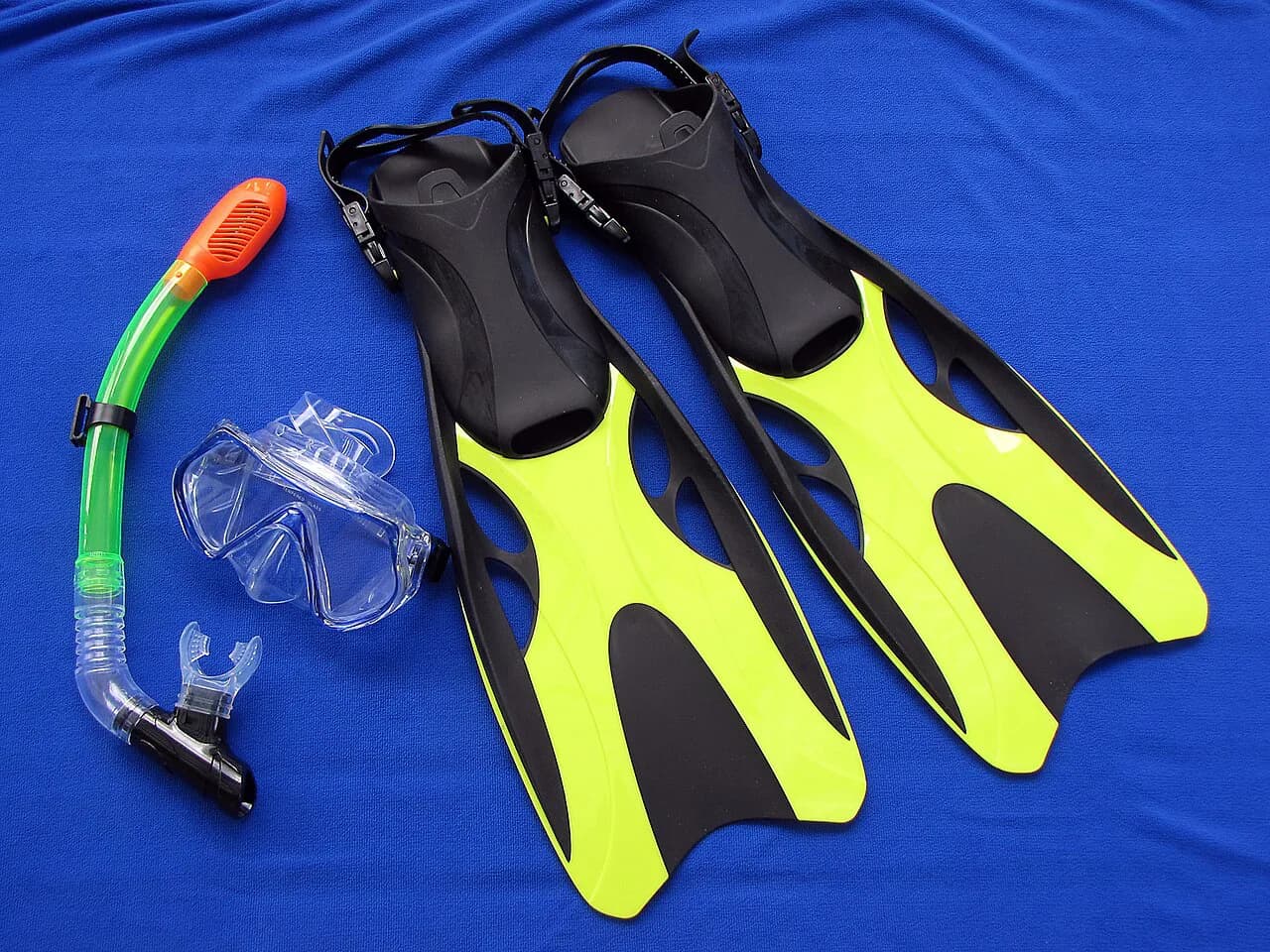
Full-foot fins have a closed pocket molded to a bare foot, and a water shoe inside that pocket usually makes the fin too tight or impossible to pull on. Open-heel fins with an adjustable strap over the heel are the ones that accept a shoe, and they are sized to allow for a bootie's thickness.
If you already own full-foot fins and want protection on the walk in, carry the shoes and leave them at the waterline, or switch to a fin with a removable foot pocket. Bringing your shoes and fins to the same fitting is the only reliable way to check the combination.
Kids: Flotation, Tiny Sizing and Grip on Wet Rock
Children benefit from water shoes more than adults do, because small feet find every urchin and every hot patch of sand. Look for a closed toe, an adjustable closure that a wet hand can tighten, and a sole flexible enough that a child can still push off naturally.
Pair shoes with a properly fitted flotation device and a mask that seals on a small face, since footwear does nothing for buoyancy or breathing. A child in a snug pull-on sock moves more confidently across wet rock than one in an oversized slip-on that fills with sand.
Care and Travel: Drying, Odor, and Packing Weight
Rinse shoes in fresh water after every saltwater session, drain them and dry them in shade rather than direct sun, which hardens rubber and fades uppers. Neoprene holds water far longer than mesh, so a thick bootie needs a full day of air before it goes back in a bag.
For packing, thin aqua socks compress into a mesh pouch and weigh almost nothing, while armored reef shoes take the space of a second pair of sneakers. If you are flying to a sand beach and boat dives, one thin pair is usually enough.
What Not to Wear in the Water
Leave street sneakers, sandals with open straps and anything with a loose lace or toggle in the car; a sandal that slips off is litter, and a lace that snags is a hazard. Cotton socks under a water shoe stay wet, hold sand and rub.
Sunscreen matters as much as footwear on a reef, and many snorkel destinations regulate what you may wear or apply in the water. Choose a reef safe sunscreen with non-nano zinc oxide or non-nano titanium dioxide as the active filter, and apply it before you get in so it has time to absorb.
Common Buying Mistakes
The first mistake is sizing a water shoe like a sneaker, which leaves it loose once wet. The second is buying a thick-soled shoe for a sand beach, then finding it will not fit inside the fins you already own. The third is choosing a heavy neoprene bootie for a tropical trip where a thin sock would do.
A fourth is forgetting that the rest of the kit has to fit together too. If a shoe changes how your fin feels, recheck your snorkel mask seal and your dry-top snorkel on the same outing, since a fin that slips makes you lift your head and break the seal.
Packing the Right Footwear
Choose your shoe from the ground you will cross, then confirm it fits inside your fins: thin aqua socks for sand and travel, armored reef shoes for rock and rubble, a snug wet shoe for boat ladders and cool water. Bring your fins when you try shoes on, and walk out of the shop only when the combination feels tight at the heel and free at the toe.
Everything else in the bag follows the same logic, from a mask that seals to a snorkel that suits your swimming style. Build the kit around the entry and the water you will actually be in, and footwear stops being an afterthought. For a worked example of choosing a spot before you choose gear, this Big Island snorkeling guide matches spots to entry conditions.
Frequently Asked Questions
Do you need water shoes for snorkeling?
You need them when the entry is rocky, the shallows are coral rubble, or you cross hot pavement or a wet boat ladder. On clean sand with a gentle slope, bare feet or full-foot fins work fine and are lighter.
Are aqua shoes the same as reef shoes?
No. Aqua socks are thin pull-ons with a minimal sole, suited to sand and grass. Reef shoes add a stiffer outsole and a closed toe for rock, rubble and urchin ground, and they weigh more.
What should you not wear snorkeling?
Avoid street sneakers, loose sandals and cotton socks; they hold water, trap sand or slip off. Also apply a reef safe sunscreen before you enter rather than relying on footwear alone.
Can you wear water shoes with snorkel fins?
Yes, with open-heel fins that have an adjustable strap and enough room for a bootie. Full-foot fins with a closed pocket are molded for a bare foot, so a shoe usually makes them too tight.
Are water shoes good for slippery rocks?
A sticky rubber outsole with a shallow tread helps on wet limestone ledges, but no shoe guarantees grip. Step slowly, keep three points of contact on steep rock and watch for surf washing over the ledge.
Sources
Snorkeling notes for your next trip
Optional updates to our snorkeling guides.
You might also like
Continue reading
More guides you'll find useful