Snorkel Gear for Beginners: What You Actually Need
Snorkel gear for beginners, explained: which mask, snorkel, and fins matter, how to fit them, and when rent-or-buy decisions actually pay off.
On this page
A first snorkel day succeeds or fails on one piece of equipment: the mask. If it seals against your face without pinching or leaking, you can relax, look around, and actually enjoy the reef; if it does not, you will spend the whole swim clearing water and adjusting straps. This guide walks through mask, snorkel, and fin choices in the order they matter, flags the trade-offs beginners feel most, and keeps the day-one shopping list small.
Start With Fit, Not Features
Beginners tend to shop by lens size, color, or the latest valve design, but the deciding factor is whether the skirt sits flush against your face. A well-fitted mask stays put with the strap barely snug, and that comfort is what lets you keep your face in the water long enough to see anything. Buy the seal first, then worry about how wide the view is.
No.
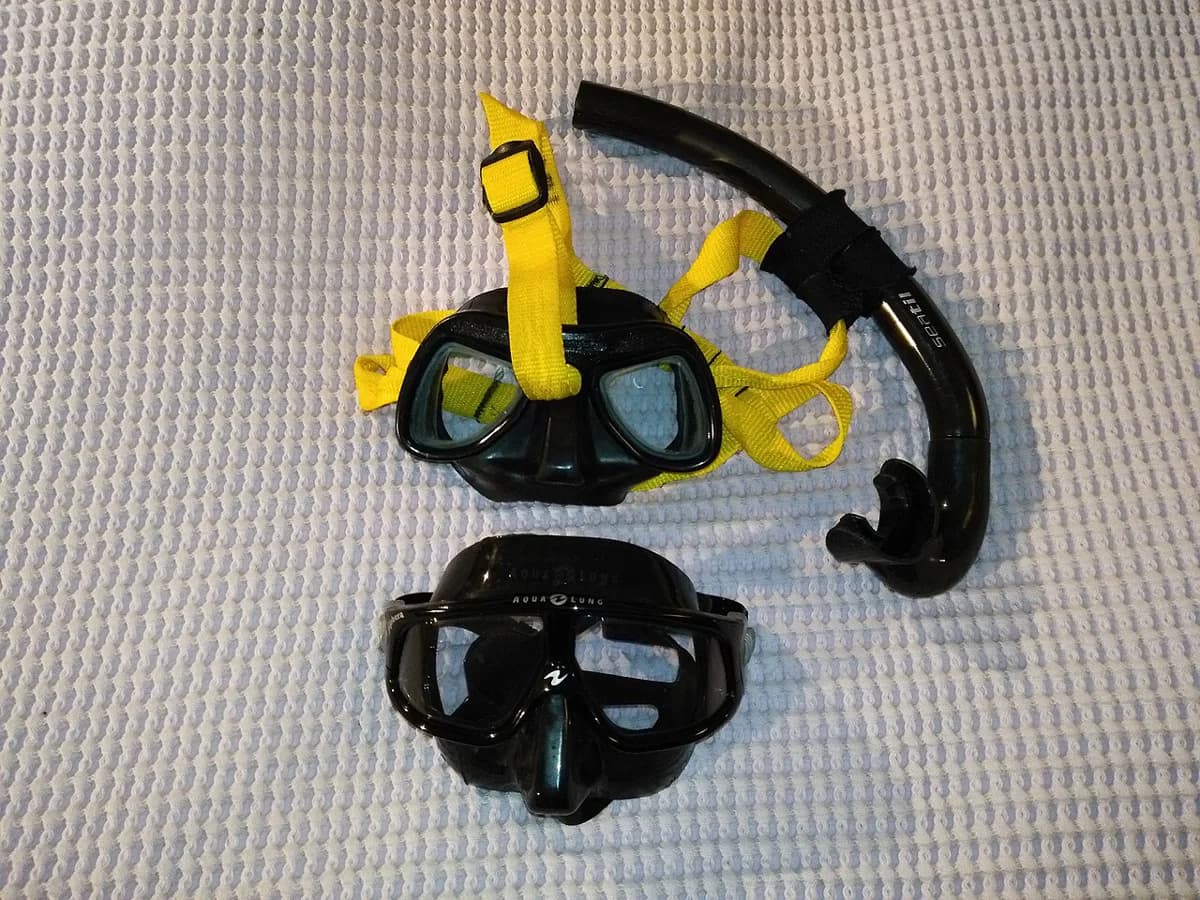
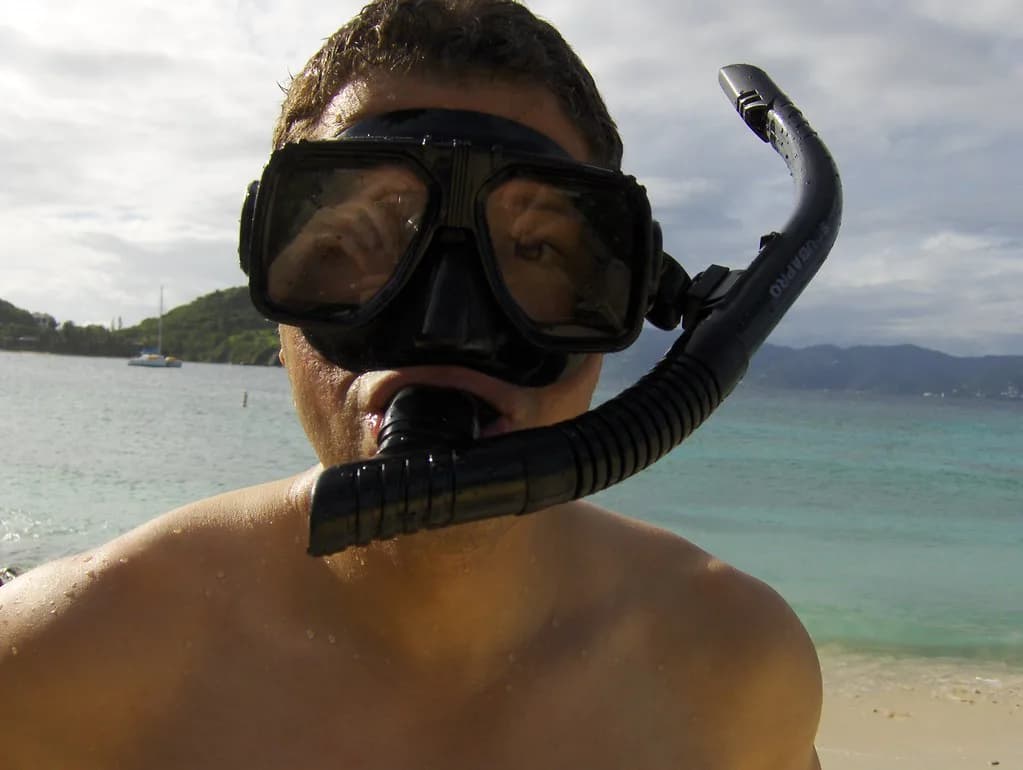
Standard guidance for recreational snorkelers points to a few core mask features: tempered glass lenses, comfortable adjustable straps, and a silicone skirt that seals against the face. A double silicone skirt adds a second sealing edge, which can help on faces where a single skirt leaks.
Mask Basics: Lenses, Skirt, and Field of View
Tempered glass is the lens material to look for because it resists scratching and stands up to pressure better than plain glass or plastic. The skirt, the soft part that touches your face, is usually silicone; it is what actually creates the seal, so its shape and flexibility matter more than the lens.
Two-lens masks and single-window masks both work for beginners, and the choice is largely about view and nose access. Some masks use side lenses as well as a front pane to widen the field of view, and inverted teardrop lens shapes are designed to open up downward visibility. A nose pocket you can pinch lets you equalize pressure if you duck below the surface, so check that your fingers can reach your nose comfortably. Once your mask seals, where you use it shapes the rest of your kit, as this guide to snorkeling in Maui shows when comparing boat and shore entry.
Mask Fit in Three Checks
First, press the mask gently to your face without using the strap and inhale through your nose. If it holds for a moment and then releases when you stop inhaling, the seal is working; if air leaks in around the skirt, try another size or shape. Second, with the strap on, tighten only until the mask stays put, since overtightening pulls the skirt away from your face and causes leaks. Third, check nose pocket clearance: your nostrils should not touch the lens or the pocket walls.
Facial hair, a narrow face, or a prominent brow can all push a mask out of seal, so fit-testing in person is worth the extra stop even if you plan to buy online later. A neoprene strap cover is a small add-on that reduces hair pulling and tangling when you take the mask on and off.
Snorkel Basics: Dry-Top, Splash-Top, and Purge Valves
A dry-top snorkel has a valve at the top that closes when the tube submerges, which keeps water out when you duck under or take a wave. A splash-top snorkel blocks some spray at the surface but lets water in if you dive, so you may come up with a mouthful. Both designs usually include a purge valve at the bottom that lets you clear the tube with a short exhale instead of blowing hard.
For a first-timer, the practical difference is how forgiving the snorkel is when things go slightly wrong. A dry-top design costs more and adds a bit of bulk, but it removes the most common beginner frustration: swallowing seawater after a splash or a dive. If you mostly float at the surface in calm water, a splash-top tube is lighter and cheaper and works fine.
Whichever valve style you pick, check that the mouthpiece sits comfortably between your teeth without jaw strain and that the tube curves so the top stays clear of your head. A snorkel that sits awkwardly will tire you out faster than any fin choice.
Fins for Beginners: Open-Heel Versus Closed-Foot
Open-heel fins use an adjustable strap and a foot pocket that can be worn bare or with neoprene booties, so they fit a range of feet and are easy to share or size up as kids grow. Short-blade open-heel fins are compact enough to pack and give a recreational snorkeler enough propulsion without leg strain. Closed-foot fins slip on like a shoe and deliver efficient propulsion, but the fit is fixed, so getting the size right matters much more.
If you plan to walk over rocks or a hot beach to reach the water, booties under open-heel fins protect your feet; if you are stepping straight off sand, bare feet in open-heel pockets are simpler. Closed-foot fins are the better choice only when you know your size and want maximum push per kick.
Full-Face Masks: Nose Breathing and Wide View
Full-face masks let you breathe through your nose and see a wide panoramic view, which removes the mouthpiece-learning curve that trips up some beginners. They also tend to fog less and leak less than traditional masks for many users, and the volume of air inside adds buoyancy at the surface. That buoyancy is helpful when you want to float and look down, but it makes duck-diving harder.
If your plan is to stay at the surface and watch fish from above, a full-face design can be a comfortable entry point, and models like the Tribord Easybreath are built around nose breathing and a wide field of view. If you want to dive down for a closer look at coral or a turtle, a traditional mask and snorkel gives you more control.
Snorkel Vest: When Added Flotation Helps
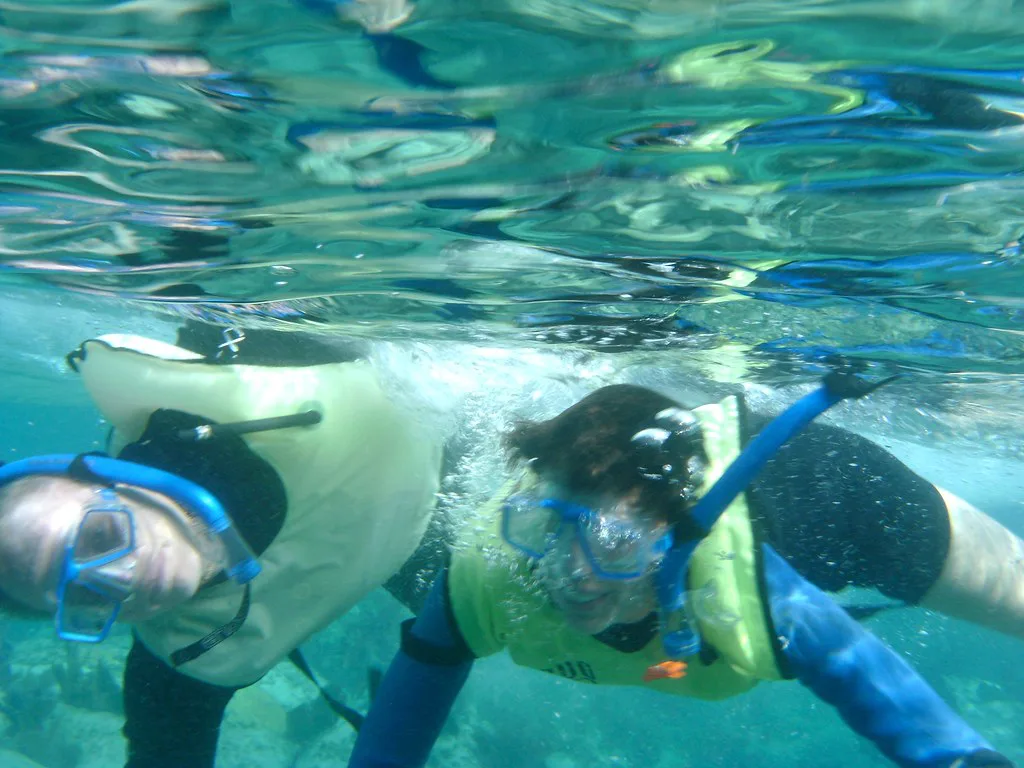
An inflatable snorkel vest is a light, packable way to add flotation so a new snorkeler can relax at the surface and focus on breathing and looking around rather than staying afloat. It inflates and deflates quickly and is easy to take on and off, so you can adjust buoyancy as you get comfortable. It is not a substitute for swimming ability or a life jacket rated for the water you are in, but it does reduce fatigue on a long surface swim.
What to Skip on Day One
A first purchase does not need every accessory in the catalog. Strap covers, dry bags, underwater cameras, and antifog sprays are useful once you know you will snorkel regularly, but they add cost without improving your first swim. Start with a sealing mask, a snorkel you can clear, and fins that fit.
Reef-safe sunscreen belongs on the day-one list, though, because many snorkel destinations require it and the formulation matters underwater. Look for non-nano zinc oxide or non-nano titanium dioxide as the active ingredients, and apply before you get in the water so the product has time to absorb.
Rent Versus Buy: Fit and Hygiene
Rental gear is the fastest way to try snorkeling without committing, and operators usually supply a mask, snorkel, and fins as part of a trip. The trade-offs are fit and hygiene: rental masks come in a limited range of shapes, and a rental snorkel has been in other mouths. If you snorkel more than a couple of times a year, owning your own mask and snorkel pays off in comfort and cleanliness, and it lets you walk off the beach without planning.
If you rent fins but bring your own mask, you get the two biggest benefits, a reliable seal and a clean mouthpiece, without the luggage. An added flotation vest is worth renting on a first boat trip if you are unsure how you will feel in open water.
Packing and Travel
Short open-heel fins and a mask and snorkel pack into a mesh gear bag that lets everything dry and keeps sand out of your luggage. Rinse gear in fresh water after saltwater use and dry it out of direct sun, since heat can warp silicone and degrade lens coatings.
For carry-on travel, compact short fins tuck into a duffel more easily than long blades, and many mask-and-snorkel sets include a bag that fits the whole kit. Pack the mask at the top of your bag so it does not get crushed, and keep the snorkel mouthpiece covered if you are worried about grime in transit.
Sizing for Kids and Growing Families
Children grow fast, so adjustable open-heel fins and a mask with a wide strap range get more seasons out of one purchase than fixed-size gear. A mask made for a smaller face seals better than an adult mask cinched tight, and a kid-sized full-face design can ease nose breathing for younger snorkelers.
Fit-test a child's mask the same way as an adult's: press it on without the strap and see whether it holds. If a mask leaks on a small face, no amount of tightening will fix it, so try a different shape or size before buying.
Common Beginner Mistakes
Loose straps, fogging, oversized fins, and biting down on the mouthpiece are the four habits that spoil a first snorkel day. Overtightening a strap is just as bad as a loose one, since it pulls the skirt away from your face. Fogging usually comes from a dirty lens or breathing through your nose, so rinse the lens and breathe through your mouth.
Oversized or stiff fins cause leg cramps on a long surface swim, so err toward compact open-heel blades with a comfortable foot pocket. Relax your jaw around the mouthpiece and let the snorkel sit lightly; gripping it hard tires you out and can break the seal on your mask.
Plan Your First Snorkel
Build your first kit around a mask that seals, a snorkel you can clear without effort, and fins that fit your feet and your travel plans. Add a vest if you want flotation, add reef-safe sunscreen before you leave, and leave the accessories for the second trip. That combination handles calm bays, boat trips, and beach entries without overbuying.
Frequently Asked Questions
Does a snorkel let you breathe underwater?
No. A snorkel lets you breathe at the surface with your face in the water by extending the air tube above the waterline. If the tube submerges while you duck under, a dry-top valve closes to keep water out, and a purge valve helps you clear the tube when you resurface.
Is snorkeling hard for beginners?
Snorkeling is a learnable surface skill, and most beginners get comfortable in calm, shallow water within a session. The main obstacles are a leaking mask, a mouthpiece that feels awkward, and nerves about breathing through the tube, all of which a properly fitted mask and a few minutes of practice address.
Do you need your own snorkel gear?
You do not need your own gear to try snorkeling, since rental kits are widely available on guided trips. Owning your own mask and snorkel pays off through a better fit and a clean mouthpiece if you plan to snorkel regularly, and it lets you walk off the beach without planning.
Are full-face snorkel masks good for beginners?
Full-face masks can suit beginners because they allow nose breathing and offer a wide view, and the air volume inside adds buoyancy at the surface. That same buoyancy makes duck-diving harder, so they fit surface-focused snorkelers better than people who want to dive down for a closer look.
What should I leave off my first snorkel shopping list?
Skip strap covers, dry bags, underwater cameras, and antifog sprays on the first purchase. A sealing mask, a clearable snorkel, fins that fit, and reef-safe sunscreen cover the essentials, and the accessories can wait until you know you will snorkel often.
How do I know a mask fits before buying?
Press the mask to your face without the strap and inhale gently through your nose; if it holds briefly and releases when you stop, the seal is working. Then check that your nostrils do not touch the lens and that the strap tightens only enough to keep the mask in place.
Sources
Snorkeling notes for your next trip
Optional updates to our snorkeling guides.
You might also like
Continue reading
More guides you'll find useful