Snorkel Fins: How to Choose Short, Long and Full-Foot Pairs
Snorkel fins explained: short versus long blades, full-foot versus open-heel fit, sizing on published charts, and matching fins to calm bays or choppy water.
On this page
A good pair of snorkel fins turns a tiring swim into a relaxed one, letting you cover more of a reef with a slower kick and keep your hands free of the bottom. They also give you finer control when you want to hold position over a patch of coral or glide alongside a turtle without splashing. The choice that matters is not the flashiest model but the blade length and foot pocket that fit your feet and the water you plan to swim in.
Why fins change a snorkel day
Fins convert a modest kick into forward motion, which means less arm work and more time with your face down watching the reef. That efficiency also helps you hold a steady line near coral instead of sculling with your hands, and it lets you back away from an animal without thrashing. Fins are highly recommended for snorkeling but not mandatory, so treat them as the core of a proper kit rather than an optional extra.
Fins are highly recommended for snorkeling but not mandatory.
There is a practical safety angle too: a fin blade sits between your foot and whatever you might otherwise step on or kick, and in an emergency a finned snorkeler can return to the beach faster. Bright-colored fins also make you easier to spot from shore or from a lifeguard tower, which matters most in busy beach parks and boat channels. Build the rest of your kit around that logic with our broader snorkel gear guide, which walks through masks, snorkels and exposure protection.
Short blades versus long blades
Short snorkeling fins suit quick, high-velocity kicks, change direction easily and are gentler on leg muscles, which makes them a sensible first pair for children, beginners and anyone who tires or cramps quickly. They also work well in shallow water where a long blade would scrape sand or coral. Their limit is rough water: in waves and current, a short blade gives less power per kick and you work harder to hold position.
Longer blades trade maneuverability for thrust, so you spend less effort covering distance and move faster through moving water. That makes them the better pick for a coast with surge, a long swim out to a reef line, or a day when you know you will fight a current on the way back. The trade-off is bulk, heavier legs and less agility in tight, shallow terrain. Match the blade to the water rather than to a single all-purpose recommendation.
The Cressi Palau is a short adjustable fin with a lightweight blade and a pull-tab ring on the strap, described as portable and suited to shallow snorkeling but less effective against strong current. The Mares Plana Avanti is a mid-sized, three-channel blade with an orthopedic-style foot pocket, built to be easy to kick over long sessions. Neither design promises anything about cramps or current; they simply shift the balance between agility and power.
Full-foot versus open-heel
A full-foot fin uses a closed heel pocket that grips your bare foot, so there is no strap to adjust and nothing to snag; it is the typical warm-water snorkel fin and needs no booties. An open-heel fin uses a strap behind the heel, usually with an adjustable buckle or bungee, and is worn over a neoprene bootie or fin sock — useful when you walk over hot sand, rock or cold water on the way in.
Open-heel models in the roundup include the TUSA SF-22 Solla with its multi-compound foot pocket and adjustable strap, and the Scubapro Seawing Nova Gorilla with a marine-grade bungee strap and non-skid grip for wet surfaces. The Deep See Junior Splash and Arena Junior Fins are the kids' picks built around an open heel or open toe for easy on-off and ankle flexibility. IST Rubber Rocket fins use a snug rubber foot pocket built for heavier duty.
Whichever style you choose, the foot pocket is what decides comfort: a closed pocket that pinches or an adjustable strap that slips will ruin a swim faster than any blade design. Fin socks are the inexpensive fix for rubbing and blisters, and the guide recommends them for children wearing the Cressi Mini Light. Bring the sock or bootie thickness you actually plan to wear when you try fins on.
Sizing from published charts
Fin sizing varies by brand, so your shoe size is only a starting point. The CaliCase guide builds comparison charts across Cressi, Mares, Scubapro, IST and TUSA for men and women, and its clear advice is to try fins on rather than order blind from another swimmer's recommendation. Use the chart for the brand you are considering, then confirm the size range printed on the product before you commit.
Sizing complaints run through the roundup: the Mares Avanti drew a report of a bag labeled one size but holding a smaller pair, and the TUSA Solla and Scubapro models are both described as tricky to size. That argues for buying where an exchange is easy and keeping the packaging until you have tried the fins on with your socks. If you wear wide or very large feet, the TUSA Solla is singled out in the guide as a strong option for larger-footed snorkelers.
Kids' fins and shallow-water use
For children, the deciding factors are a secure, comfortable fit, short blades that limit accidental contact with other swimmers or marine life, and light, easy-to-use construction. The Cressi Mini Light is a short-blade closed-foot design sized from about age two, and the guide suggests fin socks to stop rubbing. The Arena Junior Fins are the shortest of the kids' picks, aimed at beginners in calm water and sized for ages nine and up.
An adjustable open-toe fin like the Deep See Junior Splash lets a child keep the same pair as feet grow, though the guide notes a less secure fit and a buckle that can break. Closed-foot fins fit more firmly but cannot be adjusted, so hand-me-downs may simply be the wrong size. In shallow calm water, let children practice kicking on the surface before heading anywhere near coral or rocks.
How to fit a pair before you buy
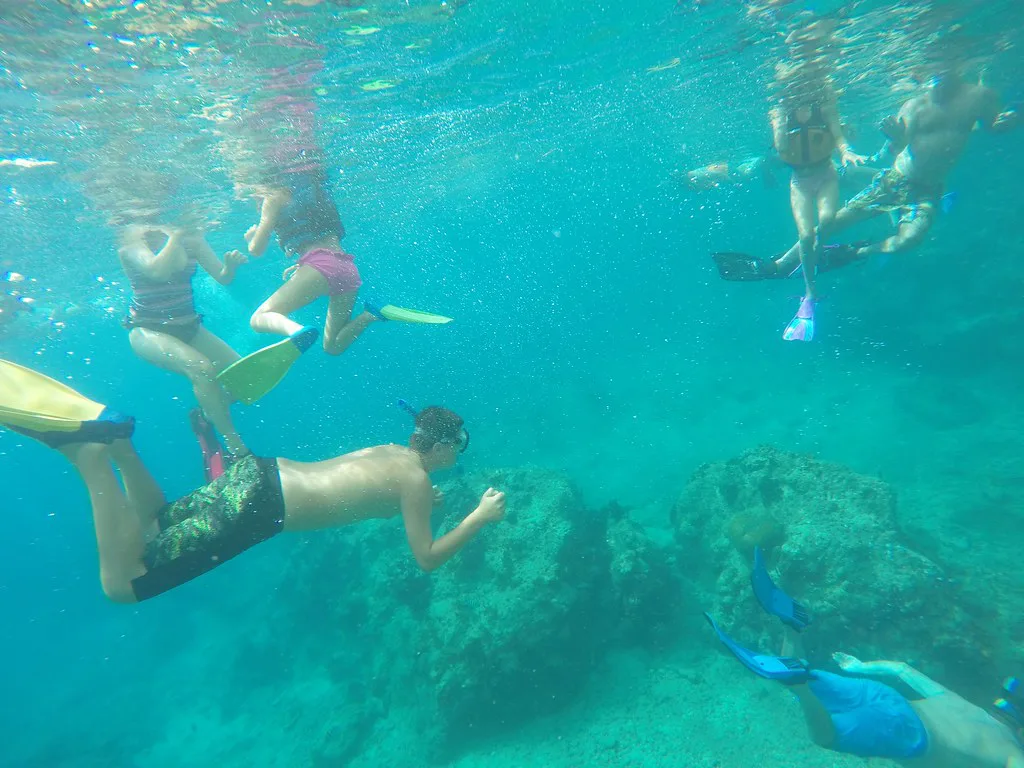
Try fins on with the socks or booties you will actually wear, then check three points: the heel should sit firmly in the pocket with no slip, the toes should not jam against the end, and the strap or pull tab should be easy to grab and release. Walk a few steps — a loose open-heel fin will flop or twist, and a tight full-foot pocket will pinch the instep. The Palau's pull-tab ring, for example, is designed for easy donning and doffing, not to compensate for a poor size.
Reviews in the roundup show both failure modes: one snorkeler reported Palau straps that slipped off the heel under a hard kick, while others found the same fins comfortable for travel and short dives. That is a sign to test the strap tension and heel hold rather than assume a popular model fits every foot. If the fit needs a socks layer, take the guide's cue and buy the sock first so you size around it.
Fins for travel and boat days
Short, packable fins fit more easily in a duffel, are simple to pull on and off on a boat deck, and are easier to walk in across sand — which is much of why the Palau is framed as a travel-friendly fin. If your itinerary mixes flights, boat rides and roadside entries, a compact blade set saves weight and space. Long, stiff fins deliver more thrust but are bulkier to pack and harder to manage in a crowded tender.
Divers Supply stocks full-foot, open-heel and compact travel fins in one place, which helps when you want to compare foot pocket styles side by side instead of ordering blind. Check the published size range and foot pocket type on the product page before you buy, and remember that a travel fin you actually pack will outperform a powerhouse fin left at home.
Matching fins to the water
In a calm, shallow bay with a sandy entry, short fins give you the maneuverability to turn over a reef patch and stand up without a long blade tangling your legs. On a current-prone coast or a shore break, the extra power of a longer blade reduces the effort of the swim out and back, provided you can handle the bulk in the surf zone. Entry over rock or rubble is a separate call: open-heel fins with booties protect your feet on the approach, while full-foot fins are lighter but leave you in bare feet or thin socks. The same short-versus-long decision comes up when planning snorkeling in Key Largo, where protected reef sites and open drifts sit close together.
Read the day before you commit to a fin style. A beach with lifeguards, posted advisories and a protected cove rewards agility; an exposed shoreline with drift rewards power and a bootie. If you are unsure of conditions, ask the lifeguard or check the local ocean-safety forecast and plan a shorter swim with the fins you already own.
Pairing fins with the rest of your kit
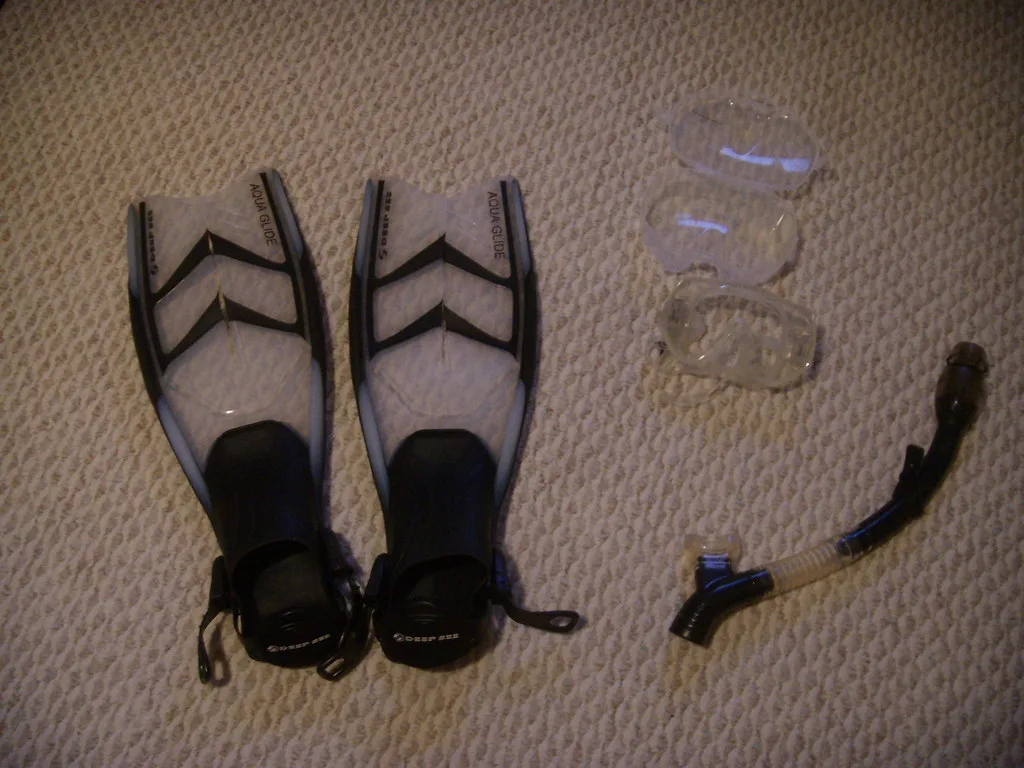
Fins fix propulsion, but a leaking mask or a flooded snorkel ends the swim regardless. Our guide to the snorkel mask covers skirt seal, fit and lens options, and for breathing you can weigh a dry snorkel against a wet snorkel depending on how much chop you expect. Bright fin color and a snorkel with a visible top make you easier to spot, which is worth more than a marginal blade upgrade.
Sun protection belongs in the same planning step, since many snorkel destinations restrict certain sunscreen ingredients to protect reefs. Check the local rules for the bay you are visiting and look for formulas built on non-nano zinc oxide or non-nano titanium dioxide, outlined in our reef safe sunscreen guide, before you pack.
Fins for lap swimming and swim training
Swim training uses a different tool entirely: a center-mount snorkel lets a swimmer hold a still head position and work on body line and stroke technique without turning to breathe. Finis makes an original swimmer's snorkel for that purpose, and it is not a substitute for a reef snorkel with a purge or dry top. If your goal is laps rather than reef time, choose a swim-specific snorkel and leave the fins for kick sets or snorkel days.
Short training fins are commonly used for kick drills and leg conditioning in pools, and the short-blade trade-off described for snorkeling applies here too: more kick cadence, less top-end speed. Long blades reward distance swimming; short ones reward technique work. Decide which you are training before you buy a second pair.
Care and lifespan
Rinse fins in fresh water after every saltwater swim, dry them out of direct sun, and store them flat rather than folded under weight so the blade does not take a set. Check the foot pocket and strap attachment points periodically; the Mares Avanti is noted as prone to foot pocket wear under daily use, and worn straps are a common failure point on adjustable models. Replace a fin when the pocket tears or the strap no longer holds tension — a fin that slips off mid-swim is a real hazard.
Choose Your Fins, Then Your Water
Start with the water you will actually snorkel: calm shallow bays reward short, packable fins, while exposed coasts and long swims reward a longer blade and booties. Then fit the foot pocket with the socks you will wear, check the brand's chart, and buy where an exchange is easy. Pair the fins with a mask and snorkel that seal properly and reef-safe sun protection, and you have a kit that works across a whole trip.
Frequently Asked Questions
Do you need fins to snorkel?
Fins are highly recommended for snorkeling but not mandatory. They add propulsion so you can cover more reef with a slower kick, they give you better control near coral, and the blade shields your feet from knocks and scrapes. In an emergency, a finned snorkeler can also reach the beach faster than an unassisted swimmer. Bright colors help lifeguards and boat operators spot you.
Are long fins better than short fins for snorkeling?
It depends on the water. Short fins are easier to maneuver, quicker to change direction, gentler on the legs and better in shallow water, which is why they suit children, beginners and anyone who cramps easily. Long fins give more thrust per kick, so they are the better choice on a coast with waves and current or on a long swim out to a reef line. The cost is bulk, heavier legs and less agility close to coral.
Do you need booties with open-heel snorkel fins?
Open-heel fins use a strap behind the heel and are normally worn over a neoprene bootie or a fin sock, which helps when you walk over hot sand, rock or cold water on the way in. Full-foot fins have a closed heel pocket worn on the bare foot and need no booties, which makes them lighter and simpler for warm-water snorkeling. If you choose open-heel, try the fins on with the bootie thickness you plan to wear.
What size snorkel fins should you buy?
Use the sizing chart published for the specific brand, because fin sizing varies across Cressi, Mares, Scubapro, IST and TUSA even for men and women within the same brand. Shoe size alone is not reliable, so try the pair on with your socks or booties before committing, and buy where an exchange is straightforward. Keep the packaging until you have confirmed the fit.
Are short fins good for beginners and children?
Yes, in calm shallow water. Short blades are easier to control, gentler on the legs and less likely to strike another swimmer or the reef, and the shortest kids' models are aimed squarely at beginners. For children, look for a secure fit, light construction and a simple strap or pull tab they can manage themselves. A pair of fin socks cuts down on rubbing at the heel and toes.
Can you snorkel without fins?
You can, but you will work harder. Without fins you rely on your arms and a flutter kick for every yard of travel, so sessions tend to be shorter and you spend more energy getting back to the beach. Fins also keep your feet covered on rocky or rubble entries. If you swim without them, stay close to shore and stick to calm, shallow water.
Sources
Snorkeling notes for your next trip
Optional updates to our snorkeling guides.
You might also like
Continue reading
More guides you'll find useful