Hawaii Reef Fish: How to Identify What You'll See Snorkeling
Learn the Hawaii reef fish you're most likely to spot snorkeling, how to tell triggerfish, tangs, wrasses and angels apart, and which ones to give space.
On this page
What makes a Hawaii snorkel different from a Caribbean one is the number of fish you can see only here. The islands sit far enough from other reef systems that a long list of species evolved in isolation, and the Hawaiian name index maintained for the state's Division of Land and Natural Resources catalogues hundreds of them. You do not need to memorize a field guide to enjoy the show, but knowing a few body shapes and Hawaiian names turns a blur of color into a readable reef.
This guide suits beginners and families who want to know what they are looking at from the beach, as well as stronger swimmers planning a boat trip to a deeper bay. It organizes fish by the zone where you meet them, from the ankle-deep surge channel to the coral heads farther out, so you can look in the right place at the right depth.
Why Hawaii's reef fish look different
Endemism is the headline. A meaningful share of the fish on Hawaiian reefs are found only in the archipelago, which means a species you see here may not appear anywhere else in the Pacific. The state's reef fish volume documents more than 600 species across the island chain, from the shoreline down to 200 meters. That range is why one snorkel at a sheltered bay can turn up species a diver would travel farther to find.
The bright yellow fish most snorkelers notice is usually the yellow tang, a surgeonfish that grazes shallow reef flats in small schools.
The five species spotlighted for Kealakekua Bay on the Kona coast show the pattern: the masked angelfish, flame hawkfish, Hawaiian saddle wrasse, Hawaiian white spotted toby and Potter's angelfish. Several of these are Hawaiian endemics, and the saddle wrasse is one of the most familiar fish on any island reef. Expect to see them in different microhabitats rather than all in one spot.
The fish you'll meet first: damselfishes and surgeonfishes in the shallows
The moment your mask clears, you will usually see small dark damselfishes darting over the rock. These are the starter fish of every Hawaiian snorkel, and they reward a slow approach: hold still over a coral head and the school settles back into place. Look for the sergeant major's banded body and the gray damselfish hovering just above the substrate.
Surgeonfishes, the tangs, are the other shallow-water staple. The convict tang, called manini in Hawaiian, wears vertical black bars and grazes in loose groups over rubble and rock. The yellow tang is the bright yellow fish snorkelers ask about most, and it often works the same shallow reef flats in small schools. The yellow-eyed surgeon, or kole, is a darker, chocolate-brown tang that prefers the surge zone where waves wash over rock.
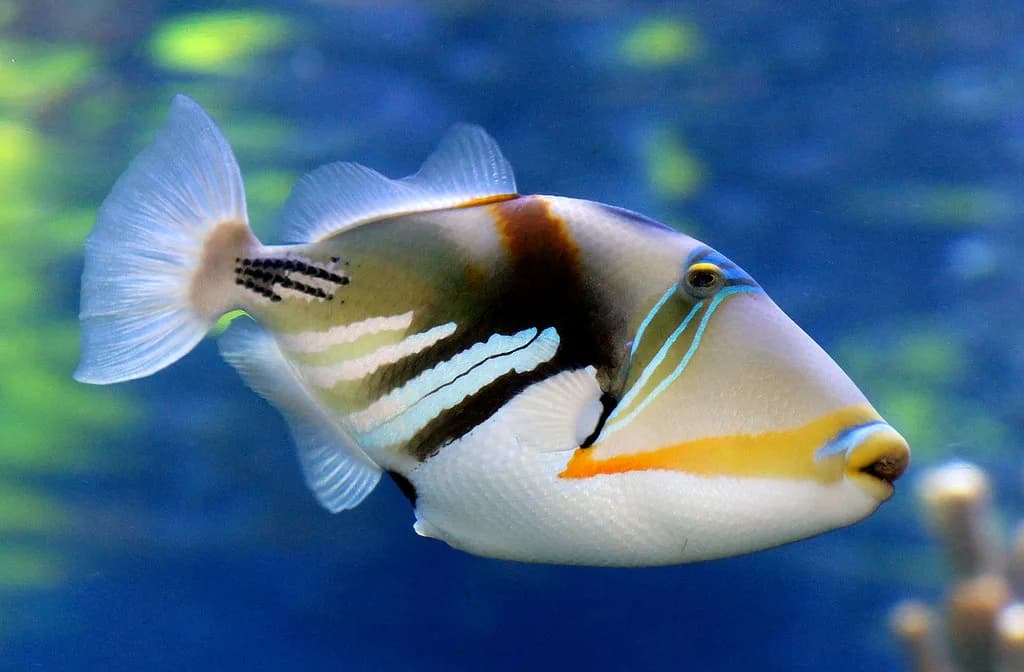
The reef triggerfish is the one fish nearly every snorkeler recognizes, with its Picasso-like blocks of color and its namesake trigger spine. It is also the fish most likely to hold its ground, particularly when nesting, so give it a wide berth rather than swimming directly at it. Learn its silhouette and you will spot it on nearly every reef flat in the islands.
Saddle wrasses, parrotfishes and other swimmers that move across the reef
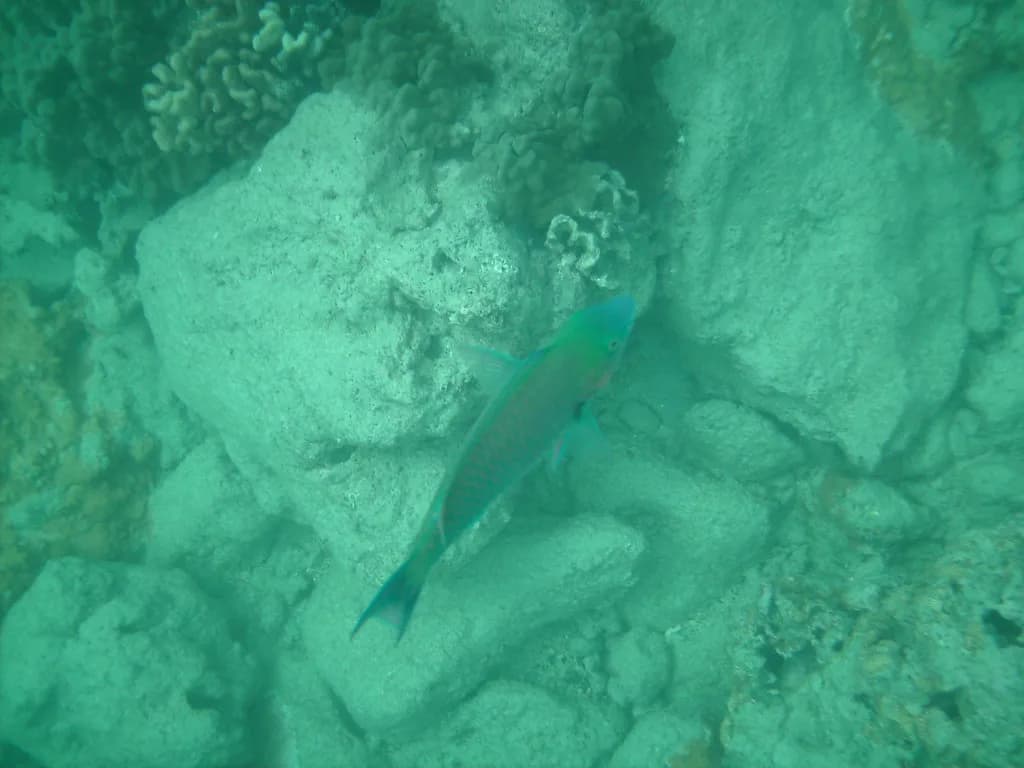
Mid-water swimmers cover more ground, so they show up unpredictably. The Hawaiian saddle wrasse, called hinalea in Hawaiian, is a greenish fish with a dark saddle across its back and blue lines on the face; it works the reef edge in constant motion. Parrotfishes, the uhu, are larger and louder, scraping algae from coral with beak-like teeth; you often hear them before you see them.
Goatfishes are the bottom workers. The manybar goatfish, moana, and the white saddle goatfish, kumu, patrol sand channels with two long chin barbels extended, sifting for invertebrates. Watch a sand patch beside a coral head rather than the coral itself and you will often find a pair of goatfish working the edge. Their Hawaiian names are worth learning because local signage and dive briefings often use them.
Angelfishes and hawkfishes: the rarer sightings and where they hold
The masked angelfish is the prize. It has a yellow body with a black mask across the eyes and blue markings on the fins, and it tends to hold near ledges and drop-offs rather than the open flat. The flame hawkfish is easier to find once you know its habit: it perches on coral and rock, watching the reef from a fixed point, so scan the tops of coral heads rather than the water column.
Potter's angelfish is the commonest angelfish in Hawaii, rusty orange with fine vertical blue-gray lines that darken toward the lower body. The Hawaiian white spotted toby is a small, brownish puffer covered in large white spots, often found near the same coral heads. Because these fish hold close to structure, a slow pass over a single coral head can produce more than a fast swim across the whole bay.
Reading the reef: depth zones, coral heads and sand channels
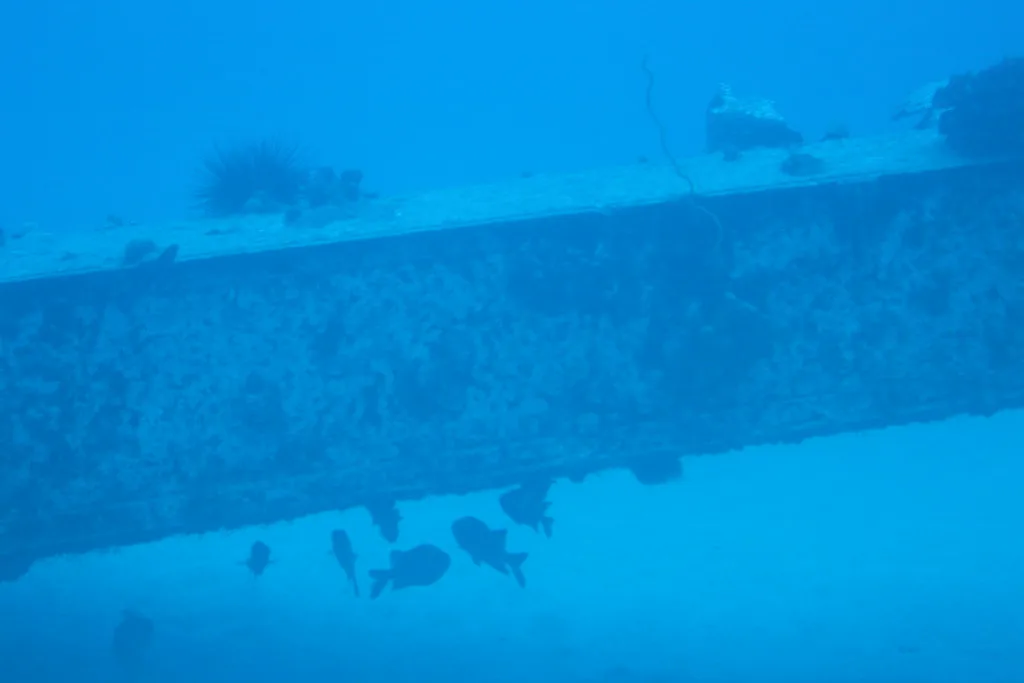
Reef zones decide what you see. The shallow surge zone is damselfish and surgeonfish country, with rock and rubble close to the surface. The mid-depth coral heads host hawkfishes, tobies and angelfishes, which need structure to hide in. The sand channels between heads are where goatfish and wrasses feed, and the deeper outer edge is where you are more likely to encounter larger swimmers.
Coral health matters more than any single fish. Bleached or broken coral supports fewer fish, and the state's reef fish volume notes that habitat loss and other pressures affect these populations. Snorkel over living coral with a gentle kick and you see more, and you leave the reef in better shape for the next group.
Identifying fish without a photo: body shape, tail shape, markings
Start with the outline rather than the color, because water absorbs red light with depth and a fish that looks brown at 20 feet may be red in a photograph. A tall disc-shaped body points to a surgeonfish or angelfish; a torpedo shape points to a wrasse; a deep-bodied fish with a beak is a parrotfish. Tail shape narrows it further: forked tails belong to fast swimmers, rounded tails to slower ones.
Then look at markings. Vertical bars, saddles, masks and spots are stable identifiers, while overall color shifts with light, stress and sex. The saddle wrasse's dark saddle, the masked angelfish's black face mask and the toby's large white spots all work as reliable field marks. Note the depth and the habitat too; that context often confirms the identification.
Hawaiian names worth knowing alongside the common names
Hawaiian names appear on signage, in dive briefings and in local conversation, so a working vocabulary helps. The cross-reference index lists manini for convict tang, kole for yellow-eyed surgeon, uhu for parrotfish, hinalea for wrasse and kumu for white saddle goatfish. Learning five names takes ten minutes and makes reef interpretation much easier.
The reef triggerfish carries the longest name in the index's list, humuhumunukunukuapuaa, and it is the state fish. You will hear it used for the species you will most often see on a shallow snorkel, so knowing both names avoids confusion when a guide points one out.
Fish to keep your distance from and how to behave around the reef
Some reef residents deserve space. Triggerfish defend nesting territories and will charge a swimmer who comes too close, so back away rather than holding your ground. Moray eels retreat into coral and can bite if cornered, and sea urchins on the rock are a foot hazard when you stand up in the shallows. None of this should keep you out of the water; it should shape how you move through it.
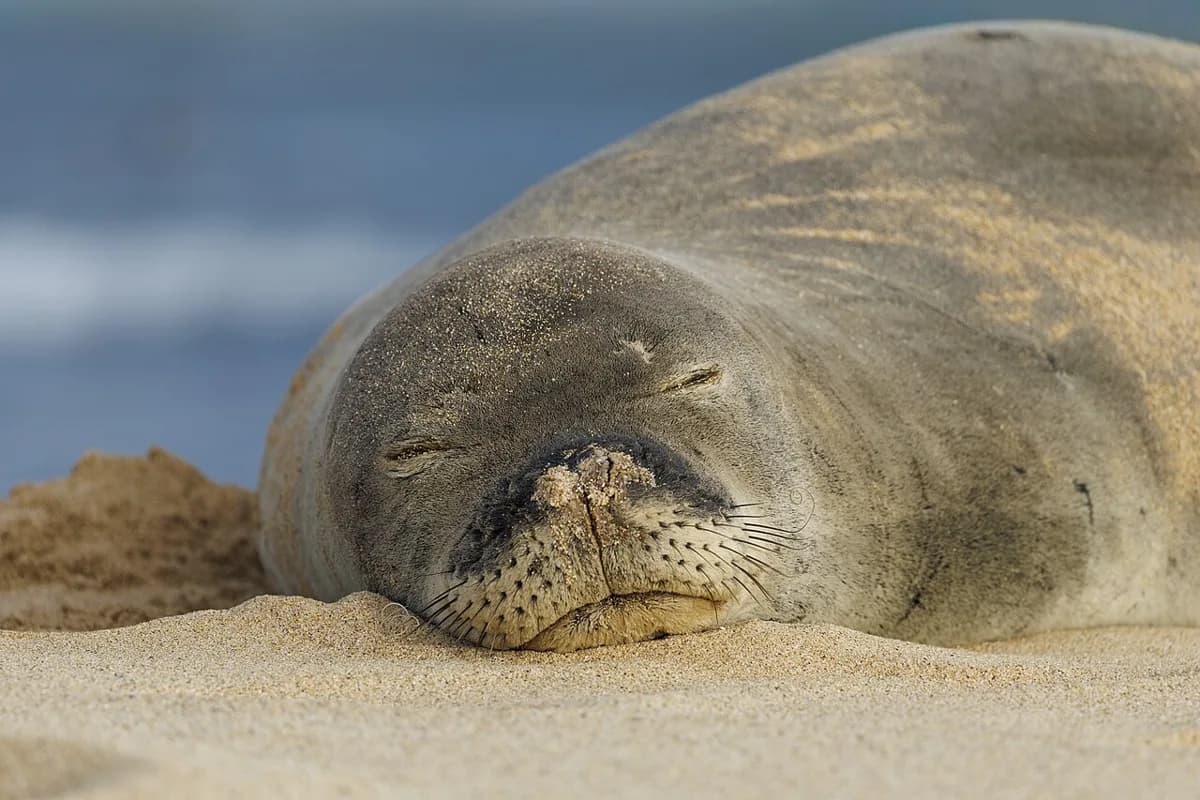
The wildlife-viewing rule on Hawaiian reefs is simple and consistent: look, do not touch, feed or chase. That applies to turtles and monk seals as much as to fish, and it protects the animals and keeps them approachable on their own terms. The same discipline applies to fire coral and other stinging organisms, which you avoid by keeping your hands and knees off the reef.
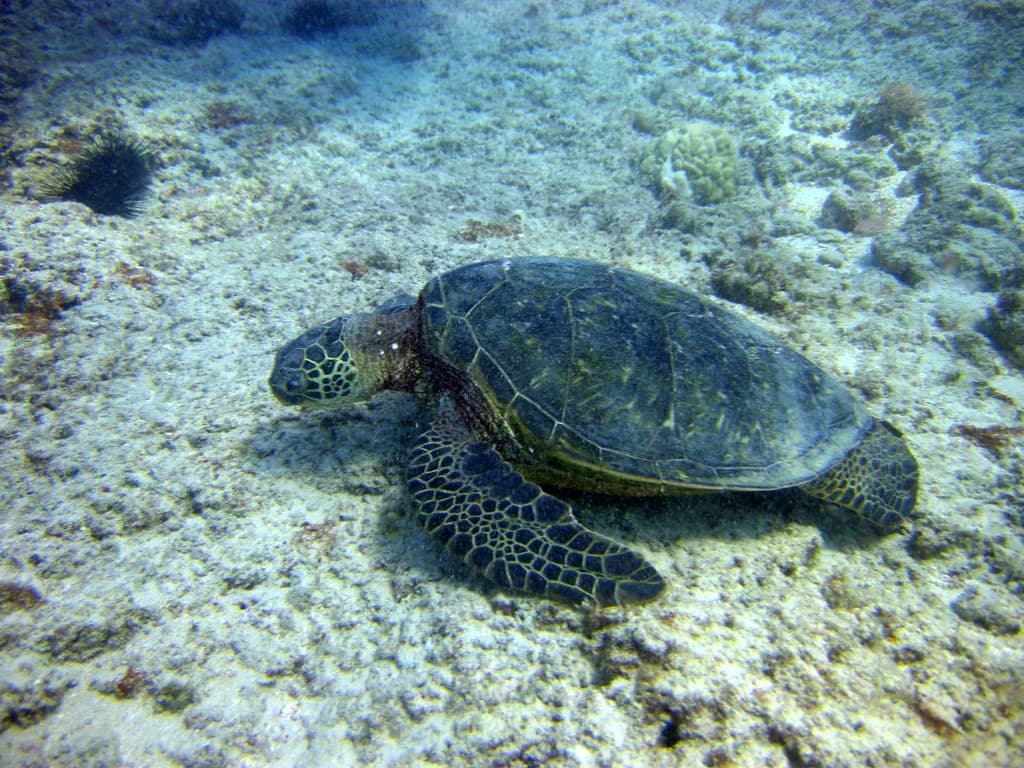
The Hawaiian green sea turtle, honu, is the animal most snorkelers most want to see, and it is also the one most often disturbed. Watch from the surface and let the turtle choose the distance. The same principle holds for the reef itself: hovering above a coral head gives you a better view than grabbing onto it.
What to bring and how to snorkel so fish stay close
Reef-safe sunscreen, a rash guard and a properly fitted mask matter more than any single accessory. A mask that leaks forces you to surface constantly, which scares fish away; a snug fit and a defogged lens keep you face-down and still. Fins help you cover ground, but a slow flutter kick keeps you off the coral and lets fish return to their business.
The best technique for fish-watching is to pick one coral head and hold position for several minutes. Fish that scatter at your approach often return once you stop moving. Bring a waterproof fish card or a slate if you want to record what you see; identification is much easier when you can note the depth, the habitat and the field marks before you surface.
Combining fish-watching with a bay-by-bay snorkel plan
The Kona coast is the classic fish-watching itinerary. Kealakekua Bay is a marine sanctuary with coral reefs and a reputation for tropical fish, and companies such as Captain Zodiac run snorkel trips there. Booking directly gives you the current trip options and what each one covers, so check current prices and dates before you go.
On other islands, match the bay to the fish you want to see. Sheltered bays with shallow coral heads suit beginners and families, while outer reef points and drop-offs suit stronger swimmers chasing angelfish and larger pelagics. If you are weighing where to base the trip, our guide to snorkeling in Maui covers shore spots and boat options that pair well with this fish list, and our Oahu snorkeling guide does the same for Oahu's reefs. Check the state's reef and shore fish reference before you go so you know which species are possible in the habitat you are visiting.
Plan Your Snorkel Day
Pick one bay, learn five fish before you go, and spend your water time hovering over a single coral head rather than racing across the whole reef. That approach suits beginners and rewards experienced snorkelers equally, and it is the surest way to see the endemics that make Hawaii different.
For safety and rules, check the Hawaii Division of Land and Natural Resources and the ocean-safety page for the beach you plan to visit before you leave. They publish current advisories that no static guide can replace.
Explore more Marine Life snorkeling
Frequently Asked Questions
What are the yellow fish I see snorkeling in Hawaii?
The bright yellow fish most snorkelers notice is usually the yellow tang, a surgeonfish that grazes shallow reef flats in small schools. The masked angelfish also has a yellow body, but it is a deeper, rarer sighting with a black face mask.
How can I identify a fish without a photograph?
Start with body outline and tail shape, then add markings such as vertical bars, saddles, masks or spots. Color is the least reliable field mark because water absorbs red light with depth. Note the depth and the habitat as well; they often confirm the identification.
What is the Hawaiian name for swordfish?
The Hawaiian name index lists a'u for blue marlin and a'u lepe for sailfish, and a'uku for swordfish. These are offshore species rather than reef fish, so you are unlikely to see them on a snorkel.
Why is the humuhumunukunukuapuaa Hawaii's state fish?
The reef triggerfish, humuhumunukunukuapuaa, is the state fish and one of the most recognizable fish on Hawaiian reefs. Its bold blocks of color and its trigger spine make it easy to identify, and it is common on shallow reef flats.
Which Hawaiian reef fish are endemic?
Several of the species highlighted for Kealakekua Bay are Hawaiian endemics, including the masked angelfish, the Hawaiian saddle wrasse, the Hawaiian white spotted toby and Potter's angelfish. The flame hawkfish is also associated with Hawaiian reefs. Expect to see each in its own habitat rather than all in one spot.
Should I take a boat tour or snorkel from shore?
Boat tours reach deeper bays and outer reef points that shore snorkelers cannot easily access, which suits stronger swimmers chasing rarer species. Shore entries suit beginners and families who want to practice in the shallows. Book directly with an operator for current trip options.
Sources
Snorkeling notes for your next trip
Optional updates to our snorkeling guides.
You might also like
Continue reading
More guides you'll find useful