Stingray Snorkeling: Where to Go and How to Act Around Them
Stingrays turn up on sand flats, in bays and along reef edges. Learn where snorkelers meet them, how to read their behavior and how to keep your distance.
On this page
Stingrays are the payoff of shallow, calm water: sand flats, lagoon edges and the sandy channels that thread between reef structures. Snorkelers who suit this kind of day are comfortable in waist- to chest-deep water, happy to hover quietly, and patient enough to scan the bottom instead of racing across it. You do not need a boat or a guide to meet a wild ray, though some destinations run tours that put you over sandbars where rays gather.
The skill is reading the flat, not chasing the animal. A ray half-buried under a puff of sand, a dark shadow gliding ahead of you, a pair of spiracles behind the eyes — these are the details that tell you whether to hold still or back off. Everything below applies to wild rays on open flats and to the habituated rays at tour sites, with different expectations for each.
What Stingray Snorkeling Actually Is
A stingray snorkel is usually a shallow-water walk-in or a short boat hop to a sandbar, not a reef dive. The animals rest on sand and in seagrass, often in water from ankle depth out to a few feet, and they glide away when something large approaches. Treat any sighting as optional: rays move with tide, temperature and boat traffic, so a flat that held a dozen yesterday can be empty today.
Yes, with basic positioning.
The most reliable setups are places where sand meets structure. Look for a deep sand channel beside a seagrass bed, or a rubble edge where the flat drops toward the reef. Rays often work these edges because prey hides there, and snorkelers can hover over the sand and watch without touching the bottom.
Where Snorkelers Meet Stingrays
Four settings account for most encounters. Sandbars and lagoon floors give you the easiest entry and the shallowest water, which suits families and new snorkelers. Seagrass flats hold rays feeding over the grass, but the bottom is soft and easy to kick up. Reef edges and sandy channels put rays alongside coral and reef fish. Feed sites, where tour boats have stopped for years, concentrate rays and make them far less shy of people. The same shallow-flat logic drives the snorkeling in Bahamas, where island choice hinges on calm lagoon water.
The Cayman Islands operate a well-known version of that last setting. At Grand Cayman's sandbar the water averages around waist depth, and Stingray City Cayman Islands, which runs trips there, describes southern stingrays that have grown accustomed to human presence over decades. Trips run daily from the cruise terminal and Seven Mile Beach resorts, and the company's reef stop at Coral Gardens sits in 8 to 12 feet of water where turtles and stingrays sometimes pass through, as described on the Stingray City Cayman Islands tour pages. The lesson for any destination is that a feed site is a habituated site, and you should expect different behavior there than on a wild flat.
How to Spot a Ray
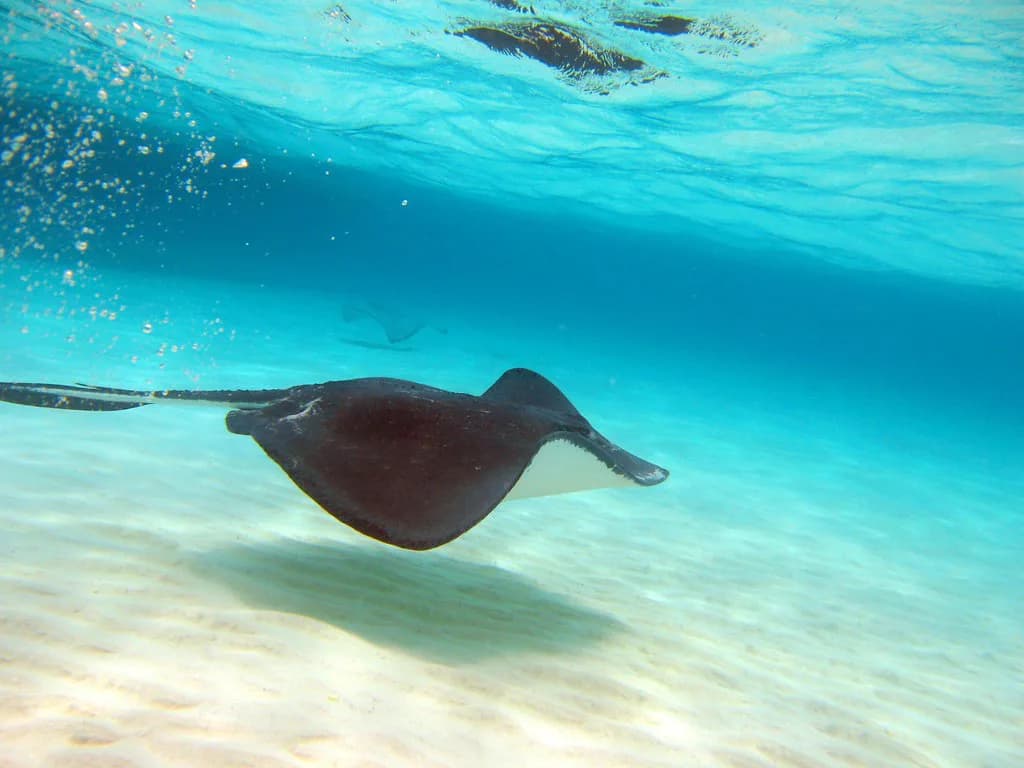
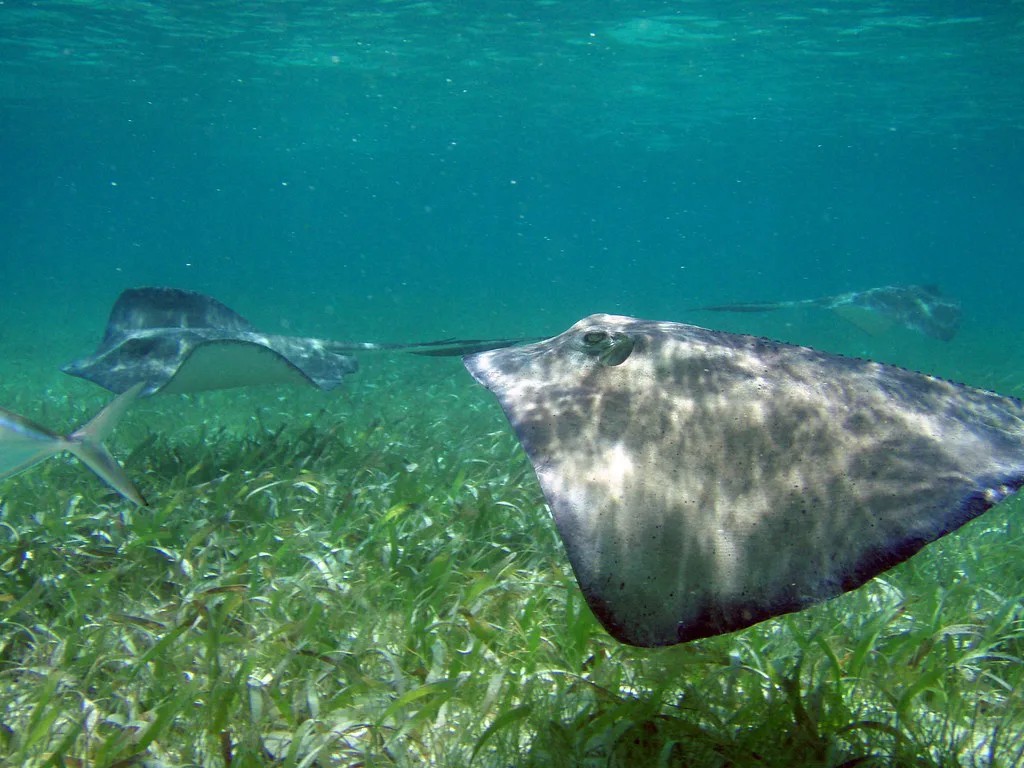
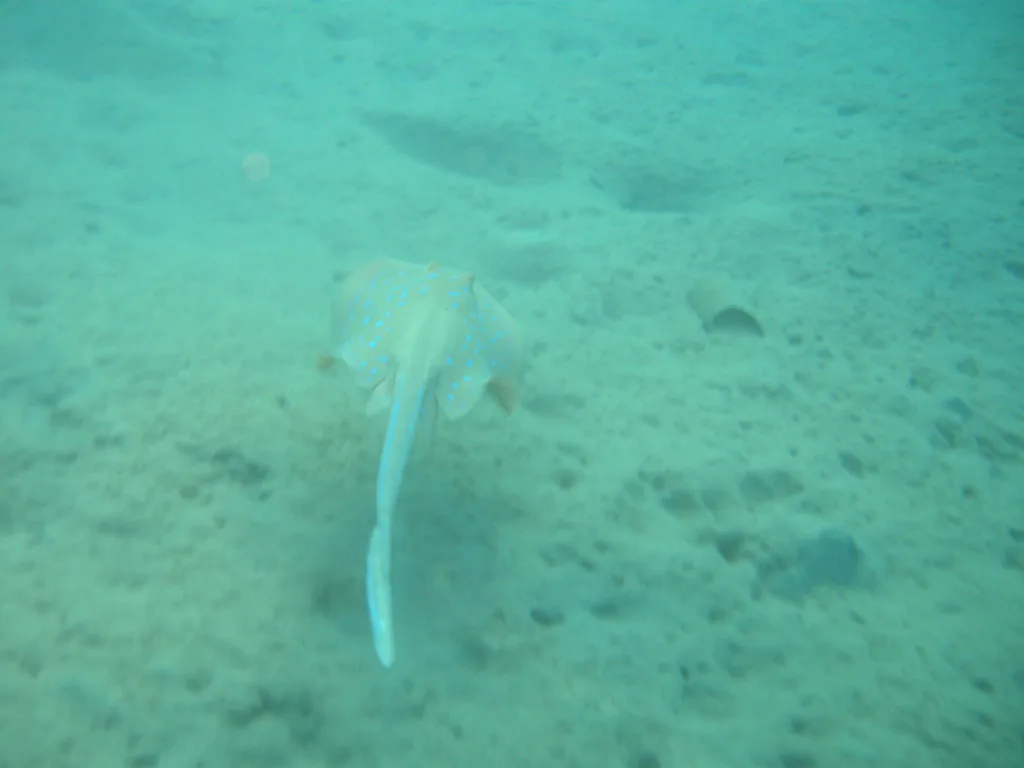
Start with the shadow. A resting ray on pale sand reads as a dark, flat outline with a long tail, and a gliding ray casts a moving shadow that gives it away before the animal itself resolves. Look for the twin spiracles just behind the eyes, the small openings a buried ray keeps clear of the sand, and watch for a wing tip lifting or settling.
A ray that has just buried itself leaves a fresh puff of suspended sand that hangs over the bottom for a few seconds. Scan slowly, in overlapping sweeps, and keep your body low and horizontal so you look along the sand rather than down at it. The same slow scan picks up the animals snorkelers mistake for rays: conch shells, starfish and the dark spines of urchins.
Reading Behavior Before You Move
Resting and burying mean leave it alone. A ray settled on the bottom, especially one that has just covered itself, is not inviting attention, and hovering directly above it blocks its escape line. Gliding is neutral: keep your distance and let it set the direction. Fleeing, a rapid wingbeat and a burst of sand, means you are already too close, so stop, back off and give it open water.
Rays on regularly visited flats behave differently from wild ones, and divers who have watched both note that shy animals keep their distance while rays at popular tour stops are far more tolerant of people. Tolerance is not tameness, and your approach should get quieter at a busy site, not bolder. Do not grab, lift or steer an animal even when it swims into your space.
Getting In and Positioning
Enter quietly from sand, not from rock. Shuffle your feet along the bottom as you wade out; this is a cue to any buried ray and it moves anything underfoot before you do. Once the water reaches your waist, put your face down, lie flat on the surface and keep your fins behind you rather than kicking them vertically near the bottom.
Stay low on the surface and use slow, small fin strokes. A snorkeler who hovers without splashing sees more rays than one who swims hard, because the animals settle again once the disturbance passes. Keep your hands close to your body and your gear streamlined, with no dangling straps to trail across the sand.
Distance and Viewing Rules
Give a wild ray several body lengths and never block its path to deeper water. If it is between you and the shore, move sideways so it has a clear line out, and never corner one against a beach or a seawall. Marine reserves in the destinations covered here commonly restrict touching and feeding of marine life, so follow posted rules at the site and assume no handling unless a managing agency says otherwise.
Distance is the practical tool, not a formality. A ray that keeps its ground while you hold still is comfortable; one that lifts and moves is telling you the gap is too small. Photograph from the surface with the animal in open water, and skip the close-up that requires you to crowd it.
Hazards on Sand Flats
The tail spine is the reason for the shuffle step. A ray resting under sand reacts to being stepped on, so feet — not hands — are the concern, and flat, closed footwear or booties help on rubble-strewn entries. Never straddle or lift a ray, and keep your hands away from the tail end of any animal you pass.
Surge and current over open flats are the bigger trip-planning constraint. Shallow flats offer little shelter, and an incoming tide can push you off your line faster than you expect. Watch the water before you commit, pick a flat with a calm lee side, and keep your exit point in sight. Where local ocean-safety agencies post advisories for high surf or currents, treat them as the day's plan rather than background noise.
Etiquette at Feed and Tour Sites
A feed site is not a petting zoo. Rays gather because boats have stopped there, and their tolerance of people is a trained response rather than an invitation to handle them. Watch how the crew manages the animals, keep your hands to yourself, and let the guides control any feeding. If a ray swims toward you, hold your position, keep your hands close and let it pass; do not reach out to redirect it.
Expect the encounter to be brief and crowded. Published itineraries for these sites allot short stops of a few dozen minutes, with the ray portion followed by reef or beach time. Book the tour whose itinerary matches what you actually want to see, and read the safety briefing rather than treating it as paperwork.
What You Will See Alongside Rays
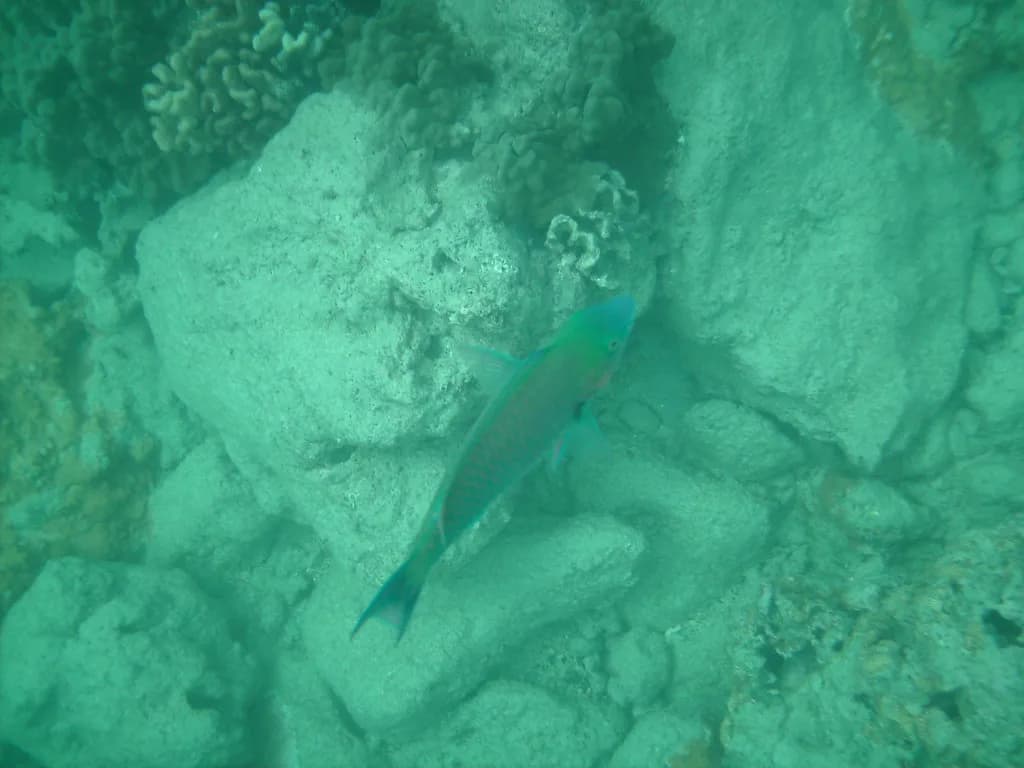
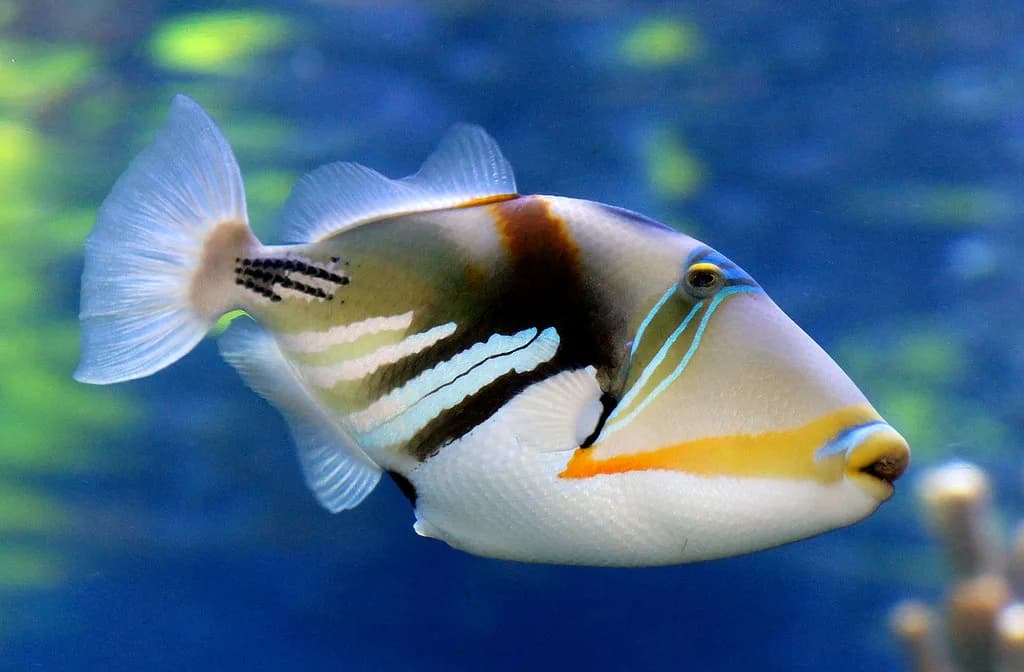
The same flats hold a crowd of other animals. Conch, starfish and urchins sit on the sand and in the grass, nurse sharks rest in deeper channels, and bonefish work the shallows in small groups. Reef fish spill in from adjacent coral, and snorkelers who learn the common species get more out of a flat because they know what is unusual. A regional fish reference helps here; the hawaii reef fish guide is a useful starting point for recognizing the species that share Indo-Pacific and Central Pacific flats, including the reef triggerfish, known formally as Rhinecanthus rectangulus and often called the Picasso triggerfish for its painted markings.
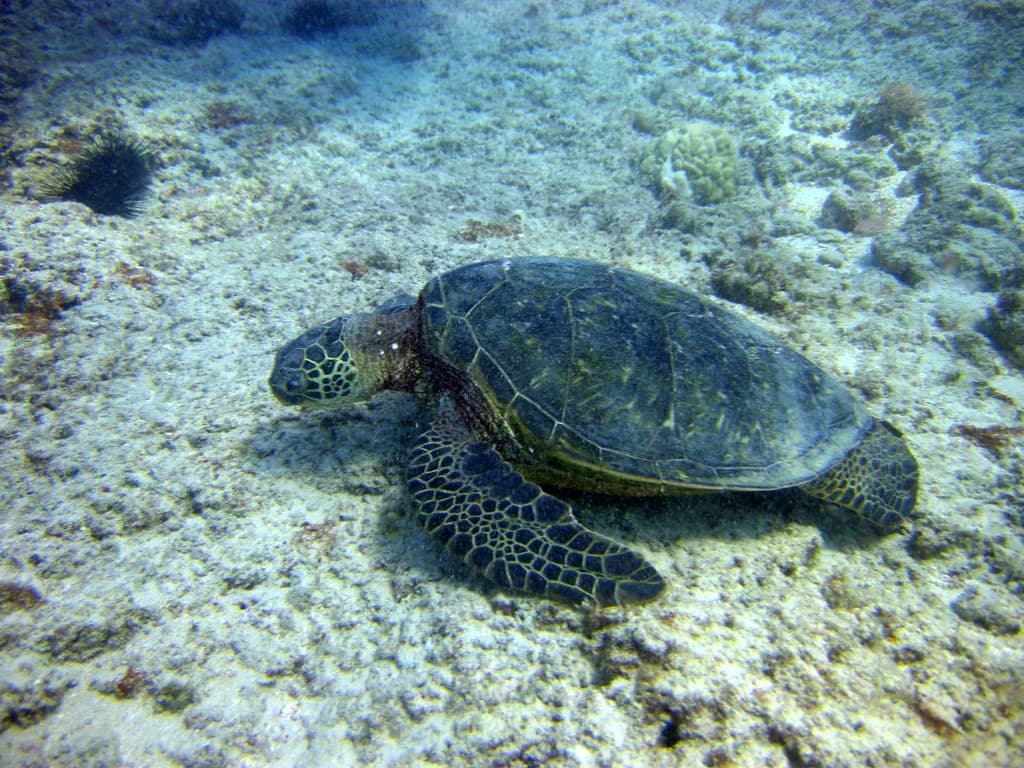
Rays share water with protected animals too. Sea turtles surface to breathe beside sand flats, and in Hawaii the Hawaiian green sea turtle, Chelonia mydas, is a common sight on shallow reef and grass beds. Give turtles and resting sharks the same open-water courtesy you give a ray, and never chase a surfacing animal.
Best Time and Conditions
Go when the water is flat and the sun is high enough to light the bottom. Early morning usually brings less wind and fewer boats, and mid-morning sun cuts glare on the sand so buried rays show as shadows. A rising tide is often the better window on open flats because it lets you move farther out without wading over exposed reef.
Season and swell direction matter more than the clock. Onshore swell stirs up sand and kills visibility on the flat, while a calm lee shore stays clear. Check the day's surf and wind before you choose a site, and keep a second flat in mind for the afternoon if the first one turns murky.
Snorkel Setup That Helps
A low-volume mask and a dry-top snorkel reduce the noise and drag that spook shallow animals. Split fins suit flat-water hovering better than long freediving blades, because you can scull gently without stirring the bottom. A rash guard and a thin layer of reef-safe sunscreen protect you without leaving a film on the water, and a snug-fitting strap keeps gear from trailing across the sand.
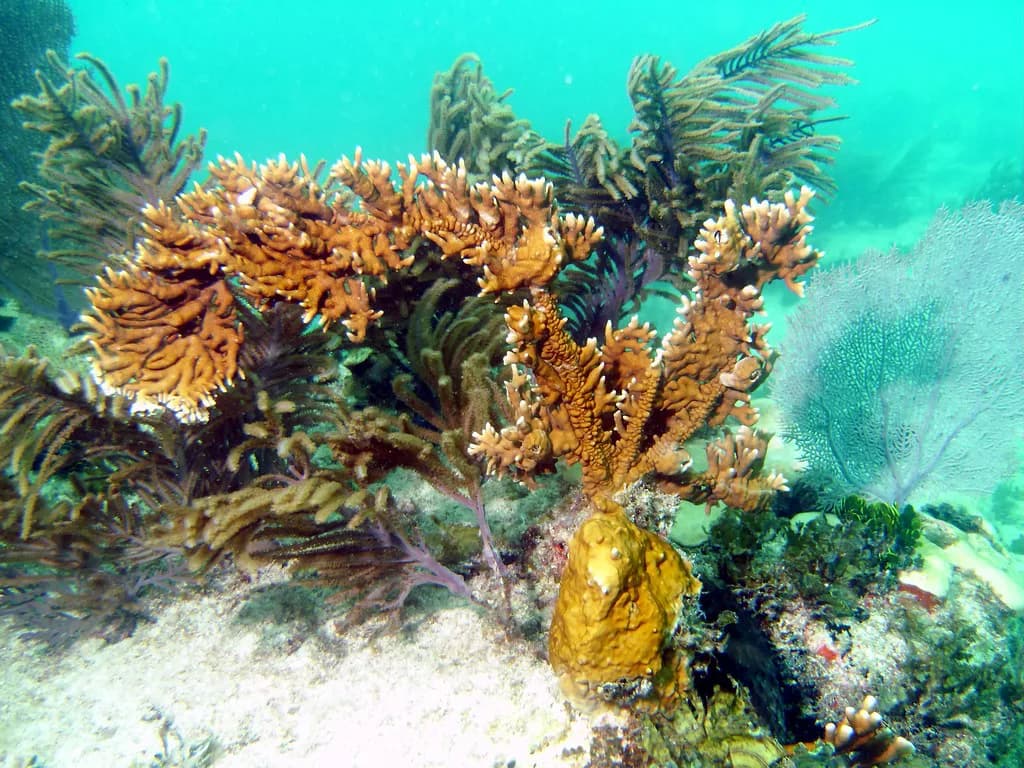
Where the flat runs into shallow reef, watch what you touch. Corals such as fire coral, Millepora alcicornis, grow on shallow reef rock and sting on contact, so keep hands and knees off the substrate. That habit also keeps you from crushing the coral the reef fish depend on.
Common Mistakes
Chasing is the first error. Swimming after a ray pushes it off the flat, and the animals rarely return while a snorkeler is pursuing them. Touching and lifting are the next: they stress the animal and put your hands near the tail. So is standing upright on the bottom, which kicks up silt, blocks the view and puts your feet where a ray may be resting.
Cornering a ray against the shore forces it to choose between you and dry land, and crowding a feed-site ray teaches it that people are a nuisance rather than a neutral presence. The fix is simple: hover, watch, let the animal move first, and take the photo from a distance that leaves it an exit.
Combining a Ray Flat With a Reef
A good half-day pairs a sand flat with a reef edge. Start on the flat in calm morning water, watch rays and check the grass for conch and starfish, then move to the reef as the sun climbs and the light improves. The order matters: flat first, reef second, because a stirred-up flat clouds quickly once boats and swimmers arrive.
Keep the two habitats separate in your behavior. On the flat you hover low over sand; on the reef you stay off the coral and watch where your fins go. The same slow pace works in both places, and it is the pace more than the location that determines how much you see.
Plan Your Ray Day
Pick a shallow flat with sand, grass and an edge of structure, get in quietly with a shuffle step, and spend the first ten minutes hovering and scanning before you swim anywhere. That routine works at a wild flat and at a busy tour site, and it is what separates a good sighting from a rushed one.
Rays are wild animals on their own schedule, so build a backup reef into the plan and let the flat's conditions decide which you use. Watch one final time before you leave the water, and let the last ray you see be one you did not push.
Frequently Asked Questions
Is it safe to snorkel around stingrays?
Yes, with basic positioning. Wild rays on sand flats avoid people and move off when you approach, so the main risk is stepping onto a buried animal rather than an unprovoked strike. Shuffle your feet on the way out, keep your hands away from the tail end, and hover at a distance instead of reaching down to touch one.
How close should you get to a stingray?
Stay several body lengths away and let the ray keep its escape route. A resting or burying ray should be left alone entirely, while a gliding ray can be watched from the surface as long as it is not changing direction to avoid you. If it lifts off in a burst of sand, the gap was already too small.
Do stingrays sting when you step on them?
A stingray resting under sand reacts to being stepped on, and its tail spine is the hazard, which is why the shuffle step matters. Drag your feet along the bottom as you wade out so anything buried moves before your weight lands. Keep your hands off the tail end of any ray you pass and never try to lift one.
What should you do if a stingray swims toward you?
Hold your position, keep your arms close and let the animal pass. Rays at regularly visited flats are accustomed to people and may come close out of habit, but that tolerance is not an invitation to touch, steer or block one. If you need to move, drift sideways and leave open water behind you.
Can kids snorkel near stingrays?
Shallow sandbars and lagoon floors suit children who are comfortable in waist-deep water, because the entry is sandy and the bottom is visible. An adult should stay alongside, keep the child from chasing or reaching for animals, and pick a flat with a calm lee side. Hovering and watching is the whole activity.
Do you need a tour to see stingrays?
Not always. Wild rays turn up on walk-in sand flats, seagrass beds and reef edges where you can wade out from shore and scan the bottom yourself. Tours matter at places like the Grand Cayman sandbar, where boats reach a habituated population offshore and operators publish daily departures from the cruise terminal and Seven Mile Beach resorts.
Sources
Snorkeling notes for your next trip
Optional updates to our snorkeling guides.
You might also like
Continue reading
More guides you'll find useful