Parrotfish in Hawaii (Uhu): How to Spot Them on the Reef
Parrotfish, called uhu in Hawaii, graze algae on lava reefs and coral heads. Learn their color phases, behavior, and how snorkelers can watch them.
On this page
Parrotfish are among the most watchable fish on a Hawaiian snorkel, and they are forgiving company: they graze in the open, hold still long enough to study, and turn up on reef flats and lava shelves close to shore. Uhu, the Hawaiian name for the group, suit beginners and kids who can float and look down, as well as photographers who want a slow, cooperative subject. The catch is that the same species can look like two completely different fish, so knowing the phases turns a confusing blur of colors into a readable reef.
What Uhu Are and Why They Matter on Hawaii Reefs
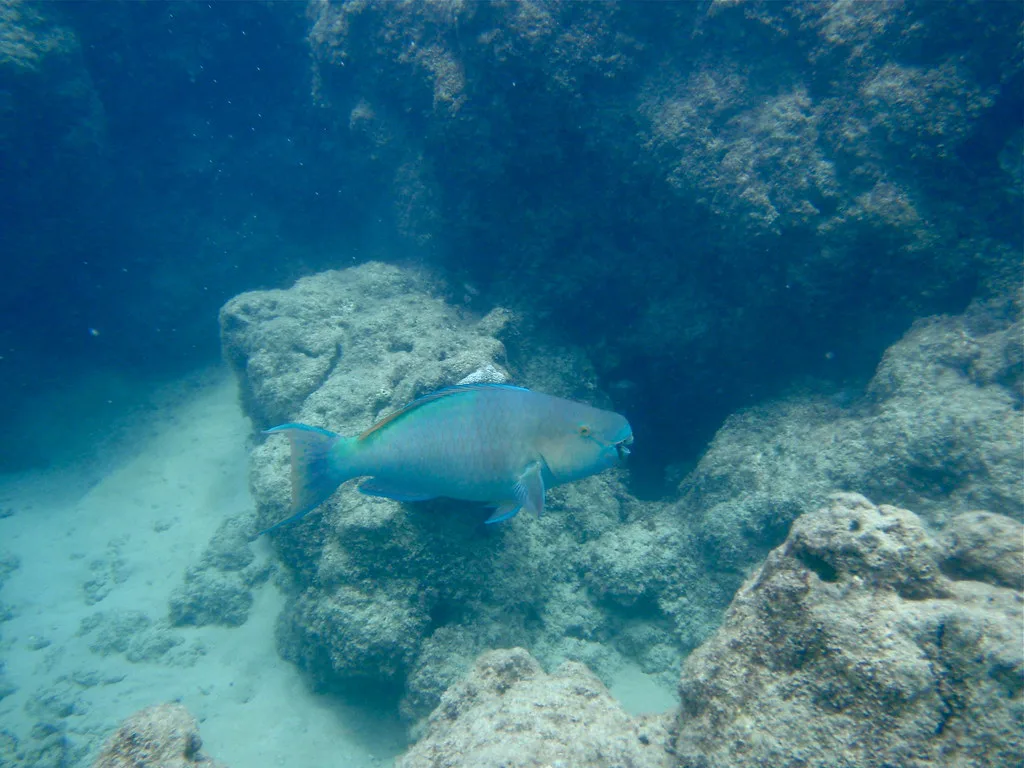
Parrotfish are named for a beak of fused teeth that works like a chisel, scraping algae and rock and coral surfaces. They are widespread in shallow tropical seas, and several species live on Hawaiian reefs, from small, quick fish to the largest uhu, which can reach over 70 cm in total length.
Yes.
That constant scraping is the reason parrotfish matter to the reef: they keep algae trimmed so coral can hold space, and the rock and coral they grind passes through them as fine sediment that becomes part of Hawaii's beaches. For a snorkeler, this means a grazing parrotfish is not just a photo opportunity but a working part of the reef you are floating over.
Hawaii's reefs hold a mix of species, and snorkelers who learn to recognize a few parrotfish quickly start seeing them everywhere. That skill pairs well with the rest of the hawaii reef fish you will meet on the same swim, from tangs to wrasses, so treat uhu as an entry point to reading the whole fish community. Once you can read a reef this way, it makes choosing a tour easier, as our Molokini Crater Snorkeling Guide: Choosing a Maui Tour shows.
The Three Looks: Initial Phase, Terminal-Phase Males, and Juveniles
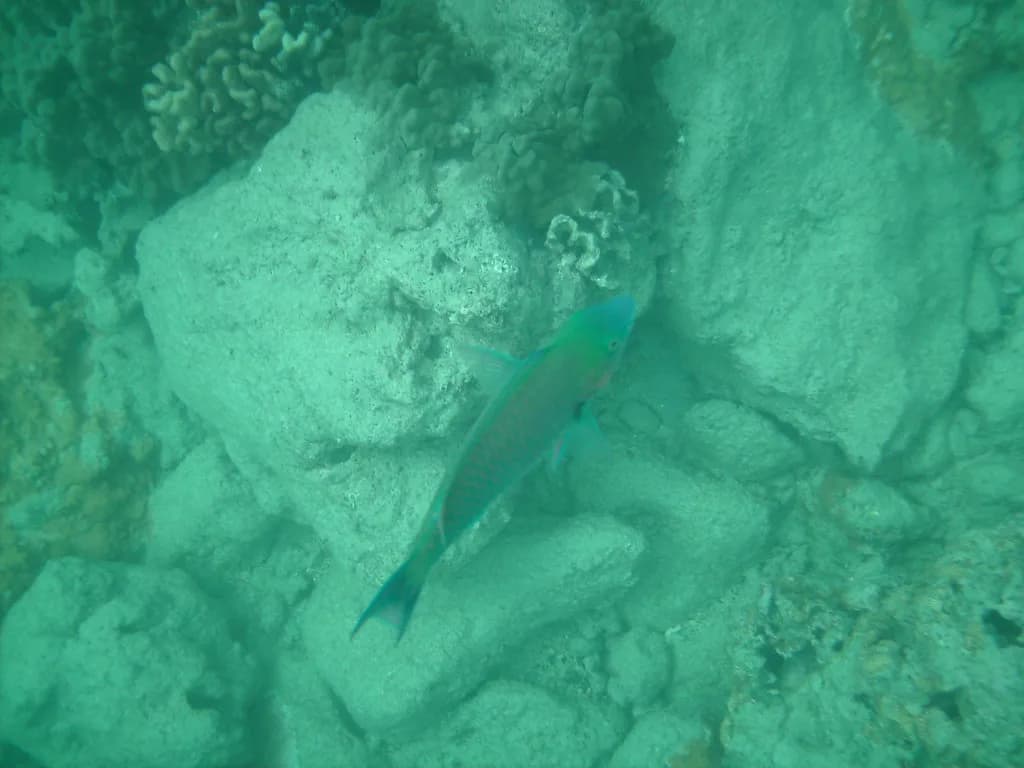
Most parrotfish begin life as females, and the largest, brightest blue fish are terminal-phase males that changed sex for breeding. That is why a dull reddish or mottled fish and a vivid blue one can belong to the same species. Divers who target uhu often pass on those blue breeders to protect the breeding cycle, even where taking them is legal.
Juveniles are smaller and often less boldly marked, which makes them easy to overlook on a busy reef. Look for them close to cover on shallow flats, where they graze in loose groups. Rather than chasing an identification, note the body shape, the beak, and the way the fish moves, then compare sizes and colors to sort species apart.
Where Snorkelers See Parrotfish: Reef Flats, Lava Rock, and Coral Heads
On the Big Island, uhu frequent coral reef, rocky reef, and algae-covered lava, and published species notes place them at roughly 5 to 60 ft, with the most productive hunting described in the 10 to 30 ft range on lava reef. For a snorkeler, the takeaway is to work the shallow lava shelves and rubble edges where algae grows, not just the showiest coral heads.
Reef flats and the sloping rock at the edge of a bay are often the easiest places to watch grazing fish, because the water is shallow and the bottom is close. Kick slowly along the contour and scan for fish head-down, tails up, working a patch of rock. When you find one feeding, stop and let it come back to its patch instead of following it.
Reading Parrotfish Behavior Underwater
A feeding parrotfish is usually head-down against rock, biting and scraping, with the occasional cloudy puff of sediment drifting away. Approach from the side at a slow, steady pace and pause between kicks; parrotfish are not especially wary but will spook if you rush them. Watching one graze for a minute tells you more about the species than a dozen quick passes.
Some parrotfish rest at night in a mucus envelope, a behavior worth knowing if you are on a night snorkel or a dusk swim. During the day, the same fish are active and easy to observe. Keep a respectful gap, never block a fish against the bottom or a wall, and let it choose the distance.
Common Parrotfish You May See and How to Tell Them Apart
Hawaiian parrotfish range widely in maximum size, from about 30 cm for smaller species to over 70 cm for the largest. Size is a useful first filter at a distance, followed by color and body shape. The largest and most striking uhu is the one most snorkelers notice first, but quieter initial-phase fish and smaller species are just as common on the reef.
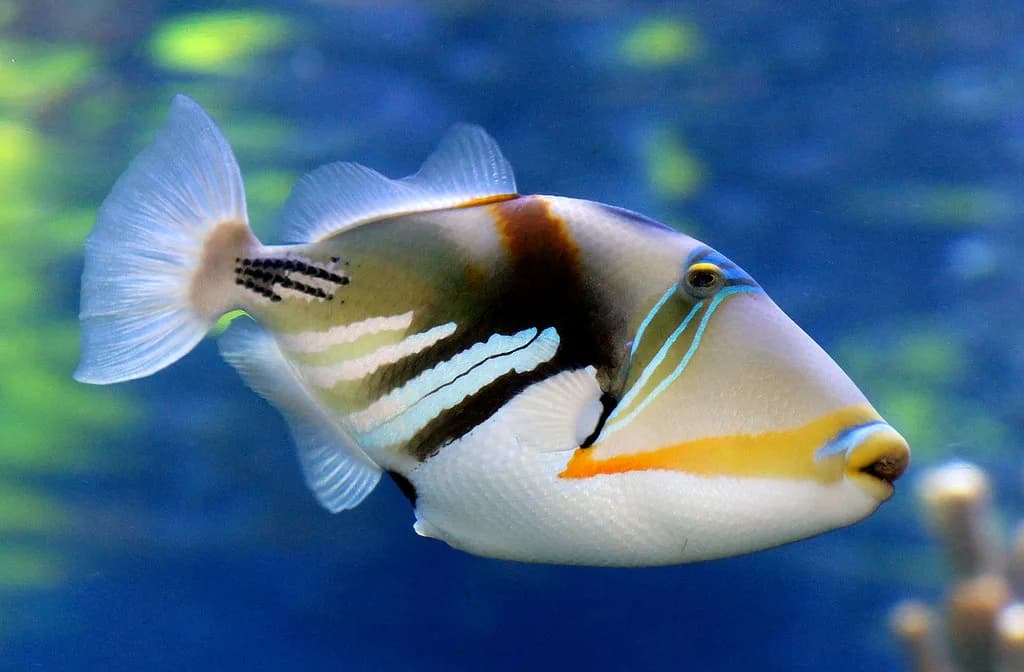
Two other reef fish often share the same rock: the reef triggerfish, Hawaii's state fish, and the smaller, spiny species that hover in the surge. Learning those alongside parrotfish gives you a mental map of the reef. When you see a triggerfish holding its ground in a crevice, give it room, because triggerfish are territorial nest guards.
Parrotfish and the Reef: Algae Control and Sand Production
The scrape of a parrotfish beak keeps algae from smothering coral, which is why a reef with healthy parrotfish populations tends to look grazed rather than fuzzy. The rock and coral they take in is ground up and passed out as sand. That link between a single fish and a beach is one of the clearest examples of how reef animals build the shoreline you stand on.
Because they graze algae, parrotfish also spend time on algae-covered lava as well as coral. That habit puts them in the same zone as surgeonfish and other grazers, and it means a plain-looking rock patch can be the busiest part of a snorkel.
Uhu in Hawaiian Culture and Local Fishing Rules at a Glance
Uhu is the Hawaiian name for parrotfish, and the fish is a well-known food and target species in Hawaii. Spearfishers take them selectively, and many pass on the largest blue terminal-phase males to keep breeding going, a habit that explains why those big blue fish are best left alone even when you are only snorkeling.
In state waters, the published parrotfish regulations require at least 14 inches for redlip parrotfish and its green terminal phase, known as uhu eleele, and 10 inches for other uhu, with a bag limit of 2 parrotfish per person per day across all species combined. The rules vary in specific community-based fishing areas, and night spearing and some zones are restricted. These limits apply to fishing, so a snorkeler with a camera has nothing to measure, but the rules show why those large fish are protected.
Snorkeling Etiquette Around Parrotfish and the Rest of the Reef
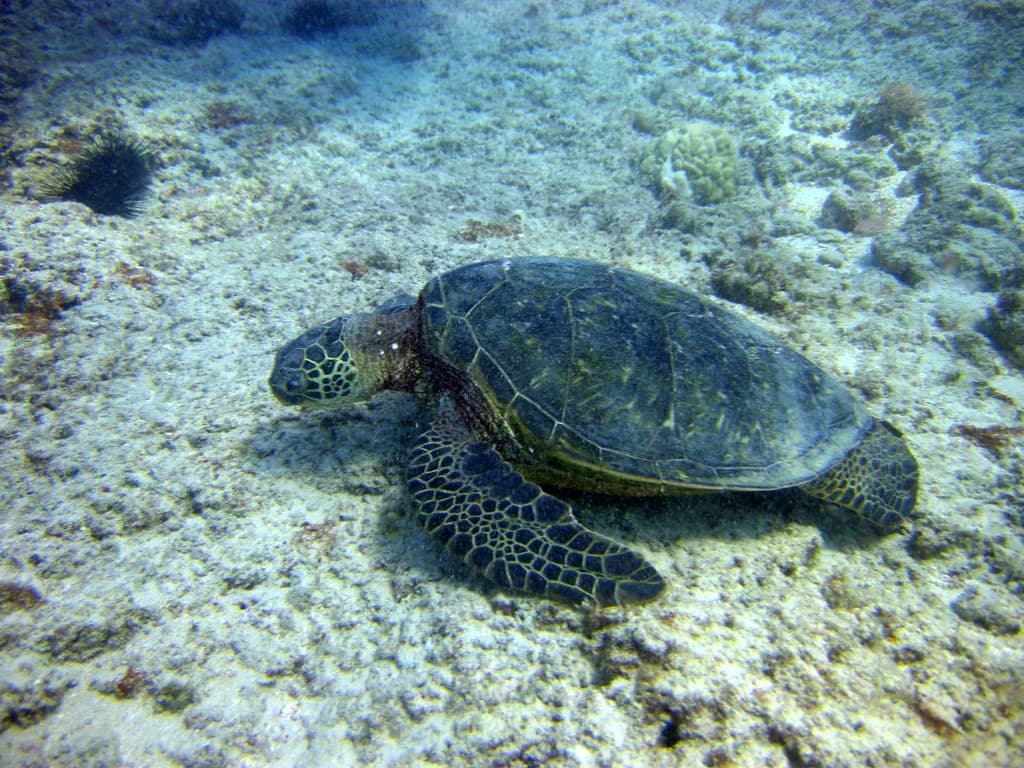
Do not feed, touch, or chase parrotfish, and do not herd them into a corner to get a photograph. Keep your fins off the bottom, because a fin strike can damage the algae and coral a fish feeds on. If a fish is resting or a turtle is grazing nearby, hold your position and let the animal move first.
Hawaii's shallow reefs also hold less obvious hazards, including fire coral, which stings on contact and looks like a harmless crust on rock. Stinging creatures and reef damage are both avoided by the same habit: keep a body length of clearance. Use reef-safe sunscreen and cover up rather than applying lotion right before entering the water.
Best Time of Day and Conditions for Spotting Them
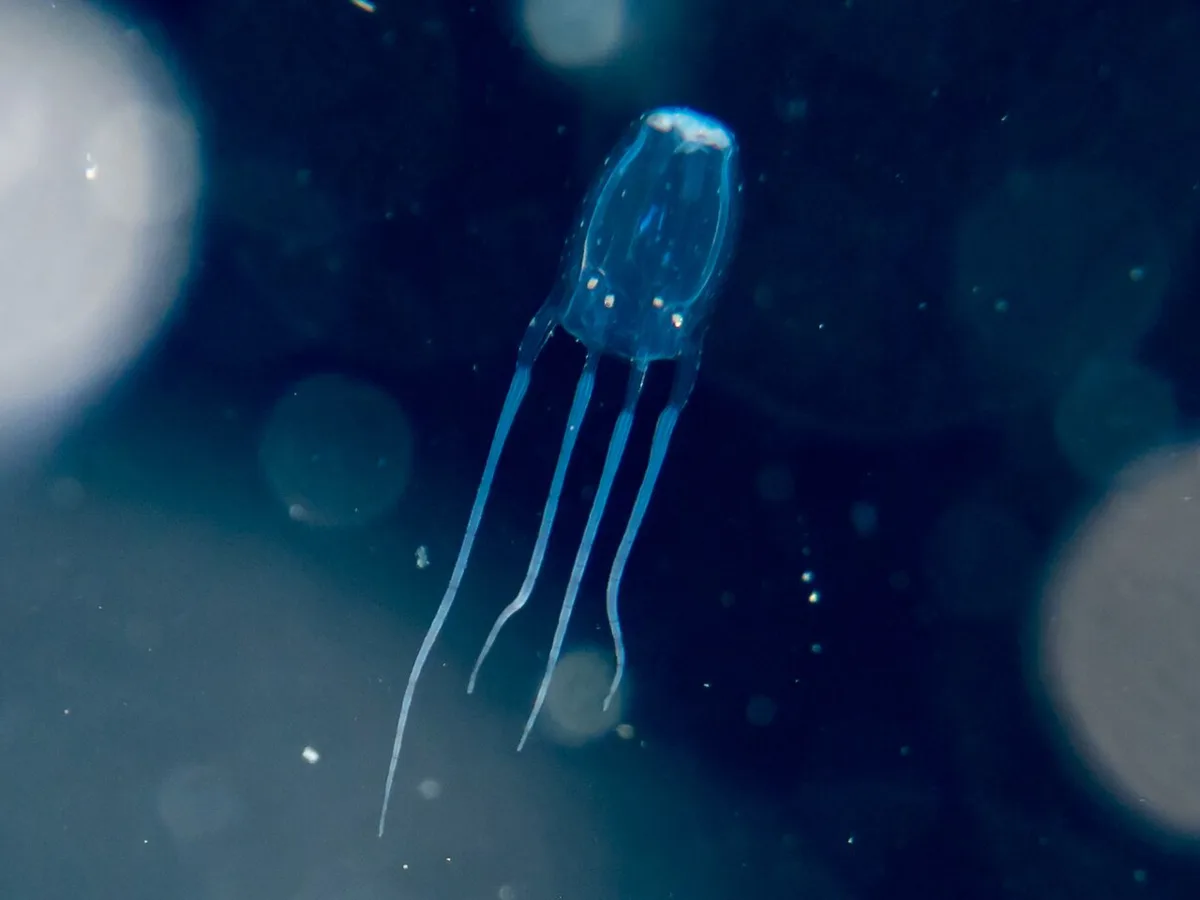
Early morning and late afternoon put the sun at an angle that reveals the bottom, and parrotfish graze throughout the day, so a calm morning swim is a good bet for watching them work. Flat water and low swell make the shallow lava shelves accessible; when a big swell hits, those same shelves get surging water and poor visibility. Check the marine forecast and any posted advisories before you get in, and watch for box jellyfish days, which a Hawaii ocean-safety source announces and which close some beaches.
Aim for a rising tide or a slack period when the reef flat is covered but the surge is modest, and skip the shallows when the wind is pushing chop onto the rock. Bring a mask that fits and a rash guard for sun and scrapes, and carry a float if you plan to drift along a long flat. Check the Hawaii DLNR pages and beach signage for current rules and closures before your swim.
Combining Parrotfish Watching with Other Reef Fish
A single snorkel can cover a lot of fish families if you work the reef in strips: lava shelves for grazing parrotfish, coral heads for butterflyfish and damselfish, and open water for the occasional larger visitor. Hawaii's better-known residents, including the masked angelfish and flame hawkfish, hold closer to coral and crevices, so change your search pattern rather than swimming farther.
The reef triggerfish, also called the Picasso triggerfish, is easy to spot by its bold pattern and often holds a patch of rubble near parrotfish. Add it to your list alongside uhu and you will start recognizing the regulars on any given reef.
Plan Your Visit
Parrotfish reward a slow, quiet approach: find a patch of algae-covered rock or rubble, stop kicking, and let the fish resume feeding in front of you. Learn the phases so a mottled fish and a blue male read as the same species, and give every grazer a body length of space. That combination of patience and distance is the whole technique for watching uhu in Hawaii.
Frequently Asked Questions
Are there parrotfish in Hawaii?
Yes. Several parrotfish species live on Hawaiian reefs, and the Hawaiian name for the group is uhu. They range from small species to large ones, and the biggest can reach well over 70 cm in total length, so you may see very different-looking fish on the same shallow reef.
What is the Hawaiian word for parrotfish?
Uhu is the Hawaiian name for parrotfish. You will see it used both for the group and for particular species; the redlip parrotfish and its green terminal phase, for example, are known as uhu palukaluka and uhu eleele. Fish are often paler or darker than the field-guide illustration, so watch body shape and the beak.
Why do some parrotfish look completely different from others?
Most parrotfish start life as females, and the largest, brightest blue fish are terminal-phase males that changed sex for breeding. That is why a dull reddish or mottled fish and a vivid blue one can be the same species. Smaller juveniles, often marked less boldly, add a third look on shallow flats.
Do parrotfish make sand?
Yes. Parrotfish scrape algae and rock with a beak of fused teeth, and the rock and coral material they take in is ground up and passed out as fine sediment. Over time, that sediment contributes to Hawaii's beaches. It also means a grazing fish is actively shaping the shoreline you walk on.
Can you eat parrot fish in Hawaii?
Yes. Uhu is eaten in Hawaii and is a traditional target species, and published fishing rules govern its take, including size limits of at least 14 inches for redlip parrotfish and its green terminal phase and 10 inches for other uhu, with a bag limit of 2 parrotfish per person per day across all species combined. Those rules apply to fishing, not to snorkeling.
How close can you get to a parrotfish while snorkeling?
Approach slowly and from the side, pausing between kicks, and stop while the fish is still feeding rather than pressing closer. Keep at least a body length of clearance, never touch or feed them, and do not herd a fish against the bottom or a wall. If a parrotfish spooks and darts, back off and let it return to its patch.
Where do snorkelers find parrotfish on a Hawaii reef?
Look on reef flats, shallow lava shelves, and rubble edges where algae grows. Species notes describe uhu at roughly 5 to 60 ft, with the busiest feeding in the 10 to 30 ft range on lava reef. That puts the closest reefs, not just the deepest coral heads, at the center of a good parrotfish swim.
What other reef fish will you see alongside parrotfish?
Parrotfish share rock and rubble with tangs, wrasses, butterflyfish, damselfish, and triggerfish. The reef triggerfish, also called the Picasso triggerfish, is Hawaii's state fish and often holds a patch of rubble near grazing uhu. Keep distance from triggerfish, which guard nests, and let turtles and other animals move first.
Sources
Snorkeling notes for your next trip
Optional updates to our snorkeling guides.
You might also like
Continue reading
More guides you'll find useful