Hawaiian Monk Seals: Where to See One and How to Keep Your Distance
Hawaiian monk seals rest on beaches across the main islands. Learn the 50-foot viewing rule, why pups need space, and how to read a seal's behavior.
On this page
A Hawaiian monk seal on the sand is one of the rarest wildlife encounters in the islands, and it almost always happens on the seal's terms. The species exists nowhere else on Earth, and seeing one in the main Hawaiian Islands usually means finding a dark, sleeping shape at the top of a beach rather than a face in the water.
This guide suits beachgoers and snorkelers who want to watch respectfully without disrupting an animal that may be resting after long foraging dives. You will find out where seals turn up, how to read their behavior, and what the published viewing guidelines ask of you.
What You Are Looking At
The Hawaiian monk seal, known in Hawaiian as ʻīlioholoikauaua, is endemic to the Hawaiian archipelago and is recognized as Hawaiʻi's official state mammal. Its entire natural range sits within these islands, which ties the species' survival directly to local ocean health.
Yes.
Most of the population lives in the remote Papahānaumokuākea Marine National Monument in the Northwestern Hawaiian Islands, with a smaller and growing number around the main islands including Oʻahu, Kauaʻi, and Maui. A seal on a main-island beach is therefore a genuine outlier rather than a routine sighting.
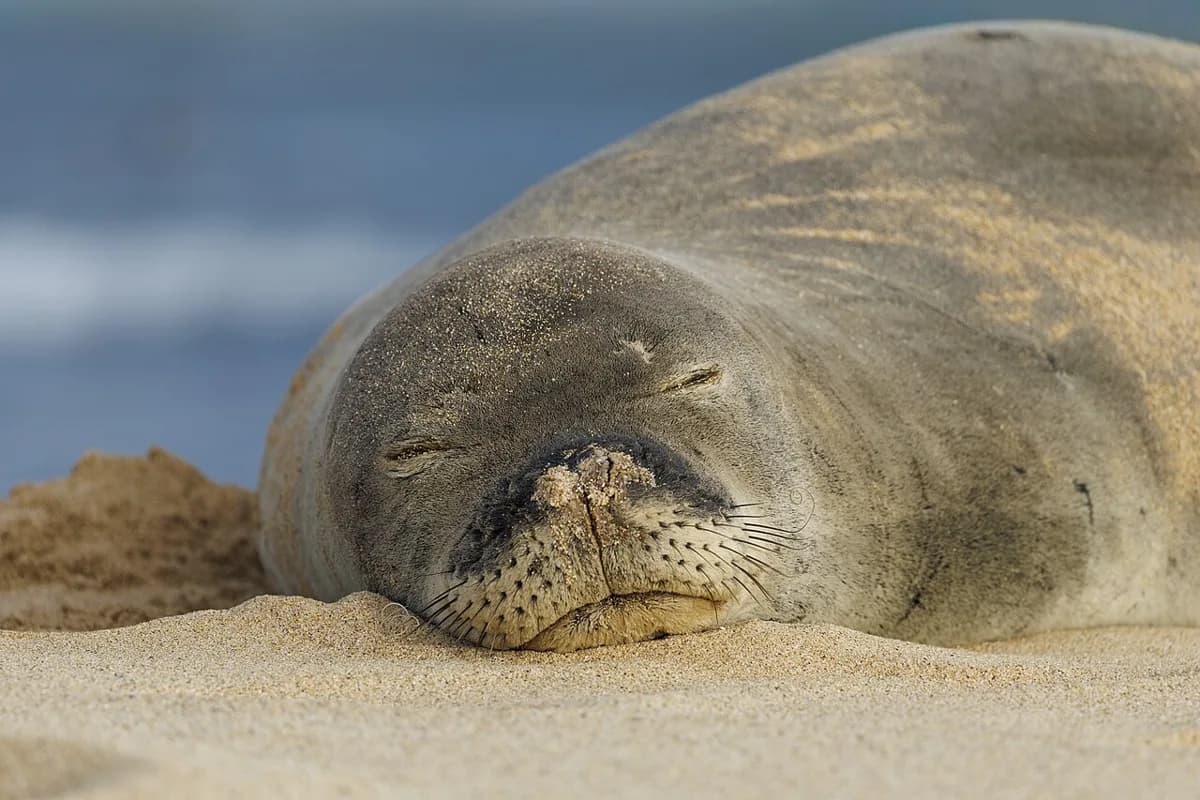
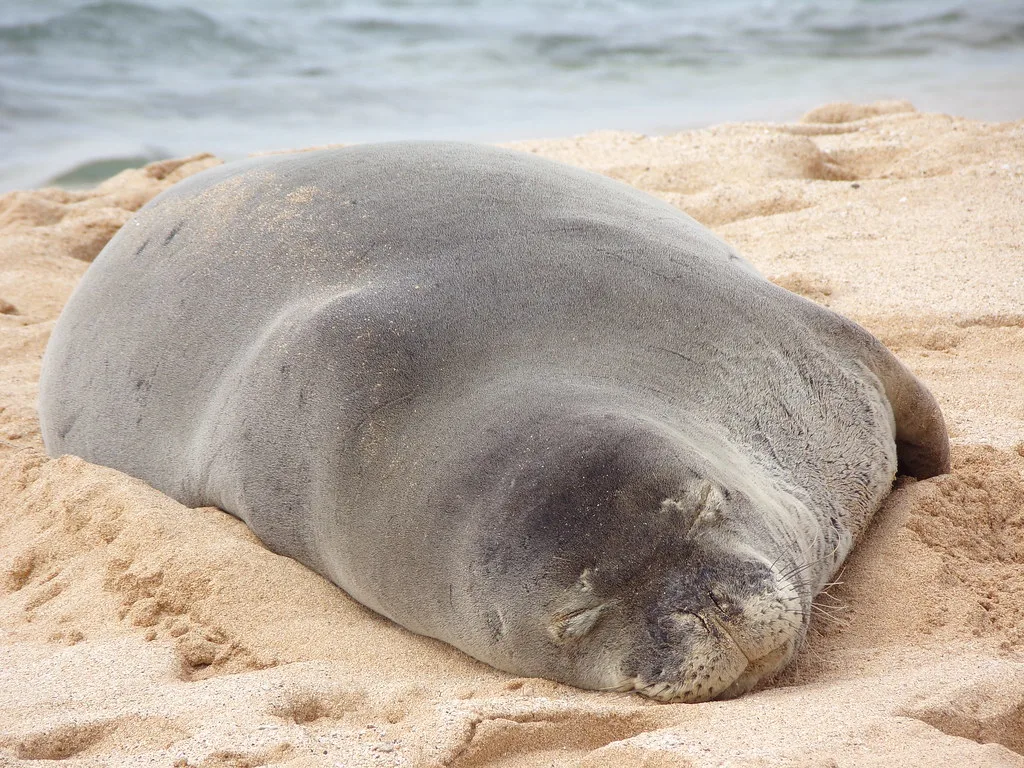
Full-grown monk seals are large, torpedo-shaped animals with a broad head and dark gray-brown back that weathers lighter on top. They look unmistakably like seals rather than sea lions, and a resting animal on sand will often lift its head, yawn, or flick sand over its back before settling again.
How Rare They Are
Population estimates for the species diverge depending on the source, so treat any single figure as an estimate rather than a census. A Maui Ocean Center marine life page places the total at fewer than 1,100 animals, while a Trilogy captain's log post cites roughly 1,600, about one-third of the historic population.
Hawaiʻi Wildlife Fund describes the species as critically endangered and counts fewer than 1,400 seals across the entire archipelago. The organisation notes that numbers in the Northwestern Hawaiian Islands are declining while seals born in the main islands survive better, which makes protection on populated coasts especially important.
The species is federally protected under the Endangered Species Act and the Marine Mammal Protection Act, so a seal on a public beach is not a photo prop but a legally shielded animal. Harassment, pursuit, and feeding all fall outside what the law allows.
Where You Might Cross Paths
Nearly every monk seal encounter in the main islands happens on a sandy beach where the animal hauls out to rest, warm up, or care for a pup. Seals often return to familiar beaches, so a stretch of sand that hosted one seal may host another later, and a rope perimeter appearing without warning is normal.
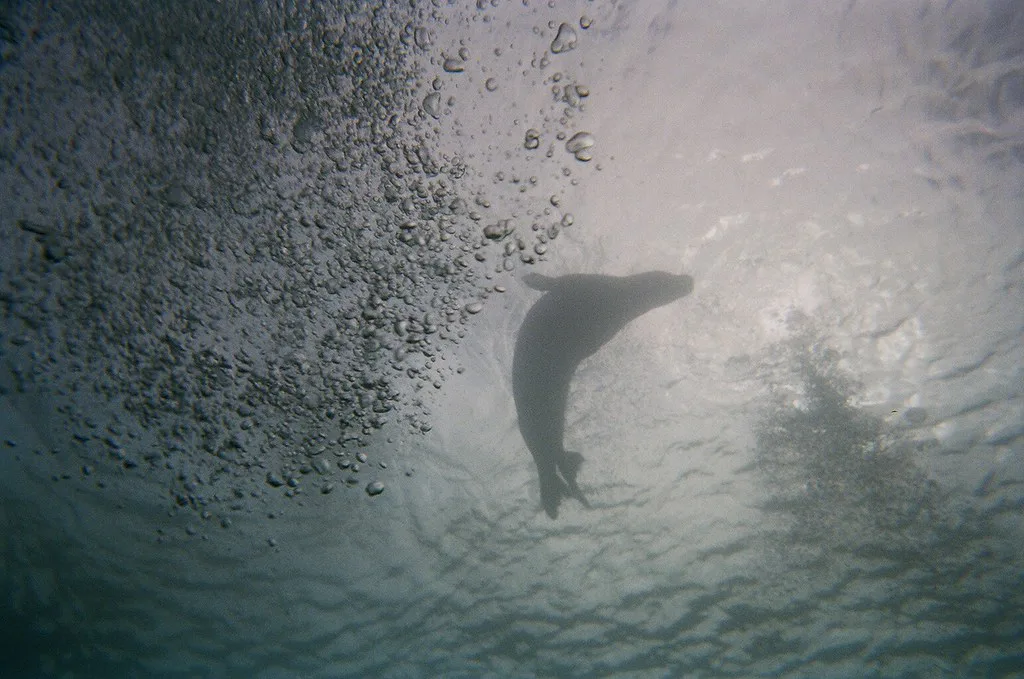
In the water, seals surface briefly to breathe between dives and rarely linger at the surface. Your odds improve at nearshore reef edges, but a snorkeler looking down at fish can easily miss a seal passing behind.
If you want to combine a beach-based seal watch with a reef snorkel, plan the sand portion first and the reef second. Seals rest high on the beach, so scan from a distance as you arrive, keep your gear low, and pick a snorkel entry that keeps you away from any roped-off sand. The same sand-first planning applies wherever you snorkel, so it pays to know the Oahu snorkel spots before you choose a beach.
Why the Beach Is Not the Whole Story
Monk seals spend about two-thirds of their time at sea, diving and foraging along reefs and the seafloor rather than cruising the surface. Their diet runs to reef fish, octopus and squid, eels, and crabs, shrimp, and lobster, most of it taken near the bottom where prey hide under sand or rock.
Hawaiʻi Wildlife Fund notes that seals feed mostly at night, which is why a daylight haul-out is a rest stop rather than a hunting break. That matters to snorkelers: a seal on the sand in the afternoon is likely recovering from a night of diving, not waiting for entertainment.
Individual seals may roam hundreds of miles across the island chain but generally stay within Hawaiian waters for life. They are largely solitary animals, often travelling alone or resting independently, so a pair on the beach is usually a mother and pup rather than a social group.
How to Read a Seal on the Sand
A seal lying flat on the sand with its eyes closed is resting, and that quiet time on shore helps it recover after long foraging dives. Warming up in the sun and molting also bring seals ashore, and a seal flicking sand over its back is regulating temperature rather than inviting attention.
A seal that lifts its head, opens its mouth, or moves toward the water is telling you it feels crowded. Back away steadily and quietly, keep low, and let it choose its route; never place yourself between a seal and the sea.
A mother with a pup is the one situation where you should give the widest berth and leave the area entirely. Mothers fast while nursing and lose significant body weight, so a disturbed pair may abandon the beach or the pup.
The 50-Foot Rule in Practice
Published responsible-viewing guidance asks people to stay at least 50 feet (15 meters) from a monk seal and never to touch, feed, or approach one. Keep dogs leashed and well away, and avoid loud noise or crowding that can push a resting animal back into the water.
Fifty feet is farther than most people estimate on open sand, so pace it out against something familiar. On beaches where volunteers or agency staff have roped off an area, the rope line marks the working boundary and should be treated as the near edge of your viewing zone, not a barrier to lean over.
Binoculars, a long lens, or simply sitting still at distance all work better than edging closer for a phone shot. If a crowd is forming around a seal, the most useful thing you can do is give the animal more room and let others see you doing it.
Pups and Pupping Season
Female monk seals give birth to a single pup on a sandy beach, and newborns arrive covered in soft black fur. Mothers nurse for roughly five to six weeks while staying ashore, fasting through the period, then return to sea once the pup is weaned and the young seal learns to hunt alone.
Hawaiʻi Wildlife Fund puts the nursing period at approximately six weeks and stresses that mother seals with pups must not be disturbed. That is why a mother-pup pair can clear a stretch of public beach for weeks at a time, with tape and volunteers keeping the sand quiet.
A black-coated pup is not abandoned just because its mother is offshore or out of sight. If you are worried about a pup alone on the sand, keep your distance and let agency staff make that call rather than intervening yourself.
If a Seal Swims Toward You
Monk seals are naturally curious and may occasionally swim over to check out a snorkeler. If that happens, hold your position or back away slowly, keep your hands to yourself, and never attempt to touch or interact with the animal.
An in-water approach does not loosen the rules: no touching, no chasing, and no feeding, even when the seal initiates contact. Let the animal move off on its own, and avoid blocking its path to open water or to the beach.
A seal surfacing close to your group is a good moment to stop swimming and let it pass. Flippers splashing and sudden movements can prolong the encounter, and a calm, still group usually gets a shorter visit.
Seals, Turtles and Dolphins: Different Rules
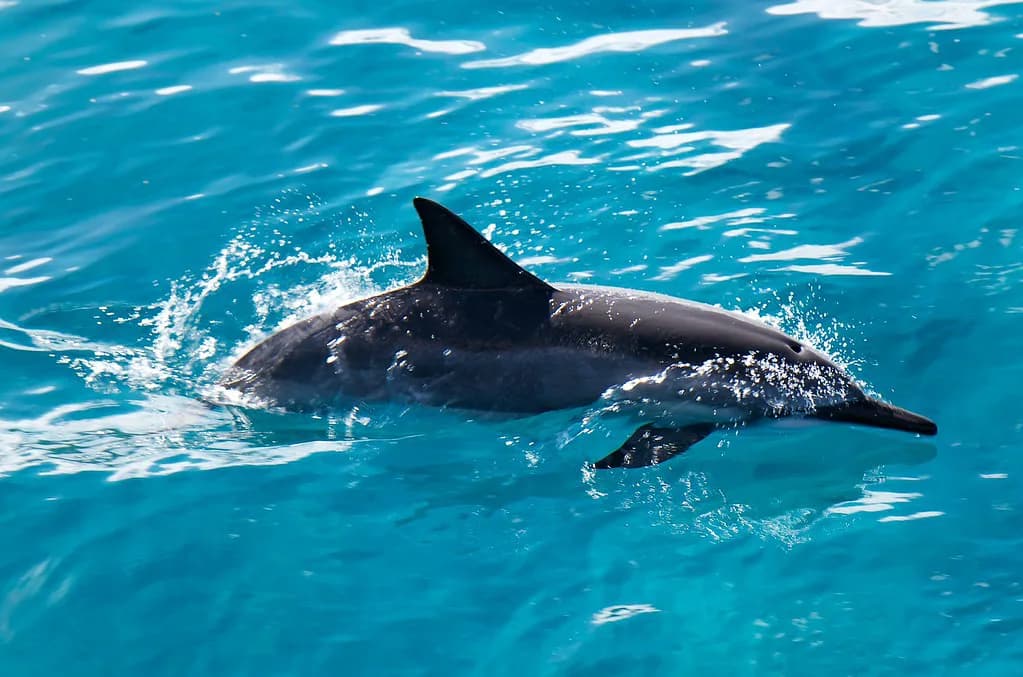
Hawaiian waters host several protected species with separate published viewing distances, so one beach day can involve more than one rulebook. The monk seal guidance is its own standard, and it is not interchangeable with guidance for sea turtles or spinner dolphins.
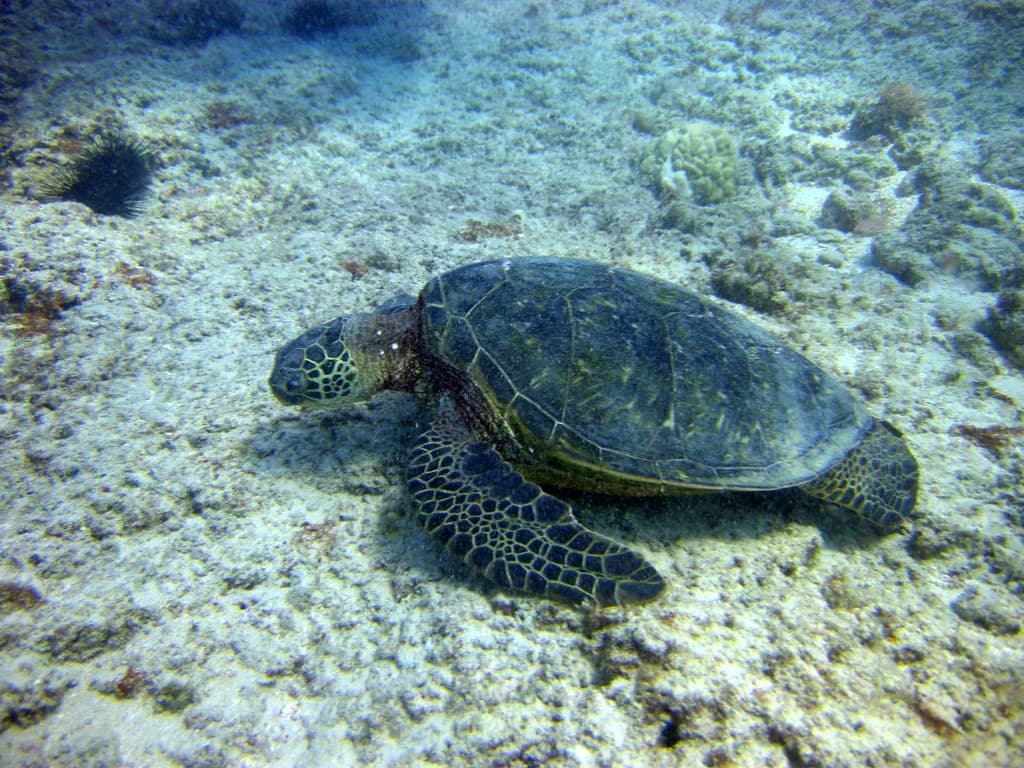
A snorkeler who has just been watching green sea turtles on a reef may carry the same habits over to a seal, and that is where trouble starts. Turtles graze on reef algae, while seals rest on sand and dive to the seafloor, so the encounter geometry and the appropriate response differ.
Treat every protected animal on its own terms and check the species-specific guidance before you get in the water. A single vague distance applied to everything is how people end up too close to the animal that needs the most room.
Dogs, Drones and Crowds
Human disturbance on beaches is a documented threat to monk seals, and repeated disturbance can cause seals to abandon resting or pupping sites. Dogs belong on a leash and well away from any seal, and a loose dog rushing a hauled-out animal is one of the fastest ways to clear a beach of seals for good.
Crowding and loud noise count as disturbance even when nobody touches the animal. A circle of people closing in, a cooler set down beside a sleeping seal, or a group shouting across the sand all push the animal toward leaving.
Report a seal in trouble, a stranded animal, or harassment to the agencies that handle it rather than trying to help directly. The NOAA Hawaiʻi marine animal emergency hotline is 888.256.9840, and Hawaiʻi's Division of Conservation and Resources Enforcement takes reports of sea turtle harassment or illegal activity at 808.643.3567.
What Monk Seals Eat and What Threatens Them
Monk seals feed on reef fish, octopus and squid, eels, and crustaceans including crabs, shrimp, and lobster, mostly hunting near the seafloor. That bottom-feeding habit puts them in the same nearshore reef zone snorkelers visit, though usually at night and usually out of sight.
Key threats include marine debris and fishing gear, limited food availability for young seals, human disturbance on beaches, and disease and pollution. Monk seals have some of the highest entanglement rates among seals worldwide, which is one reason debris cleanup matters on Hawaiian coasts.
Little in the water preys on an adult monk seal, but pups and juveniles are vulnerable, and Hawaiʻi Wildlife Fund points to a population declining about 5% a year in the Northwestern Hawaiian Islands. Sharks are present on Hawaiian reefs, but the practical risk to a snorkeler comes from surf, currents, and boat traffic rather than from seals.
Reporting a Seal in Trouble
Sick, stranded, entangled, or harassed animals need agency response rather than beachside rescue attempts. Keep people and dogs back, note the location and what you observed, and call the hotline instead of trying to move or cover the animal.
For marine wildlife emergencies across all Hawaiian Islands, the published contact is NOAA's Hawaiʻi marine animal emergency hotline at 888.256.9840. Maui-specific reports for sick, stranded, or entangled sea turtles go to the Maui Ocean Center Marine Institute at 808.286.2549.
Volunteer monitoring has a long history on Maui, where the Monk Seal Watch placed tape and educated the public around resting seals from 1996 to 2007 before NOAA Fisheries took over coordination. Volunteers still matter to the species, and the same page lists a contact for people who want to help.
Pairing a Seal Watch With a Reef Day
A monk seal is a beach animal first, so build the day around sand time and add snorkeling where the reef is calm. Choose a beach with a sandy entry and a reef close to shore, scan the sand from the car park before unpacking, and keep your setup well back from any roped area.
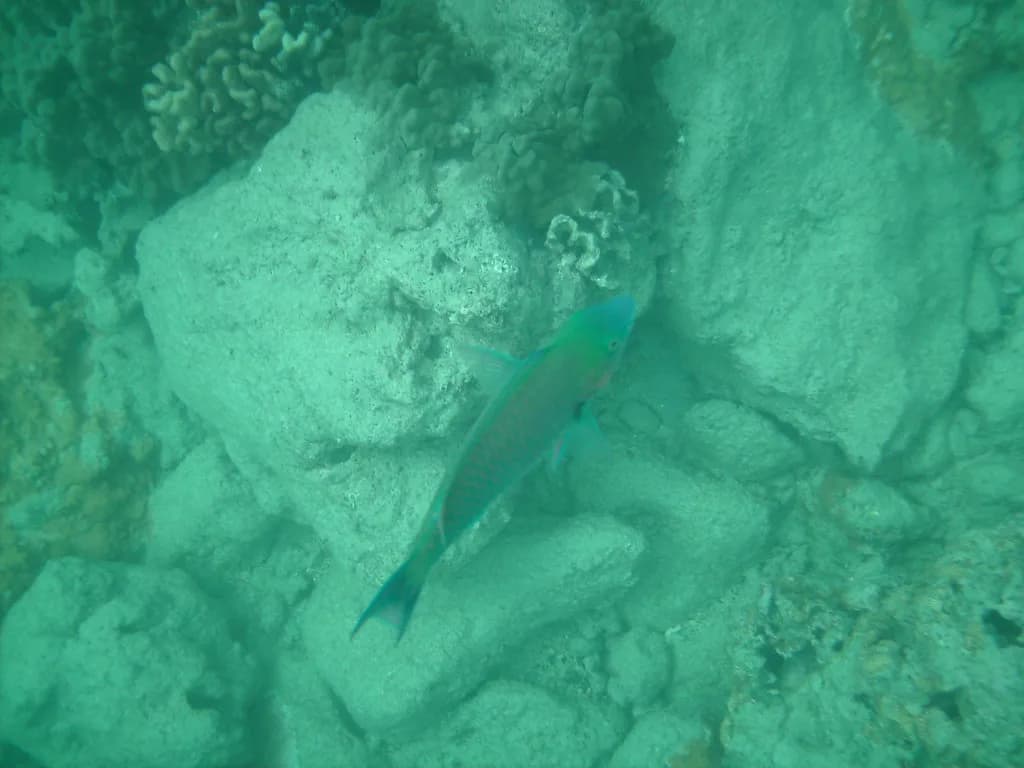
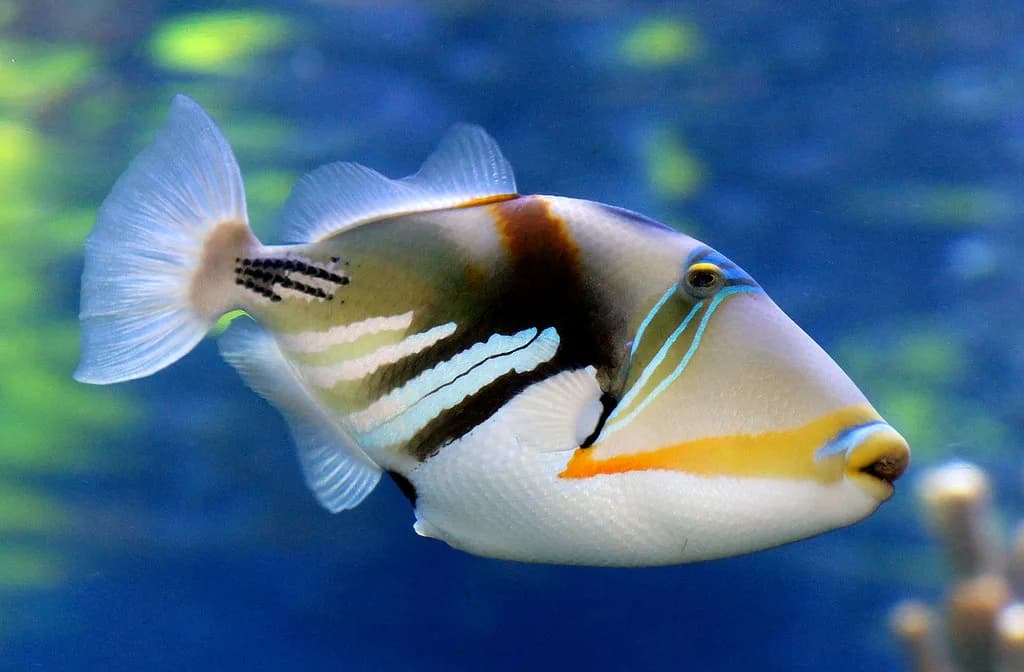
Once you are in the water, the usual reef cast takes over: reef triggerfish, also called humuhumunukunukuāpuaʻa, along with the many damselfish and wrasses in our hawaii reef fish guide. Knowing what is in front of you keeps your attention on the reef instead of on the beach behind you.
Watch for fire coral on shallow reef structures when you stand up or push off rocks, since contact with it stings. It grows on reef flats and drop-offs where snorkelers commonly rest, so keep fins and hands clear when you pause.
What to Bring for a Seal-Friendly Beach Day
Pack for shade and distance: a wide-brim hat, sunglasses, water, and binoculars let you watch a resting seal from 50 feet without creeping closer. Reef-safe sunscreen matters on any Hawaiian beach day, and it should go on before you arrive so you are not applying lotion beside a roped-off animal.
Bring a leash for the dog or leave the dog home, and skip the drone if you were considering one. Keep your gear consolidated so you can move quickly if a seal hauls out near your spot, and leave room along the sand for volunteers to set a perimeter.
A simple mask and snorkel with a properly fitted mask and comfortable fins is enough for nearshore reef viewing. Choose gear by published specifications such as lens type, skirt material, and fin blade stiffness rather than by marketing claims.
Plan Your Visit
A monk seal sighting rewards patience and distance rather than pursuit, and the practical moves are simple: scan the sand on arrival, keep 50 feet back, keep dogs away, and let the animal decide when to move. If a seal swims up to you, stay still, keep your hands to yourself, and let it pass.
Pair the beach time with a calm reef snorkel, know the NOAA wildlife emergency hotline before you go, and treat every haul-out as a temporary closure of that stretch of sand. The seal gets its rest, and you get the rare sight of an animal found nowhere else on Earth.
Frequently Asked Questions
Are there seals in Hawaii?
Yes. The Hawaiian monk seal is endemic to the Hawaiian archipelago and is found nowhere else in the world. Most of the population lives in the Northwestern Hawaiian Islands, with a smaller and growing number around the main islands including Oʻahu, Kauaʻi, and Maui.
How close can I get to a Hawaiian monk seal?
Published responsible-viewing guidance asks people to stay at least 50 feet (15 meters) away and never to touch, feed, or approach a seal. Where volunteers or agency staff have roped off a resting area, treat the rope line as the near edge of your viewing zone and watch from behind it.
What should I do if a monk seal swims up to me?
Hold your position or back away slowly, keep your hands to yourself, and never attempt to touch or interact with the animal. An in-water approach does not loosen the rules, so let the seal move off on its own and avoid blocking its path to open water or the beach.
Are monk seals friendly or dangerous to humans?
Monk seals are wild, federally protected animals, not tame pets, and they can be curious in the water without being safe to handle. Keep your distance, never feed or chase one, and let agency staff handle any animal that appears sick, stranded, or entangled.
Why are Hawaiian monk seals endangered?
Key threats include marine debris and fishing gear, limited food availability for young seals, human disturbance on beaches, and disease and pollution. Monk seals have some of the highest entanglement rates among seals worldwide, and repeated beach disturbance can cause them to abandon resting or pupping sites.
What do Hawaiian monk seals eat?
Their diet includes reef fish, octopus and squid, eels, and crustaceans such as crabs, shrimp, and lobster. Most hunting happens near the seafloor, and seals feed mostly at night, which is why a seal resting on the sand during the day is usually recovering rather than waiting for food.
What should I do if I find a seal in trouble?
Keep people and dogs back, note the location, and call the NOAA Hawaiʻi marine animal emergency hotline at 888.256.9840 rather than trying to move or cover the animal. On Maui, sick, stranded, or entangled sea turtles are reported to the Maui Ocean Center Marine Institute at 808.286.2549.
How long does a monk seal mother stay with her pup?
Mothers nurse pups on the beach for roughly five to six weeks while fasting, then return to sea once the pup is weaned. A black-coated pup alone on the sand is not necessarily abandoned, so keep your distance and let agency staff assess the situation.
Sources
Snorkeling notes for your next trip
Optional updates to our snorkeling guides.
You might also like
Continue reading
More guides you'll find useful