Fire Coral: How to Recognize It and Avoid the Sting
Learn to spot fire coral on shallow reefs, see why its surface stings, and plan a hands-off snorkel line that keeps you and the reef safe.
On this page
Fire coral rewards a snorkeler who looks before gliding. It spreads across shallow reef flats and reef edges where light is strong and water moves, and it can take the form of branching thickets, thin columns, or a flat crust that is easy to mistake for bare rock. Treating every textured, tan-edged surface as off-limits keeps your hands and knees clear and leaves the colony unharmed.
The creature itself is a hydrozoan wearing the costume of a stony coral, which is the single most useful fact for planning a swim. Once you can read its growth forms and its smooth-looking surface, you can pick a line through the water rather than reacting at arm's length. This guide covers recognition, the settings where it turns up, hands-off snorkeling habits, and what to do if skin makes contact.
What Fire Coral Actually Is
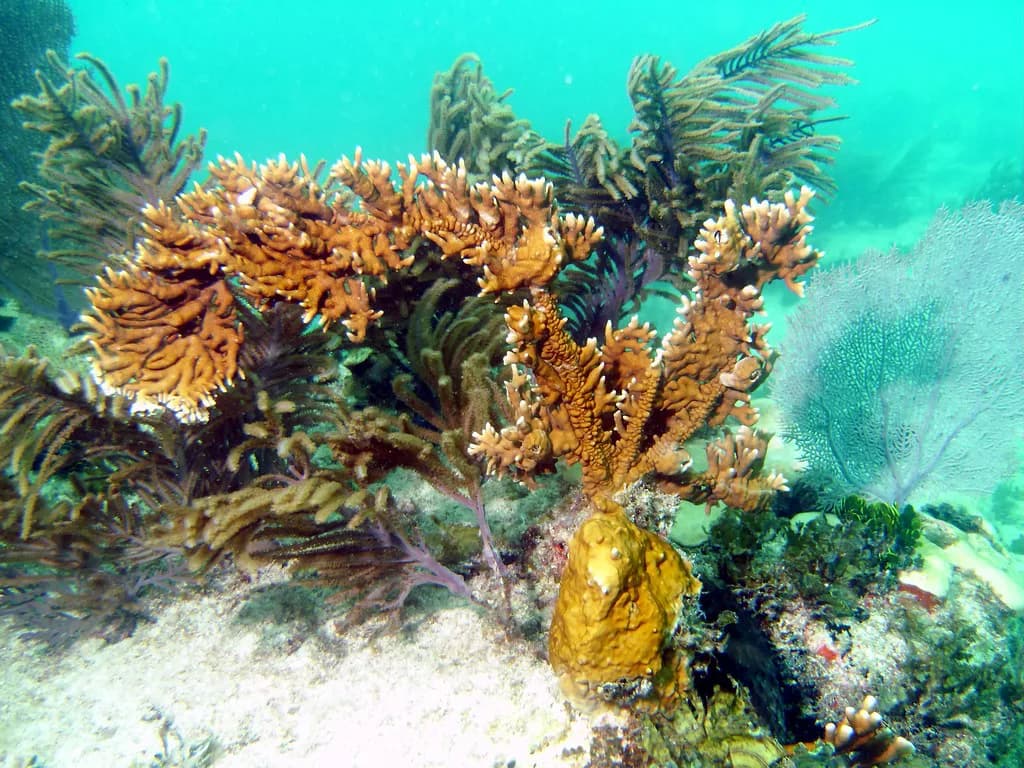
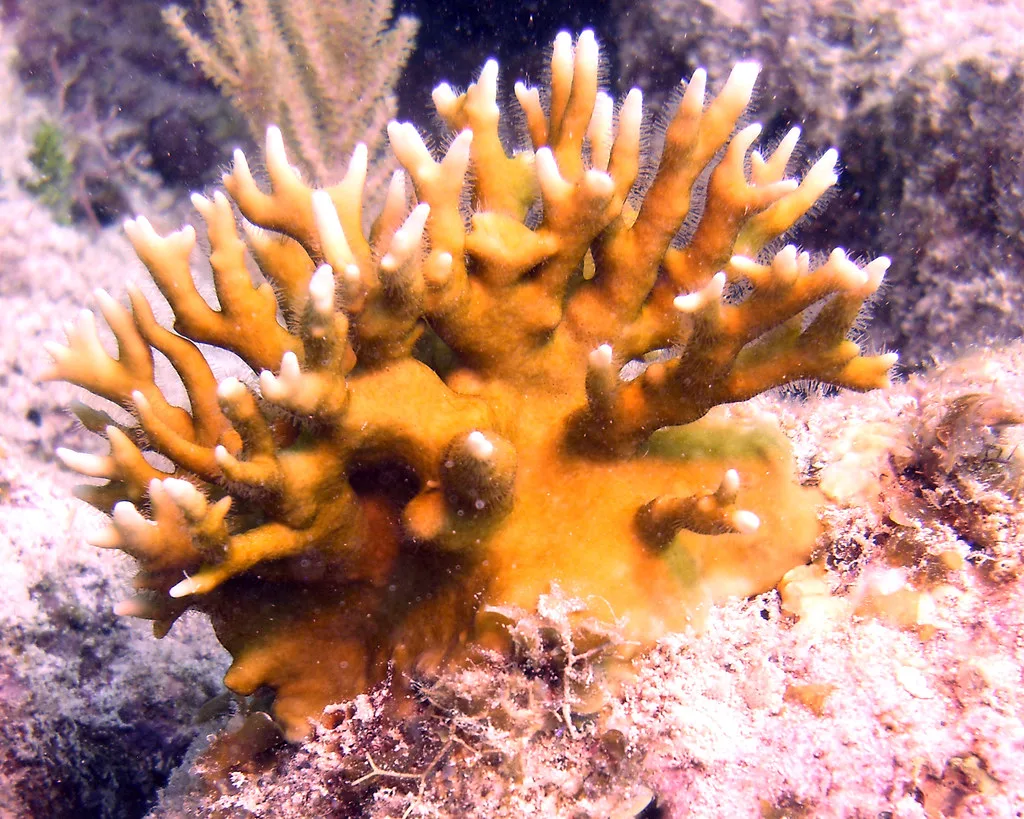
Fire coral belongs to the genus Millepora, a group of colonial marine organisms that mimic stony corals in shape and habit. The resemblance is skin-deep: the colony is built by hydrozoans, and each surface is studded with tiny pores rather than the broad cups of a stony coral. That porcupine texture is the detail to scan for when you are floating over a shallow reef.
Contact with the living surface causes a burning sensation and blisters, and DAN notes that complications are possible.
Two kinds of polyp share the colony, and the division of labor explains why a brushed knee can sting while a passing fish does not. Feeding polyps capture plankton, while specialized stinging polyps carry the nematocysts that fire on contact. The living tissue sits on the outside of the colony, so the surface you can see is the part that reacts.
Where You Find It on a Reef
Fire coral favors shallow reefs with plenty of sunlight and some variation in water flow, which is why you meet it in the bright first few meters of a reef rather than in deep shade. It also takes hold on reef faces and along reef edges, so a drop-off wall is another place to keep your distance. On a snorkel, that means the sunlit shelf you cross on the way out and the lip where the bottom falls away. For reef-by-reef planning of that sunlit shelf, the Key Largo snorkeling guide maps out comparable shallow-reef settings.
Warm-water reefs are its range, which places it across the Caribbean and other tropical seas rather than in every ocean. Fire coral is absent from the reefs of Hawaii, so snorkelers planning a trip around the islands should look for other hazards and other animals on the reef. If your itinerary mixes Hawaii with, say, Puerto Rico or Florida, the recognition habit transfers even though the species does not.
How It Grows: Three Shapes to Scan For
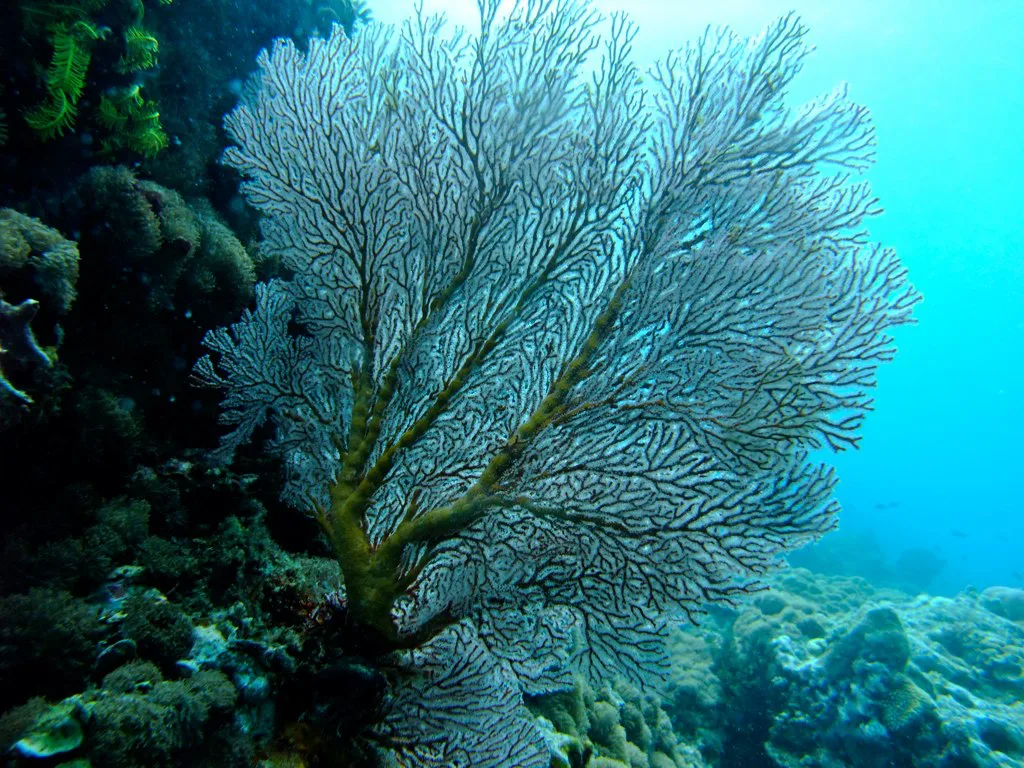
Current strength shapes the colony, and that gives you a way to predict what you will see in different parts of a reef. In places with a light current, fire coral can grow as long thin strands that form a lattice; where the current runs moderately strong, it builds thick branches or columns. In extremely strong flow it flattens into a thin crust over the substrate.
For a snorkeler, that crust form is the sneaky one, because it can coat rock in a sheet that reads as harmless at a glance. Branching thickets are easier to spot from the surface, but they sway close to where hands naturally drift when you steady yourself. Scan the bottom a body length ahead, and you will have time to adjust your line instead of pushing off the reef.
Recognizing It Underwater
Look for a surface that seems smooth yet is pocked with fine pores, often with a pale or bleached-looking rim where the growing edge catches light. Fire coral skeleton is smooth despite the textured look, and the living layer covers pores of several types, including the feeding polyps and the stinging ones. The overall impression is of a hard, slightly fuzzy-skinned mound or blade rather than a soft waving coral.
Color varies, so do not rely on a single shade as your cue. Instead, judge shape and texture: encrusting sheets over rock, upright blades, thick finger-like columns, or fine lattice fans, depending on the current. When you cannot tell whether a surface is fire coral or bare limestone, give it the same clearance and you avoid the question entirely.
Why Contact Hurts
The sting comes from nematocysts packed into the living surface, and they discharge when skin touches the colony. DAN describes fire coral contact as producing a burning sensation and blisters, with possible complications. That reaction is why even a brief steadying hand on a colony can end a snorkel early, and why the hands-off habit matters more than any piece of gear.
The colony's own defenses are aimed at competitors and small prey, not at snorkelers, but the effect on skin is the same. Feeding polyps sift plankton from the water using their tentacles, and the stinging polyps stand ready alongside them. You do not need to identify the polyp type to stay safe: stay off the surface.
Snorkeling Around It: Buoyancy and Hands-Off Habits
A snorkel line over a shallow reef is mostly about body position, and fire coral gives you a reason to trim that position before you launch. Float with your legs up and fins behind you rather than dangling, and keep your hands at your sides or folded across your chest. When you want to stop for a look, stop swimming and let your body settle instead of reaching for the bottom.
If you need a rest on a shallow shelf, find open sand and stand or kneel there, not on a hard, textured surface that could be a living colony. A rash guard and leggings add a layer between skin and anything you brush, but they do not license contact with the reef. A snorkel vest or a few relaxed buoyancy drills in open water make the hands-off habit much easier to keep.
If Contact Happens
DAN's guidance on fire coral injuries covers immediate first aid and wound care, and it is the source to follow rather than folklore passed along the beach. Rinse with seawater, avoid rubbing the area, and watch for worsening symptoms; seek local help if the reaction spreads or blisters badly. Plan where that help is before you get in, whether that is a lifeguard station, a dive shop, or an urgent care clinic you located on arrival.
If symptoms worsen or you are unsure how to respond, stop snorkeling for the day and get local medical advice rather than pushing on to the next site.
Fire Coral and Hawaii: What Changes
Fire coral is absent from Hawaiian reefs, which shifts the recognition work for anyone using this site's island guides. On a Hawaiian shallow reef you will not be scanning for Millepora colonies, but the same hands-off discipline protects the coral and rock you will encounter. The Hawaiian species you will meet are covered in the hawa reef fish pages, where reef fish behavior and viewing manners are described.
That absence is one more reason to read the site's Hawaiian material as its own subject rather than a generic tropical template. Your recognition habits still serve you on any Caribbean or Florida trip, where fire coral is part of the shallow-reef scenery.
Reef Etiquette on Shallow Reefs
Reef etiquette is simple to state and hard to practice in a current: no touching, no standing on coral, and no collecting. Keep a body length or more between your fins and the bottom on shallow shelves, because a single kick can break branching colonies that took years to build. Use reef-safe sunscreen as your destination's rules require and apply it before you enter the water.
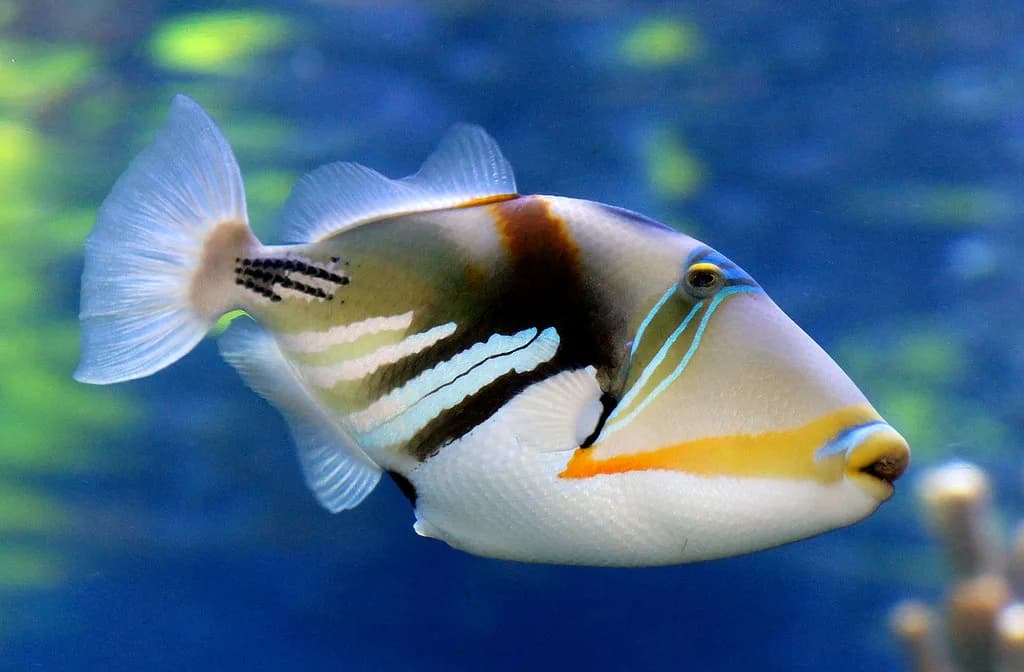
Good etiquette also means leaving wildlife alone, and a hands-off approach keeps you clear of both fire coral and the animals that live around it. Whether you are watching a reef triggerfish patrol its territory or simply drifting over a patch reef, the habit of not reaching is the one that travels best between destinations.
Marine Life on the Same Reef
Shallow reef flats that suit fire coral also host a crowd of small, site-attached fish, which makes a slow drift worth the effort. On Caribbean and Florida reefs you can expect to see damselfish, wrasses, parrotfish, and the occasional moray tucked into a crevice; the colony itself shelters small crustaceans and fish among its branches. Move slowly and let the fish resume their business, and you will see more than you would by chasing.
If you want to build fish-recognition skills for a trip that includes Hawaii, the Hawaii reef fish guide covers the species you are likely to meet there, including the Masked Angelfish and Flame Hawkfish that reward a careful look at rocky structure. Learning a few names before you travel turns a pleasant drift into a scavenger hunt, and it keeps your attention on the reef instead of your hands.
Plan Your Snorkel Day
Fire coral is best handled as a planning problem: know its shapes, scan the bottom ahead of you, and keep your hands and fins clear. Bring a rash guard, practice neutral floating on open sand, and pick sites where you can rest without touching the reef. That approach protects your skin and the colony at the same time.
If skin does make contact, follow DAN's wound-care guidance, rinse with seawater, and get local help if the reaction worsens. The rest of the day's plan can wait; a snorkel that ends early but safely is a better outcome than one pushed too far.
Frequently Asked Questions
What does fire coral do to you?
Contact with the living surface causes a burning sensation and blisters, and DAN notes that complications are possible. The effect comes from stinging cells in the tissue covering the colony, so even a brief brush with a hand or knee can trigger it. Avoid touching the colony and keep your fins off the bottom.
What should you do if you touch fire coral?
Rinse the area with seawater rather than rubbing it, and follow DAN's published first-aid and wound-care guidance. Watch for worsening symptoms and seek local medical help if blisters spread or the reaction is severe. Knowing where the nearest lifeguard or clinic is before you swim makes that decision easier.
How painful is fire coral?
DAN describes fire coral contact as producing a burning sensation along with blisters. The severity varies with how much skin contacts the colony and how the individual reacts, so treat any contact as a reason to leave the water and assess. Do not rely on a previous mild reaction to predict the next one.
Is fire coral rare?
Fire corals are found on warm-water shallow reefs in many regions, favoring bright shelves with moving water, reef faces, and reef edges. They are absent from Hawaiian reefs, so snorkelers in Hawaii will not encounter them. Abundance varies by site, so treat the habitat as the guide rather than expecting a colony at every reef.
How do you recognize fire coral underwater?
Look for a smooth-looking surface pocked with fine pores, growing as encrusting sheets, blades, thick columns, or thin lattice branches depending on the current. Color varies, so use texture and shape rather than shade. If you are unsure, keep the same clearance you would keep from any stinging animal.
Is fire coral found in Hawaii?
No. Fire coral is absent from the reefs of Hawaii, so island snorkelers should focus on the coral, rock, and wildlife that are actually present there. The hands-off approach still applies, and the site's Hawaii reef fish material covers what you are likely to see instead.
What is fire coral, exactly?
It is a colonial hydrozoan in the genus Millepora, not a stony coral, though it grows in shapes that look like stony coral. Its surface carries two kinds of polyp, one for feeding and one for stinging. That living skin is the part you must not touch.
Should you use reef-safe sunscreen around fire coral?
Use reef-safe sunscreen as your destination's rules require, and apply it before you get in rather than over the water. Sun protection matters on a shallow reef where your back is exposed while you float. Check the specific local rules for the area you are visiting before you travel.
Sources
Snorkeling notes for your next trip
Optional updates to our snorkeling guides.
You might also like
Continue reading
More guides you'll find useful