Hawaiian Green Sea Turtle (Honu): Snorkeler's Guide
Learn what a honu looks like underwater, where it grazes on Maui's reefs, how close you may swim, and why touching or chasing one is illegal in Hawaii.
On this page
A honu gliding over a shallow reef flat is the encounter most snorkelers in Hawaii hope for, and it is the one you are most likely to get: Hawaiian green sea turtles are the sea turtles most commonly seen in Maui's coastal waters. They suit beginners and families because they often feed in calm, shallow water close to shore, where you can watch from the surface without diving.
What makes them different from a fish is the pace. Honu are the only herbivorous sea turtle species, grazing on algae called limu and on seagrass, so a feeding turtle stays put and crops the bottom rather than chasing prey. That habits gives you a predictable subject: find the grassy, algae-covered shallows and you are looking at turtle habitat.
Why the Honu Is Worth Watching
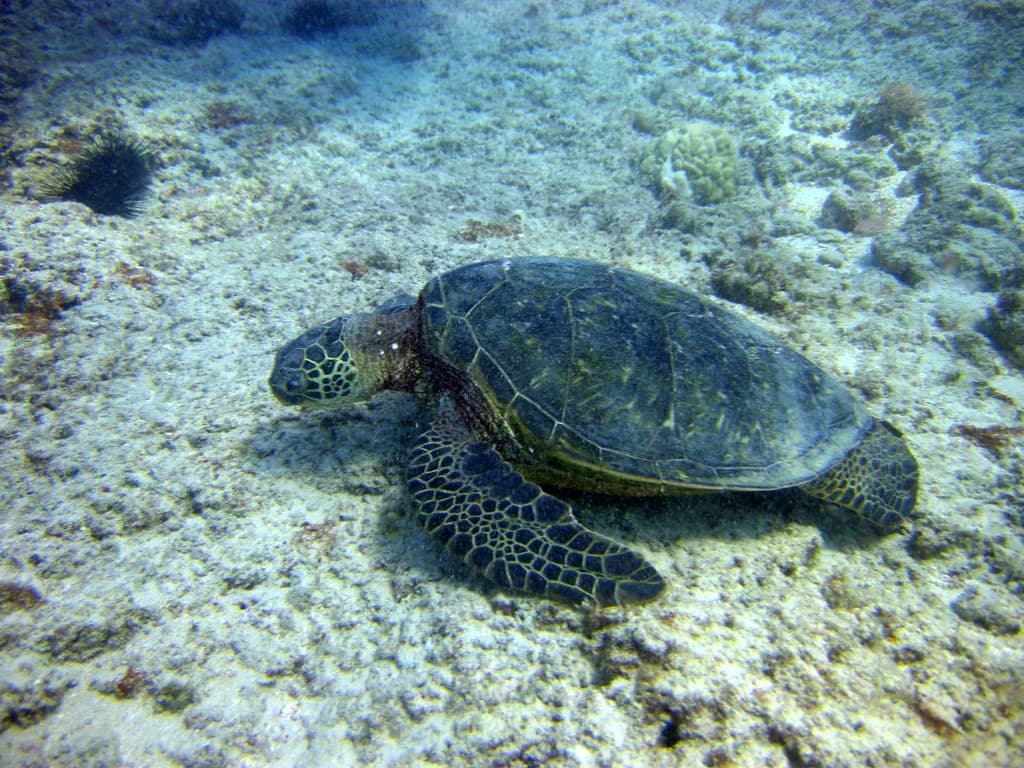
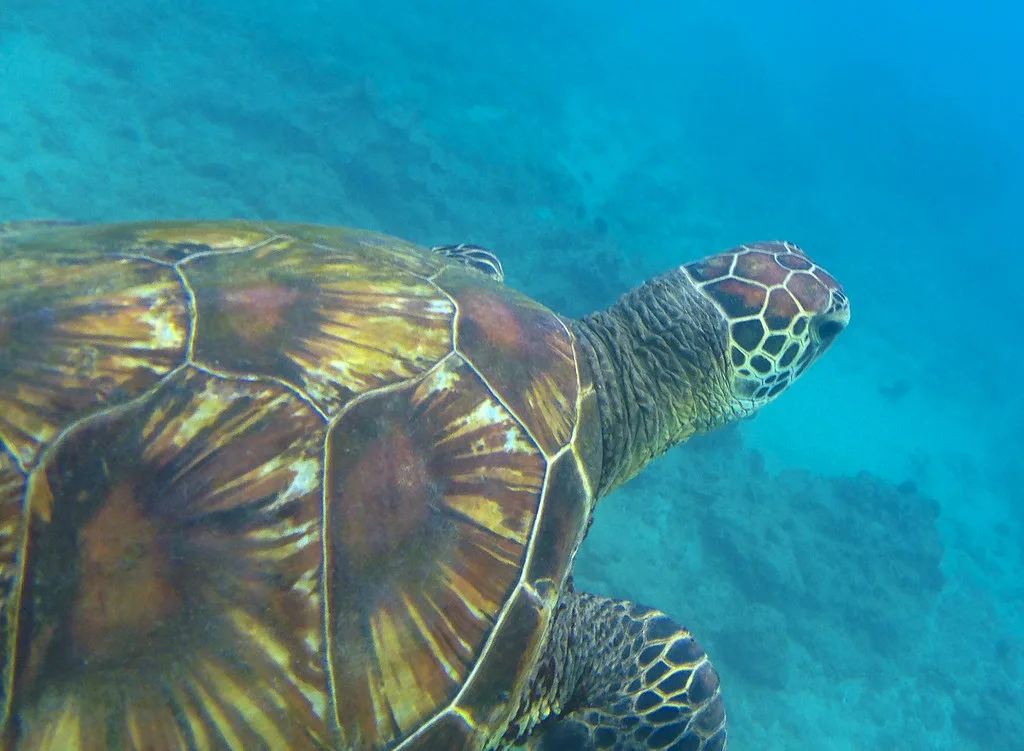
The Hawaiian green sea turtle, Chelonia mydas, earns its name from green fat and cartilage rather than its shell, which is typically dark brown, olive or black with streaks and mottling. Adults grow to roughly 3 to 4 feet long and weigh around 300 to 350 pounds, and they can live 60 to 100 years.
No.
Their grazing has a job on the reef. By cropping algae, honu keep overgrowth from smothering coral and help maintain healthy seagrass beds that shelter fish and invertebrates, which is why turtle-rich reef flats tend to look busy with life beyond the turtles themselves.
Recent research adds another layer to that grazing role: honu have been documented for the first time actively feeding on Chondria tumulosa, an aggressive invasive red alga. Treat that as a published research finding, not a reason to expect a specific feeding show on your swim.
Telling a Honu Apart at Snorkeling Range
From the surface you rarely get a clean side view, so work from three cues: overall size, shell color and the animal's position in the water. A big, dark-shelled turtle hovering over algae in two or three feet of water is almost certainly a green; the scale of an adult, three feet plus, is a strong tell because small reef turtles are unusual at snorkeling depth.
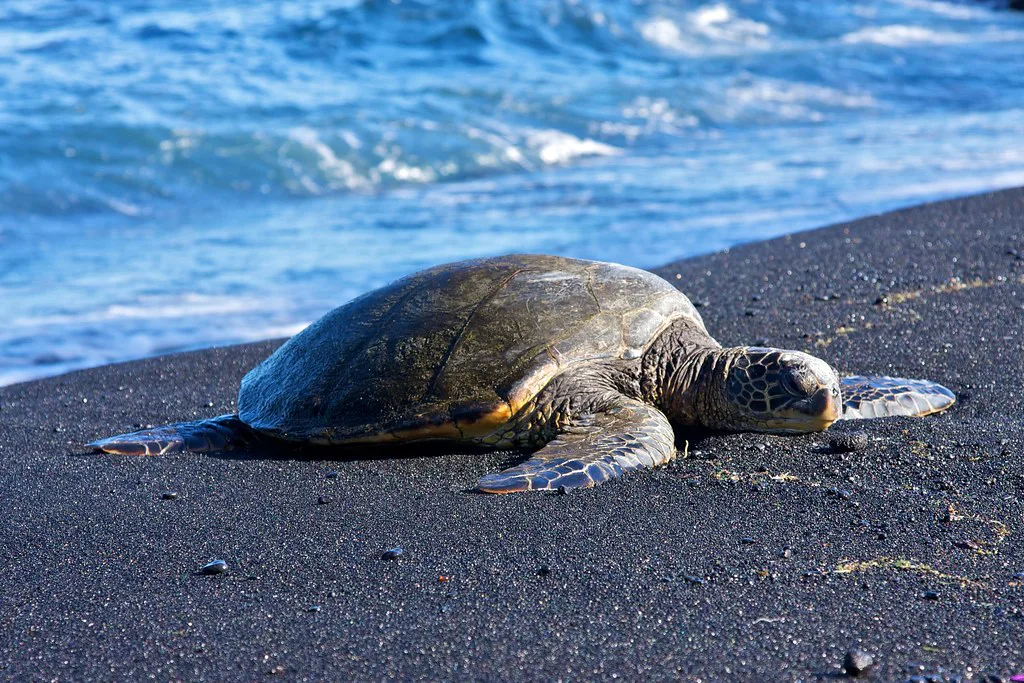
The reliable detail is behavior and habitat. Greens are grazers, so they spend time head-down over limu and seagrass, and they also haul out to bask on Maui beaches, a habit that puts them in plain view on the sand at places like Makena State Park. Watch the mouth: a grazing turtle's head stays low and busy, while a turtle cruising past with its head up is traveling, not feeding.
What Honu Eat and Where They Feed
Adults are primarily herbivorous, eating algae and seagrass, though juveniles are omnivorous and take fish, plants and small invertebrates before shifting to the adult plant diet between ages five and seven. That dietary shift explains why the biggest turtles you see are the ones parked over vegetation rather than prowling the coral heads.
For a snorkeler, the practical rule is to swim the shallow, grassy edges of a bay before you swim the middle. Reef flats with visible green algae and seagrass are the table; drop-offs and sandy channels are the highway. Start in knee-to-chest-depth water along the rocky edges where the bottom texture changes, and scan slowly rather than finning hard.
A turtle's grazing also creates reef structure you can use as a search pattern. Where herbivores keep algae short, coral and the fish that depend on it do better, so these patches are worth a second pass — and they are good places to practice holding still, which is also how you keep your fins off living coral such as fire coral.
Where You Are Likely to See One on Maui
South Maui holds the densest cluster of named turtle spots. Turtle Town around Maluaka Beach is known for abundant honu in calm, clear water, Makena Landing's reefs host many turtles, and the nearshore reefs across South Maui are good for spotting foraging animals; Honolua Bay, a marine life conservation district on the west side, has clear water where honu are often seen. If Turtle Town is on your list, our guide to Turtle Town Maui Snorkeling: Entry, Reef and Best Time to Go covers entry points and timing at Maluaka.
Two more options are worth knowing. Molokini Crater draws turtles especially around the back wall, though that is boat-access water rather than a shore snorkel, and the Kihei turtle cleaning station is a spot where turtles gather to be cleaned by fish. La Perouse Bay's rugged bay also attracts honu in clear water, but the shoreline is lava, so treat it as a spot for confident swimmers.
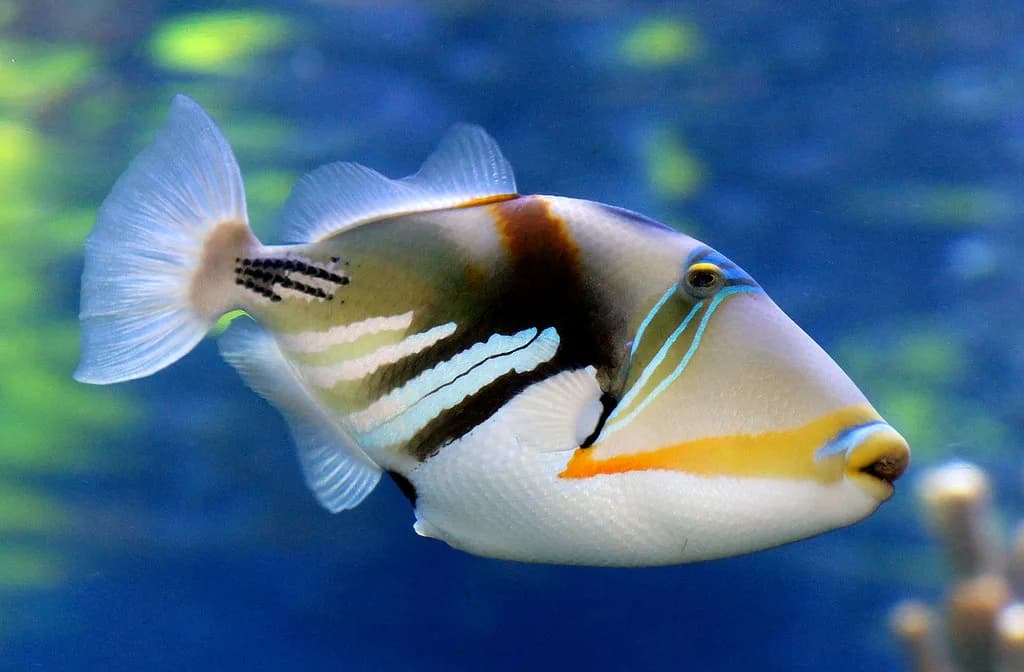
If you want to pair turtles with reef fish, plan the same bay twice rather than racing between beaches. The fish life on these reefs includes the reef triggerfish, Rhinecanthus rectus, the state fish you will see patrolling the coral, and a slow pass over the shallows often turns up more species than a fast swim across the bay.
Turtles on the Sand: Basking Behavior
Hawaiian green sea turtles uniquely bask on beaches, and this behavior helps them regulate body temperature and digestion. On Maui, Makena State Park is one of the beaches where you may see this, and the turtles are not stranded — they are resting. That distinction matters because a well-meaning crowd around a basking turtle is the main way a quiet encounter goes wrong.
Walk the sand wide, keep dogs leashed and at a distance, and give a basking turtle at least 15 feet. Skip flash photography and loud noise, and never try to move or herd a turtle toward the water; if you want a photo, use a long lens or zoom from where you already stand.
How Close You May Swim
Federal guidelines recommend staying at least 10 feet, about 3 meters, away from sea turtles both in the water and on land, with 15 feet, or 5 meters, even better for basking turtles. A turtle that swims toward you is not an invitation to close the gap — hold your position and let it pass or turn away on its own.
Touching, feeding or harassing a honu is illegal and harmful: it stresses the animal, can transfer bacteria, and changes natural behavior. Hawaiian green sea turtles are listed as Threatened under the U.S. Endangered Species Act and are also protected under state law in HRS Chapter 195D, so the distance rule is a legal line, not etiquette.
Report harassment to the NOAA Hotline at 1-800-853-1964 or DLNR's DOCARE line at 1-643-DLNR. If a turtle is injured or entangled, do not intervene yourself — call the NOAA Marine Wildlife Hotline at 1-888-256-9840 with the location and the animal's condition, or on Maui the Maui Ocean Center Marine Institute at 808-286-2549.
Reading Turtle Behavior in the Water
A relaxed turtle keeps doing turtle things: gliding slowly, cropping algae, or rising unhurried to the surface for a breath before settling back down. Those surfacing pauses are the moment to stop finning and give space, because a turtle coming up for air will meet whatever is parked overhead.
A pressed turtle looks different. It turns away, tucks or changes direction, hugs the bottom, or abandons a feeding patch — all signals you have crowded it. If you see any of them, back off several body lengths and stay low and still; a curious turtle may then approach you, and that approach is the only one worth having.
Practice this on a fish first. Holding position quietly is the same skill that lets you watch the smaller reef residents — the masked angelfish and flame hawkfish that sit tight to coral and bolt when a snorkeler looms. Learning to hover without sculling builds the control that keeps you off the bottom and out of a turtle's path.
A Recovery Story Worth Knowing
Nearly all Hawaiian green sea turtle nesting happens at French Frigate Shoals in Papahānaumokuākea Marine National Monument, with about 96% of the population nesting there; females migrate more than 600 miles every two to five years from foraging grounds like Maui. Nesting has grown roughly 5% a year over two decades, from 67 nesting females in 1973 to nearly 500 annually now.
That recovery is why turtle encounters on a Maui snorkel day are now realistic rather than rare. It also sets the stakes: the population is still listed as Threatened, and the animals you meet in the water are a small, visible sample of a slow-breeding species that reaches sexual maturity between 25 and 40 years old.
Threats a Snorkeler Can Help With
The threats honu face in busy coastal water are mostly human: entanglement in fishing line and nets, ingestion of marine debris, boat strikes where turtles surface to breathe, coastal lighting that disorients nesting females and hatchlings, disease such as fibropapillomatosis, and climate effects on nesting beaches. Your contribution is modest but real — pack out trash, avoid single-use plastic, and never leave line in the water.
In high-use bays, surface time is the danger zone. When a turtle is up for a breath, boat traffic is the risk you cannot control, so keep your own profile low and avoid chasing an animal into the middle of a channel or harbor mouth. On the beach, minimizing outdoor lighting near the coast between May and December helps hatchlings head for the sea instead of the street.
Gear and Technique for a Turtle Encounter
The right setup for turtle watching is simple: a mask that fits, a snorkel you can clear, and fins stiff enough to cover distance but soft enough to hover. Fins you can keep still matter more than speed, because a snorkeler who stops finning stays off the bottom and lets a feeding turtle keep grazing; a rash guard or thin wetsuit adds buoyancy and warmth on longer sessions.
Enter quietly. A gentle slide-in from the sand, rather than a jump, keeps you from splashing a shallow flat where turtles are feeding, and it protects the reef below. Stay horizontal and slightly positive, keep your hands to yourself, and use the surface as your viewing platform rather than diving down to a turtle's level.
Best Time of Day and Conditions
Plan around calm water and low angle light. Early morning typically brings the lightest wind and flattest surface on south and west Maui shorelines, which is when shallow reef flats are easiest to read and turtles are easiest to spot; midday glare on the water makes scanning harder. Morning also means fewer bodies in the water at popular bays.
Because sightings cannot be scheduled, give yourself a full morning at one bay rather than a quick check. Skip the swim when surf is up — a bay that is calm at noon can be surging at low tide — and ask a lifeguard where one is posted about the day's surf, surge and current before you get in the water.
Getting In, Parking and Facilities
South Maui's turtle beaches are largely shore-access sites, so entry is from sand and the walk-in is short. Makena Landing and Maluaka Beach place the reef within swimming distance of the shore, which makes them workable for families with older children; Honolua Bay is a different proposition, with a rocky shoreline and a longer swim, and it is best for confident swimmers.
Facilities vary by location and are not uniform, so decide what you need before you choose a beach: a lifeguard, a shower, or a restroom changes which access point makes sense for your group. Entry conditions and any posted notices also change with swell, so look at the water and any signage at the access before you gear up.
Combining Turtles With Nearby Reef
The best turtle days pair one turtle-focused bay with one fish-focused reef nearby rather than ticking off several names. On the South Maui coast, Makena Landing, Maluaka Beach and the surrounding reefs sit within a short drive of each other, so a morning at one and a later swim at another keeps travel time small and time in the water long.
Reef fish are a good second act because they need no boat and no special conditions. A shallow reef where you can hover quietly gives you the hawaii reef fish cast — triggerfish, surgeonfish and the small coral residents — and the same patience you learned around the turtles. For a broader primer on those species, browse the reef fish guide before you go.
Honu in Hawaiian Culture
For many Hawaiians the honu is an 'aumākua, an ancestral spirit guide or guardian believed to embody ancestors, and the Kumulipo creation chant places the turtle among the first creatures born. That cultural weight is why an encounter is treated as a gift rather than a photo opportunity, and it is a good reason to keep your distance and let the animal choose the moment.
Historical use matters here too: honu were considered property of the aliʻi and were hunted commercially in the 1900s before federal protections allowed a recovery. Knowing that history reframes a swim-by — you are watching a species that came back because people stopped taking it.
Planning Your Turtle Day
Choose one South Maui bay, arrive early, and spend your first ten minutes reading the bottom before you swim. Grass and algae mean grazing habitat, a turtle head-down means you can hover at a distance and watch, and a turtle turning away means you have gone far enough. Check current ocean conditions with the Hawaiʻi DLNR or a lifeguard before entry, and let the sighting be the turtle's decision.
Frequently Asked Questions
Can I touch a sea turtle in Hawaii?
No. Touching, feeding or harassing a Hawaiian green sea turtle is illegal, and federal guidelines call for staying at least 10 feet away in the water. Touch stresses the animal, can transfer bacteria between you and it, and disrupts the behavior you came to see. If a turtle is injured or entangled, call the NOAA Marine Wildlife Hotline rather than intervening.
How close can you get to a sea turtle while snorkeling?
Keep at least 10 feet, about 3 meters, in the water, and give basking turtles on the sand about 15 feet, or 5 meters. Hold your position if a turtle swims toward you rather than closing the distance; contact remains your responsibility even if the animal approaches.
What do Hawaiian green sea turtles eat?
Adults are primarily herbivorous, grazing on algae known as limu and on seagrass, which is why turtle-heavy spots tend to be shallow reef flats with visible plant growth. Juveniles are omnivorous and eat fish, plants and small invertebrates, shifting to the adult plant diet between about five and seven years old.
Why are they called green turtles if their shells are brown?
The name refers to the turtle's green fat and cartilage, which take on that color from the herbivorous diet of algae and seagrass, not to the shell. A honu's carapace is usually dark brown, olive or black, often with streaks or mottling.
How long do green sea turtles live?
Hawaiian green sea turtles can live 60 to 100 years and mature slowly, reaching sexual maturity between roughly 25 and 40 years old. That slow timeline is a key reason the species needs long-term protection even as nesting numbers have risen.
Where is the best place to see Hawaiian green sea turtles on Maui?
Turtle Town around Maluaka Beach, Makena Landing and the nearshore reefs of South Maui are the best-known shore-access areas, and Honolua Bay is a west-side option with clear water. Molokini Crater draws turtles too, but access is by boat. None of these guarantees a sighting.
Why do turtles come to shore?
On Maui, Hawaiian green sea turtles bask on beaches such as Makena State Park, a behavior that helps regulate body temperature and digestion. A resting turtle on the sand is not stranded, so keep well back, keep dogs leashed and avoid flash photography or noise.
Is it illegal to touch a green sea turtle in Hawaii?
Yes. Hawaiian green sea turtles are listed as Threatened under the U.S. Endangered Species Act and are protected under state law in HRS Chapter 195D, and touching, feeding or disturbing them violates those protections. Report harassment to the NOAA Hotline or DLNR's DOCARE line.
Sources
Snorkeling notes for your next trip
Optional updates to our snorkeling guides.
You might also like
Continue reading
More guides you'll find useful