Blue Heron Bridge Snorkeling: Phil Foster Park Guide
Snorkel the Blue Heron Bridge trail at Phil Foster Park in Riviera Beach: sandy entry, shallow reef depth, marine life, tides and guided tours.
On this page
The Blue Heron Bridge snorkel trail suits beginners, families and anyone who wants a real reef without a boat ride. You walk in from a sandy beach at Phil Foster Park in Riviera Beach, wade through standable water and reach the reef structure within a short swim across the shallows.
What makes the site distinctive is its position in the Lake Worth Lagoon beside the Lake Worth Inlet, where clean ocean water pushes in and the shallow reef sits in gentle depths. That combination makes it one of the most accessible reef swims on Florida's Atlantic coast and an easy anchor for a day of snorkeling in Palm Beach.
Where Phil Foster Park Sits in Riviera Beach
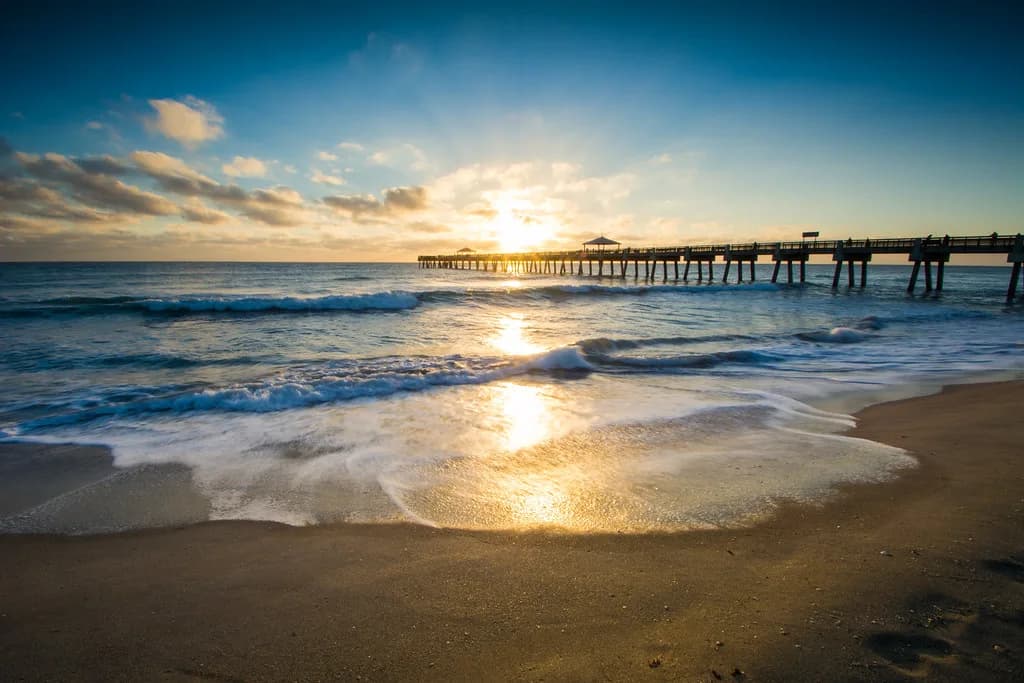
Phil Foster Park occupies the eastern end of a small island in Riviera Beach, tucked under and beside the Blue Heron Bridge where it crosses the Lake Worth Lagoon toward Singer Island. The snorkel trail runs along the park's eastern and southern shores, facing the inlet rather than the open ocean. Because the site is a sheltered lagoon shore rather than a surf beach, the water stays flat enough for walking entry on most days.
The layout is simple to read from the sand. The park beach runs along the shore with the bridge overhead, open lawn and picnic areas behind you, and the trail structures just offshore to the east and south. That orientation matters: the inlet side carries more boat traffic, while the beach side gives you the calmest water to fit your mask and start swimming.
Getting In: Sandy Walk-In Entry
Entry is by a gentle walk-in from the beach, with no ladder, stair or boat required. The sandy bottom slopes gradually, so you have time to settle your mask and snorkel in water where you can still stand before the reef structure begins. First-time snorkelers should start in about six feet of water, get their breathing comfortable, then work outward toward the main reef areas.
Guided shore tours meet right at the park, fit you with mask, fins and snorkel, and start with a short skills check in the shallows before heading out. That walk-in format removes the biggest barrier for families with kids, since nobody has to climb back aboard a boat or tread water while getting sorted.
How Deep the Trail Runs and How Far Out
The reef system sits in roughly 10 to 15 feet of water, with the sandy shelf closer to shore shallow enough to stand in. That depth band is what makes the trail work for mixed groups: a confident adult can hover over the structure while a beginner floats comfortably above the sand nearby. You do not need to swim far from the beach to reach the structures, and the bottom never drops away sharply the way an ocean-side reef does.
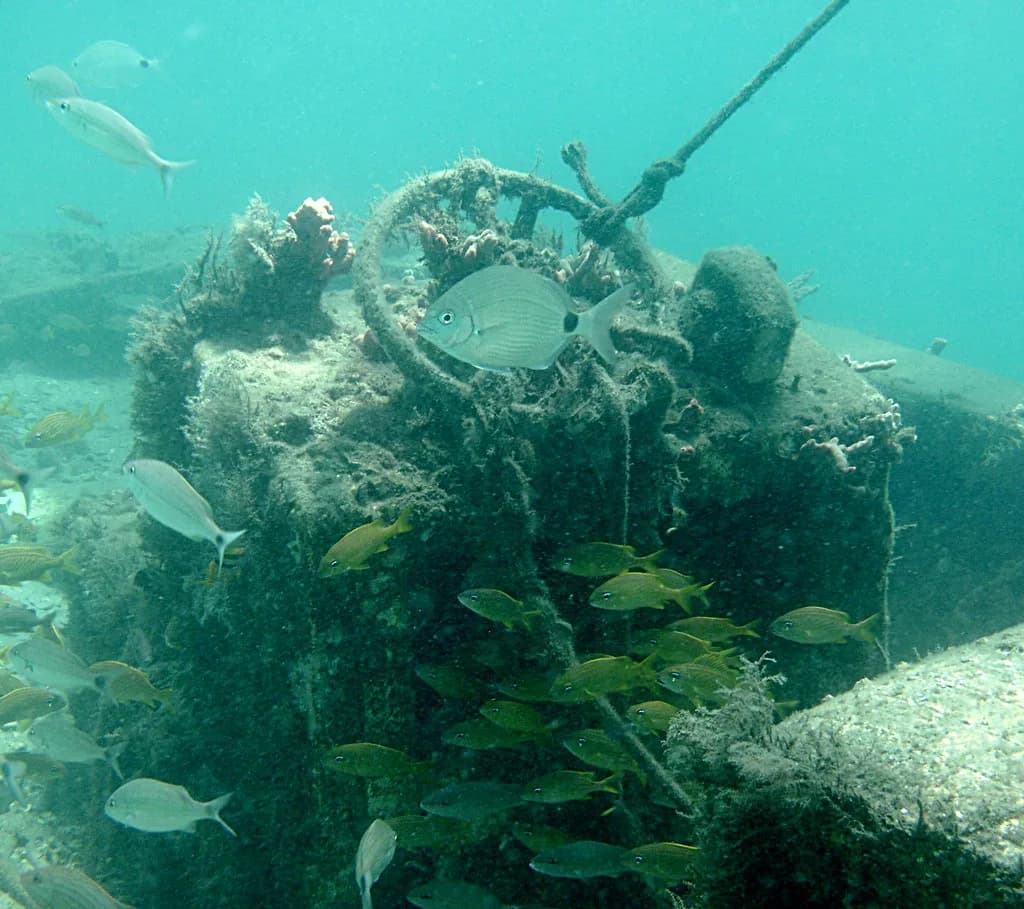
The trail is marked, and the underwater route includes sunken objects such as a small sailboat, an old airplane and statues, so there is a defined line to follow rather than a wandering search over open sand. Treat the marked route as your map: follow it out, note the structures you pass, and return the way you came.
What You Will See Along the Trail
Parrotfish are constant company, and their bright blues and greens make them easy to pick out even in the clear shallow light. Gray angelfish and French angelfish cruise around the coral heads with their disc-shaped bodies and bold stripes, and sergeant majors, the small yellow-and-black striped fish, guard their patches aggressively in spring and summer spawning season. Hold still and keep a respectful distance rather than reaching toward any animal.
Green sea turtles frequent the area, most often in the warmer months from May through September, and spotted eagle rays occasionally glide through the deeper channels on six-foot wingspans. Both are encounters, not guarantees, and viewing distance rules apply: observe from where you are and let the animal choose the gap.
Best Time to Go: Tide and Light
Plan the swim around high tide, when the inlet pushes fresh, clear ocean water into the lagoon. Local guides describe visibility in the range of 50 to 100 feet underwater on good-weather days, and that clarity is tied to the incoming water rather than to any particular hour. If you have a touring day, call a Riviera Beach operator and ask which tide window they are booking that week, since tides shift daily.
Midday sun matters as much as the tide for the fish. Parrotfish colors read much brighter with the sun high over the reef, so a late-morning into early-afternoon window combines the best light with a workable high tide. Mornings before the wind builds give the flattest water for beginners and children.
Guided Tours and Adding a Boat Trip
If you would rather have a guide point things out, a shore tour from Phil Foster Park covers the trail with a certified instructor and gear included, running about 1.5 to 2 hours with very small groups. That format is the easiest way to learn the layout on a first visit, and it removes the guesswork of where the marked route starts.
A boat trip adds a different view: catamaran snorkel tours run from the Riviera Beach Marina, leaving from the southern dock by the Peanut Island Ferry signs, and combine the bridge trail with the man-made artificial reef off Peanut Island. That trip is listed at $90 per person and asks guests to arrive 30 minutes before departure, so book and check in ahead of time.
Hazards: Boat Traffic, Current and Visibility
The inlet beside the bridge carries boat traffic, and the channel is the real constraint on the site rather than surf. Stay close to the shore and the marked trail, keep a bright surface signal with you, and give the channel plenty of room. Listen for engines when you lift your head and do not cross the marked route's boundary toward open water.
Current is usually minimal on the trail, which is why hovering over the structures is easy, but the tide that brings clear water also brings movement. Time your swim well inside the tide window instead of pushing into a building flow, and if visibility drops, shorten the swim rather than stretching it.
There is no surf break here to worry about, but the combination of boats, current and a busy park means you should snorkel in a pair or group. Reef-safe sunscreen is the standard practice on Florida reefs, and organizers ask guests to bring their own so gear stays free of residue.
Rules and Reef Etiquette on the Trail
Treat the marked trail, statues and sunken objects as look-only features. Do not touch, hold or lift any marine animal, and do not feed fish; even a starfish moved from the bottom is a disturbance, and viewing distance for turtles and rays is what keeps encounters possible. Keep fins up off the sand and coral so you do not cloud the water for the swimmers behind you.
Access to the park and the water is free, which makes the trail easy to combine with a beach day. Reef-safe sunscreen and a swim partner are the two things that matter most on a self-guided visit.
Parking, Facilities and Peanut Island
Phil Foster Park serves as the meeting point for guided shore tours and the launch point for the trail, with the beach, lawn and picnic areas right beside the water. Catamaran trips, by contrast, meet at the Riviera Beach Marina at 200 East 13th Street, where guests are asked to arrive 30 minutes before the tour begins, so plan parking time into a tour morning rather than cutting it close.
Peanut Island sits just across the inlet, a 79-acre park created by dredging in 1918 and renovated in 2005 with campsites, a pier and a man-made reef. Snorkeling the artificial reef there works best as a boat trip, and pairing it with the bridge trail in one day gives you both a shore reef and an island reef. If you want the island without the boat, consider reading up on Peanut Island snorkeling before you commit your day.
For a change of scene on the ocean side, Red Reef Park in Boca Raton offers a different kind of reef swim, and comparing the two helps you decide whether you want lagoon calm or surf-zone exposure. If you are weighing a broader range of sites before committing your day, this overview of snorkeling in Florida lays out the shore versus boat decision across the state.
Who Should Choose a Boat or Ocean-Side Spot Instead
Phil Foster Park is the right call for beginners, families and anyone who wants shallow water, a sandy entry and a marked route. Skip it if you need deep reef walls or long swims; those days belong on a boat charter or an ocean-side reef.
Strong swimmers with limited time should also weigh a boat trip that covers both the bridge trail and the Peanut Island reef in one outing, since it removes the need to plan a second visit around the tide. For a rockier, more exposed shore experience, Coral Cove Park snorkeling offers a contrast worth building into a longer Palm Beach stay.
Plan Your Snorkel Day
Build your day around high tide, arrive at Phil Foster Park early enough to sort gear on the sand, and start in the standable shallows before following the marked trail. Bring reef-safe sunscreen, a buddy and a surface signal, and keep your distance from turtles, rays and the structures themselves.
Check the tide and wind with your chosen tour company or the county park page before you drive over, then pick your window. Whether you swim from the beach or add the Peanut Island boat trip, the bridge trail delivers a genuine reef in water shallow enough for a first-timer.
Frequently Asked Questions
How deep is the Blue Heron Bridge snorkel trail?
The reef structure at Phil Foster Park sits in roughly 10 to 15 feet of water, with a gradually sloping sandy shelf closer to shore that is shallow enough to stand in. That lets a beginner float above the sand while a more confident swimmer hovers over the structures, and the bottom does not drop away sharply.
Do you need a boat to snorkel Blue Heron Bridge?
No. The trail is reached by a gentle walk-in from the beach at Phil Foster Park, and the marked route with its sunken sailboat, airplane and statues begins just offshore. A boat trip from the Riviera Beach Marina is an add-on that combines the bridge trail with the artificial reef off Peanut Island.
What marine life can you see at Phil Foster Park?
Parrotfish, gray and French angelfish and sergeant majors are the most regular sightings, and green sea turtles turn up more often in the warmer months. Spotted eagle rays occasionally cross the deeper channels. Treat every species as a possible encounter and keep a respectful viewing distance.
When is the best time to snorkel Blue Heron Bridge?
Aim for high tide, when clean ocean water moves into the lagoon and clarity improves, and pair it with late-morning to early-afternoon sun so fish colors read brightly. Tides shift daily, so ask a Riviera Beach operator or check a tide table for the window on your date.
Are there guided snorkeling tours from Riviera Beach?
Yes. Shore tours meet at Phil Foster Park and run about 1.5 to 2 hours with a certified instructor and gear included, and catamaran trips depart from the Riviera Beach Marina for the bridge trail plus the Peanut Island reef. Book ahead, since operators ask guests to arrive before departure time.
Sources
Snorkeling notes for your next trip
Optional updates to our snorkeling guides.
You might also like
Continue reading
More guides you'll find useful