River Snorkeling: Learn to Snorkel in Moving Water
River snorkeling reveals crayfish, darters, mussels and salamanders in cool freshwater. Learn to read current, choose an entry point and start on marked trails.
On this page
River snorkeling is the cheapest way to see wildlife most people never notice: darters holding in the current, crayfish backing under rocks, mussels and aquatic snails on gravel, salamanders in the slack edges. It suits beginners and kids who are comfortable floating face-down in shallow water, because the best viewing sits close to the bottom in a few feet of flow rather than out in mid-channel. A mask, a snorkel and a calm entry point are the whole kit.
The trade-off against a reef or a spring is visibility and predictability. Rivers run cold, carry sediment after rain and change shape with every high-water event, so you choose your stretch for slow flow and a gentle way in rather than for clarity alone. Marked public sites with signage and an established access point remove most of that guesswork, which is why they are the sensible default for a first trip.
What You Actually See Under a River's Surface
Freshwater snorkeling puts you over animals that rarely show at the surface: fish, amphibians, turtles and crustaceans, depending on the water body. On the marked Blue Ridge Snorkel Trail in Western North Carolina, the published species list runs to crayfishes, mussels, aquatic snails, salamanders, aquatic insects and fish that even anglers seldom see.
Yes, provided you pick a gentle stretch and a wide, shallow entry such as a gravel bar, boat ramp or town park access.
Treat every species as a possible sighting rather than a promised one. Small fish such as darters sit tight to gravel and dart sideways when you pass; crayfish and snails work the undersides of cobble; salamanders favor cool, shaded pockets near the bank. The practical consequence is that you should look down and close, not ahead and wide, and let your body drift over structure instead of chasing anything.
Why Marked Sites Beat Unmarked Stretches
A signed site gives you three things a random pull-off does not: a legal public access point, a known way in and out of the water, and a marker telling you which species live there and what safety points apply. The Blue Ridge Snorkel Trail operates on exactly that model, with ten pilot locations across Western North Carolina, each identified by signage and all free to snorkel and explore.
The trail idea came from state aquatic wildlife staff who wanted people to see rivers from a fish's point of view, and the site list spans boat ramps, town parks, a state park and a greenway. For a first river snorkel, that matters more than which river is prettiest: you can park legally, walk a short path and enter where someone has already decided the water is workable.
How a River Is Laid Out: Riffles, Runs and Pools
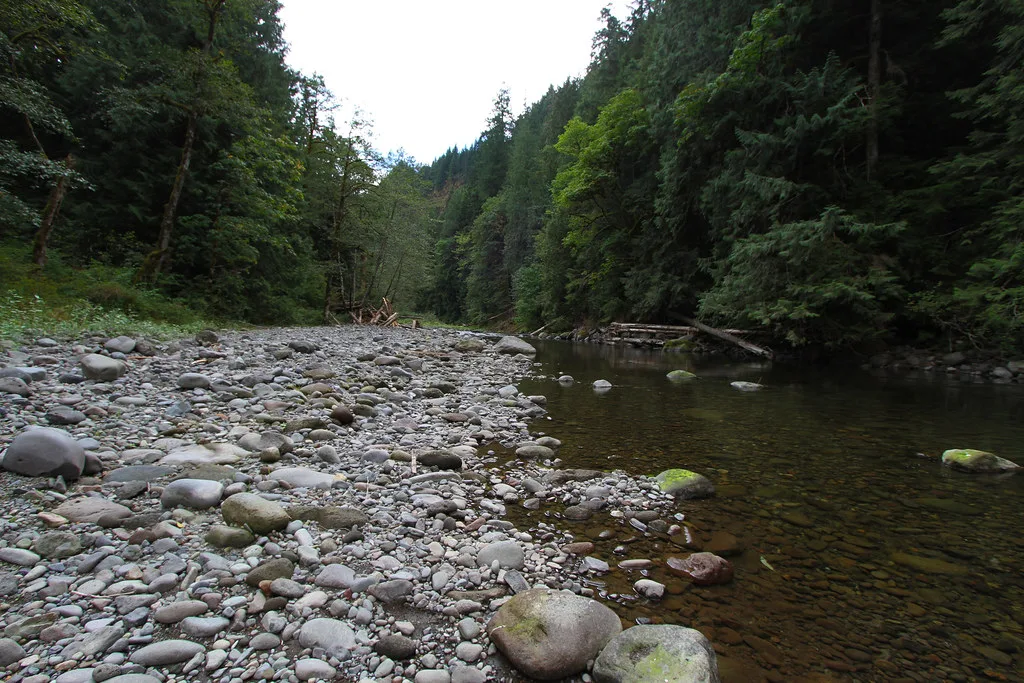
A river repeats three shapes. Riffles are shallow, fast and broken over gravel; runs are deeper and smoother with a steady push; pools are slow, often dark and deeper than they look. Fish and crayfish concentrate around the edges of these shapes, where fast water meets slack, rather than in the fastest chute itself.
That layout tells you where to point your mask. Drift along the seam at the side of a riffle, where the flow slows against a rock or bank, and you cover the most productive band with the least effort. Cross a run only when you have a reason to, and treat the head of a pool as the place to slow down and look under ledges before the bottom drops away.
Choosing an Entry Point
Gravel bars, boat ramps and park access are the beginner choices because they give you a wide, shallow shelf to wade into and a known exit behind you. Steep, undercut banks and slick rock shelves are where trips go wrong, since you cannot see your footing and the current pushes you past your exit. The published safety advice is blunt about this: stay close to the shoreline when you start, and always know exactly where your exit point is.
Lake and river entries ask different things of you. A lake usually gives you a dock, a gradual beach or a boat launch with still water, which is why lake snorkeling is the easier place to build comfort. A river entry has to be chosen against flow: a boat ramp works because vehicles already use it, a gravel bar works because it slopes gently, and a greenway or town park works because the bank has been stabilized for public use.
Reading Current Before You Get In
Stand on the bank and trace the water with your eyes before you put a mask on. Bends push flow to the outside, chutes squeeze it between rocks, and the smooth glassy tongue above a rock is usually the deepest, fastest line. Standing waves, boils and a visible line of faster water against slower water all mark places to avoid on a first swim.
Rivers can carry strong currents, quick bends and large rocks, and the same places tend to have poor visibility as well as real danger. Use that as a filter: if you cannot read a clean, slow line back to your exit, walk upstream or downstream until you can. Where boats share the water, a highly visible float with a flag, a warm wetsuit, a light and gloves are the published minimum for diving a river safely.
Depth and Visibility: Work the Bottom Structure
River snorkeling is a shallow-water activity, so plan on hovering over gravel, cobble and bedrock rather than swimming mid-channel. Structure holds the life: the downstream side of a boulder, the lip of a pool, the shaded undercut of a bank. Keeping your body low and horizontal lets you look under those edges without diving down.
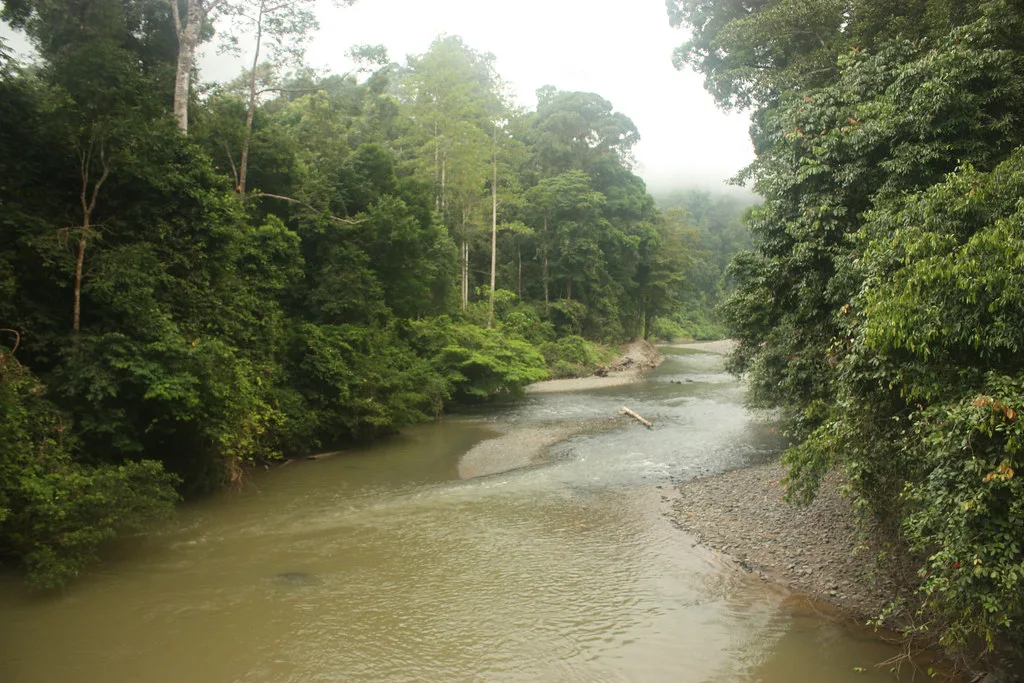
Visibility shifts with rainfall, seasonal flow and how much sediment is moving, so avoid treating any river as reliably clear. The practical rule is to match your expectations to the water in front of you: in colored water you will see shapes and movement close up, so slow down and cover less ground rather than ranging farther from the bank.
Gear for Moving Freshwater
Three items get you started: a mask that seals without leaking, a snorkel that sits comfortably and attaches to the mask, and fins, which are optional but make moving around quicker and easier. A snorkel with a valve at the top keeps water out when you duck under, which is useful in a river where you will dip and rise over rocks.
Fit beats features. Before you leave the bank, check the mask for fit and the whole kit for function, since a leaking mask or a split strap ends a river swim faster than cold water does. If you want to dig into tube design and clearing before you buy, our guide to how does a snorkel work covers the mechanics in plain terms.
First Skills: Float, Don't Kick
Snorkeling is closer to floating than to swimming. Once your snorkel is working, lie still, breathe and watch; heavy kicking splashes water into the tube and stirs sediment that hides everything you came to see. In a river, that same restraint keeps you from being pushed off your line and off your exit.
Practice in the shallows at the edge of a gravel bar: float flat, breathe through the tube, then turn your head without lifting it. The whole skillset transfers directly to salt water through our step-by-step guide to how to snorkel, so time spent here is not lost. If you are weighing how far this can take you, our comparison of snorkeling vs scuba diving explains where the two activities split in depth, cost and training.
River Hazards to Plan Around
Current, cold water, slick rock and boat traffic are the four hazards that define river snorkeling. Always go with a buddy, scout the area for wildlife, sharp rocks and bad weather before entering, and relax once you are in, since panic burns energy you may want for the walk back to the car.
Cold water is the one that catches people out on warm days, because mountain rivers stay chill even in summer. Dress for the water rather than the air, get out before you start shivering, and treat a wetsuit as normal equipment rather than an extreme measure. Several of the marked trail sites sit inside state parks and town greenways, so posted rules and seasonal notices at those accesses apply on top of your own judgment; check current conditions with North Carolina Wildlife Resources Commission before a trip.
Wildlife Etiquette in Freshwater
The animals you are looking at are the reason the site was protected, so watch without handling. Do not touch, chase or lift crayfish, mussels or salamanders, and do not turn rocks in a way that crushes what lives under them; set anything you move back as you found it. Keep fins off the bottom, and give any turtle or mammal you meet a wide berth.
Mussels are a good example of why restraint matters. They filter the water, sit largely buried in gravel and are easy to crush underfoot, so float over beds rather than standing on them. Snorkelers see these animals on the marked trail because the sites are managed for public viewing, and that arrangement only holds if visitors leave the substrate and the animals in place.
Best Time of Day and Season
Early morning gives you the calmest light, the fewest other users and usually the least disturbance on the bank, which is when skittish fish are easiest to approach. Midday sun penetrates shallow water better and warms you on the walk back, a real consideration in a cold river. Late afternoon is the compromise when you want warm air and softer light, and our guide to best time of day to snorkel applies the same reasoning to coastal water.
Season matters more in rivers than on a reef. Late spring through early fall brings warmer air and easier access, while summer low flow often exposes more gravel and structure to look over. After heavy rain, wait for the water to drop and clear rather than driving to a site and hoping; the trail page at ncfishes.com lists the marked sites and is the place to start planning.
Adding a Lake or Spring to a River Day
A river snorkel pairs naturally with a lake or spring swim, and the contrast is the point. Rivers give you flow, structure and cold water; lakes give you still water, easier entries and a gentler place to practice mask clearing or test new gear. Build the river section for the middle of the day and use the lake for an easy start or a warm finish. If you prefer your freshwater flat and glassy, our guide to Florida springs snorkeling makes a useful counterpoint to a flowing river.
If you are mapping a broader trip, our picks for the best snorkeling in the US show how freshwater and coastal days fit into one itinerary, from spring-fed swims to reef entries. Keep the two halves of the day separate in your head: the skills overlap, but the entry decisions and the hazards do not.
Where to Start: The Ten Marked Trail Sites
The Blue Ridge Snorkel Trail lists ten public sites across Western North Carolina: the Pigeon River at the Canton Recreation Park boat ramp, the East Prong Roaring River at Stone Mountain State Park, the Tuckasegee River at East LaPorte Park in Cullowhee, and the Oconaluftee River at Bryson City Island Park. The list continues with the Mills River site in Mills River, the Swannanoa at Black Mountain Veterans Park, the Little Tennessee at Queen Branch Preserve near Franklin, and the Valley River at Heritage Park in Andrews, plus the Catawba at the Marion greenway and the Cheoah at Joyce Kilmer Bridge.
At minimum you need a mask and snorkel, and some local dive and river outfitters may offer rentals for anyone without their own kit. Pick one site rather than trying to tick off several in a day, and start at a town park or boat ramp where the access is established. All ten are free to snorkel and explore, which makes the trail the lowest-risk way to try moving water for the first time.
Plan Your River Snorkel
Start with a marked site, walk the bank to find a gravel shelf or ramp, and float the seam where fast water meets slack instead of fighting the middle of the channel. Take a buddy, check your mask seal on land, dress for cold water and leave the rocks and animals where you find them. One site, one slow float and one good look under a boulder is a full first day.
Frequently Asked Questions
Can beginners snorkel in a river?
Yes, provided you pick a gentle stretch and a wide, shallow entry such as a gravel bar, boat ramp or town park access. Stay close to the shoreline at first and keep your exit point in sight. Marked public sites with signage are the easiest starting point because the access has been established for visitors.
What animals can you see snorkeling in a river?
Snorkelers on the Blue Ridge Snorkel Trail may encounter crayfishes, mussels, aquatic snails, salamanders, aquatic insects and small fish such as darters. Sightings vary by site, season and water level, so treat each species as a possibility rather than a guarantee and look close to the bottom structure.
Do you need a wetsuit for river snorkeling?
Mountain rivers stay cold even when the air is hot, so a wetsuit is normal equipment rather than an extreme measure. Dress for the water temperature rather than the weather forecast, and get out if you start to feel chilled. Where boats share the water, published river-diving guidance includes a high-density wetsuit.
Is river snorkeling free?
The ten pilot sites on the Blue Ridge Snorkel Trail are free to snorkel and explore according to trail reporting. Equipment is the main cost if you do not own a mask and snorkel, and some local dive and river outfitters may offer rentals.
Where can you rent snorkel gear for a river?
Some local dive and river outfitters in Western North Carolina may offer equipment to rent for people who do not own their own. Confirm availability directly with the shop before you drive, and check mask fit in person rather than ordering a size blind.
How do you avoid swallowing water while snorkeling?
Float rather than kick, since heavy kicking splashes water into the tube and stirs up sediment. Practice breathing through the snorkel in the shallows at the edge of a gravel bar, and choose a tube with a valve at the top that limits water entry when you dip under.
When is the best time to snorkel a river?
Early morning usually brings calmer light, fewer people on the bank and less disturbance in the water; midday gives better light penetration and warmer air. Seasonally, late spring through early fall offers the easiest access, and water is usually clearest after a dry stretch rather than right after rain.
Sources
Snorkeling notes for your next trip
Optional updates to our snorkeling guides.
You might also like
Continue reading
More guides you'll find useful