Hanauma Bay Reservations: How to Book, Fees and Entry Rules
Hanauma Bay uses timed online reservations with a daily visitor cap. Here is how booking, entry windows, fees and the required safety video work.
On this page
Hanauma Bay packs a full reef into a sheltered volcanic cone, which is why it works so well for first-time snorkelers and kids who want calm water close to the sand. The catch is that entry is managed, so your day is built around a booked time slot rather than a spur-of-the-moment arrival. Plan the reservation first and the swim second.
Treat a Hanauma morning as a three-part sequence: watch the required education and safety video, take the tram or walk down the hill, then snorkel inside the marker buoys. Budget time for each part, because the entry window is fixed and the beach clears well before sunset.
Why the bay is worth a reserved slot
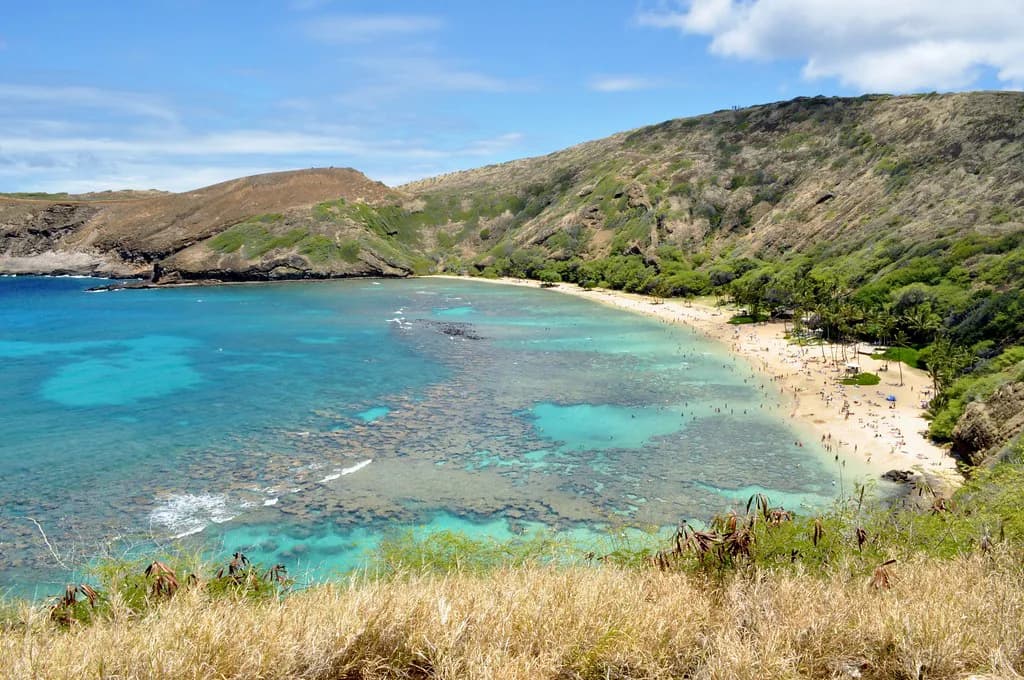
Hanauma Bay was designated Hawaii's first Marine Life Conservation District in 1967, and the 1990 management plan that followed reduced visitation, upgraded facilities, banned fish feeding and added visitor education. That history is why the water feels less picked-over than a roadside beach: the reef sits in a curved bay formed inside a volcanic cone.
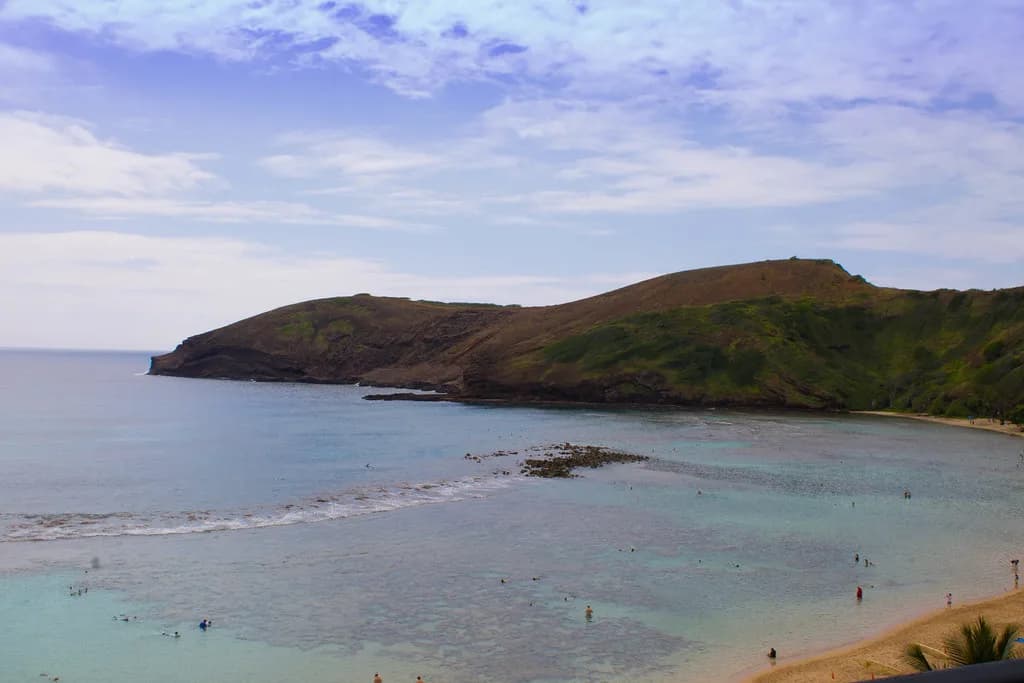
The practical payoff is layout. You enter from a sandy beach, and the shallow reef begins close enough that nervous swimmers can stay in waist-to-chest depth and still see fish. Stronger swimmers can push farther out toward the deeper center of the bay, where the current and wave exposure pick up and the buoys mark the limit.
It is the rare Oahu spot that combines easy sand entry, lifeguards, restrooms and showers with a genuine protected reef. If you are weighing it against other island options, this is the beginner-friendly end of the spectrum rather than the wild end. Island-hoppers weighing a second protected bay can compare it with snorkeling in Maui, where Molokini offers a similarly sheltered reef.
How the reservation system works
Entry is ticket-based. Tickets are sold through the City & County of Honolulu's online booking system, and you select an entry time two days before your visit; the booking window opens on that two-day mark rather than weeks out. Daily attendance is capped, which is why the timed slots behave like a limited commodity rather than a formality.
A small number of tickets are held for walk-up visitors at the bay for people without internet access. Those same-day tickets usually go before mid-morning, so arriving without a booking means arriving at opening time or accepting the risk of being turned away.
Every visitor watches the education and safety video before descending to the beach, and it must be watched on each visit rather than skipped because you saw it on a previous trip. Entry into the theater area is staggered in small groups, so the video adds real minutes to your arrival.
Reservation timing and planning your entry window
Book the moment your target date enters the two-day window, because popular morning slots disappear quickly. If your dates are flexible, aim for a Wednesday through Sunday entry: the preserve is closed all day Mondays and Tuesdays, so those days are not available to book in the first place.
Build the slot backwards. A booked entry time is when you pass through the entrance, not when you reach the sand, so add time for the video, the tram queue and the walk down. First-time visitors who book the earliest window get the calmest water and the emptiest reef; a mid-morning slot trades some calm for easier logistics.
If the online window is sold out, the same-day pool at the bay is the fallback, and it rewards an early arrival. Have a backup east Oahu beach in mind so a missed ticket does not sink the morning.
Entry fees and who gets in free
The entry fee is 25 dollars per non-Hawaii resident aged 13 and older, with a 3 dollar parking charge per vehicle for non-residents and 1 dollar for Hawaii residents. Children 12 and younger, Hawaii residents with valid state ID and active-duty military with ID enter free, and the tram ride is included with entry.
Military access has its own wrinkle: active-duty service members get in free with proper ID but still need a reservation. Residents, by contrast, skip the reservation entirely during open hours under the current policy.
Fees and ticketing rules are set by the city and can change, so confirm the current charge on the official Honolulu parks page when you book rather than relying on a planning figure.
Hours and closed days
The preserve opens at 6:45 a.m. and the last entry is at 1:30 p.m., with the beach cleared a half hour before the bay closes at 4 p.m. It is closed all day Mondays and Tuesdays.
That early last-entry cutoff is the single most useful fact for planning: an afternoon arrival will not get you in, even with a ticket. Schedule Hanauma for the morning and keep the rest of the day for the windward coast or a Hawaii Kai lunch.
Kamaaina and resident access
Hawaii residents with valid photo identification, such as a Hawaii driver's license or school ID, currently enter free and without a reservation during all open hours, Wednesday through Sunday. The city expanded this after increasing staffing, and it covers entry from opening until the 1:30 p.m. last-entry time.
Residents still pay the reduced parking rate rather than the non-resident one, and everyone, residents included, watches the safety video before heading down. Bring the ID; the free entry depends on showing it.
Getting there from Waikiki and Hawaii Kai
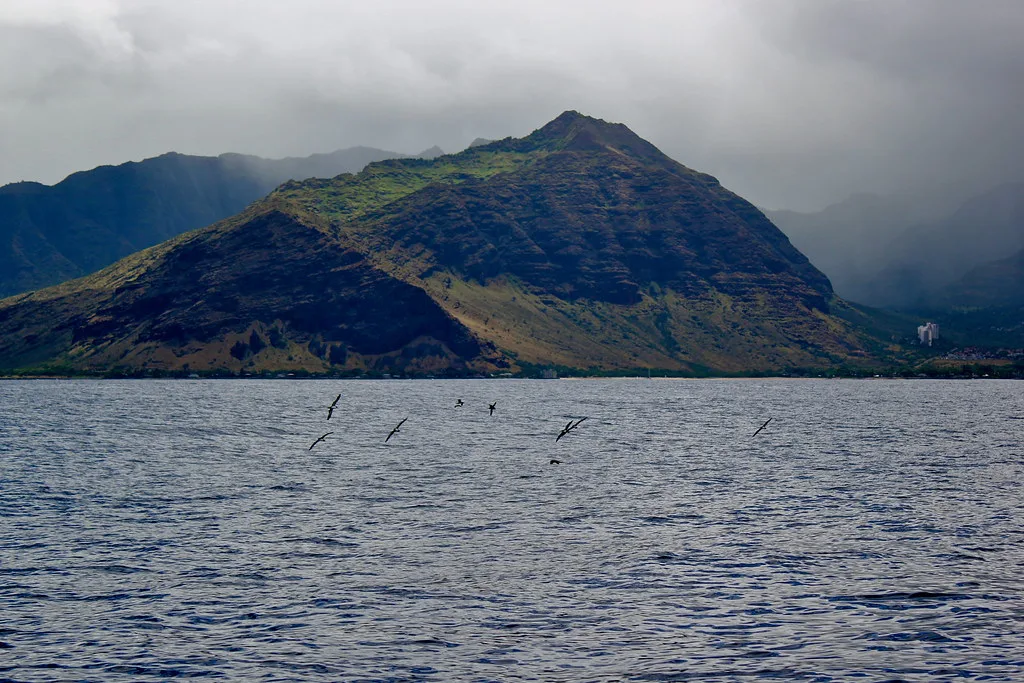
By car, follow the H1 east until it becomes Kalanianaole Highway and watch for the Hanauma Bay Road turnoff; from Hawaii Kai the drive is short. Commercial vehicles, including taxis, ride-shares and shuttle buses, are not allowed to drop guests at the bay, so a rideshare will leave you short of the entrance.
By bus from Waikiki, take the 23 toward Hawaii Kai, transfer to the 1L, and walk roughly a mile from Lunalilo Home Road and Kalanianaole Highway; the ride runs about an hour and the walk about 20 minutes. You need a Holo Card, at 2.75 dollars per ride or 5.50 dollars for a day pass once you take a second ride.
Tours and shuttle packages sidestep the drop-off restriction because they are permitted operators, and many bundle snorkel gear with the ride. That convenience is worth it if you are staying in Waikiki without a car and do not want the mile-long walk from the bus stop.
Parking at the bay
The public lot holds roughly 280 stalls, and it fills early, so an early entry window doubles as your parking strategy.
From the upper lot, a tram carries visitors down to beach level and back up; it is included with entry, which matters on the climb back up the hill after a long snorkel. Beach wheelchairs are available free on a first-come basis from the bay's representatives.
What you will see on the reef
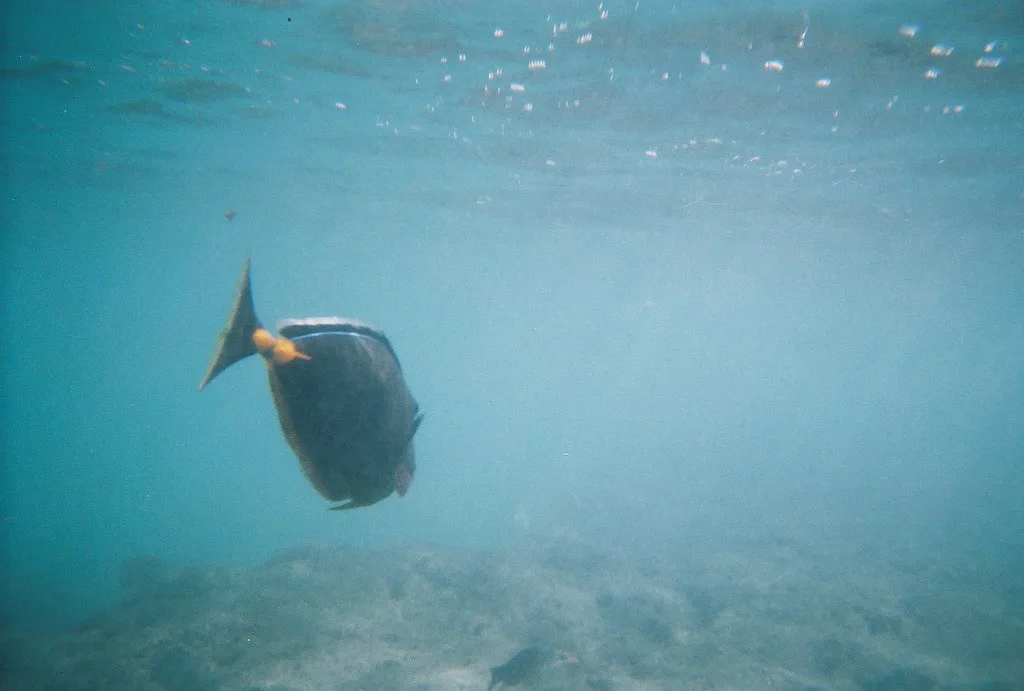
The reef holds a wide range of Hawaiian fish: yellow tang, trumpetfish, angelfish and the humuhumunukunukuapua'a, or reef triggerfish, Hawaii's state fish. Green sea turtles also turn up in the bay, though they are federally protected and sightings are never guaranteed.
Beginners do not need to go far. Plenty of reef sits in shallow water close to the beach, so keep an eye on the buoys and other markers and stay inside them; the deeper center of the bay carries stronger currents and waves.
Give turtles several body lengths of space and never chase, touch or feed anything. Coral is fragile and stepping on it damages the very structure that draws the fish in, which is why the bay's rules focus on distance and staying off the bottom.
Skill level and who it suits
Hanauma suits families and first-timers best because the sand entry removes the rock-scrambling that makes other Oahu spots intimidating, and lifeguards watch the beach. Nervous swimmers should stay in the shallows near shore; confident swimmers can explore farther out but should respect the marker line and exit before they tire.
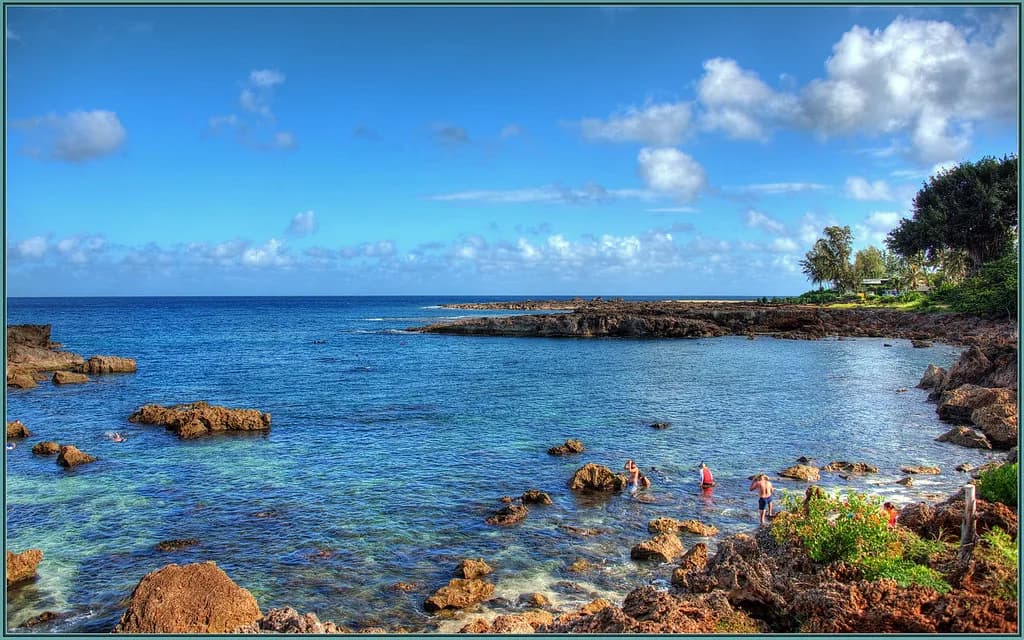
If you have a full group of strong swimmers looking for a rock-entry dive, check Shark's Cove conditions before committing everyone to Hanauma.
Rules in the preserve
Do not touch or feed marine life, never stand on coral, keep your distance from turtles and pack out your trash. Reef-safe sunscreen is required in Hawaii, so check the label and avoid oxybenzone, octinoxate, parabens and triclosan before you get in the water.
The bay has been managed for conservation since the 1990 management plan reduced visitation, ended fish feeding and added education. Treat the rules as the price of an uncrowded reef rather than bureaucracy.
Facilities on site
The beach has lifeguards, restrooms, showers, a snack bar and concession stand, locker rentals and snorkel gear rental, which makes it one of Oahu's most convenient snorkel mornings. Beach wheelchairs are free on a first-come basis, and the tram connects the lot to the sand.
If you would rather sort equipment before you arrive, compare island rental options for masks, fins and snorkels so your booked slot is not spent queueing at the concession. Bring your own mask if fit matters to you, since rental inventory varies by day.
Best time of day and conditions
Mornings usually bring the calmest water and the least crowded reef, which pairs well with the early entry windows. Afternoon sun overhead illuminates the reef better for spotting fish, but the last entry at 1:30 p.m. narrows how late you can start.
The bay's curved shape shelters it from much of the open-ocean swell, but big north or west swell periods still push water and reduce clarity. A morning glance at the Oahu snorkel report tells you whether the bay is likely to be flat or stirred up before you drive out.
Cooler winter months can bring larger surf on Oahu's north and west shores, while summer tends to deliver the flattest, clearest water. Either way, look at the day's report before you finalize the booking.
Combining Hanauma with nearby east Oahu stops
Because Hanauma's day ends early, an afternoon on the windward side works well. Drive the Kalanianaole Highway past Halona Blowhole and Sandy Beach, or head toward Kailua for a second beach stop.
Snorkelers who want a second swim should compare conditions at other east-side spots before adding one; the Hanauma Bay reef rewards a relaxed second pass more than a rushed one.
Plan Your Hanauma Bay Day
Book your slot two days out, arrive early for the video and the tram, and keep the swim inside the buoys. Residents should bring photo ID to skip the reservation, and everyone else should treat a same-day walk-up as a backup plan rather than the main strategy.
Pair the morning with an east Oahu drive and you get a full day out of a half-day bay. Build the rest of your island plan around a broader list of Oahu snorkel spots so a sold-out window never leaves you without a backup.
Frequently Asked Questions
Does Hanauma Bay require a reservation?
For most visitors, yes. Non-resident entry is ticket-based through the City & County of Honolulu's online booking system, and all visitors watch the education and safety video before going down to the beach. A limited number of same-day tickets are held at the bay for people without internet access, and they typically go early.
When do Hanauma Bay reservations open?
The online system lets you choose an entry time two days before your visit, so booking opens on that two-day mark rather than weeks ahead. Slots for popular morning windows can go quickly, which is why booking as soon as your date becomes available is the safer approach.
How much does it cost to get into Hanauma Bay?
Non-resident adults pay an entry fee plus a per-vehicle parking charge, with reduced or free entry for children, Hawaii residents with valid state ID and active-duty military with ID. Confirm the current amounts on the official Honolulu parks page when you book.
Do Hawaii residents need a reservation for Hanauma Bay?
No. Hawaii residents with valid photo identification currently enter free and without a reservation during all open hours, Wednesday through Sunday. Residents still pay the reduced parking rate and still watch the safety video before heading down.
What day is Hanauma Bay closed?
The preserve is closed all day Mondays and Tuesdays. On open days it starts at 6:45 a.m., the last entry is at 1:30 p.m., the beach clears at 3:30 p.m. and the bay closes at 4 p.m.
Is Hanauma Bay good for beginner snorkelers?
It is one of the best beginner spots on Oahu because you wade in from sand and the shallow reef starts close to shore. Stay inside the marker buoys near the beach; the deeper center of the bay has stronger currents and waves.
Sources
Snorkeling notes for your next trip
Optional updates to our snorkeling guides.
You might also like
Continue reading
More guides you'll find useful