Anna Maria Island Snorkeling: Where to Get In and What You'll See
Plan a snorkel day on Anna Maria Island: sandy Gulf entries, calm bay seagrass, boat trips to Egmont Key, plus timing, hazards and what you will see.
On this page
Anna Maria Island suits snorkelers who want a low-key beach day with a mask rather than a full reef expedition. The Gulf side offers wide sand and shallow sandbars, the bay side hides seagrass flats where fish and the occasional ray turn up, and offshore boat trips reach clearer water around Egmont Key. Families with kids and casual swimmers get the most out of it, while strong swimmers gain more from a boat trip than from wading off the beach.
The island runs roughly north to south through three towns, Anna Maria at the north end, Holmes Beach in the middle and Bradenton Beach at the south, with the Gulf of Mexico on the west and Tampa Bay on the east. That geography matters for planning: Gulf entries mean surf and swell, bay entries mean flat water and seagrass. Pick the side that matches your comfort level before you pick a beach.
Why Anna Maria Island Works for Casual Snorkelers
What makes Anna Maria appealing is access: you can park, walk a short distance to the sand and be in waist-deep water within minutes, which is unusual for Florida snorkeling that often demands a boat or a rocky entry. The trade-off is that the best-known beach entries are sand and seagrass, not coral reef, so expectations should center on fish, crabs and open sand rather than technicolor reef structure. Set your day up around calm water and marine life rather than reef architecture.
For a broader look at how this island fits with mainland and barrier-island sites nearby, the snorkeling in sarasota covers beach entries, bay flats and offshore options across the region. Use it to decide whether Anna Maria is your primary day or a half-day add-on. If you are weighing a different Gulf-coast base with the same shore-versus-boat question, snorkeling in Naples lays out that decision for a comparable set of spots.
How the Island Is Laid Out: Gulf Beaches Versus the Calmer Bay Side
The Gulf-facing beaches, from Bean Point at the north tip down through Holmes Beach to Bradenton Beach, face open water and pick up whatever swell is running. On calm days the water is clear enough to see your feet and small fish over sand; on rough days the surf churns the shallows and visibility drops fast. The bay side along the eastern shore of Anna Maria and Holmes Beach is shallower, flatter and often clearer for snorkeling because it is sheltered from Gulf swell.
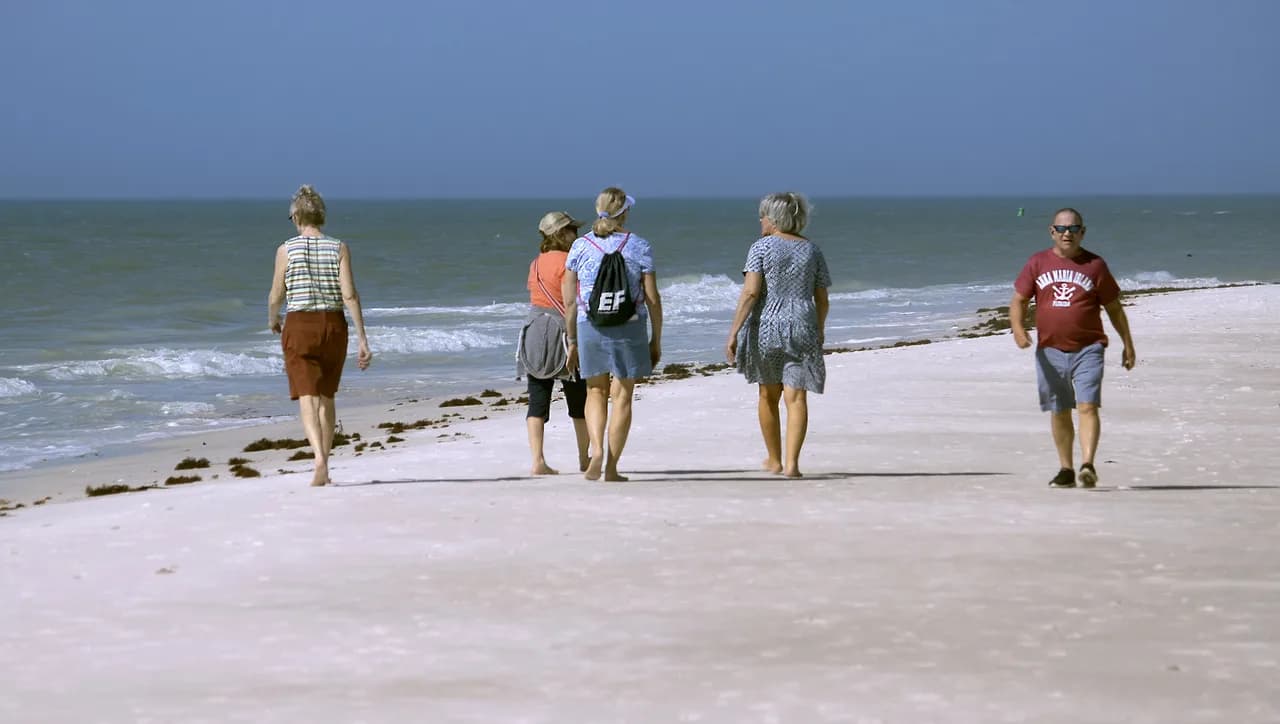
Bridge Street in Bradenton Beach marks the island's southern anchor and gives you the easiest combination of bait shop, food and beach access in one walk. Coquina Beach, just south of Bradenton Beach, sits on the Gulf and has a wide sandy shelf, which is where many families settle for a swim-and-snorkel day.
Gulf-Side Entry Points and the Nearshore Sandbars
Gulf-side snorkeling here means walking in from the sand over the first sandbar and floating in the trough between bars, where small fish gather and the bottom is usually visible in calm weather. You do not need to swim far: the productive zone is often within 100 to 200 feet of the shoreline, in water that is waist- to chest-deep. Enter slowly and shuffle your feet, since stingrays rest in the sand and a shuffle gives them time to move.
Bean Point at the island's northern tip puts you on sand with a strong sense of open water, and it is a popular spot for watching the passage where the Gulf meets Tampa Bay. Conditions there change quickly with tide and swell, and there are no lifeguard towers along much of that stretch, so treat it as a calm-day, daytime-only option. Coquina Beach on the southern Gulf shore has the widest, most forgiving sand entry and is the better pick for kids.
Bay-Side Seagrass Flats: Entry, Depth and Marine Life
The bay side is where Anna Maria snorkeling gets interesting for wildlife. Seagrass beds lie in shallow water, typically a few feet deep, with patches of sand between the blades, and they function as nursery habitat for fish, crabs and shrimp. Enter from sandy bayfront access points along the eastern shore, wade out slowly and float over the grass without standing on it, since seagrass is fragile and protected.
Expect small grunts, pinfish, sheepshead near structure, and the chance of a snook or a school of mullet moving through. Manatees and sea turtles use these shallow flats, and the rule is the same everywhere in Florida: observe from a distance, never touch, feed or chase an animal, and give turtles and manatees room to surface and breathe. If an animal approaches you, stay still and let it pass.
Boat Trips From Anna Maria Island, Including Egmont Key
The clearest water and the most reliable marine life sit offshore, which is why a boat trip is the single best upgrade for a snorkel-focused visit. Local operators run dolphin and snorkeling excursions out of the Anna Maria area, with Egmont Key State Park among the destinations, combining snorkeling with time around the island's historic fort area.
CoastLine Dolphin & Snorkeling Excursions is based in Bradenton and serves Anna Maria Island, running snorkeling and dolphin-watching trips with a licensed captain and crew. The company publishes business hours of Monday through Saturday, 8:00 am to 8:00 pm, and is closed on Sunday, so book ahead if your only free day falls on a weekend.
Boat trips solve two problems at once: they cut the swim distance to productive water and they put you on a schedule with a captain who reads the weather. The trade-off is cost and flexibility, since you go where the boat goes and you share the water with other passengers. For families with young kids, the guided format is often easier than managing a beach entry with surf.
What You Will See: Fish, Seagrass Life and the Chance of Turtles or Rays
Nearshore Gulf water over sand holds small fish, crabs and the occasional passing school, while seagrass flats on the bay side concentrate herbivores and the predators that follow them. Sheepshead, snook, grunts and pinfish are realistic targets, and southern stingrays are common over sand. None of these should be handled or fed; keep your hands to yourself and let animals move away on their own.
Larger encounters are a matter of luck and season. Dolphins are regularly seen around the island and on boat trips, sea turtles and manatees use shallow bay habitat, and none of it is guaranteed on any given day. Treat a sighting as a bonus and plan your day around calm water and good visibility instead.
Skill Level: Which Spots Suit Beginners, Kids and Strong Swimmers
Beginners and kids do best at Coquina Beach and other wide Gulf beaches in calm, low-surf conditions, where the sand entry is gentle and the water stays shallow for a long stretch. Bay-side seagrass is a good second step for swimmers who are comfortable floating over uneven bottom, since the water is flat but the grass can hide the bottom from view.
Strong swimmers and confident snorkelers should book a boat trip, because offshore water around Egmont Key offers better clarity and more fish life than the beach zone. If you want a shore entry with rock structure and reef fish without leaving the region, Siesta Key Snorkeling at Point of Rocks is the closest thing to a classic reef snorkel and pairs well with an island morning.
Best Time of Day, Season and Swell Direction
Morning is the practical window: Gulf wind typically builds through the afternoon, so an early entry gives you flatter water and better visibility before the chop picks up. On the bay side the wind matters less, which makes it the more forgiving choice for an afternoon snorkel. Plan your Gulf swim for the first few hours after sunrise and save the bay for later.
Swell direction is the deciding factor on the Gulf side. Onshore wind and any ground swell push surf onto the west-facing beaches and stir up the sand, while offshore wind flattens the surface and clears the water. Summer brings warm, swimmable water and afternoon storms; winter fronts can bring strong surf and cooler air, so a flexible plan beats a fixed one.
Hazards: Currents, Surf, Boat Traffic and Stingrays
Rip currents are the main Gulf-side risk and form most often near sandbar gaps and around structures; if you feel yourself being pulled away, swim parallel to the beach rather than against the current. Surf and shorebreak can knock kids over in the shallows even on moderate days, so watch the water before you commit. Stingrays rest in sand, which is why shuffling your feet on entry is standard practice here.
Boat traffic is a real concern on the bay side and around the passes, so stay close to shore, keep a visible position and avoid swimming across channels. Jellyfish appear seasonally in Florida water, and their presence is a signal to stay out rather than push through. Check the day's marine forecast from the National Weather Service before you drive to the beach, and follow any posted warnings at beach access points.
Parking, Beach Access and Facilities
Beach access on the island is mostly through county and city beach parks with paved lots, and those lots fill quickly on weekends and holidays, so arriving before mid-morning is the practical strategy. Coquina Beach and the Bradenton Beach area have the largest lots and the easiest walk to the sand, while residential streets near the north end offer limited parking and are best avoided as a fallback.
Facilities vary by park: larger beach parks typically provide restrooms, outdoor showers and picnic areas, and lifeguards are posted at some but not all beaches, so check signs at your access point for current coverage. Bring water, shade and cash for any vendor purchases, and treat the amenities as a bonus rather than a guarantee.
Rules: Wildlife Distance and Reef-Safe Practices
Florida wildlife rules apply across the island: do not touch, feed, chase or block the path of sea turtles, manatees or dolphins, and keep your distance so animals can surface and move freely. Seagrass beds are protected habitat, so float over them rather than standing, dragging gear or anchoring into the grass. Carry out everything you bring, including snorkel packaging and food wrappers.
Nearby Spots to Combine With an Island Snorkel Day
Anna Maria pairs naturally with the rest of the Sarasota barrier islands, and a short drive south puts you at more varied water. Venice, Florida snorkeling is known for its fossil-bearing shoreline and shark-tooth hunting in the shallows, a completely different experience from the island's sand and seagrass.
Closer in, Longboat Key sits between Anna Maria and Sarasota and offers quieter bayfront access, while lido key snorkeling gives you a city-adjacent option near Sarasota's beaches and St. Armands. Build a two-stop day with a morning Gulf snorkel and an afternoon bay or beach stop, and keep the drive short rather than chasing too many sites.
What to Bring and How to Choose Mask, Fins and Snorkel
A well-fitting mask is the difference between a good snorkel and a frustrating one, so choose a low-volume mask with a soft silicone skirt that seals without pressure on your face. Test the seal by placing it gently on your face and inhaling through your nose without the strap; if it holds, the fit is right. Skip masks with tempered-glass claims you cannot verify and look for tempered glass, which is the standard for dive masks.
For beach snorkeling on Anna Maria, short open-heel or full-foot fins are easier to manage in the surf than long freediving blades, and a dry-top snorkel helps in choppy Gulf water. Add a rash guard for sun and abrasion protection, and skip any gear that requires you to touch the bottom or the reef to use it. Rentals are available from local dive and beach shops, so call ahead for availability if you are traveling light.
Plan Your Anna Maria Island Snorkel Day
The strongest plan for Anna Maria Island snorkeling is a morning Gulf swim at Coquina Beach or another wide sandy entry, a midday break, and a boat trip to Egmont Key if your budget and schedule allow. If the Gulf is churned up, move to the bay-side seagrass flats and float over the grass rather than fighting the surf.
Book any boat trip in advance, especially with Sunday closures common among local operators, and keep one eye on the marine forecast before you commit. The island rewards flexibility more than any fixed itinerary.
Frequently Asked Questions
Where can you snorkel from the beach on Anna Maria Island?
The Gulf-facing beaches, especially Coquina Beach and the wide sand in Holmes Beach and Bradenton Beach, give you the easiest walk-in entry over sandbars. For flatter water and seagrass, use the bay-side access points along the island's eastern shore.
Is the water clear enough for snorkeling on Anna Maria Island?
Clarity depends heavily on wind and swell. On calm days with offshore wind, Gulf water over sand can be clear enough to see fish and the bottom in the shallows, while onshore wind and surf reduce visibility quickly. The bay side usually holds better clarity when the Gulf is stirred up.
Do you need a boat to snorkel around Anna Maria Island?
No, but a boat helps. Beach entries reach sandbars and shallow seagrass, while offshore trips to places like Egmont Key reach clearer water and more fish life. If you want reef-style snorkeling, a boat trip is the better use of your day.
What marine life can you see snorkeling near Anna Maria Island?
Expect small fish such as grunts, pinfish, sheepshead and snook, plus crabs and stingrays over sand. Dolphins are common in the area, and sea turtles and manatees use shallow bay habitat, but sightings are never guaranteed and all animals should be observed from a distance.
Is snorkeling at Anna Maria Island good for beginners and kids?
Yes, on calm days. Wide sandy Gulf beaches like Coquina Beach offer shallow, gentle entry, and the bay side is flat and sheltered. Watch for surf and currents, shuffle your feet on entry, and choose a beach with lifeguards when swimming with children.
When is the best time of day to snorkel on Anna Maria Island?
Early morning usually gives the calmest Gulf conditions before afternoon wind builds. The bay side stays workable later in the day because it is sheltered, so plan your Gulf swim first and your bay snorkel second.
Can you rent snorkel gear on Anna Maria Island?
Local dive and beach shops around Bradenton Beach and Holmes Beach handle rentals, and boat operators typically supply gear on their trips. Call ahead to confirm sizes and availability, especially in peak season.
Sources
Snorkeling notes for your next trip
Optional updates to our snorkeling guides.
You might also like
Continue reading
More guides you'll find useful