Tamarindo Beach, Culebra: Snorkeling Guide for All Skill Levels
Snorkel Tamarindo Beach in Culebra, Puerto Rico: how the shoreline entry works, where the reef starts, what you may see, and which conditions to plan around.
On this page
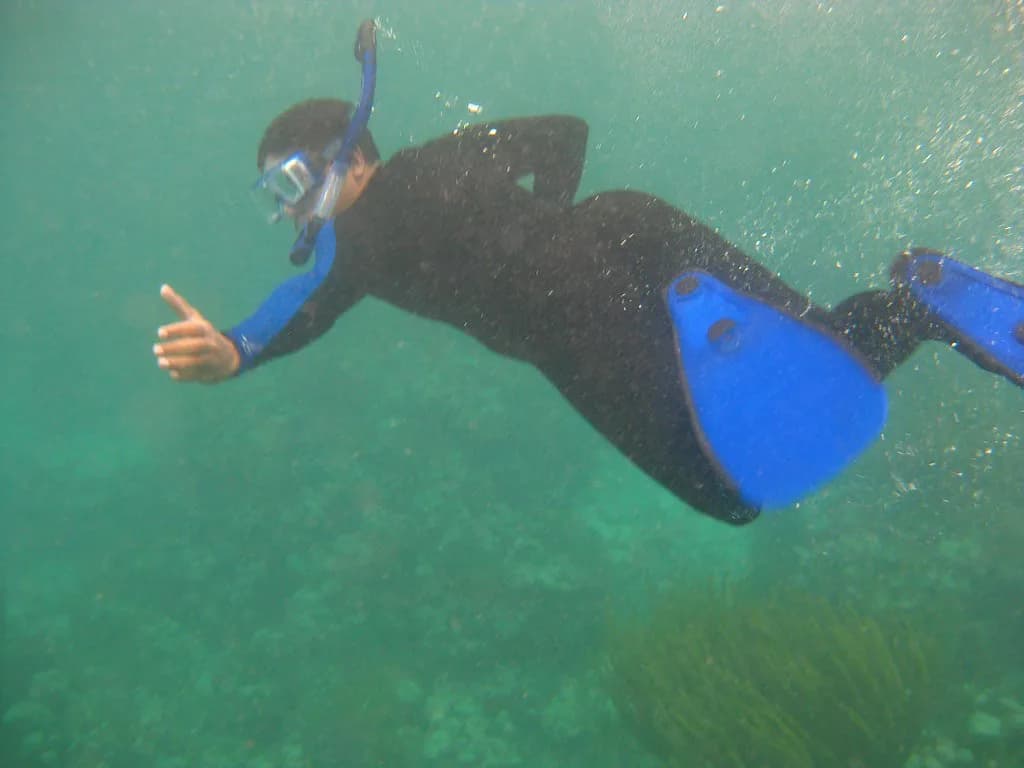
Tamarindo Beach rewards snorkelers who want an easy start: a long shoreline where the water begins shallow over sand and seagrass before the bottom drops toward coral. It suits families with kids and first-time snorkelers on the inside, and stronger swimmers willing to explore further out.
The bay sits on Culebra's protected northwest side, a short drive from the Dewey town center along the road toward Culebra National Wildlife Refuge land. That position means the swim is best treated as a shoreline session rather than a boat trip, and it pairs naturally with a broader day of snorkeling in Puerto Rico.
Why Tamarindo Beach Suits Snorkelers
Few Culebra beaches offer such a gentle first impression. The entry slope is soft and gradual, so you can wade in waist-deep and put your mask on without committing to deep water, which is exactly what nervous swimmers and children need. Beyond the shallows, patchy reef and seagrass give you a reason to keep exploring at your own pace.
The trade-off is that Tamarindo is not a deep-water reef wall. If you want a dramatic drop-off or a long coral shelf, look at St. Croix snorkel spots as an offshore alternative, but as a low-stress introduction that lets you build confidence, this beach does the job well.
Where the Beach Is on Culebra
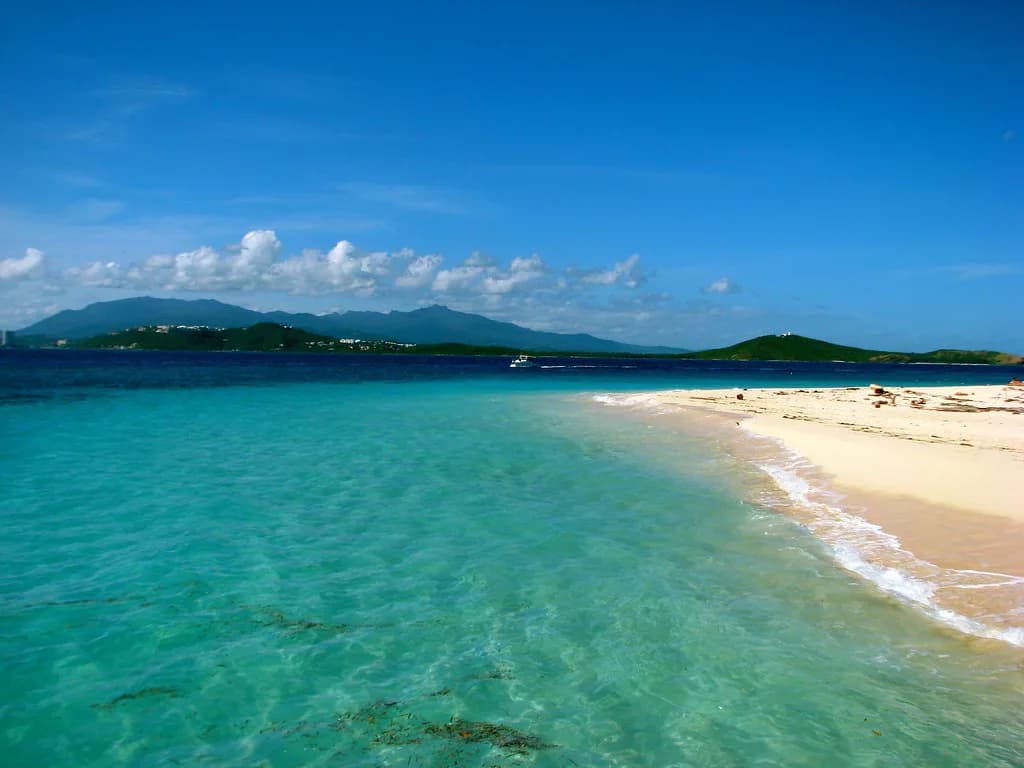
Tamarindo Beach lies on the island's northwest shore, reached by following the main road out of Dewey past the turnoff toward the wildlife refuge. The shoreline is part of the Culebra National Wildlife Refuge's wider protected landscape, so the surroundings stay low-key rather than developed.
Because it faces the protected side of the island, it usually reads calmer than the exposed Atlantic-facing beaches. Use that as a starting point, not a guarantee: wind direction on the day changes the picture more than any fixed description can.
Getting In: Shoreline Entry and the Rock-and-Grass Fringe
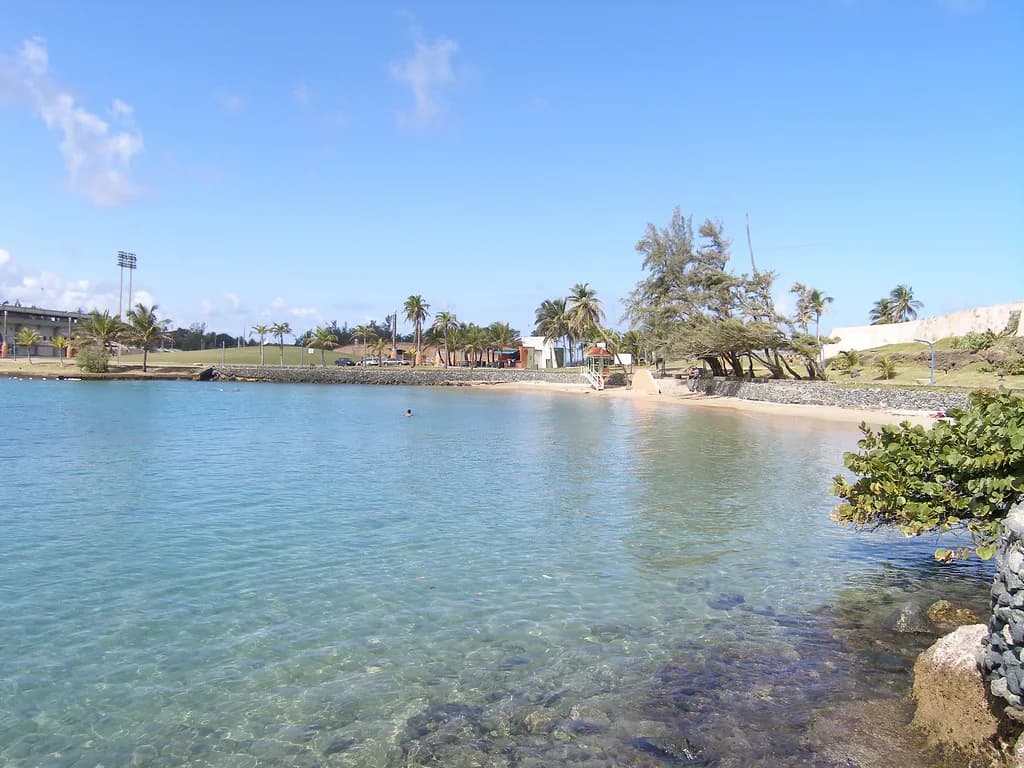
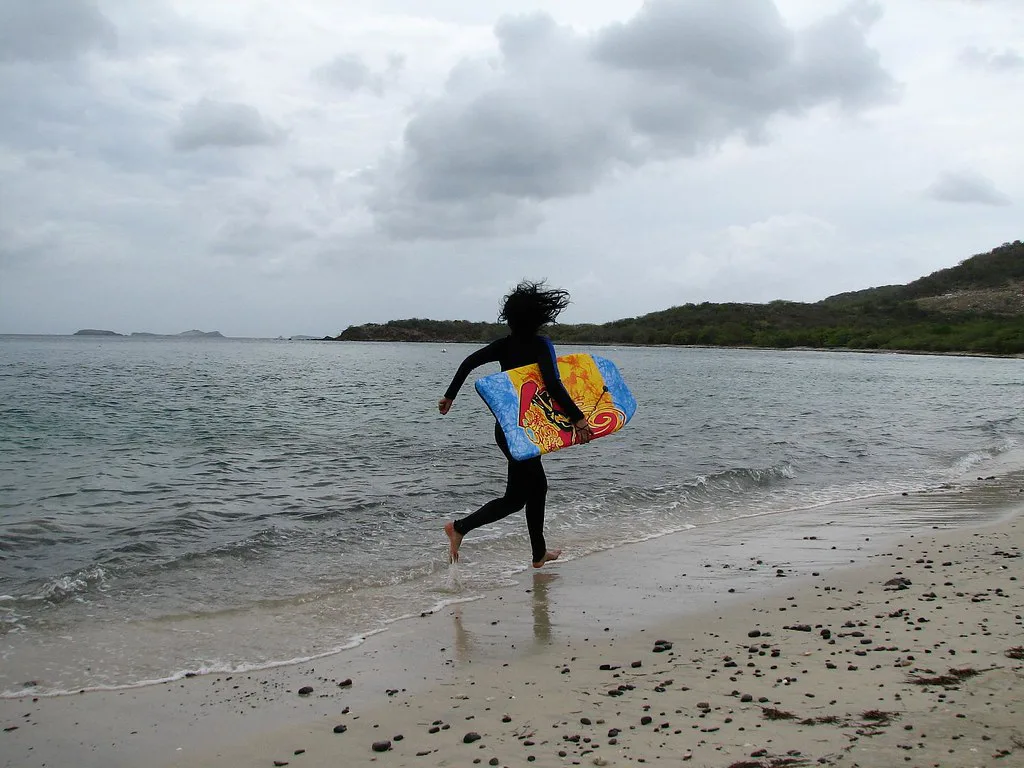
You enter from the sand. The first stretch is shallow and mostly sandy, with seagrass beds and scattered rock beginning a short way out, so you can stand, adjust your mask and ease forward. Beaches by definition shift with tide and swell, so the sand-and-grass edge can look different from one week to the next, and water shoes help on the uneven fringe.
Start over the grass-and-rock band rather than swimming straight out. That zone is where the calmest water and most of the small fish sit, and it lets you watch how the bottom changes before you commit to deeper reef.
How Far Out the Reef Sits and What Depths to Expect
The bottom steps down gradually. Sand and seagrass dominate close to shore, patchy coral and rock appear as you move out, and the water deepens in stages rather than dropping off a ledge. That means you can choose your depth: knee-deep for kids, waist-to-chest depth for new snorkelers, deeper water for confident swimmers.
Conditions on the day determine actual visibility, so judge it from the beach before you swim. If the water looks stirred up close in, the outer patches are usually clearer, but only swim as far as your comfort and fitness allow.
What You Will See: Reef Fish, Turtles, Rays and Coral
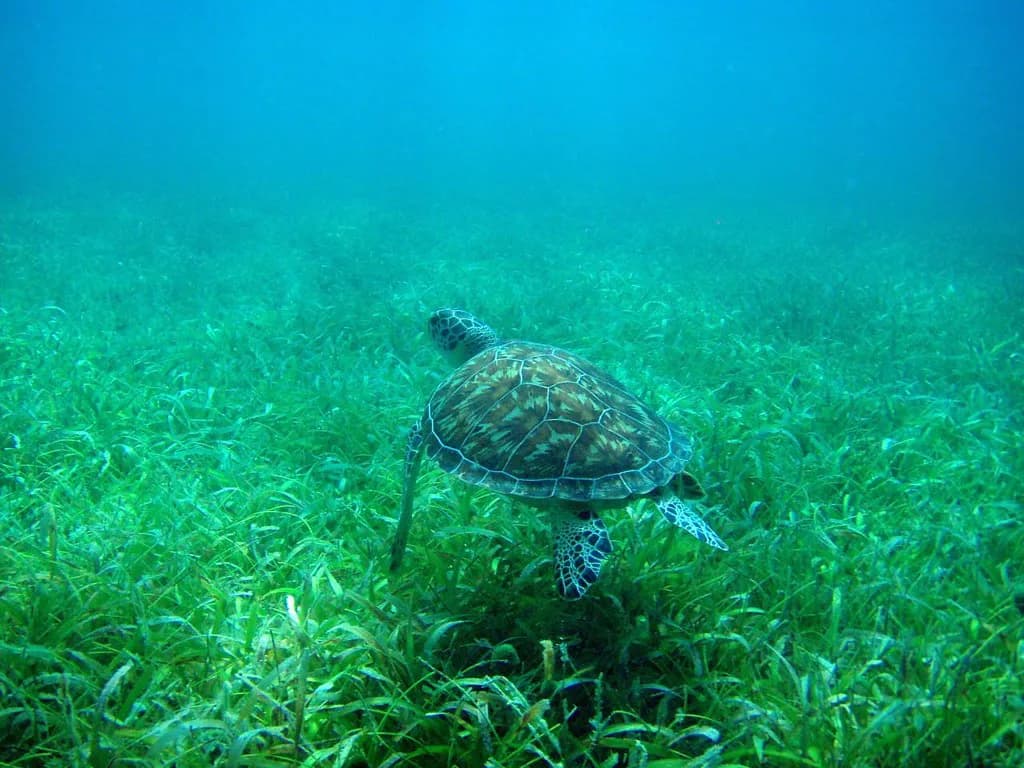
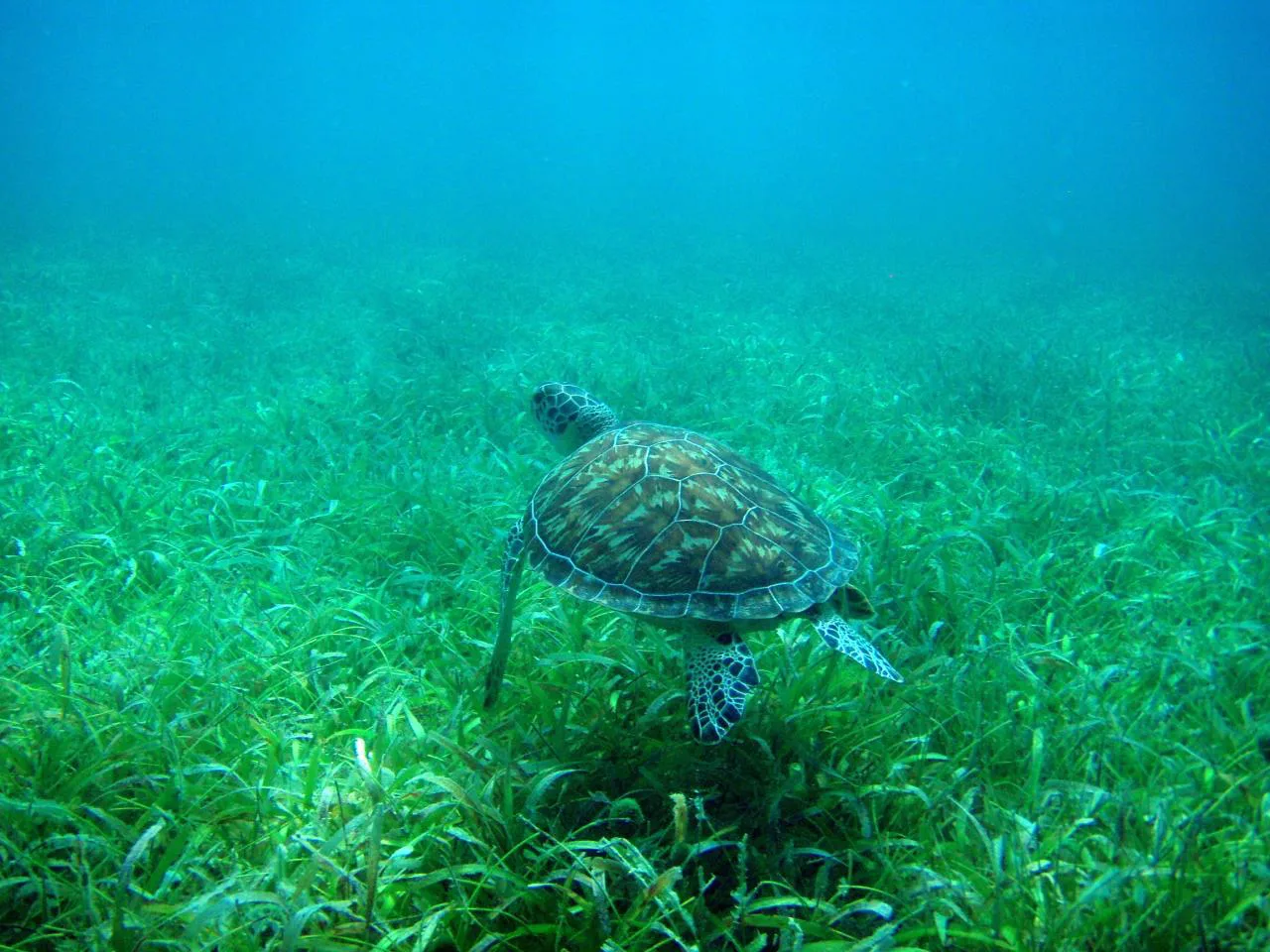
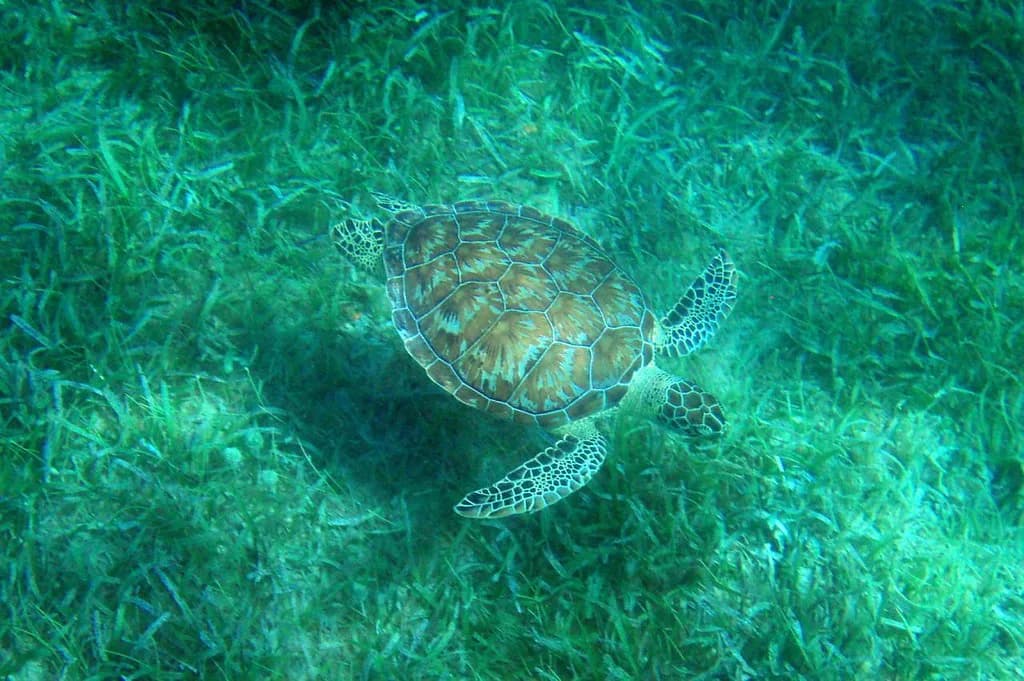
Seagrass is the big draw here. Green sea turtles and hawksbill turtles graze over the grass beds, and southern stingrays often rest half-buried in the sand nearby. Look for the shapes rather than chasing them: a slow, quiet approach at the edge of the grass gives you the best view.
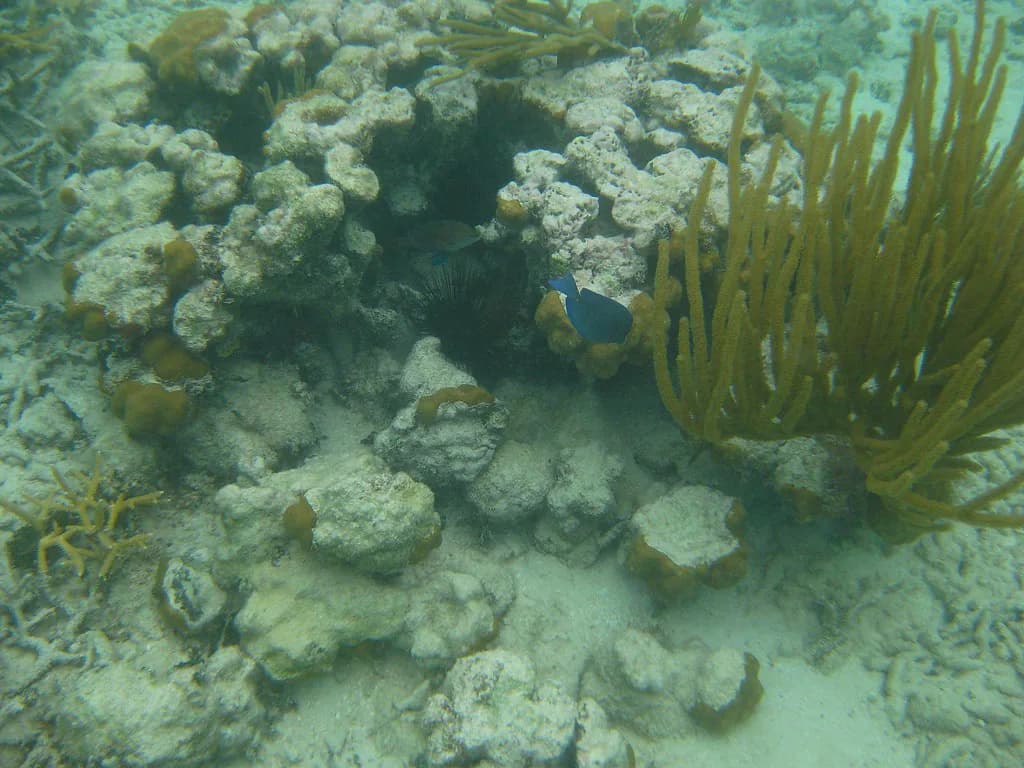
Around the rock and coral patches, expect the usual Caribbean reef community: parrotfish, sergeant majors, blue tangs, wrasses and the occasional small school of snapper. Elkhorn coral and other hard corals grow in patches, and the healthiest-looking sections are worth giving extra space. Sightings are never guaranteed, so treat turtles and rays as a bonus rather than the plan.
Skill Level and Who It Suits
Beginners and kids should stay in the shallow grass-and-rock fringe, where they can stand and where the water is calmest. Strong swimmers and experienced snorkelers can work further out over the deeper patches, but the outer reef is not a place for weak swimmers or anyone uncomfortable without a bottom in sight.
A realistic split works best: one adult with the children inside, another pair exploring the outer reef, then swap. That keeps the calmest water for the least confident swimmer in the group and keeps everyone within sight of the beach.
Best Time of Day and How Wind and Swell Change the Water
Morning usually brings the lightest wind and the clearest water, and it also gets you on the beach before the afternoon crowd. Snorkel before the breeze picks up, then use the windier part of the day for lunch or a drive to another beach.
Wind direction is the deciding factor here. Onshore breeze stirs up the shallows and makes the entry choppier, while a calm or offshore morning leaves the bay glassy. Check the marine forecast the night before and again in the morning, then pick your window; the same beach can look completely different from one day to the next.
Hazards to Plan Around: Boat Traffic, Current and Surf
Tamarindo sits near channels used by small boats and ferries crossing to and from Culebra, so stay alert and keep close to shore when boat traffic is visible. Carry a dive flag if you swim beyond the fringe, and surface regularly to check your position.
Current can run along the shoreline on windier days, and the unprotected side of the island gets real surf when a north swell arrives. Swim with a buddy, keep children within arm's reach and get out if the water starts pulling sideways.
Rules in Culebra's Protected Waters
Tamarindo falls within the Culebra National Wildlife Refuge's protected waters, where coral and marine life are protected. Do not stand on or touch coral, and keep a respectful distance from turtles, rays and any other wildlife you encounter; never feed or chase them.
Reef-safe sunscreen matters in Culebra's clear, shallow water, and it is the sensible default anywhere you snorkel in Puerto Rico. Apply it before you get in, and use a rash guard for extra coverage instead of reapplying over the water.
Parking and Facilities
Parking at Tamarindo is informal, with space along the road and a short walk to the sand. Arrive early in high season, since the roadside fills up once the morning snorkelers and day-trippers arrive.
Facilities here are minimal, so treat it as a bring-your-own day: water, snacks, shade, towels and your own gear. Dewey has the island's shops and rental options if you need to pick something up on the way.
Nearby Spots to Combine with Tamarindo
For a contrast, drive over to the island's north side and try Flamenco Beach, where the wide sandy bay offers a different, gentler swim and a famous stretch of shoreline. It makes a natural second stop if you have a car for the day; read the flamenco beach snorkeling notes before you go so you know which end of the bay to aim for.
If you are staying on the main island, Crash Boat Beach near Aguadilla is a lively alternative with its own snorkeling and beach scene, and it works well as a separate day rather than a combined one. Plan your time around the island's ferries and the Culebra snorkeling options before you commit to a multi-stop itinerary.
Plan Your Culebra Snorkel Day
Tamarindo Beach is the right first stop for a calm, shallow snorkel where kids and new snorkelers can build confidence over grass and rock before anyone heads for deeper reef. Go early, watch the wind, and treat the turtles and rays as a privilege rather than a promise.
Pair it with a second Culebra beach for the afternoon, and check the marine forecast and any refuge advisories with the U.S. Fish and Wildlife Service before you drive out. That one check decides whether you swim or sightsee.
Frequently Asked Questions
Is Tamarindo Beach good for snorkeling?
Yes, especially for a relaxed shoreline snorkel. The water starts shallow over sand and seagrass, so you can ease in from the beach and choose your depth, with patchy reef and coral further out for more confident swimmers.
What will I see snorkeling at Tamarindo Beach, Culebra?
Seagrass beds draw green sea turtles and hawksbill turtles, and southern stingrays often rest in the sand nearby. Around the rock and coral patches you can expect parrotfish, sergeant majors, blue tangs, wrasses and small snapper schools. Sightings are never guaranteed, so keep a respectful distance and let the animals come to you.
Is Tamarindo Beach good for beginner snorkelers and kids?
It is one of the better choices on Culebra for beginners. The shoreline entry is gradual and sandy, and the grass-and-rock fringe stays shallow enough to stand in, which lets kids and nervous swimmers adjust before going further out.
What is the best time of day to snorkel Tamarindo Beach?
Morning typically brings the lightest wind and clearest water, and it gets you ahead of the day-trippers. Wind direction matters more than the clock, so aim for a calm or offshore morning and skip the swim if onshore breeze is stirring up the shallows.
Do I need reef-safe sunscreen in Culebra?
It is the sensible choice for snorkeling anywhere in Puerto Rico, since you are swimming over living coral in shallow water. Apply reef-safe sunscreen before you get in and use a rash guard for coverage rather than reapplying over the water.
What other beaches near Tamarindo are worth snorkeling?
Flamenco Beach on the island's north side is the obvious pairing for a different, wide-bay swim, and it works well as an afternoon stop if you have a car. On the main island, Crash Boat Beach near Aguadilla makes a separate snorkel day rather than a combined one.
Sources
Snorkeling notes for your next trip
Optional updates to our snorkeling guides.
You might also like
Continue reading
More guides you'll find useful