Florida Reef Fish Identification: Which Species to Know
Learn to identify the ten most commonly sighted Florida Keys reef fish by silhouette, habitat and depth, so you can name what you see on a snorkel.
On this page
The Florida Keys reward snorkelers with an unusual density of recognizable fish, and most of them belong to a handful of families you can learn before you get in the water. The sanctuary stretches roughly 220 miles in an arc from the southern tip of Key Biscayne to the Dry Tortugas, holding patch reefs, hardbottom, seagrass meadows and bank reefs in one connected system. That range of habitat is why a single snorkel day can turn up algae-grazing tangs, schooling snappers and small territorial damselfish within a short swim of each other.
This guide organizes identification by silhouette first, because shape and swimming style are what you actually register in murky, moving water. Once you have the family, habitat narrows the species: reef crest, patch reef, seagrass, ledge or sand. Learn the ten below and you will name most of what passes your mask on a typical Keys snorkel.
Why Florida Keys Reefs Hold So Many Fish
The Florida Keys archipelago contains roughly 1,700 islands, and the surrounding sanctuary protects extensive offshore coral reefs alongside fringing mangroves, seagrass meadows, hardbottom and both patch and bank reefs. Each habitat shelters a different fish community, which is why the same bay can show grazing tangs over coral and grunts hiding beneath a ledge a few kicks away. Snorkelers who move between habitats see more species than those who hover in one spot.
The most frequently sighted species on Keys reef surveys are blue tang, stoplight parrotfish, yellowtail snapper, bluehead, sergeant major, bicolor damselfish, French grunt, bluestriped grunt, ocean surgeonfish and foureye butterflyfish.
Survey divers with the Reef Environmental Education Foundation log fish across this sanctuary and rank the species they sight most often, which makes their list a practical starting point rather than a bucket list of rarities. The top ten most frequently sighted fish there are blue tang, stoplight parrotfish, yellowtail snapper, bluehead, sergeant major, bicolor damselfish, French grunt, bluestriped grunt, ocean surgeonfish and foureye butterflyfish. If you learn only those ten, you will recognize the majority of fish around you on a Keys reef.
Identification by Silhouette: The Six Families That Matter
Underwater you rarely get a clean, still view, so sort by body plan before you chase color. Tangs and surgeonfish are oval and knife-thin with a single dorsal profile; parrotfish are chunkier with beak-like mouths; snappers are streamlined and fork-tailed; grunts are deep-bodied with a big mouth and often hang in groups; damselfish are small and dart aggressively near the bottom; butterflyfish are round, flat and patterned. Committing those six outlines to memory cuts identification time to a glance.
Color is unstable across depth and light, and it changes with the animal's age and mood, so treat a bright flash of hue as a hint rather than an answer. Shape, habitat, grouping behavior and how the fish feeds all hold steadier. A round flat fish hovering in pairs over coral heads is a butterflyfish long before you can resolve its markings.
Blue Tang and Ocean Surgeonfish: The Algae Grazers
Blue tang belongs to the surgeonfish family, and like all of them it is an herbivore that grazes algae off the reef. That grazing keeps algae from overgrowing corals, so these fish are a working part of the reef rather than decoration. REEF describes the blue tang as the most common fish throughout the wider Caribbean and Bahamas region, and it ranks high on Keys survey lists. Watch for them moving in loose groups over coral, dipping to nip at algae.
Ocean surgeonfish looks similar at a distance, and the two are the pair snorkelers most often confuse. Both are oval and dark, but the surgeonfish family is named for the scalpel-like blades at the base of the tail, a defense feature you will rarely see clearly. Use body tone and the pattern of any markings rather than a single glimpse; a fish that shifts from deep blue to gray as it turns is behaving like a tang.
Stoplight Parrotfish and the Color-Phase Trap
Parrotfish have long bodies and a fused, beak-like mouth built for scraping algae and coral, and you will often hear them crunching before you spot them. The trap is color: parrotfish change appearance dramatically between juvenile, initial and terminal phases, and males and females of the same species can look like different fish. Beginners regularly log the same species twice because two color phases look unrelated. Learn the body shape and the beak, then treat color as the last clue.
The stoplight parrotfish is one of the most frequently sighted fish on Keys reefs, so it is the one to study first. Expect it over coral and hardbottom where there is algae to scrape, often solitary or in small loose groups. If you see a parrotfish hovering and tilting to bite the substrate, that feeding posture is a better identification anchor than any shade of green or turquoise.
Yellowtail Snapper: The Fish That Finds You First
Yellowtail snapper is a streamlined, fork-tailed fish and among the most frequently sighted species on Keys reefs, which means it often arrives before you have settled into the water. Snappers generally appear alone or in schools around reef structure, and this one tends to hang in the water column rather than hug the bottom. Look for a pale body with a distinctly bright yellow tail, and expect curiosity rather than shyness.
Because snappers are a large family with over a hundred species, resist identifying every fork-tailed silver fish as the same animal. Yellowtail snapper is common enough that it deserves to be your default, but check the tail and the body line before you log it. Noting whether the fish was mid-water or near structure will separate it from reef-hugging snappers on a second look.
French Grunt and Bluestriped Grunt: Ledges by Day
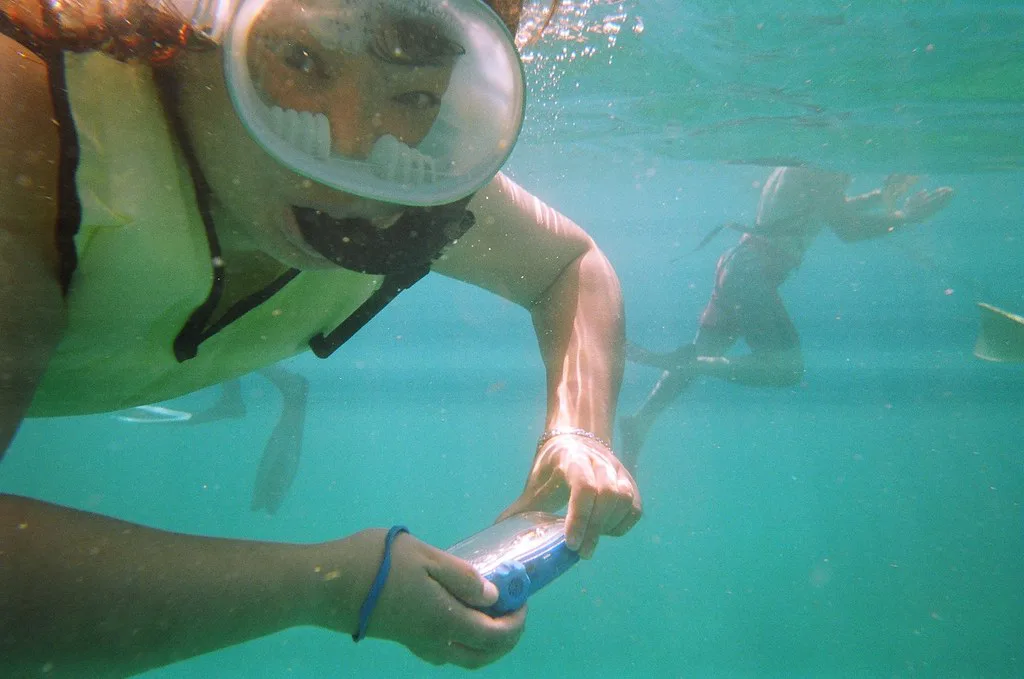
Grunt species are among the most numerous fishes on Florida Keys reefs, and they spend the day hanging under ledges before many of them forage off the reef at night in nearby grassbeds. That daytime ledge habit makes them easy to find: drop your gaze to shadowed coral overhangs and you will often see a cluster of deep-bodied fish facing out. Bluestriped grunt is distinguished by blue stripes and a black tail.
Grunts belong to the family known as sweetlips in the Indo-Pacific, a group of more than 130 species, so the deep-bodied silhouette with a large mouth is your entry point. Both French grunt and bluestriped grunt sit high on the Keys survey list. Approach ledges slowly and hold still; a group packed into a shadow will usually hold position if you do not push into the overhang.
Sergeant Major and Bicolor Damselfish: The Shallow Territorial Ones
Sergeant major is a plankton-eating damselfish found in tropical waters worldwide, and it forms large schools above the reef, which makes it one of the first fish a snorkeler notices over the reef crest. Males can turn quite territorial when guarding a nest of eggs, so a single fish may rush toward your mask and then veer away. That aggression is display, not attack; give the nest patch room and the school settles around you again.
Damselfish as a family are small and colorful and often the first fish you encounter, which makes them ideal practice for reading behavior rather than markings. Bicolor damselfish appears on the Keys most-sighted list and stays close to coral and hardbottom, darting in short bursts. Use these shallow, fast fish to train your eye before you spend air on deeper reef.
Foureye Butterflyfish: False Eyes Explained
Foureye butterflyfish is very common through most of the Caribbean, and it feeds on a variety of small invertebrates. Its defining feature is a pair of ocellated spots, false eyes that serve a defensive purpose by confusing what might approach it. Butterflyfish as a group are among the most common sights on reefs at low depth, so they are a good target for a snorkeler working the shallows.
The identification mistake here is counting eyes: the real eye sits near the head and the false one near the tail, and in poor light you may see only the rear spot. Note the round, flattened body and the way the fish hovers in pairs or alone over coral before you try to place the markings. A butterflyfish that never seems to face one direction is often simply keeping its false eye toward you.
Nassau Grouper and Neon Goby: The Protected and the Tiny
Nassau grouper is a large fish-eater that functions as a top predator on the reef, and slow growth and longevity have made it vulnerable to overfishing. Nassau grouper are protected in Florida waters, so treat a sighting as something to watch from a distance and log, never pursue. Expect a big-bodied, slow-moving fish near structure rather than a constant presence on any given snorkel.
The neon goby is the opposite extreme: a tiny fish that cleans parasites and dead skin off other fish, and it is found only along continental coasts, so it does not appear around most Caribbean islands. Finding one means slowing down and watching a larger fish hold still at a cleaning station. This is where a patient snorkeler out-sees a fast swimmer.
Matching Fish to Habitat and Depth
Reef crest and shallow hardbottom put you over damselfish, sergeant majors and butterflyfish, often within easy reach of the surface. Patch reefs and coral heads concentrate parrotfish, tangs and snappers, while ledges and overhangs hold grunts during the day. Seagrass and sand seem quiet by comparison but serve as night feeding grounds for grunts and other fish, which is why the same area reads differently at different hours.
For species count, work the top of the reef first, then drift over patch reef, then look under ledges, rather than finning hard between distant structures. Shallow reef crest keeps bottom time long and light good, which matters more to identification than reaching deeper water. You do not need depth to see the ten most common Keys fish; you need to cover several habitats in one swim.
Behavior to Watch For
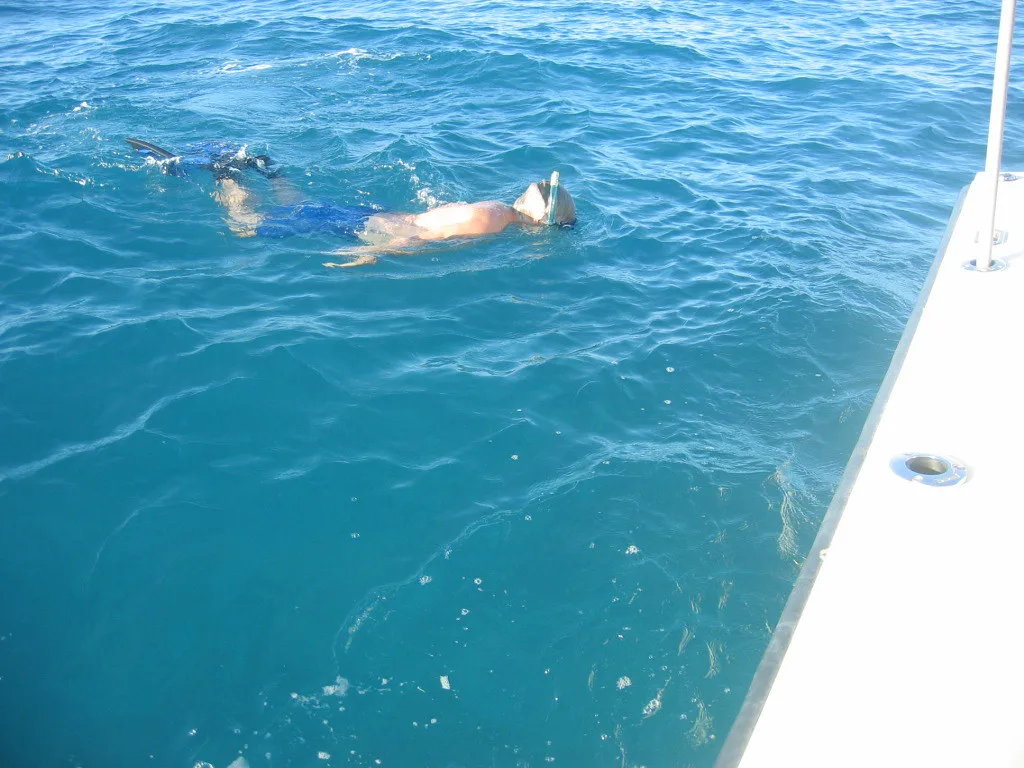
Feeding posture is the most useful behavior to read: a parrotfish tilting to scrape the substrate, a tang dipping into algae, a grunt facing out from a shadow. Schooling above the reef suggests plankton feeders like sergeant major, while a fish holding station beside a larger one may be at a cleaning stop. Log the behavior alongside the name and your identification accuracy improves faster than memorizing more species.
Keep your distance and let fish come to you; touching, feeding or chasing animals changes the behavior you are trying to observe and removes the sighting. Hovering still over a coral head for a minute usually reveals more residents than active swimming does. That patience is also the practical rule that keeps reef viewing sustainable.
Building a Personal ID List
Start a simple log with three fields: species, habitat and depth, plus whether the fish was alone or in a group. Photograph what you can without chasing it, then match the image to a family page on shore rather than trying to identify underwater. Over a few snorkel days the log becomes a personal reference tuned to the reefs you actually swim.
A printed or downloaded fish ID reference works better than a phone in the water, where screens are hard to read and saltwater is unforgiving. Use the reference after the swim to sort the day's sightings by family first, then species. If you build the habit of one page per family, you will recognize the next fish in that group instantly.
Combining ID Practice With Keys Snorkel Spots
Reef fish identification improves fastest when you snorkel several habitats in one trip, so plan shore entries over shallow hardbottom in the morning and a boat or deeper reef later if your operator runs one. The wider Florida snorkeling picture, including Gulf Coast sites and freshwater springs, is worth reading before you commit a week to one island. Gulf Coast snorkelers who want a second habitat-rich comparison can study snorkeling in Palm Beach and its shallow shore reefs before booking.
REEF runs its Ocean Exploration Center and campus at Mile Marker 98.3 on the Overseas Highway in Key Largo, a useful stop before a snorkel day if you want to look at fish references and exhibits in person rather than guessing from memory. Pair that with a written species list so you arrive at the water already knowing the six silhouettes.
Plan Your Snorkel Day
Build your trip around three habitats rather than one, pack a family-first reference for the evening, and log every sighting with depth and behavior. The ten most-sighted Keys fish will cover most of what you see, and the Nassau grouper will stay a distant, memorable exception. Check the sanctuary's current rules and advisories with the Florida Keys National Marine Sanctuary before you go.
Snorkelers heading to other parts of the state can widen the skill set with manatee viewing in Crystal River, where slow, quiet approaches matter for the same reasons they do on a reef. Learn the silhouettes on land, then let the reef do the teaching.
Frequently Asked Questions
What fish will I see snorkeling in the Florida Keys?
The most frequently sighted species on Keys reef surveys are blue tang, stoplight parrotfish, yellowtail snapper, bluehead, sergeant major, bicolor damselfish, French grunt, bluestriped grunt, ocean surgeonfish and foureye butterflyfish. Learn those ten silhouettes and you will recognize most of what passes your mask, with Nassau grouper and neon goby as less common extras.
How do I tell a blue tang from an ocean surgeonfish?
Both are oval, thin members of the surgeonfish family, so start with shape rather than color. Blue tang is described as the most common fish across the wider Caribbean region, and its tone shifts between deep blue and gray as it turns. Ocean surgeonfish shares the scalpel-like tail blades that name the family. Check body pattern and markings rather than one glimpse of color.
Why do parrotfish look different in different photos?
Parrotfish change appearance between juvenile, initial and terminal phases, and males and females of the same species can look like separate fish. Beginners often log the same animal twice. Focus on the long body and the fused, beak-like mouth used to scrape algae and coral, and treat color as the last clue rather than the first.
What is the most common fish on Florida Keys reefs?
Survey rankings from the Reef Environmental Education Foundation list blue tang, stoplight parrotfish and yellowtail snapper among the most frequently sighted fish, alongside bluehead and sergeant major. The order matters less than the group: those ten species are your working vocabulary. The sanctuary itself holds patch reefs, hardbottom, seagrass and bank reefs, each with a slightly different mix.
Are Nassau grouper protected in Florida?
Yes. Nassau grouper are protected in Florida waters, according to the Reef Environmental Education Foundation. They are large fish-eaters and slow to mature, which is part of why protection matters. Treat a sighting as something to observe from a distance and record in your log rather than pursue.
What depth do I need to snorkel to see reef fish?
You do not need depth to see the most common species. Butterflyfish and damselfish turn up at low depth on reef crest and shallow hardbottom, while parrotfish, tangs and snappers work patch reefs and coral heads closer to the surface than you might expect. Cover several habitats in one swim instead of finning hard toward deep structure.
How do I identify a fish I saw snorkeling?
Sort by silhouette first: oval tangs, chunky parrotfish, fork-tailed snappers, deep-bodied grunts, small darting damselfish and round flat butterflyfish. Then use habitat, depth and behavior such as feeding posture or schooling to narrow the species. Photograph without chasing, and match the image to a family reference once you are back on shore.
Do I need a fish ID book or is an app better?
A printed or downloaded reference is easier to use on a boat or beach, where screens are hard to read and saltwater is unforgiving. Keep it as an after-swim tool and log species, habitat and depth in a notebook. Over several snorkel days that log becomes a personal reference tuned to the reefs you actually swim, which no generic list matches.
Sources
Snorkeling notes for your next trip
Optional updates to our snorkeling guides.
You might also like

Continue reading
More guides you'll find useful