Jellyfish in Florida: Species, Seasons and Snorkeling Smarts
Florida jellyfish reach both coasts and the Panhandle, sometimes in dense blooms. Learn the common species, when they arrive and how to snorkel around them.
On this page
Jellyfish ride the currents that shape Florida snorkeling, so a good day on the reef starts with knowing what might be drifting past. Cannonball and moon jellies are mostly a nuisance, while box jellies and Portuguese man o' war are the ones that demand real distance. This guide is for snorkelers planning a shore or boat day who want to read the water before they pull on a mask.
Why jellyfish matter to a Florida snorkel day
A bloom can turn a clear, calm morning into a stinging obstacle course without any change in the weather. Jellyfish are Cnidaria, a group whose stingers fire on contact as a defense, and that includes any tentacle you brush in the shallows. The practical response is not fear but planning: pick your window, watch the surface, and cover more skin.
Florida has cannonball jellies, moon jellies, sea nettles, upside-down jellies, box jellies and Portuguese man o' war.
Florida sees a lot of human-jellyfish contact. A 2009 National Science Foundation report described in a Florida Everglades wildlife page estimated at least 150 million people worldwide are exposed to jellyfish stings each year, with roughly 200,000 stings annually in Florida. Those numbers are old but they explain why beach flags and lifeguard warnings take jellies seriously.
For snorkelers the risk is concentrated near the surface and in the shallows, where drifting tentacles and beached jellies sit exactly where you wade and float. Plan a jellyfish-aware day alongside a broader snorkeling in florida itinerary so a bloom pushes you to another spot rather than ending the trip.
The species you are most likely to meet
Cannonball jellies are the round, firm, brown-rimmed jellies that wash up on Gulf beaches in numbers; they are the classic beached jelly on Panhandle sand. Moon jellies are paler and flatter, with a faint four-ring pattern through the bell, and they drift in both quiet bays and open water. Neither is a reason to cancel a swim, but both mean you keep your hands to yourself.
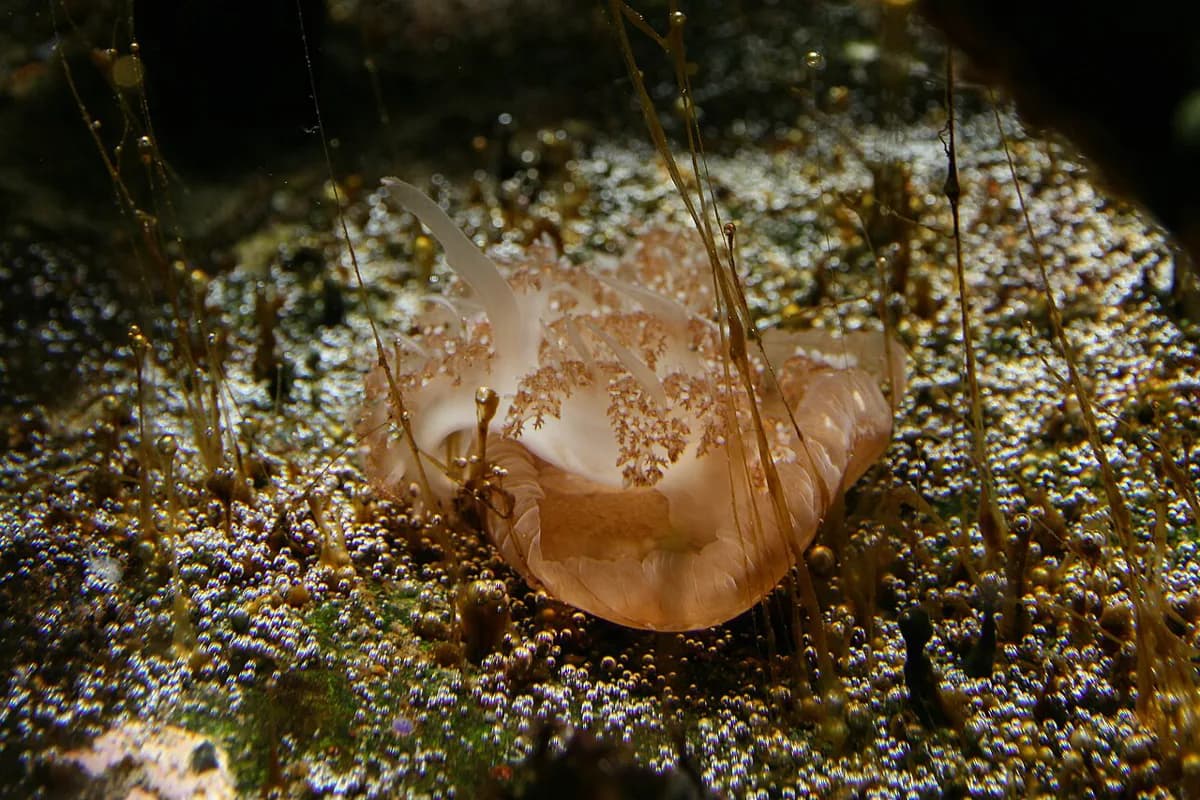
Sea nettles are the ones that surprise people, because a translucent bell and fine tentacles are easy to miss in murky water. The upside-down jelly is different again: it rests bell-down on calm, shallow bottoms, especially in sheltered estuaries such as Rookery Bay National Estuarine Research Reserve, and looks more like a sitting pancake than a swimmer.
The upside-down jelly can still sting if you kneel or push off a shallow bottom near it, so keep fins and knees off the substrate in seagrass flats. Treat any jelly on the bottom as a fixed hazard and route around it rather than over it.
Stinging jellies snorkelers should know
Box jellies are found in U.S. waters, including Hawaii and Florida, and they are the group that earns the most caution. Their bells are box-shaped and their tentacles can be nearly transparent, which makes them hard to spot in low light or choppy surface glare. If you see one, give it a wide berth and get out of the water rather than trying to swim past.
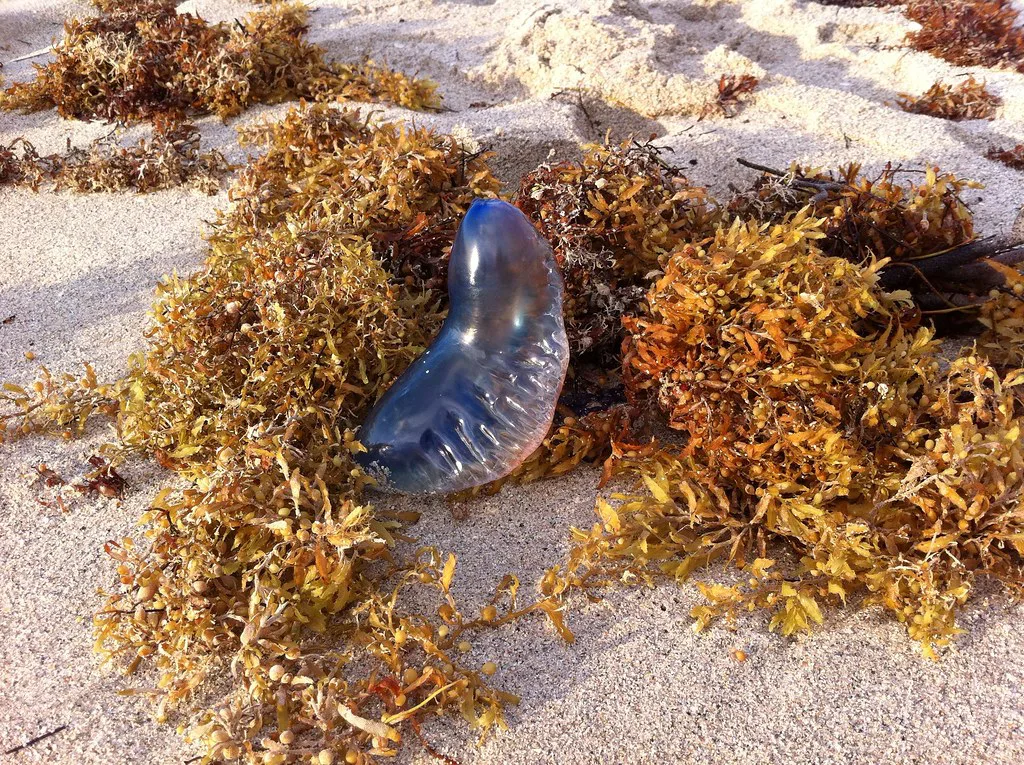
Portuguese man o' war are not true jellies but floating colonies with a gas-filled sail and long stinging tentacles that trail well below the surface. They arrive with onshore winds, and their tentacles can sting even when the animal is stranded on the sand. That is why beach cleanups and lifeguards warn against picking up any jelly, blue or clear, with bare hands.
When blooms arrive
Bloom formation depends on ocean currents, temperature, nutrients and oxygen levels rather than a single calendar date, and some blooms can reach enormous numbers. That means Florida jellyfish season is better read as a pattern than a schedule: warm months and onshore winds tend to push jellies toward the beach, while offshore winds and clean blue water tend to clear them out.
A practical rule is to plan morning snorkels when the water is calm and the surface is glassy, because that is when you can actually see what is floating. After a stretch of strong onshore wind, expect more jellies in the shallows and more stranded ones at the tide line. If the beach is littered with fresh cannonballs, that is your cue to pick a different site or a pool day.
How Florida's coasts differ
The Gulf side, from the Panhandle down through Tampa Bay and Naples, is shallow and often turbid, which favors species that tolerate low-oxygen, nutrient-rich water. The Atlantic side, especially the Florida Keys, has clearer water and more current, so jellies tend to move through rather than sit. Neither coast is jelly-free, but the Gulf's calm, warm shallows are where you most often see the upside-down jellies sitting on the bottom. For an Atlantic-side comparison, the snorkeling in Palm Beach guide covers Peanut Island and Phil Foster Park, where clearer, more current-driven water shapes the same tidal planning.
For a Gulf-side plan, see snorkeling florida gulf coast, and for the Keys, think about pairing a reef day with a jellyfish check before you leave the dock. On the Atlantic side, a stiff east wind can push man o' war into the surf line, so ask a lifeguard or dive operator what came in overnight.
Reading the water before you get in
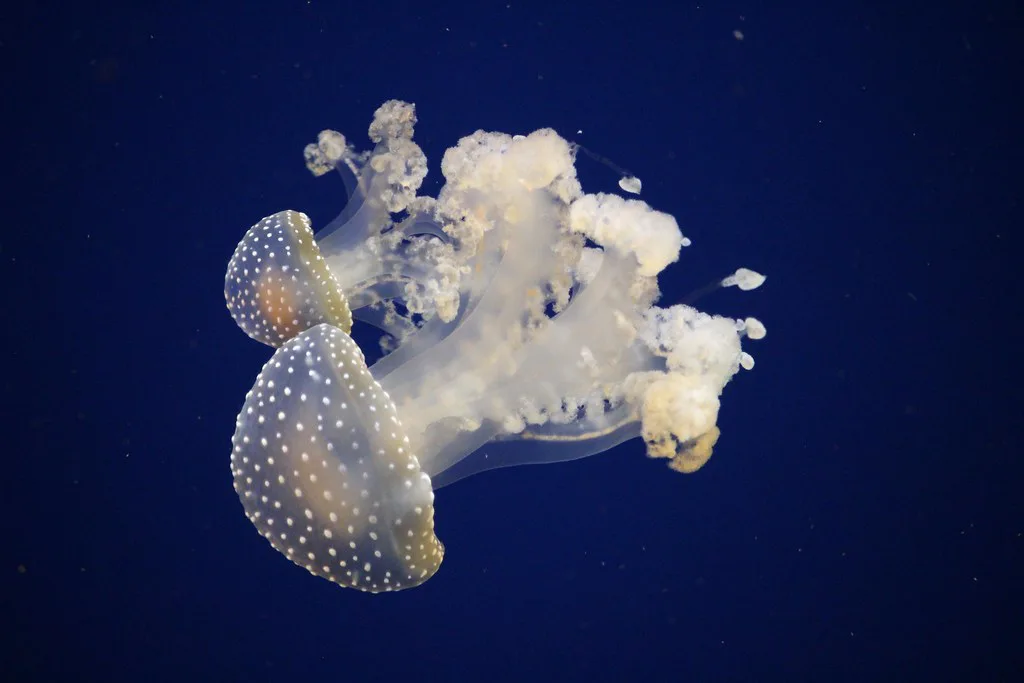
Stand at the tide line and look for stranded jellies, blue bottles and clear blobs, then scan the surface for drifting smacks before you put on your fins. Lifeguard towers and beach access boards often post warning flags on heavy jellyfish days, and it is worth a look even when the water looks perfect. If the flags are up, snorkel in a sheltered bay or move to a spot with a lifeguard on duty.
A jellyfish bloom is a swarm, and a swarm can be large enough to fill a visible band along the beach. When you see that band, do not try to swim through it to reach clearer water; move laterally along the beach or pick a calmer, enclosed site instead.
What to wear
Full-coverage swimwear is the simplest defense: a long-sleeve rash guard, leggings or a dive skin covers the arms and legs that drifting tentacles most often reach. Thin neoprene also adds a little buoyancy and warmth on long snorkels. Add gloves only if they are permitted at your site, and never use them as an excuse to touch the reef or an animal.
Pair coverage with a mask you can see through and fins you can control, because good vision is what lets you spot a translucent bell before it brushes you. If you are shopping gear, read published specs on fit and lens type rather than relying on a single review.
In-water habits that limit contact
Swim on the surface, keep your hands and knees off the bottom and keep a little distance from drift lines of weed and foam, which collect jellies. When you duck-dive to the reef, look up before you surface so you do not rise into a trailing tentacle. These habits do not guarantee a sting-free swim, but they reduce the number of accidental encounters.
Currents push both food and jellies into the same places, so the calm eddy behind a rock or the slack water inside a bay can be beautiful and jelly-rich at once. Watch how local swimmers behave; if they are floating feet-first and scanning the surface, follow that pattern.
If a sting happens
Published guidance from a Florida Everglades wildlife page is straightforward: remove any tentacle fragments carefully, then rinse the area with vinegar or salt water, never fresh water, since fresh water can trigger more stinger release. Seek medical help for serious reactions, and tell responders which species are in the water if you know.
News coverage from a Florida beach in 2025 showed how quickly a bloom can sting hundreds of people in one day, which is why lifeguards close the water when counts spike. If you hear a whistle or see a red flag, treat it as information about the water, not a challenge.
Rules and wildlife distance
Jellyfish, like all Florida wildlife, are look-only animals. Never touch, move or handle a jelly, even a beached one, and teach kids the same before they start poking at blue bottles on the sand. The same distance rule you apply to reef fish and turtles applies to anything gelatinous.
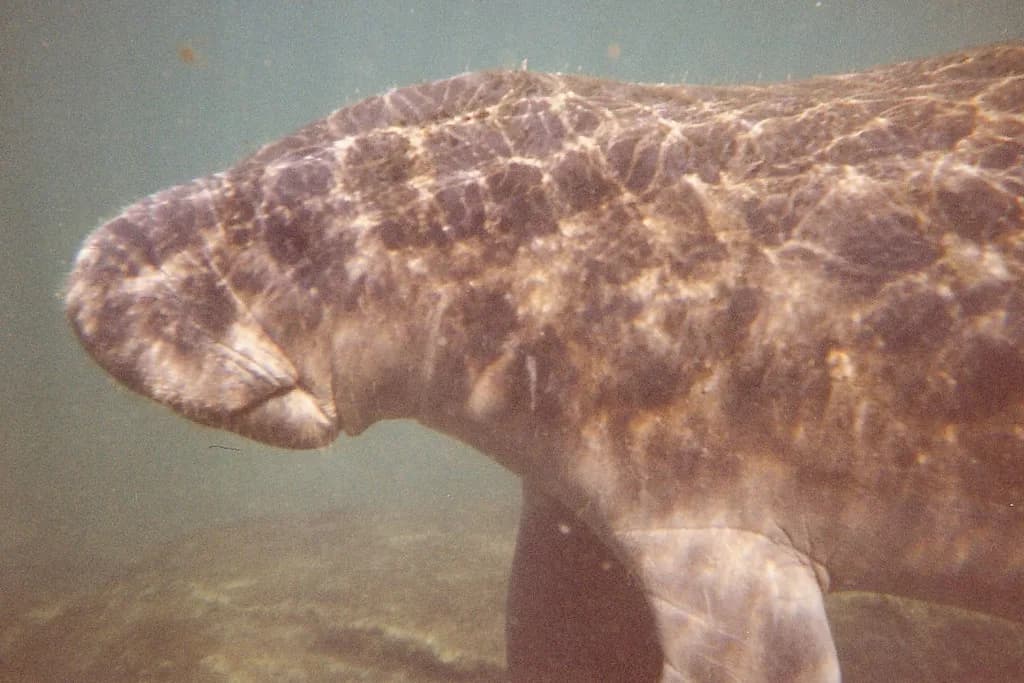
If you are combining a jellyfish check with a manatee day, keep the wildlife handling rules consistent; snorkeling with manatees has its own posted distance and no-touch expectations that sit alongside jellyfish awareness.
Where jellyfish fit alongside the reef
On a clear day, the reef is the main event and jellies are background traffic, so decide before you leave the dock how much drift you can tolerate. On a murky, onshore-wind day, shift to a sheltered bay, a spring run or a shore entry with a lifeguard and a posted flag. A flexible plan beats a fixed booking.
A jellyfish-aware plan is really a conditions plan: wind, tide, recent rain and a look at the beach before you commit. Pair it with a reef fish identification guide so you know what you are seeing besides the jellies.
Plan Your Jellyfish-Aware Snorkel Day
Build your day around visibility and wind rather than a fixed spot: clear, calm mornings make jellies easy to spot, and onshore blows make the shallows risky. Cover your skin, keep your hands off the bottom, and treat every stranded jelly as still capable of stinging.
Before you go, look up local beach flags and lifeguard warnings, and if you are undecided between coasts, use a Florida snorkeling guide to line up a backup site. Jellyfish are a planning variable, not a reason to stay home.
Frequently Asked Questions
What types of jellyfish are found in Florida?
Florida has cannonball jellies, moon jellies, sea nettles, upside-down jellies, box jellies and Portuguese man o' war. Cannonballs and moons are the most familiar to beachgoers, while box jellies and man o' war are the ones that demand the most distance.
When is jellyfish season in Florida?
There is no single season. Blooms depend on currents, water temperature, nutrients and oxygen, and they are more common in warm months when onshore winds push jellies toward the beach. Check beach flags and lifeguard warnings on the day you plan to swim.
Are clear jellyfish dangerous?
Some are. Moon jellies are pale and mild, but box jellies and man o' war can be nearly transparent and have serious stings. If you cannot identify a clear jelly, give it room and get out of the water rather than swimming through it.
Are cannonball jellyfish harmful to swimmers?
Cannonball jellies are the round, firm jellies that wash up on Gulf beaches in numbers, and they are not the ones swimmers fear most. Still, they have stinging cells, so leave them alone on the sand and do not handle them.
What do baby jellyfish look like?
Young jellies, or ephyrae, look like tiny, nearly transparent umbrellas with fine tentacles. They are hard to see in choppy water, which is one reason surface snorkeling with a scan ahead of you matters.
What should I wear to avoid jellyfish stings?
A long-sleeve rash guard, leggings or a thin dive skin covers the arms and legs where stings happen most. It does not make you sting-proof, but it reduces exposed skin.
What should I do if I am stung?
Remove any tentacle fragments, rinse with vinegar or salt water rather than fresh water, and seek medical help for serious reactions. Lifeguards can advise on the day.
Can I snorkel after a jellyfish bloom?
Often yes, once the water clears and the wind shifts, but a bloom can leave stragglers in the shallows. Scan the beach and the surface, and ask a lifeguard or dive operator before you get in.
Sources
Snorkeling notes for your next trip
Optional updates to our snorkeling guides.
You might also like

Continue reading
More guides you'll find useful