Akumal Snorkeling Guide: Turtles, Rules & Best Time to Go
Plan Akumal snorkeling around the bay's seagrass turtles: how to get in, where the reef starts, the best time of day, and the rules that protect the bay.
On this page
Akumal means "place of turtles" in Maya, and the bay lives up to it: seagrass meadows in a reef-sheltered cove draw green, loggerhead and hawksbill turtles close to a white-sand beach. That combination of shallow, calm water and reliably present animals makes it one of the Riviera Maya's easiest turtle snorkels for beginners, kids in life jackets and photographers who want to work from the surface.
The trade-off is popularity. Akumal sits on Highway 307 roughly 30 minutes south of Playa del Carmen and 20 minutes north of Tulum, and the central bay is the busiest stretch of shoreline in the area. Plan around the two fixed circuits and the morning window, and the same bay feels entirely different.
Where Akumal Bay Sits Between Playa del Carmen and Tulum
Akumal splits across Highway 307: the beach town and its coves sit on the ocean side, while Akumal Pueblo lies across the road. The bay itself is a series of coves, with Half Moon Bay and Yal-Ku Lagoon to the north and Jade Bay and Aventuras Akumal to the south. Akumal Bay proper is the central hub, with restaurants, small shops and cash machines within a few hundred yards of the sand.
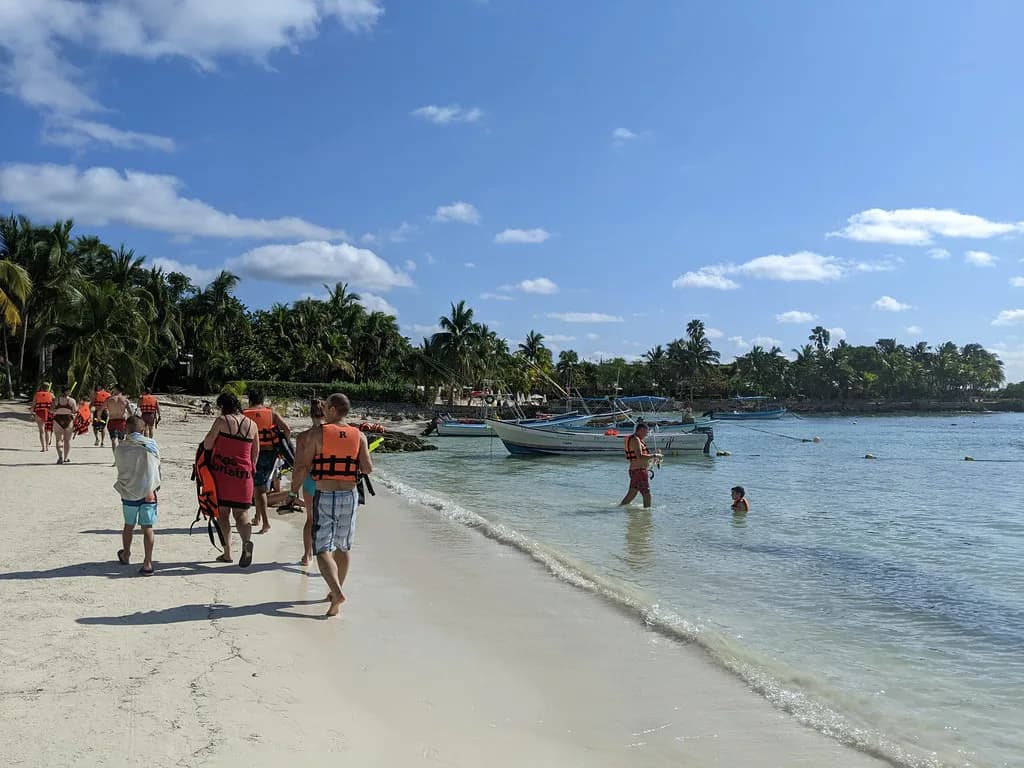
Colectivos, the white vans running Highway 307, drop you at or opposite the bay entrance, and it is a five- to ten-minute walk from the road to the beach. Driving south from Playa del Carmen means taking the retorno and doubling back north to turn into the bay. Arriving before the tour vans load is the single biggest factor in how crowded your entry feels.
How to Get In: Sand Entry and the Two Snorkel Circuits
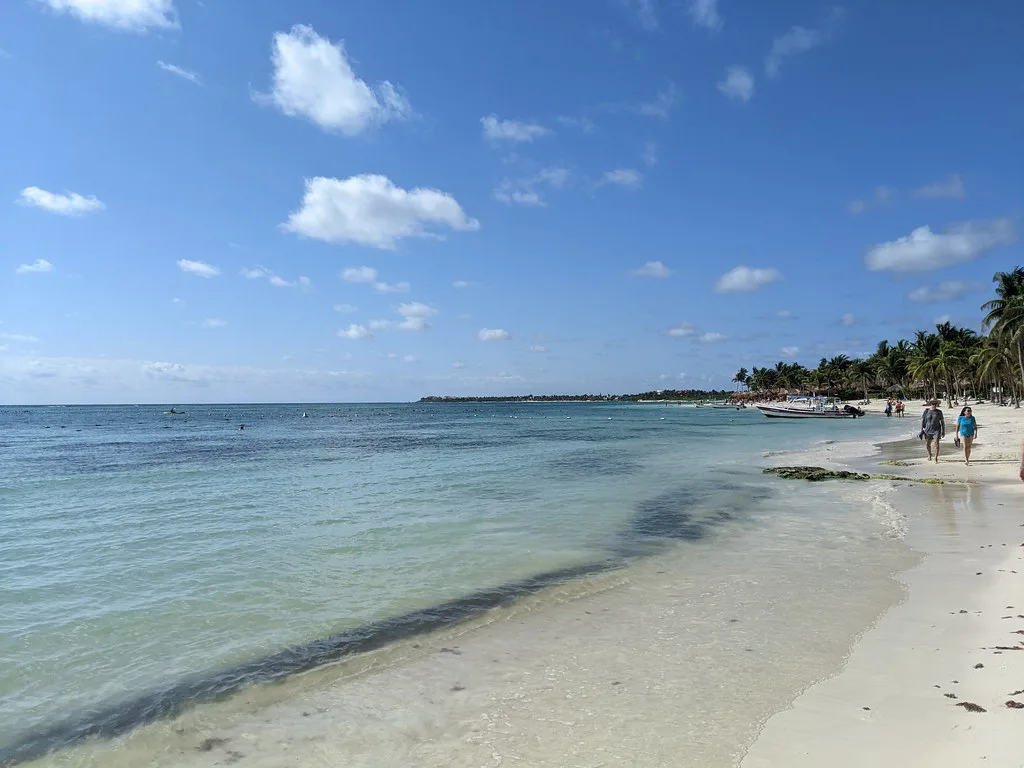
You enter from the beach over sand, with no ladder or rock shelf to negotiate, which is why families gravitate here. Offshore, a double line of barrier reef shelters the bay, keeping the water inside unusually flat for the Caribbean coast. That protection is exactly why the seagrass and the turtles thrive in the shallows.
Snorkeling is limited to two designated circuits in the bay, and other zones are closed to protect coral and allow regrowth. Officials patrol by kayak, so staying inside the marked circuits is not optional. Treat the buoys and cordons as the map: they tell you where the snorkel zone starts and where the reef is off limits.
The closest snorkeling begins just past the sandy shallows over seagrass, where turtles graze in water shallow enough to stand in places. Coral and the outer barrier reef lie farther out, beyond the swimming zone. For that outer reef, the practical route is a short panga boat ride rather than a long surface swim.
What You Will See: Three Turtles Over Seagrass
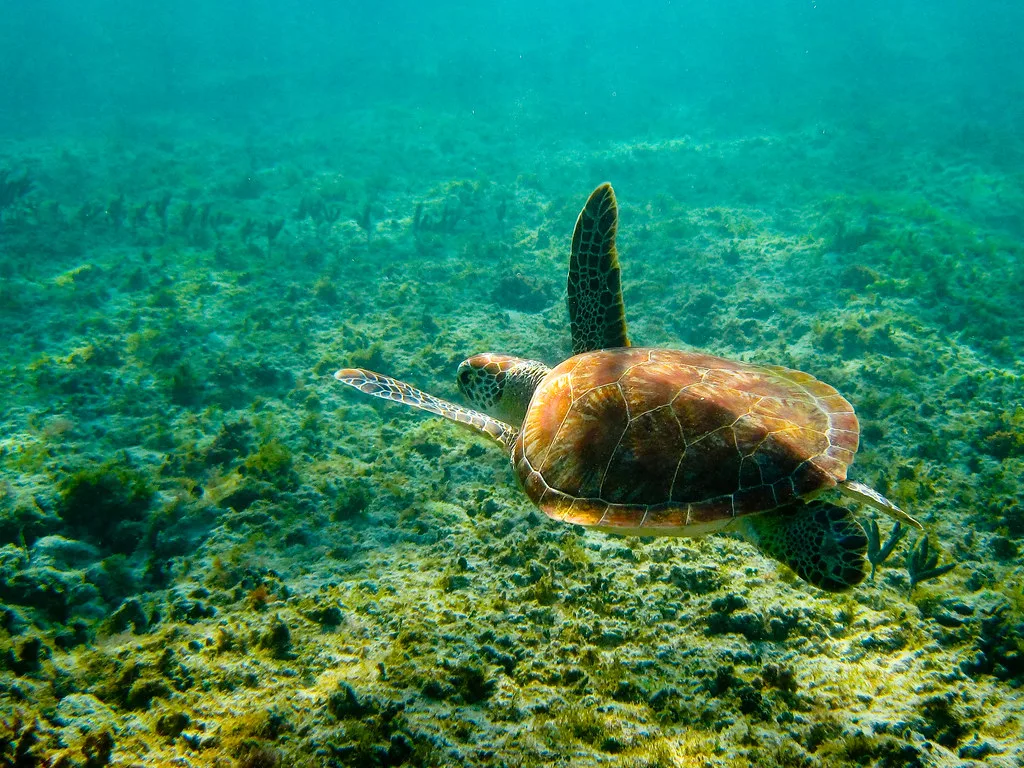
Green turtles are the most common sighting and the largest hard-shelled sea turtle, reaching up to five feet and roughly 700 pounds. They crop the tips of seagrass blades, which keeps the meadow healthy, and they surface for a few breaths before dropping back to feed. A green turtle close to the bottom, head down in the grass, is the classic Akumal view.
Loggerheads run smaller, around three feet and 250 pounds, with a reddish-brown shell and a heavy yellow-toned head, and they feed on jellyfish, mollusks and crustaceans rather than grass. Hawksbills are the rarest here and critically endangered, recognizable by a narrow, beak-like head and a patterned shell; they favor reef ledges and sponges. Seeing all three in one morning is possible but never guaranteed.
Nesting season runs roughly May through November, when hundreds of turtles come ashore in the wider bay area, but turtles feed in the bay year-round. Over a thousand nests were counted in the central bay in 2020 alone. Plan for turtles on any visit and treat a sighting as the bonus it is.
Reef Fish to Expect
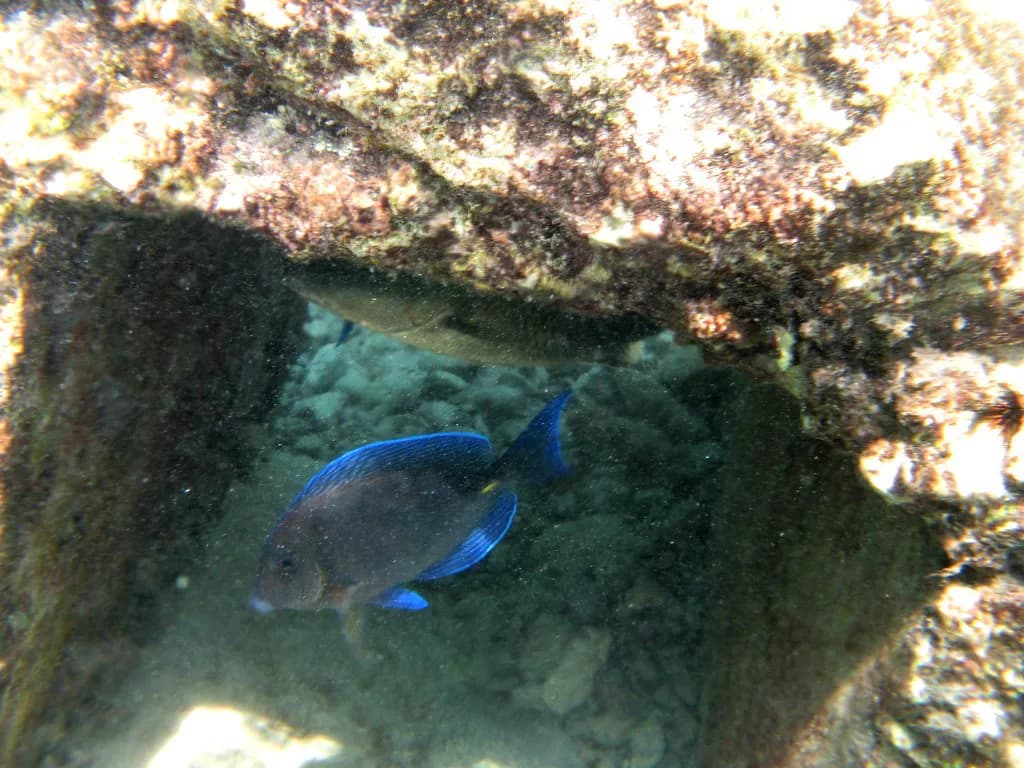
The seagrass and coral patches hold angelfish and butterflyfish in the shallows, often bold enough to approach a mask, plus parrotfish scraping algae with their beak-like mouths. Surgeonfish patrol in schools, and hogfish work the bottom for mollusks, crabs and urchins. Damselfish, grunts, snappers and the occasional barracuda round out a typical circuit.
Look down as well as out: stingrays rest in the sand and react defensively if stepped on, so shuffle or hover rather than planting a foot. Keeping fins off the bottom protects coral and keeps visibility clean for everyone behind you.
Depth and Conditions
Inside the bay the water is shallow and protected, with seagrass flats giving way to coral farther out; the reef's shelter keeps the surface calm on most days. That layout suits weak swimmers and children, but calm is not a promise. Wind and passing weather can push waves into the bay, so a life jacket for every child, and for adults escorting them, is a sensible default.
Visibility depends heavily on traffic. Sand kicked up by waders, swimmers and boats lingers, and the bay is clearest at the start of the day before the crowd arrives. After a windy night, expect the bottom to be stirred and plan your circuit accordingly.
Best Time of Day
Go as early as you can. The first tours usually leave around 9 AM, so independent snorkelers who arrive at sunrise get calm water, fewer people and cleaner visibility. By midday, stirred sand and boat traffic dull the view.
Mondays work differently: guided tours are not permitted in the bay that day, leaving the water to independent snorkelers. Arriving before 10 AM on a Monday gives you the quietest snorkel of the week. If you want a guide and a boat, choose Tuesday through Sunday instead.
Best Time of Year
The dry season from November to April brings calmer seas, less rain and the clearest water, which is why it is also the busiest stretch of the calendar. The wet season from May to October brings afternoon rain and wind that can cloud the bay. Turtle nesting, meanwhile, falls between May and November, so early winter offers both clean water and recent nesting activity.
Winter is peak season on the Riviera Maya, with North American visitors filling the coast from mid-December through March, and guided slots book out ahead of it. Shifting your trip to May or the late autumn trades some visibility certainty for far thinner crowds. Akumal's turtles are present either way.
Skill Level and Kids
Akumal Bay is a beginner-friendly snorkel: sandy entry, shallow water and a protected cove. Children as young as two to four can join guided trips, and non-swimmers do fine in a well-fitted life jacket with an adult alongside. Strong swimmers still gain from the flotation, especially when the bay turns choppy.
Snorkel in pairs, keep a buddy in sight and agree on a turnaround point before you enter. The outer-reef panga trip is a step up: deeper water, boat traffic and a guide's schedule to follow. Book that one after you have tested your mask and comfort in the shallows.
Rules and Protected Areas
Stay at least 15 feet, or 4.5 meters, from every turtle, and hold still if one swims toward you rather than backing away or reaching out. Touching turtles is illegal under Mexican law and the Endangered Species Act, and touching coral can spread disease that kills it. Fins are discouraged in the shallows because a careless kick damages the reef.
Only biodegradable sunscreen is allowed in the bay; chemical filters such as oxybenzone and octinoxate are banned in the marine protected area. A full-coverage rash guard is the simplest way to cut how much sunscreen you need. Coral-safe habits matter more than any single product here.
Stay inside the two designated circuits and out of the cordoned zones, where officials patrol to enforce compliance. Take everything you carry out, and skip the fins if you're only working the shallow grass. The rules exist because the bay's seagrass and coral are the whole reason the turtles are here.
Tours, Gear Rental and the Panga Ride
A mask-and-snorkel rental through the Akumal Dive Center runs about $5 USD, and a short panga ride to snorkel farther out costs around $35 USD with an added reservation fee. Seth Dive quotes private ocean snorkeling trips at roughly $90 to $150 per person, covering gear, guide, boat and marine park fees. Treat these as the published rates they are and check current pricing with Akumal Dive Center or Seth Dive when you book.
Booking through a well-established dive center also spares you the gauntlet of beach vendors touting tours along the access path. December to April slots fill two to three weeks ahead, so reserve early if your dates fall in peak season. If you would rather snorkel cenotes after the turtles, the same operators run inland combos.
Getting In for Less: Beach Access and Parking
Parking lots near the beach charge by the hour, often around 20 pesos. Two access routes avoid that cost: park free at the Akumal Dive Center if you rent gear or take a tour, or at Lol-Ha Restaurant if you buy a drink, snack or meal. Tell the attendant at the alley rope which one you are using.
The Akumal Dive Shop charges about $5 USD for beach access on its property, but free routes exist. Walkers can use the alleyway while patronizing the dive center or Lol-Ha, or pass through the Hotel Caribe Akumal entrance to come out beside the restaurant. Free beach access, in short, is tied to spending somewhere rather than simply showing up.
Parking, Facilities and What to Bring
Restrooms are available at the beach bars; diners at the Lol-Ha snack bar get free use of the facilities, while beachgoers otherwise pay a few pesos. Bring cash for small charges, a rash guard, and your own mask if you have one that fits. A dry bag keeps phones and keys safe while you are in the water.
Reef-safe sunscreen, water and a towel complete the kit, and a light layer helps on breezy mornings before the sun climbs. Leave valuables in your accommodation where you can, and carry only what fits in a waterproof pouch.
Combining Akumal with Half Moon Bay, Yal-Ku Lagoon and Jade Bay
Half Moon Bay and Yal-Ku Lagoon lie to the north of the central bay, while Jade Bay and Aventuras Akumal sit to the south, so a single day can cover more than one entry point. Yal-Ku is a sheltered lagoon with calmer water than the open coast, which makes it a gentle second stop.
If you are based in Playa del Carmen, Akumal pairs neatly with a beach day at Playacar Beach or a park day. For plumbing the rest of the coast, start with the full snorkeling guide and pick spots by entry type rather than by fame. If you are weighing a bigger trip, the same turtle-and-seagrass logic plays out in the Bahamas snorkeling guide.
Plan Your Visit
Akumal rewards an early start more than almost any other Riviera Maya snorkel spot: arrive before the first tour boats, stay inside the two circuits, and you get shallow, calm water and a good chance of turtles over the grass. Mondays give independent snorkelers the quietest morning, while Tuesday through Sunday is when guided trips, boat rides to the outer reef and gear rental line up.
Build the day around the rules rather than against them. Keep 15 feet from turtles, wear reef-safe sunscreen or a rash guard, and use a life jacket for kids and weaker swimmers. Confirm current tour availability and pricing before you travel, whether you book directly with Akumal Dive Center or through Seth Dive.
Frequently Asked Questions
Is there good snorkeling in Akumal?
Yes, in the sense that the central bay is shallow, sheltered by a double barrier reef and full of seagrass that draws turtles. Snorkeling is limited to two designated circuits, so the quality of the experience depends on staying inside them and arriving early. Coral and the outer reef lie beyond the swimming zone and need a panga boat ride.
Can you snorkel with turtles in Akumal?
You can snorkel in the same water where green, loggerhead and hawksbill turtles feed on the seagrass, and green turtles are the most common sighting. Sightings are never guaranteed. Federal rules require staying at least 15 feet from any turtle and forbid touching or chasing them.
Do you need a guide to snorkel in Akumal?
Independent snorkeling is allowed inside the two designated circuits, and many visitors enter from the beach with their own mask and snorkel. Guided trips are required for the outer reef by boat and are not permitted in the bay on Mondays. A guide is a good call for first-timers who want coaching on turtle etiquette.
What is the best time of day to snorkel in Akumal?
Early morning, before the first tours leave around 9 AM. Water is calmer, the sand has not been stirred up and visibility is at its best. Monday mornings before 10 AM are especially quiet because guided tours are not permitted that day.
What is the best time of year to see turtles in Akumal?
Turtles feed in the bay year-round, and nesting season runs roughly May through November. The dry season from November to April brings the clearest water and calmer seas but also the biggest crowds. Late autumn and May offer a middle ground.
Is Akumal Bay calm enough for kids and beginners?
Usually yes: sandy entry, shallow water and reef shelter make it a good first snorkel, and children as young as two to four can join guided trips. The bay can turn choppy in wind, so fit every child with a life jacket and swim with a buddy.
Where do you enter the water for Akumal snorkeling?
Enter over sand from Akumal Bay beach, just past the shallows onto the seagrass flats. Free access routes run through the Akumal Dive Center or Lol-Ha Restaurant when you rent gear, take a tour or buy something. The Akumal Dive Shop charges for beach access on its property.
Is Puerto Morelos or Akumal better for snorkeling?
They offer different experiences: Akumal is a sheltered turtle bay with seagrass and shallow water, while Puerto Morelos sits on a reef with its own character and conditions. Choose Akumal if turtles and an easy sand entry are your priority, and compare entry points and rules for each before you commit.
Sources
Snorkeling notes for your next trip
Optional updates to our snorkeling guides.
You might also like
Continue reading
More guides you'll find useful