Cenote Dos Ojos Snorkeling: Plan Your Playa del Carmen Visit
Snorkeling Cenote Dos Ojos means clear freshwater, two entry platforms and small fish over deep caverns. Plan your swim, entry point and timing.
On this page
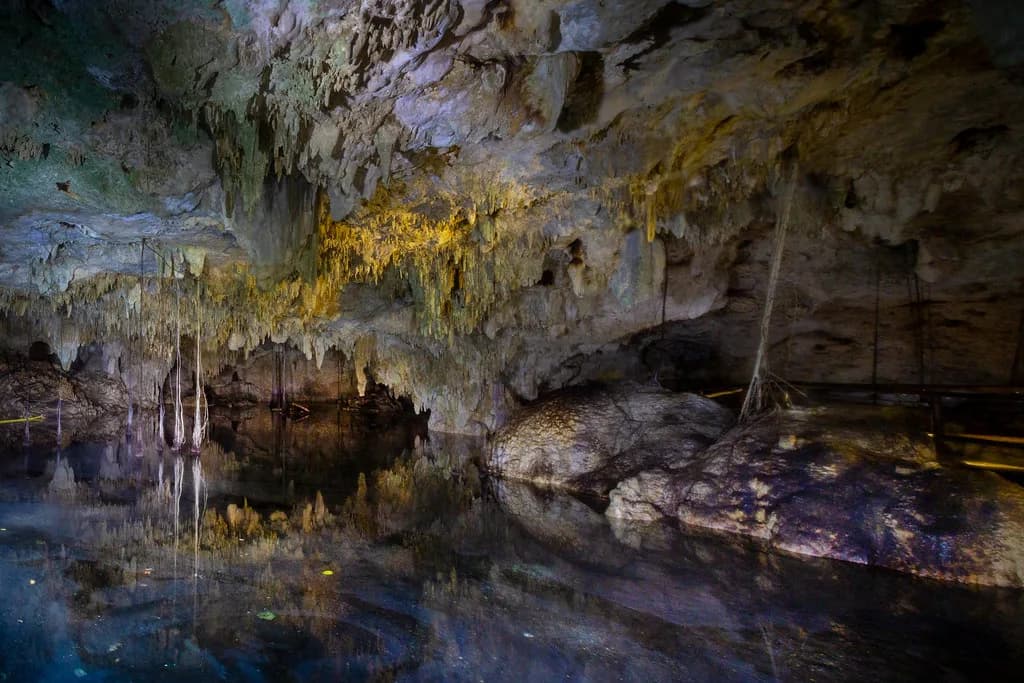
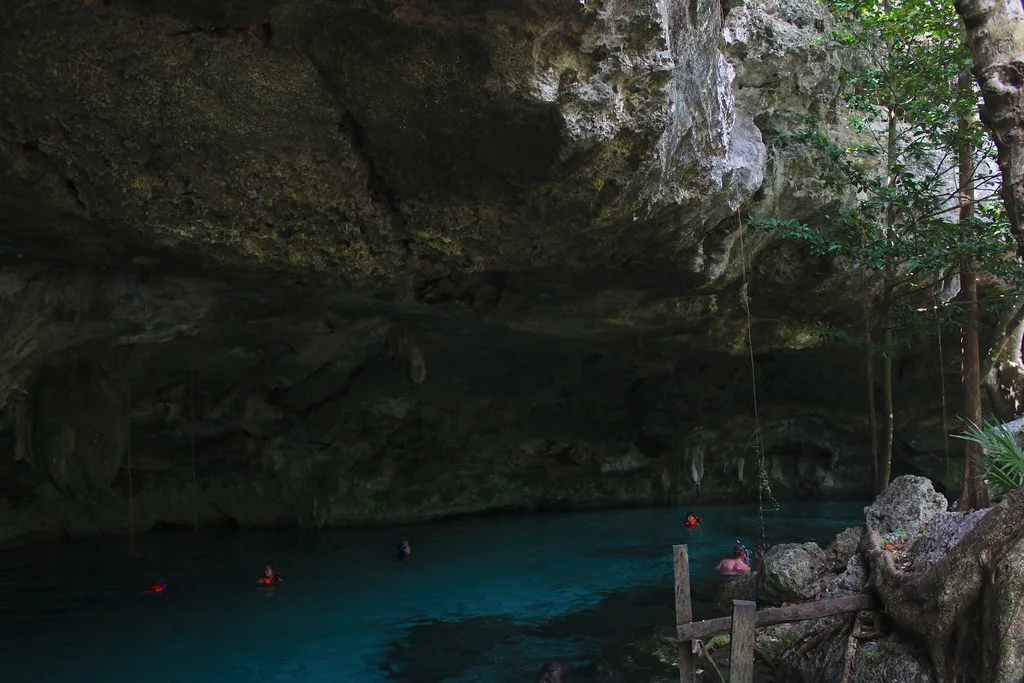
Cenote Dos Ojos gives snorkelers a rare thing: cavern scenery and swim-through light without a dive certification. The water is fresh, cool and clear enough that small fish and rock formations show up sharply from the surface, while the dark cave mouths drop away below you.
It suits families and beginners who pick the left platform with its shallow shelf and steps, and it suits confident swimmers who want the second entrance over deeper water. It is a poor match for anyone hoping for a quiet reef scene or shallow wading, because divers dominate the first platform and the steps stay busy.
Where Cenote Dos Ojos Sits in the Riviera Maya
Dos Ojos, Spanish for two eyes, sits between Playa del Carmen and Tulum on the Riviera Maya, just south of Akumal and close to the Xel-Ha turnoff. From Playa del Carmen it is roughly a 40-minute drive south.
The cenote is one of several on the same gravel road inside Parque Dos Ojos. Driving in, you pass Cenote Jaguar with its zip line, Cenote Nic Te Ha and Cenote Tahal Tulum, with Cenote Taak Bi Ha further along; Dos Ojos itself is an entrance on the left side of that road.
Distances are short but the road is unpaved, so allow more time than the map suggests. If you are building a day around it, pair the cenote with Akumal snorkeling on the same stretch of coast rather than doubling back toward Playa del Carmen.
The Two Entry Platforms
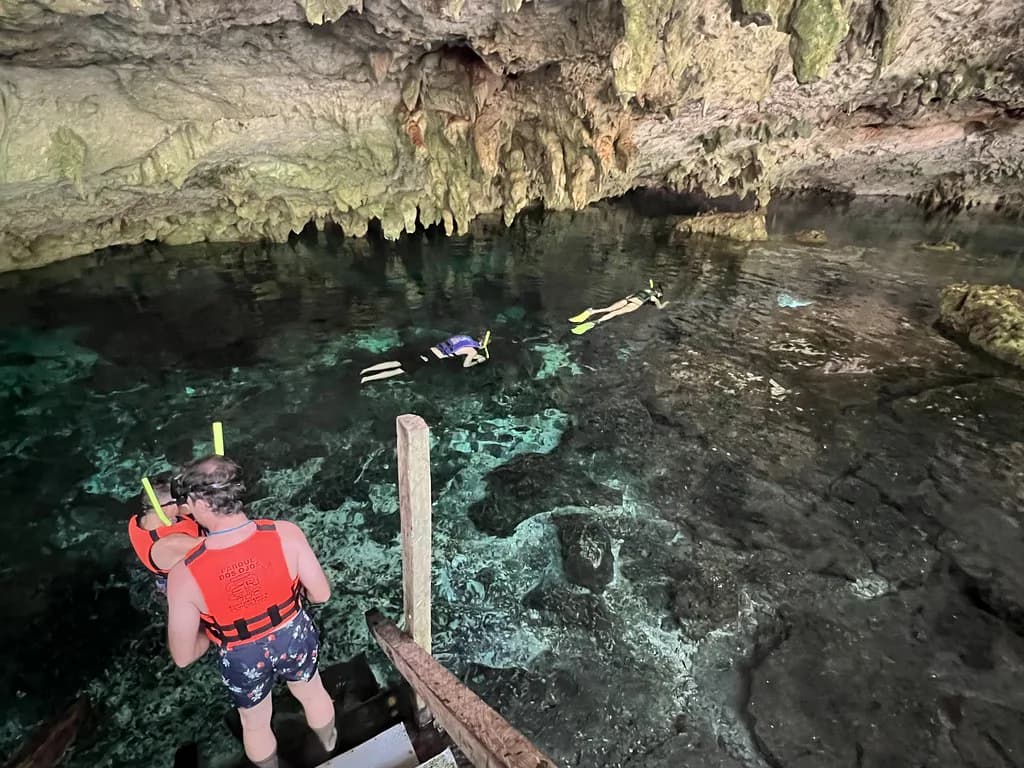
Walk in through the gate and you reach two main platforms where you enter the water. The first is to your left, and it is the larger of the two, with long steps down and a shallow area at the bottom where younger children can touch the bottom. It is also where divers come and go, so the steps and the shelf get congested.
The second platform sits to your right after the entrance. It is smaller, essentially a jump-off point, and its stairs lead into deeper water and can be slippery, so treat it as the option for stronger swimmers rather than for kids.
For a family snorkel, stage yourselves at the left platform and keep bags behind the bench-like dive tables instead of on the steps. Experienced snorkelers can cross to the right side for a quieter deeper swim once everyone is in the water.
How Deep It Gets and How Far You Swim
Snorkeling at Dos Ojos is not a long-distance swim. Most people spend their time circling the first cavern around the left platform, where the water runs deep but the shelf gives you a shallow place to stand, rest and regroup.
The second platform opens onto noticeably deeper water, which is part of why it feels darker and less inviting to casual snorkelers. The two caverns are linked by an underground cave system that is the domain of trained divers, so snorkelers stay in the lit cavern zones and along the walls rather than following the tunnels.
What You Will See
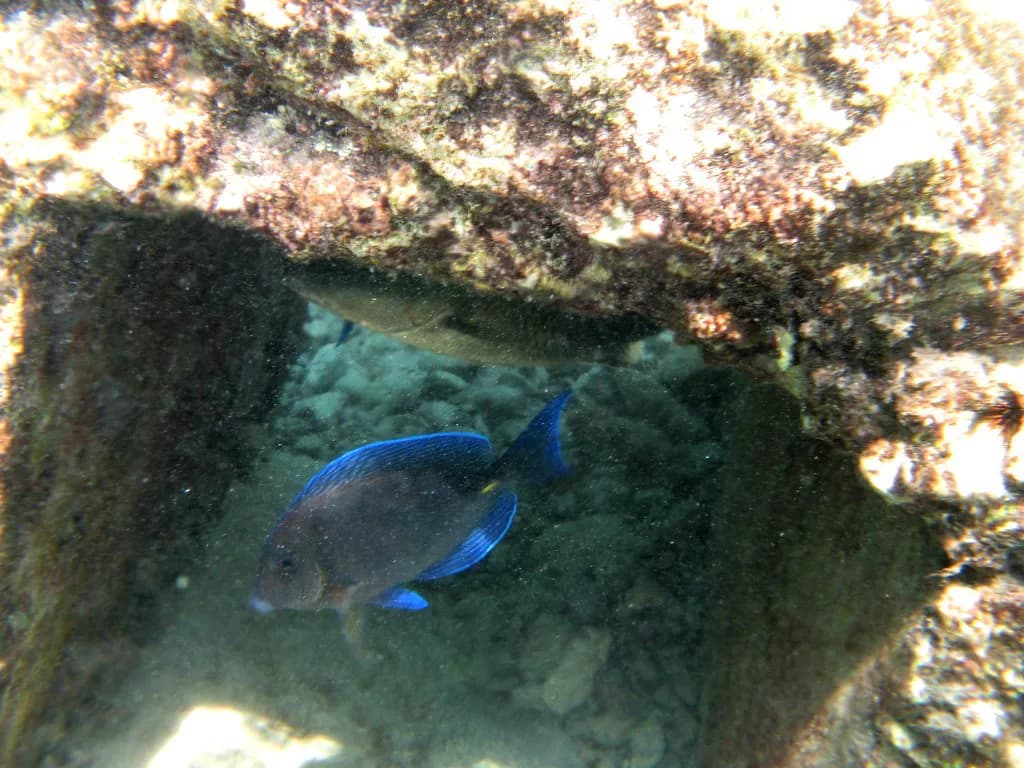
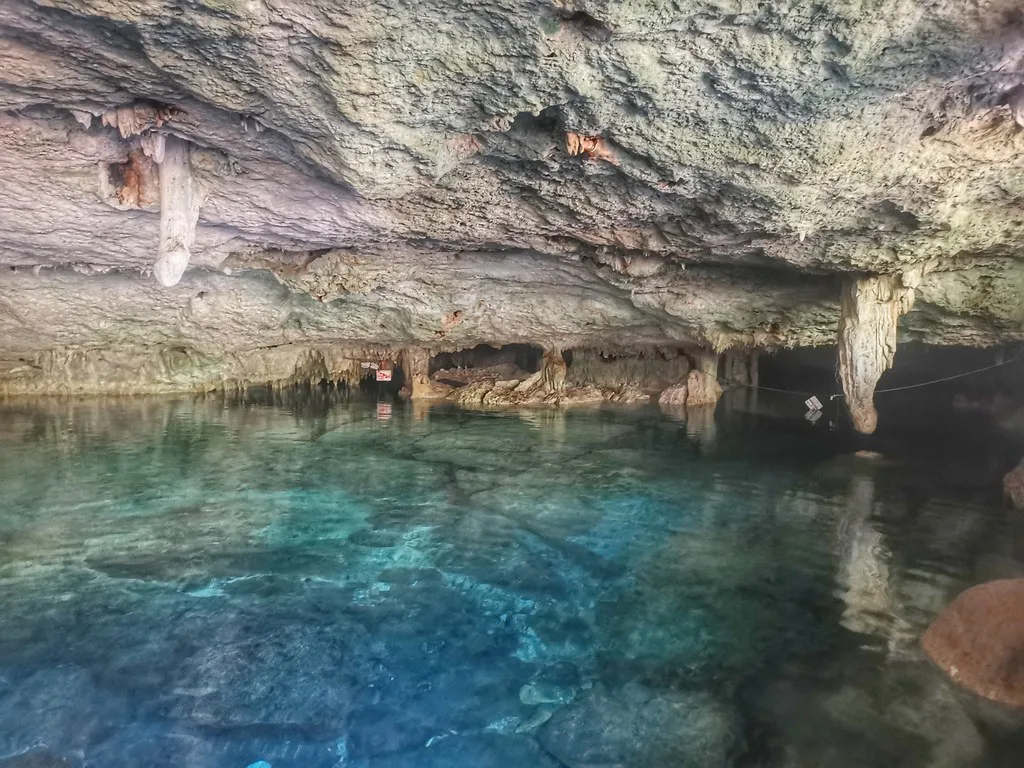
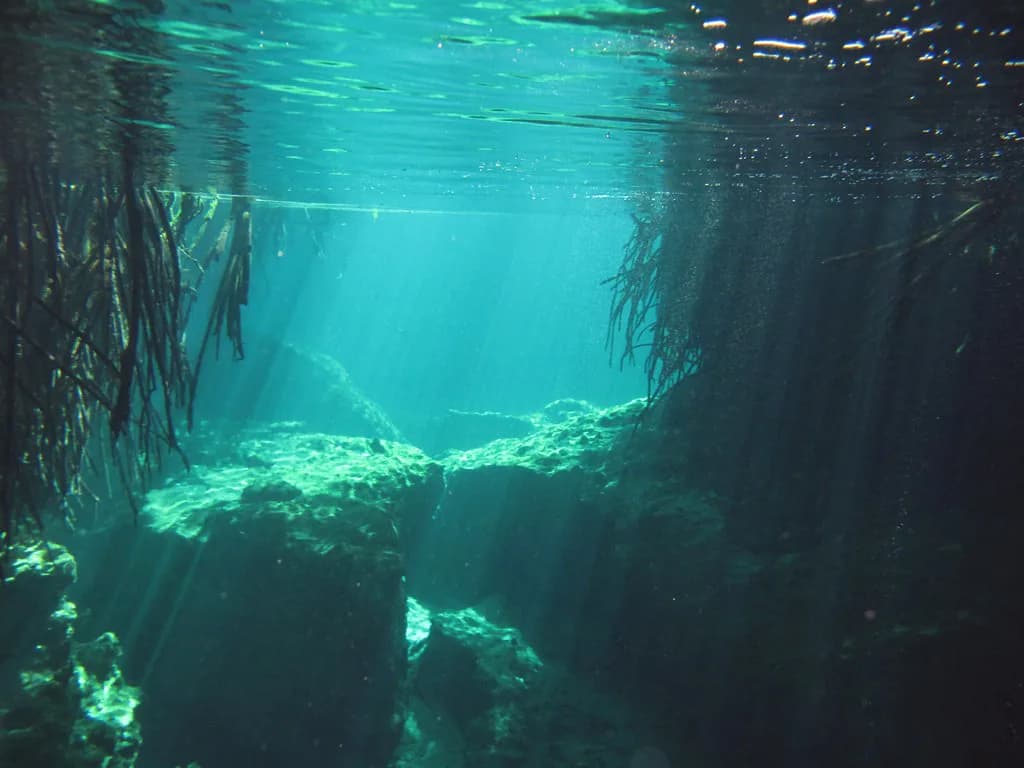
Expect small fish rather than large reef species. Light shafts and clear freshwater make them easy to watch, and the same clarity reveals the fallen rock and cave formations that give the cavern its shape.
Overhead and around the entrance you may spot iguanas, snakes and birds in the surrounding jungle, though wildlife is never guaranteed. Keep your distance from anything you encounter and leave the animals undisturbed.
The Bat Cave Passage
When the water level is right, snorkelers can swim to a bat cave through a dark, narrow cavern. It is a genuine option for confident swimmers with a head for enclosed, low-light spaces, and a poor fit for young children or anyone uneasy in the dark.
Skip it if your group is tired or lightly equipped, because the passage demands composure in a tight space. Nothing in the first cavern is diminished by leaving it out.
Water Temperature Year-Round
Water temperature in the cenote sits at around 24 to 25 degrees Celsius, about 77 Fahrenheit, all year. That is comfortable for swimming and refreshing after the hot jungle sun, but it is cool enough that children tire faster than they would in a warm sea.
Plan snorkel sessions in blocks of an hour or so rather than one long swim, and bring a towel and dry layer for the walk back up the steps. If you plan more than one cenote day, carry your own mask, snorkel and fins instead of renting each time.
Best Time of Day and Season
Mid-morning to midday gives the strongest light in the cavern, which is when the formations and fish read most clearly from the surface. Later in the day the second platform looks darker and less inviting, so snorkelers wanting the best visibility should aim early.
Crowds follow the road traffic from Playa del Carmen and Tulum, and divers tend to arrive in groups. Turning up at opening time gets you a spot behind the dive tables and a calmer left platform.
Sharing the Water With Divers
Dos Ojos is a serious dive destination, and the divers are the priority on the main platform. They move slowly on land in full gear and fins, so give them space on the steps and stay clear when they are entering or exiting.
Do not block the shallow shelf at the bottom of the steps with bags or children waiting their turn. Once you are off the platform and out in the cavern there is room for everyone, which is where the snorkeling actually happens.
Hazards to Respect
The stairs at both platforms can be slippery, and the second platform drops into deep water, so wear shoes with grip for the descent and keep an eye on weaker swimmers at the right-hand entrance.
Inside the cavern, do not touch the cave formations. Stalactites and stalagmites are fragile, and a stray fin can break them; buoyancy control and a hands-off approach protect the site for the next snorkeler.
Fees, Life Jackets and Gear Rental
Admission is paid at the entrance, and life jackets are included in the ticket price according to visitor reports, with children under six entering free at the time of that visit. Rental snorkel gear, meaning mask, fins and snorkel, was charged as an extra on top of admission.
Ticket prices at Mexican cenotes change often, so treat any figure you read online as historical and confirm the current rate at the gate or through a tour operator before you commit your budget. Bringing your own snorkel kit removes the rental line entirely.
Tours are sold at the gate and ahead of time. If you buy a snorkeling tour at the first highway entrance, make sure it actually goes to Cenote Dos Ojos, because packages sold there sometimes visit other cenotes in the same park instead.
Facilities on Site
The site has bathrooms, changing rooms and lockers, plus fresh water for rinsing dive gear. Snack shops and hammocks sit in the relaxing zone, which makes it easy to spread a morning across a swim and a rest.
There is no full restaurant at the cenote itself, but Restaurante Dos Ojos and Restaurante Juanita sit near the parking area, and more options cluster at the highway entrance. Plan lunch after the swim rather than counting on food at the water's edge.
Getting There Without a Car
A rental car is the most flexible way to reach Dos Ojos and combine it with other cenotes on the same road. A colectivo from Playa del Carmen runs far cheaper, but it drops you at the highway entrance, leaving a walk of about two kilometers into the park.
A taxi from Playa del Carmen is the simple door-to-door option and costs considerably more than the colectivo. Whichever you choose, arrange your return before you head in, since the highway entrance is where transport passes.
Nearby Cenotes and Coast Stops
The same gravel road serves Cenote Jaguar, Cenote Nic Te Ha and Cenote Taak Bi Ha, so you can string two or three shallow cenote stops into one morning. Shallower cenotes suit young children and nervous swimmers better than the deep second platform at Dos Ojos.
On the coast, Akumal Bay lies just north and Xel-Ha sits close to the turnoff, giving you a saltwater reef day and a freshwater cavern day in one trip. Both work well as a contrast to the cool, enclosed world of Dos Ojos.
What to Bring
Bring a swimsuit, a towel and shoes with grip for the wet stairs, plus a dry layer for the cool air after your swim. Your own mask and snorkel save the rental fee and fit better than a shared kit.
Use only environmentally safe sunscreen, and apply it before you arrive so nothing washes into the cenote. Water, a hat and a snack cover the gaps between the on-site snack shops and the restaurants at the highway entrance.
Who Should Choose a Shallower Cenote Instead
Dos Ojos is primarily a diver's cenote, and snorkelers share a busy platform with dive groups. Families with very young children, or anyone who wants a sandy bottom and easy wading, will find shallower cenotes on the same road far more relaxed, and if you are weighing a warmer reef trip instead, snorkeling in Belize offers an alternative set of shallow, easy-entry spots.
Choose Dos Ojos if you want cavern scenery, light shafts and deep clear water without a certification, and you are comfortable with cold freshwater and busy steps. If you also want a classic Caribbean reef day, add snorkeling in Playa del Carmen or a beach stop on the way home.
Plan Your Dos Ojos Snorkel Day
Build your day around the left platform: arrive early, stage your bags behind the dive tables, keep kids on the shallow shelf and give divers room on the steps. Add the bat cave only if your group is confident in dark, narrow water.
Pair the cenote with a coastal stop at Akumal or Xel-Ha, carry your own snorkel gear and confirm the current admission price and tour destination at the gate before you pay.
Frequently Asked Questions
How deep is the water where you snorkel at Cenote Dos Ojos?
The water around the first platform is deep but has a shallow shelf at the bottom of the steps where children can touch the bottom. The second platform opens onto noticeably deeper water, which is why it feels darker and is better suited to strong swimmers.
Can beginners and kids snorkel at Cenote Dos Ojos?
Yes, if you use the larger left platform with its steps and shallow shelf. The steps and shelf are shared with divers, so keep children close and bags out of the way. The smaller right platform drops into deeper water and its stairs can be slippery.
Is the water cold at Cenote Dos Ojos?
The water stays around 24 to 25 degrees Celsius, about 77 Fahrenheit, throughout the year. That is comfortable for swimming and refreshing after the jungle heat, but children tend to tire faster than in warm sea water, so plan shorter sessions.
What fish and formations will you see snorkeling Dos Ojos?
The water holds plenty of small fish, and clear freshwater and strong light let you see rock formations and cave structures from the surface. Iguanas, snakes and birds may appear in the surrounding jungle, though wildlife is never guaranteed.
How much is entrance and snorkel gear rental at Cenote Dos Ojos?
Admission is paid at the gate and has included a life jacket at the time of published visitor reports, with snorkel gear rental charged as an extra. Prices change, so confirm the current rate at the entrance or through your tour operator before you go.
Should you snorkel the first or second platform at Dos Ojos?
Choose the first, larger platform on the left for its steps and shallow shelf, especially with children. The second platform on the right suits confident swimmers who want deeper water and fewer people, but its slippery stairs make it a poor entry for beginners.
Can you snorkel to the bat cave at Dos Ojos?
When the water level allows, snorkelers can swim to a bat cave through a dark, narrow passage. It suits confident swimmers with a head for enclosed spaces and is not a good fit for young children.
How do you get to Cenote Dos Ojos without a car?
A colectivo from Playa del Carmen is the cheapest option, but it leaves you at the highway entrance with about a two-kilometer walk into the park. A taxi is door-to-door and costs much more, so arrange your return before heading in.
Sources
Snorkeling notes for your next trip
Optional updates to our snorkeling guides.
You might also like
Continue reading
More guides you'll find useful