Cenote Snorkeling in Mexico: How to Pick the Right Sinkhole
Cenote snorkeling means freshwater limestone pools near Playa del Carmen and Tulum. Learn what you will see, which cenotes suit beginners, and what to bring.
On this page
A cenote snorkel day gives you still, freshwater clarity, no surf to fight and jungle shade at the rim, which is why families and nervous first-timers often rate it above a beach swim. The catch is that cenotes differ enormously: an open pool with a shallow shelf is a different experience from a cavern where divers drop down the steps beside you. Choosing well comes down to how you enter the water, how deep it goes and how much light reaches it.
Why a Cenote Deserves a Snorkel Day
Cenotes are natural sinkholes in the limestone that underlies the Yucatan Peninsula, and the ones near the coast sit at the end of enormous flooded cave systems. For snorkelers that geology means flat, glassy water instead of a swell line, plus visibility that holds even when the Caribbean is churned up. The trade-off is that you are swimming in a confined pool or cavern rather than along a reef, so the appeal is scenery and light rather than big marine life.
A cenote day is also a good hedge against a windy coast. When the beach flag system shuts shore snorkeling down, inland pools stay calm, and the surrounding jungle keeps you out of the midday sun between swims. Plan it as a morning outing and you can still be back on the coast for the afternoon.
How a Cenote Is Laid Out
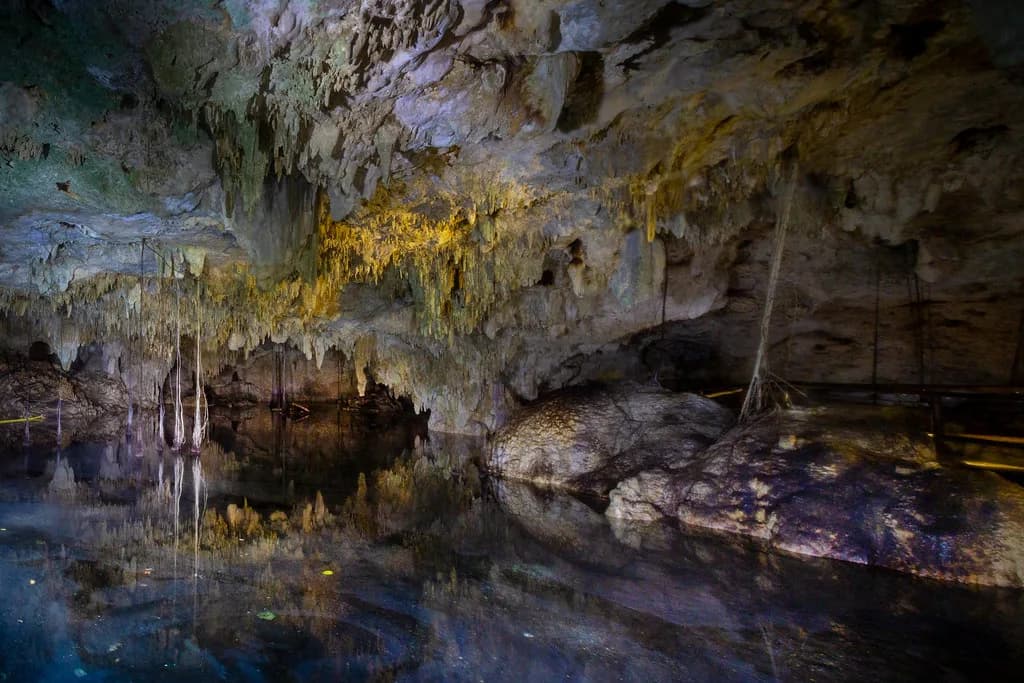
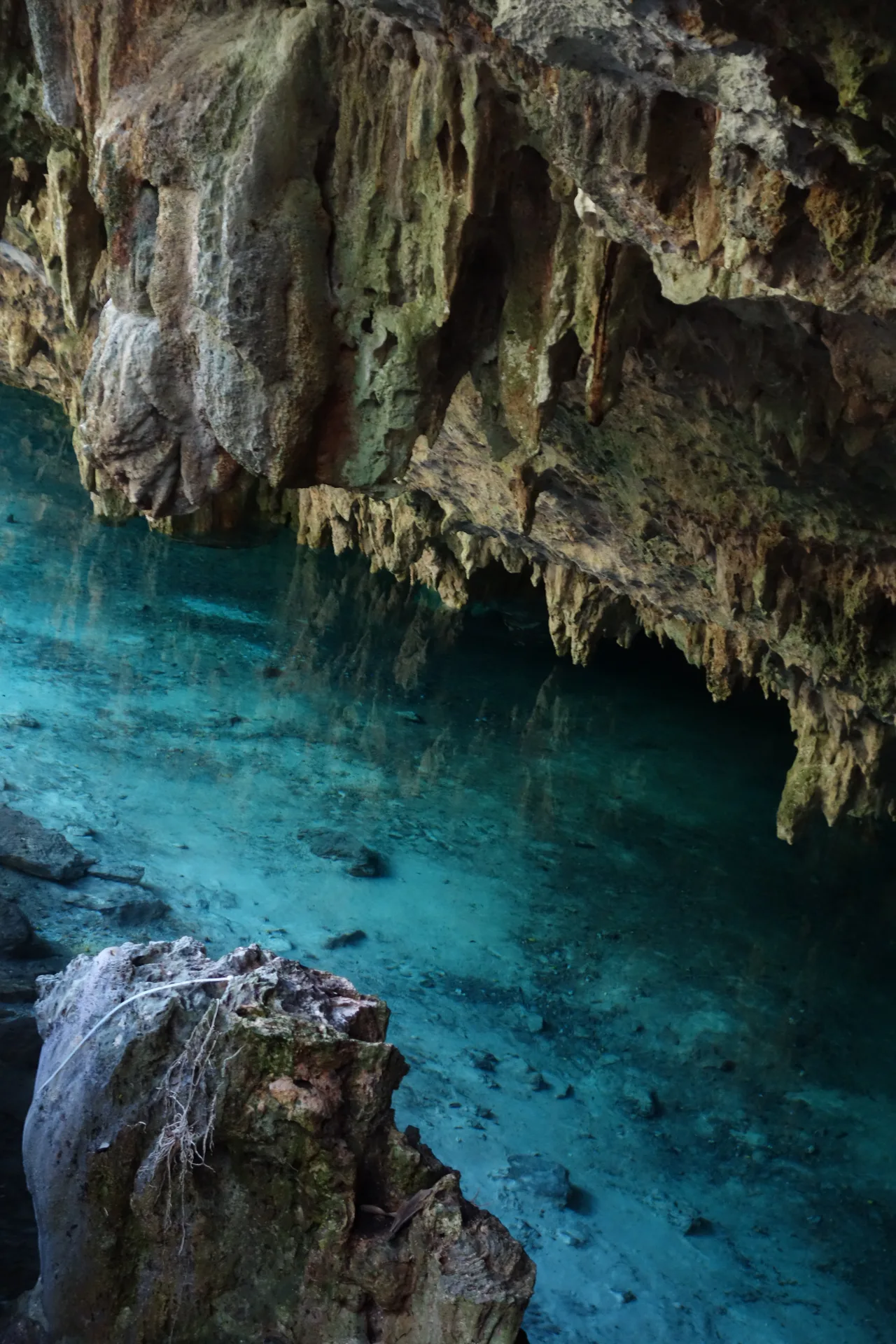
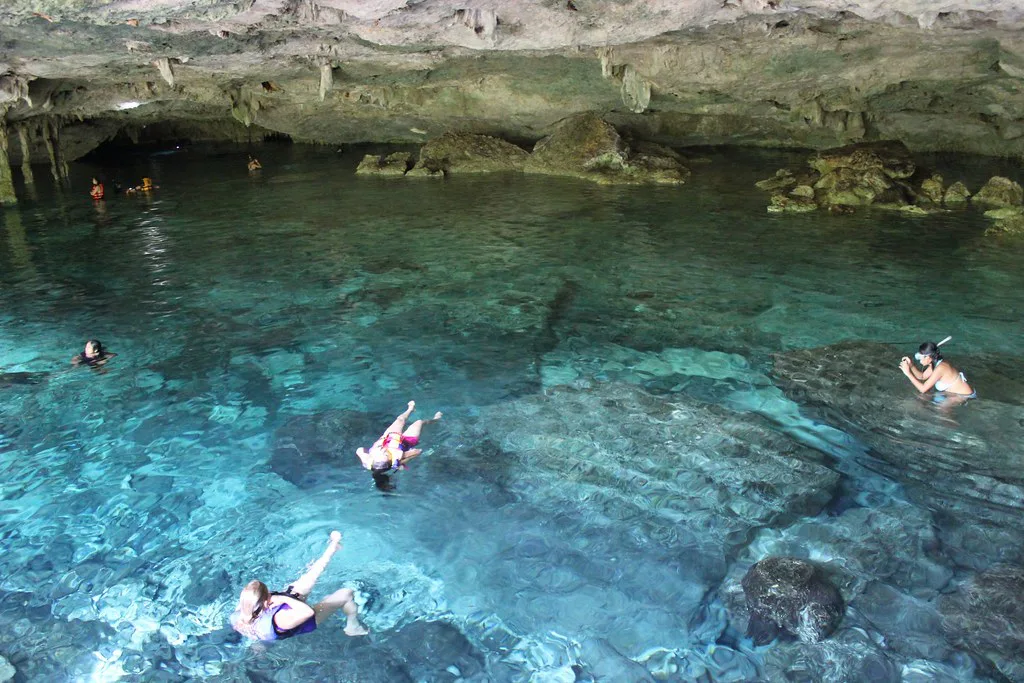
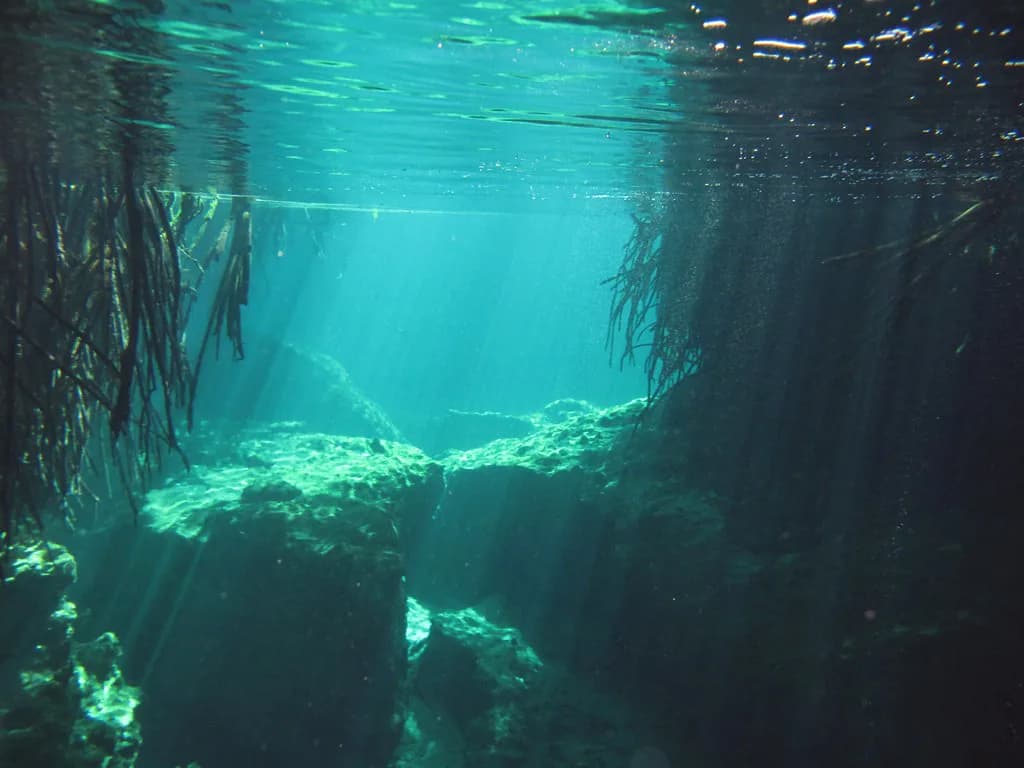
Most snorkel-friendly cenotes fall into two shapes. Open-air cenotes are broad pools with the sky above, sunshine reaching the bottom and usually a shallow shelf where you can stand or sit before swimming out. Cavern cenotes are partly roofed, so the light comes in shafts through openings, the floor drops away and the walls carry stalactites, stalagmites and columns.
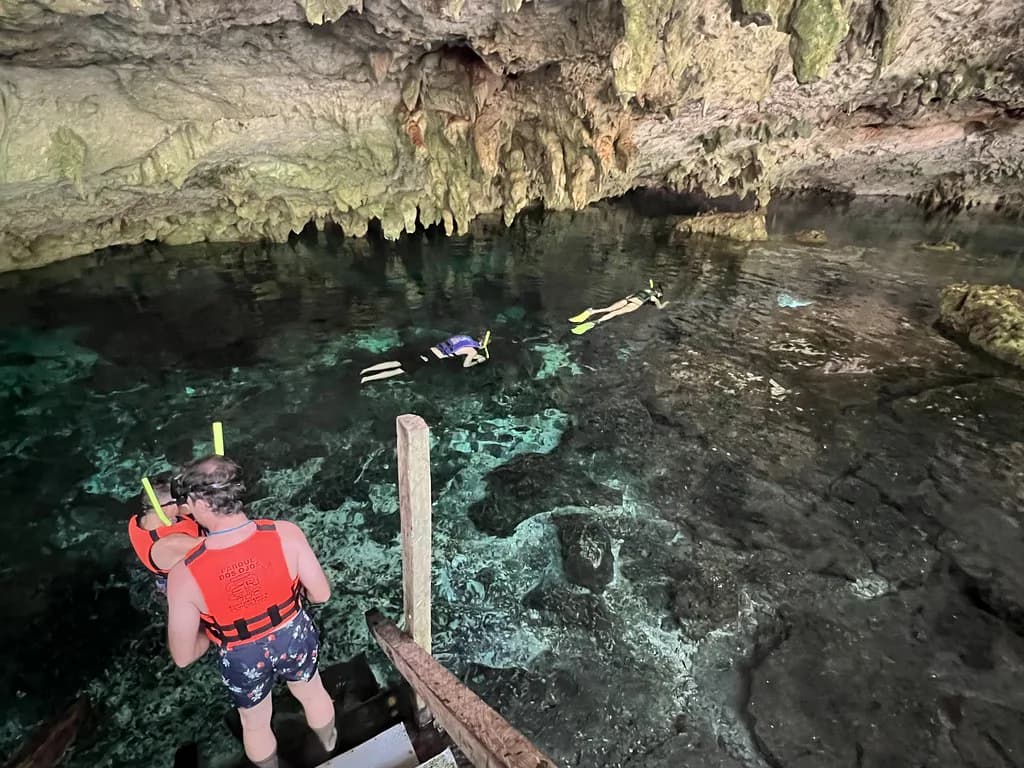
At Cenote Dos Ojos, just off the highway south of Akumal, you descend a long set of steps into the water rather than wading in from a beach. Two main platforms serve the pools, and the larger one on the left is where divers come and go, so it stays busy. The smaller platform is essentially a jump-off point with slippery stairs, which shapes how you plan your entry with kids.
Layout matters more than any online ranking. A pool with a shallow shelf and a wide entry suits a family with young children, while a cavern with deep water at the bottom of the stairs suits confident swimmers who are comfortable in shade and low light. Read the entry description before you commit, and treat an open-air pool as the safer default when the group's ability is mixed.
Getting In: Platforms, Stairs and Shelves
Think of entry as the single most practical choice you make. Platforms and stairs get you into deeper water without scrambling over rock, but wet stone steps are slick and you will want at least one hand free, so carry gear down in a bag rather than wearing fins on the stairs. Open shelves let you walk in gradually and keep your mask clear while you find your depth.
Dos Ojos is a diver-oriented site, and that shows at the water's edge. Divers in full kit move slowly on the steps, so snorkelers with children should give way and pick a quieter moment to descend. The reward is clear water, strong light shafts through the cavern openings and plenty of room once you are off the platform.
What You Will See Underwater
Expect small freshwater fish rather than a coral reef. They gather around the light and the rock ledges, and the main spectacle is geological: stalactites hanging from the ceiling, columns where formations meet the floor, and sunlight cutting through the water in visible beams. Keep your fins off the rock, because cave formations are fragile and break easily on contact.
Above the waterline the jungle rim is alive with the usual Yucatan wildlife, including iguanas and birds around the openings. At some sites the water is clear enough to watch divers descend into the dark tunnels below, which is worth a few minutes on its own.
Depth, Light and Diver Traffic
Depth determines what a cenote feels like. A shallow shelf keeps children within reach and lets you stand up between swims, while a deep cavern floor turns the same pool into a dark, quiet space where a light source makes the difference. Dos Ojos holds roughly 24 to 25 degrees Celsius (about 77 degrees Fahrenheit) year-round according to one published account, so a rash guard is often enough.
Cavern cenotes also mean diver traffic, and the etiquette is simple. Stay out of the marked descent lanes, do not follow divers into unlit passages, and stay near the surface where the light is. If a passage is too dark to see the far end, turn around; guided cavern snorkeling exists for the sites where an overhead environment requires supervision.
Cenotes Near Playa del Carmen and Tulum
Most snorkel-friendly cenotes cluster along Highway 307 between Playa del Carmen and Tulum, which makes a single day of driving or colectivo hopping realistic. Dos Ojos, El Eden, Gran Cenote and Rio Secreto all sit within that corridor, and several are close enough to Akumal Bay to pair a turtle snorkel with an afternoon in freshwater.
Dos Ojos is the classic cavern choice, with clear water and dramatic formations, and it sits a little south of Akumal. El Eden is the opposite proposition: an open pool with wide entry points, shallow shelves and clear sightlines into deeper water, which is why it works well for first-timers. Gran Cenote near Tulum is a compact snorkeling area that reviewers describe as full of turtles, with darker sections where a waterproof flashlight helps.
Rio Secreto is a guided underground river system rather than a casual swim stop, and it is usually booked as a tour. Smaller cenotes along the same road are often quieter, but they come and go as access changes hands, so pick your site on the day by asking locally which have water and open gates.
Open Cenote or Cavern: Which Suits You
Choose an open cenote if you want maximum light, an easy entry and the option to stand up. You give up the drama of stalactites and light shafts, but visibility is good from the surface and children can swim without an overhead ceiling.
Choose a cavern if you are a confident swimmer who is happy in shade and willing to stay near the surface and out of the diver lanes. Bring or rent a torch if you want to pick out formations, and accept that the best-looking passages may be beyond snorkeling depth.
Skill Level: Who Each Pool Suits
Cenotes are among the more forgiving places to learn, because there is no surf and no current pushing you along. Beginners and non-swimmers wearing a properly fitted life jacket can float over an open pool and watch the fish with a hand on the ledge. A guided tour adds a professional eyes-on-you element that is worth it for a first freshwater swim with children.
Kids tend to do fine in open cenotes and less well in cold, dark caverns, where the novelty wears off quickly. Keep groups small, keep the swim short and combine the cenote with a beach stop so nobody ends the day cold and unhappy.
Best Time to Go
Morning is the best window at almost every cenote. The light shafts are strongest, the water has not been stirred up by a morning of swimmers, and tour buses arrive later. The dry season from November to April brings clearer skies and calmer seas along this coast, while the wet season from May to October loads the afternoons with rain; one published guide advises snorkeling in the morning for that reason.
Weekends and Mexican holidays bring local families, and the most famous cenotes fill between mid-morning and mid-afternoon. Arriving at opening time is the simplest way to get a quiet pool, and it also leaves the afternoon free for a reef or beach swim.
Getting There from Playa del Carmen
By car, head south on Highway 307 and watch for the signed gravel turnoffs; Dos Ojos is reached by a marked gravel road of a couple of kilometers before you park outside the main gates. A rental car is the most flexible option for linking several cenotes in one day, and it lets you arrive before the tours.
By public transport, colectivos run down Highway 307 and drop you on the roadside, which may leave a walk of a kilometer or more to the cenote itself. Taxis are quicker but cost far more, and you should agree the fare before setting off.
Where a highway entrance sells tours, be clear about which cenote you are buying into. Gate-side sellers sometimes route visitors to other pools in the same complex rather than the one you came for, so name the site at the ticket window.
Fees and Facilities
Entrance fees vary by cenote and have risen sharply over the years, so treat any figure you read online as a starting point rather than a fixed price. At Dos Ojos one published account records a 350-peso adult admission that included a life jacket, with snorkeling gear available to rent for around 100 pesos extra and children under six admitted free. Confirm the current rate at the gate before you pay.
Facilities at the better-known sites usually include changing rooms, lockers, toilets and a snack counter, and Dos Ojos is described as having all of these plus freshwater for rinsing gear. Lockers mean you can leave dry clothes and phones behind while you swim.
Rules: Sunscreen, Formations and Wildlife
Freshwater cenotes are sensitive to sunscreen residue, and environmentally safe products are the norm; wearing a long-sleeve rash guard reduces how much you need in the first place. Do not touch the cave formations, since they are fragile and break easily under a fin stroke.
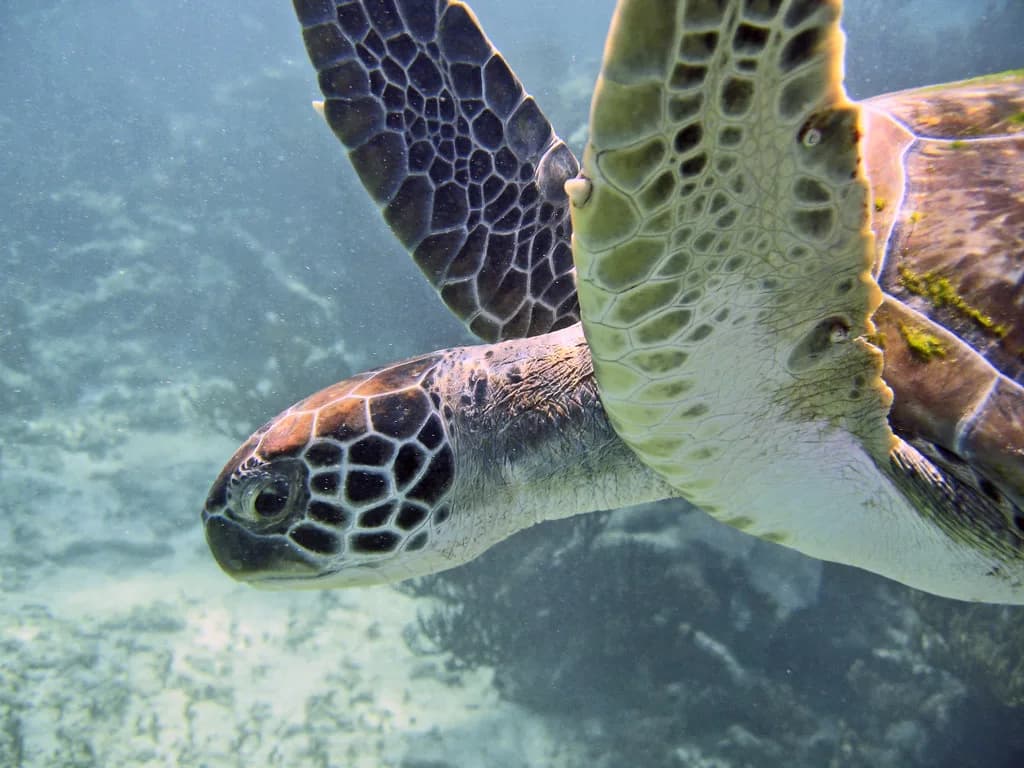
Where a cenote connects to a coastal reserve, the wildlife rules follow the sea. Guided snorkeling in Akumal Bay, for example, is limited to designated circuits with patrols on the water, and the published turtle distance is about 15 feet (4.5 meters) with touching forbidden.
Combining a Cenote with a Reef Day
The classic Riviera Maya day pairs a morning cenote with an afternoon on the reef or a beach. Coral snorkeling in the area benefits from the same early start, since visibility drops once the sand is stirred up, and combining the two gives you a freshwater and saltwater experience without repeating a long drive. If you want to compare this freshwater-and-reef combination with other warm-water destinations, snorkeling in Belize offers a similar pairing of inland and reef sites.
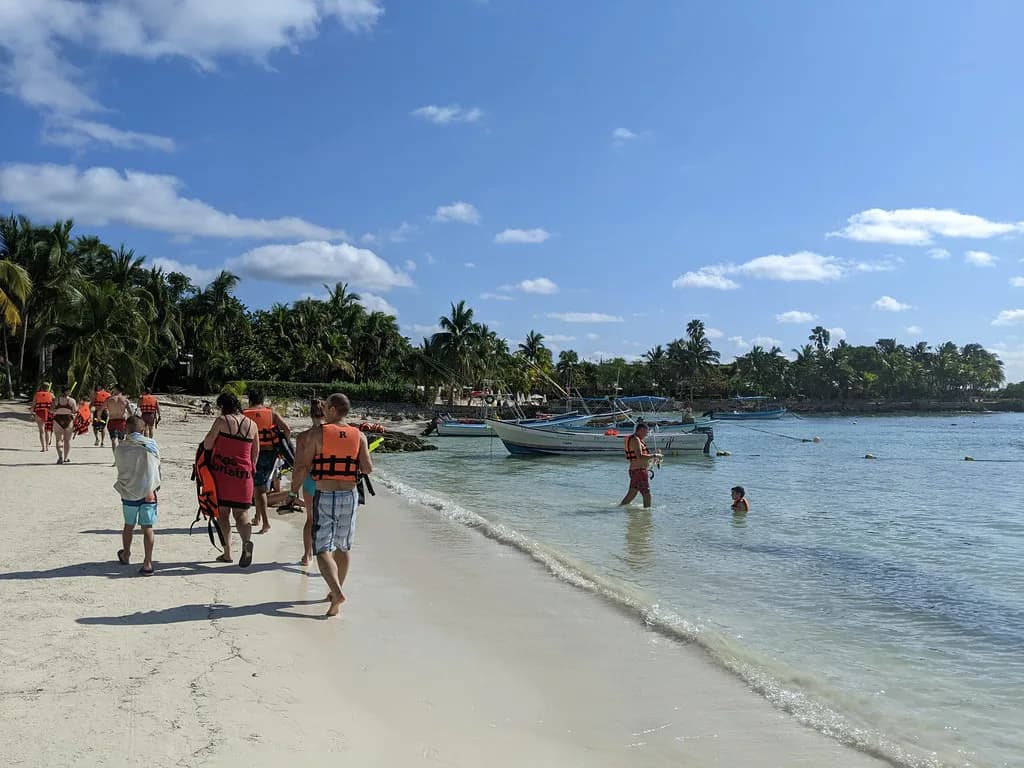
If you are based in town, Playacar Beach is a straightforward afternoon option with reef life close to shore, and Akumal is the pick for turtles on another day. Check the beach flag system before shore snorkeling and treat a cenote as the fallback when the coast is rough.
What to Bring
Pack a rash guard and quick-dry shorts, a towel and a full change of clothes, plus water shoes if the entry is rocky or the stairs are slick. Bring your own mask if you own one that fits, since rental gear is basic and a leaking mask spoils a short swim.
A waterproof flashlight is genuinely useful in cavern cenotes, and a dry bag keeps phones safe near the water. Leave fins in the bag on the stairs, and carry a refillable water bottle rather than relying on the snack counter.
Where to Stay
Playa del Carmen makes the most practical base for cenote hopping, since Highway 307 runs straight south and you can reach the main turnoffs in under an hour. Staying near the highway side of town cuts your morning drive and gets you to the gate before the tours.
Tulum puts you closer to the cluster of cenotes around Gran Cenote and the Tulum-side ruins, at the cost of a longer trip to Akumal and the reefs further north. Pick your base by which half of the corridor you want to snorkel most.
Plan Your Cenote Day
Choose an open cenote for a first freshwater swim, a shallow shelf for children and a cavern for confident swimmers who want light shafts and formations. Start early, bring your own mask, and leave fins off the stairs.
Ask at the ticket gate what the current entrance fee covers, including life jackets and gear rental, since published figures go out of date quickly. Pair the cenote with a reef swim in the afternoon and you get both sides of the Riviera Maya in one day.
Frequently Asked Questions
Which cenote is best for snorkeling rather than diving?
Open-air cenotes such as El Eden are the most snorkel-friendly, with wide entries, shallow shelves and clear sightlines into deeper water. Dos Ojos is a well-known cavern site but is primarily a diver destination, so snorkelers share the steps with divers.
Do you need a guide to snorkel in a cenote?
Some cenotes are visited independently, while others operate as guided tours, and the arrangement varies by site. Guided options are the simplest route for beginners and families with children, since gear and supervision come together.
Are cenotes good for beginners and kids?
Yes, especially open pools with a shallow shelf and no current. A properly fitted life jacket and a short swim near the entry make it manageable for non-swimmers. Caverns with deep water and low light are tougher for young children.
What should you wear and bring for cenote snorkeling?
A rash guard, quick-dry shorts, a towel and a change of clothes cover the basics. Bring your own well-fitting mask, water shoes for slick stairs and a waterproof flashlight if you plan to look into a cavern.
What is the water temperature in a cenote?
One published account puts Cenote Dos Ojos at roughly 24 to 25 degrees Celsius, about 77 degrees Fahrenheit, year-round. Freshwater feels cooler than the sea, so a rash guard is useful even on a hot day.
Can you combine cenote snorkeling with reef snorkeling in one day?
It is a common pairing along this coast: a morning cenote followed by an afternoon reef or beach swim. Start early so the cenote is quiet and the reef still has good visibility before the sand gets stirred up.
How do you get to the cenotes from Playa del Carmen?
Drive south on Highway 307 and follow the signed gravel turnoffs, or take a colectivo and walk in from the roadside. Taxis are faster but cost far more, so agree the fare first.
What sunscreen should you use in a cenote?
Use an environmentally safe, biodegradable product and wear a rash guard to cut down how much you apply. Cave formations should not be touched, and fins should stay clear of the rock.
Sources
Snorkeling notes for your next trip
Optional updates to our snorkeling guides.
You might also like
Continue reading
More guides you'll find useful