Snorkeling in Turks and Caicos: Best Spots by Island
Snorkeling in Turks and Caicos means two shore reefs on Providenciales and boat trips everywhere else. Here is where to get in, what you will see, and when to go.
On this page
Turks and Caicos rewards snorkelers with two very different kinds of water. On Providenciales you can walk off Grace Bay into a living reef within a few minutes, while the outer islands hold some of the region's best coral but demand a boat to reach it. Knowing which side of that divide suits your group is the single most useful planning decision. The beaches are public and the water is clear, but the entry surfaces, currents, and what you will actually see vary sharply from one site to the next.
Think of the country as two reef systems. The Caicos Islands sit behind a long barrier reef that Visit Turks and Caicos calls second to none in the region, while Grand Turk and Salt Cay face the deep Turks Island Passage, a channel that funnels migrating humpback whales past the islands in season. That geography explains why shore snorkeling is concentrated on Provo and why most other islands are boat destinations.
Why Turks and Caicos Rewards Snorkelers
The Caicos group is ringed by an extensive barrier reef, and the water inside it is shallow enough in places to explore from the beach. The Turks Islands group, by contrast, drops quickly into deep water, which is why Grand Turk and Salt Cay see more pelagic life and fewer easy shore entries. If your priority is walking into the water from the sand, base yourself on Providenciales, which has the finest shore reefs in the country. If you want big reef walls and the chance of whales, plan a boat day off Grand Turk.
Visibility and reef health vary by site and season, and the country's reefs have recovered unevenly from past hurricane damage. Some Provo reefs still show bleached or dead coral alongside healthy heads, so pick your entry point with that in mind. The outer barrier reef generally offers clearer water and better-defined coral formations than the fringing reefs close to shore.
The Two Beach-Entry Reefs on Providenciales
Provo has two shore snorkeling sites that matter: Bight Reef, also called Coral Gardens, and Smith's Reef. Both sit off Grace Bay and are freely accessible because all beaches in the country are public. They are not interchangeable. Bight Reef is the more structured, roped site with a sandy approach, while Smith's Reef is a patch reef over seagrass with a rockier entry and a wilder feel.
If you only have one morning on the island, Bight Reef is the easier introduction and Smith's Reef is the better second swim. For a deeper look at each layout, the Bight Reef (Coral Gardens) Snorkeling Guide, Providenciales walks through the roped area buoy by buoy, and Smith's Reef Snorkeling covers the rocky entry and outer reef in detail.
Bight Reef (Coral Gardens): Layout and Entry
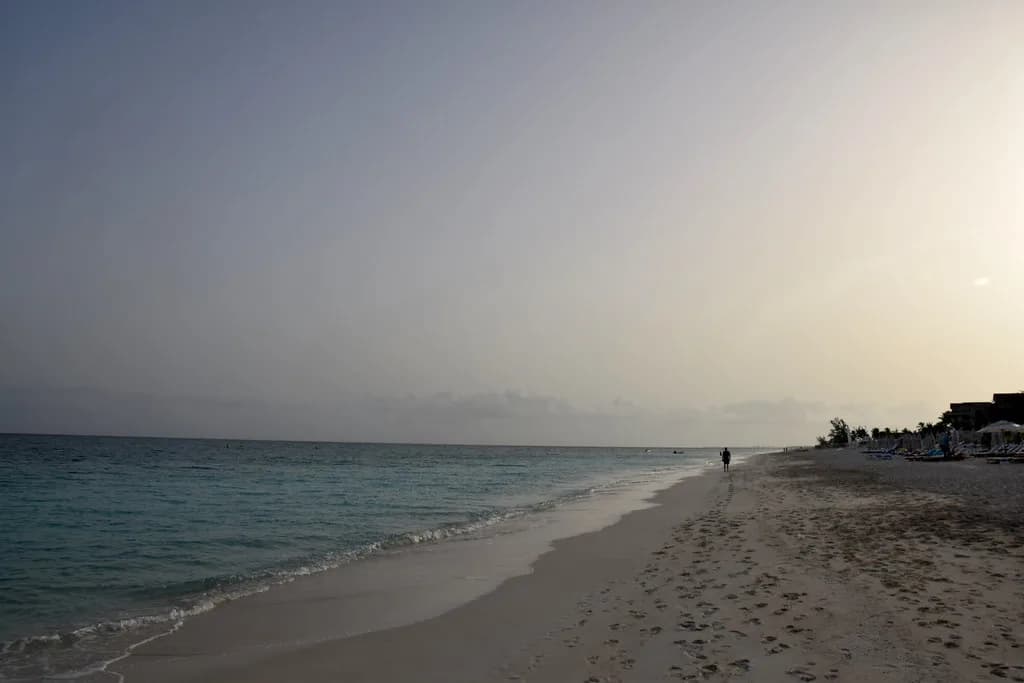
Bight Reef sits directly off the Coral Gardens resort on Grace Bay, and you enter from the sand. The reef is partly roped off to let coral regenerate, so you snorkel the edges and the deeper water outside the buoys rather than cutting across the top. The roped section is shallow and the coral heads rise close to the surface, which makes the outer edge the more interesting swim.
Expect a mild current along the rope line, and plan your exit before you enter so you are not fighting it back to your towel. The sandy beach makes this the most family-friendly entry on the island, and the shallow roped area is a good place for new snorkelers to get comfortable before moving outward. Boats occasionally pass close to the reef, so keep your head up when you surface.
Smith's Reef: Rocky Entry and Patch Reef
Smith's Reef lies at the western end of Grace Bay near the Turtle Cove marina, and the entry is rockier and less forgiving than Bight Reef. The reef itself is broken into patches separated by seagrass, so finding the good coral takes some searching. The outer reef is where the structure and fish life concentrate, and it is also where turtles are most often seen.
The trade-off is real: Smith's feels wilder and less crowded, but the rocky shore and occasional chop make it a poorer choice for small children or nervous first-timers. Strong swimmers who do not mind a careful entry get a more natural reef and a better chance of spotting green turtles grazing on the seagrass. Go early in the day when the wind is usually lighter and the water calmer.
Skill Level: Which Provo Reef Suits Your Group
Beginners, kids, and anyone who wants an easy float should start at Bight Reef. The sand entry, shallow roped area, and short swim to coral make it the most forgiving site on Provo. Families with young children can stay inside the roped shallows and still see plenty of fish without committing to deeper water.
Smith's Reef is better suited to confident swimmers who can handle a rocky entry and a longer swim over seagrass to reach the outer reef. If your group is mixed, split the day: Bight Reef in the morning for the less experienced, then Smith's in the afternoon for the stronger swimmers. Neither site is a substitute for a boat trip if you want the barrier reef's big formations.
What You Will See
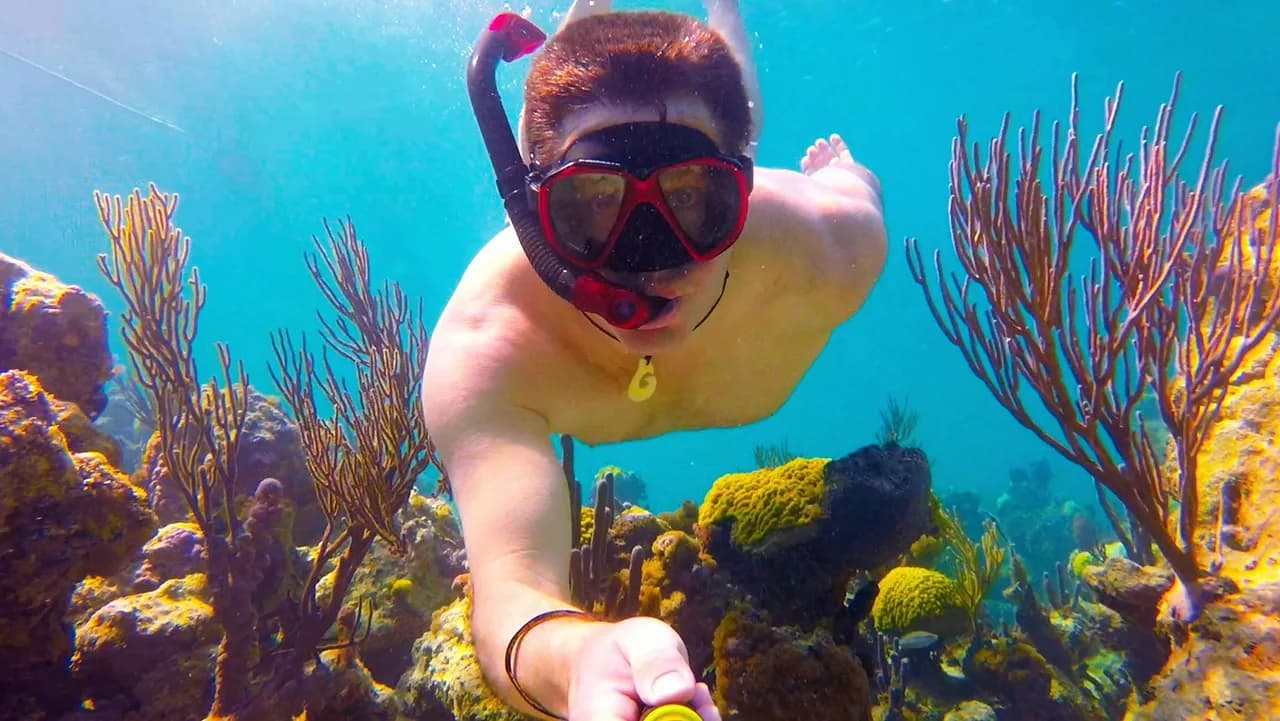
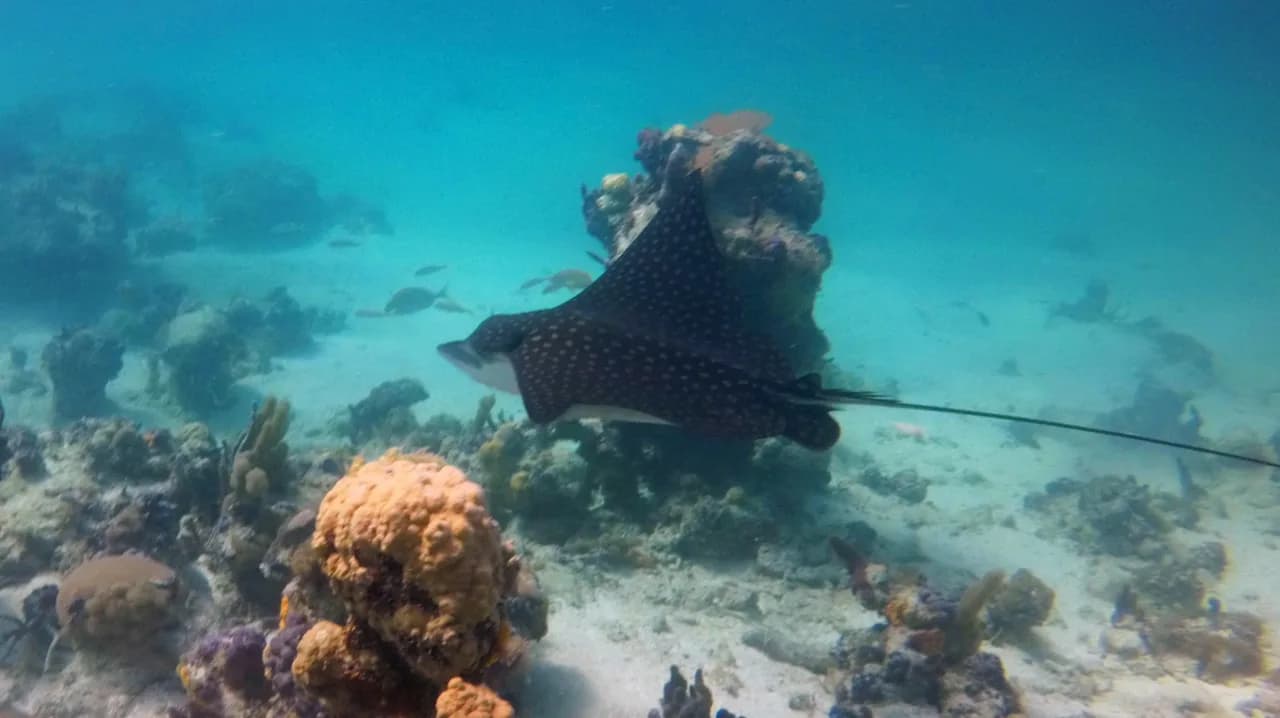
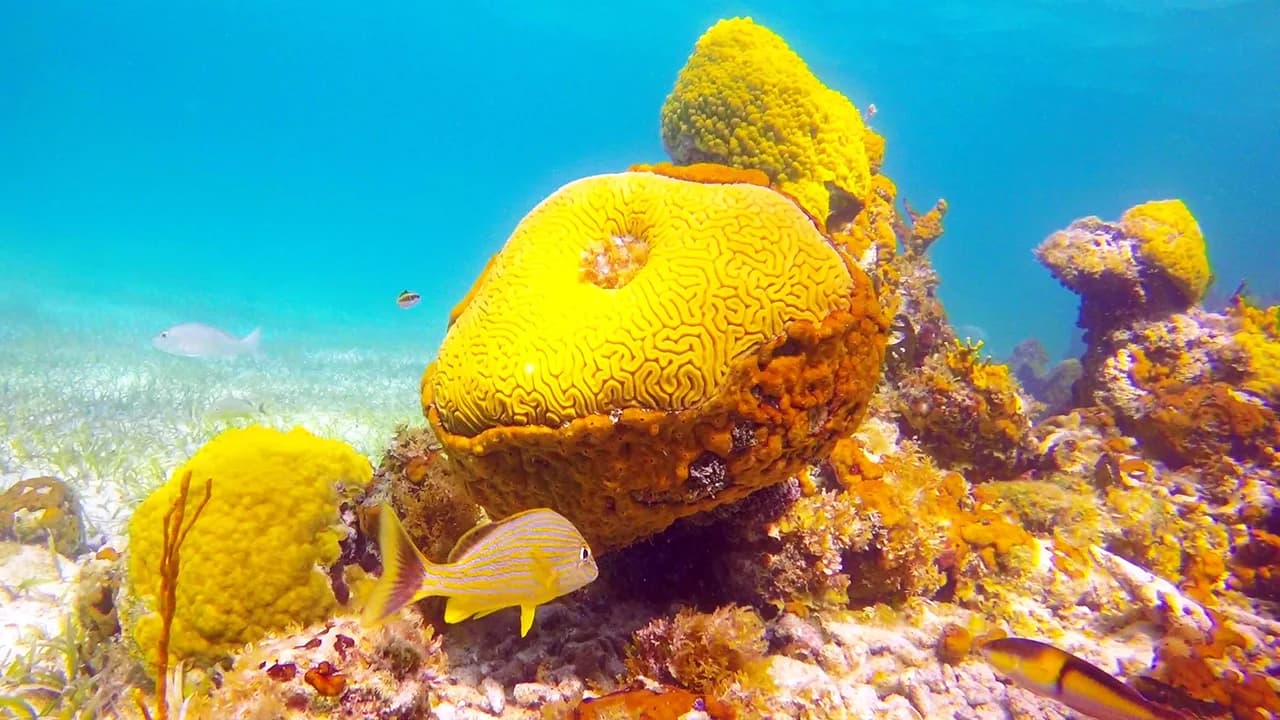
The shallow reefs around Provo hold a dense cast of Caribbean fish. Expect French grunts schooling over the coral, parrotfish scraping at the reef, queen angelfish and trumpetfish working the edges, and barracuda hanging in the blue just beyond the structure. Spiny lobster and eels tuck under ledges, and eagle rays and nurse sharks are possible on the sand flats.
Green turtles are the signature sighting at Smith's Reef, where they feed on the seagrass beds between the coral patches. Bight Reef also produces turtles along with the usual reef fish. On the Turks Islands side, humpback whales pass through the Turks Island Passage, so a boat day off Grand Turk in the right season gives you a chance, though never a guarantee, of seeing them.
Best Time of Day and Season
On Provo, the trade winds pick up through the day, so early morning usually offers the calmest water and the best light for spotting fish. Afternoon wind can chop the surface at Smith's Reef in particular, making the rocky entry harder. The winter months bring the trade winds and the whale season in the Turks Island Passage, while summer tends to be hotter and calmer on the Caicos side.
There is no single best month, but the general pattern is calmer mornings, windier afternoons, and a winter season that favors boat trips to the outer reefs and the Turks Islands. If you are planning around a specific site, ask your boat captain or dive shop what the current conditions are before you commit. One check with a local dive shop the day before is usually enough.
Boats Versus Beach on Provo
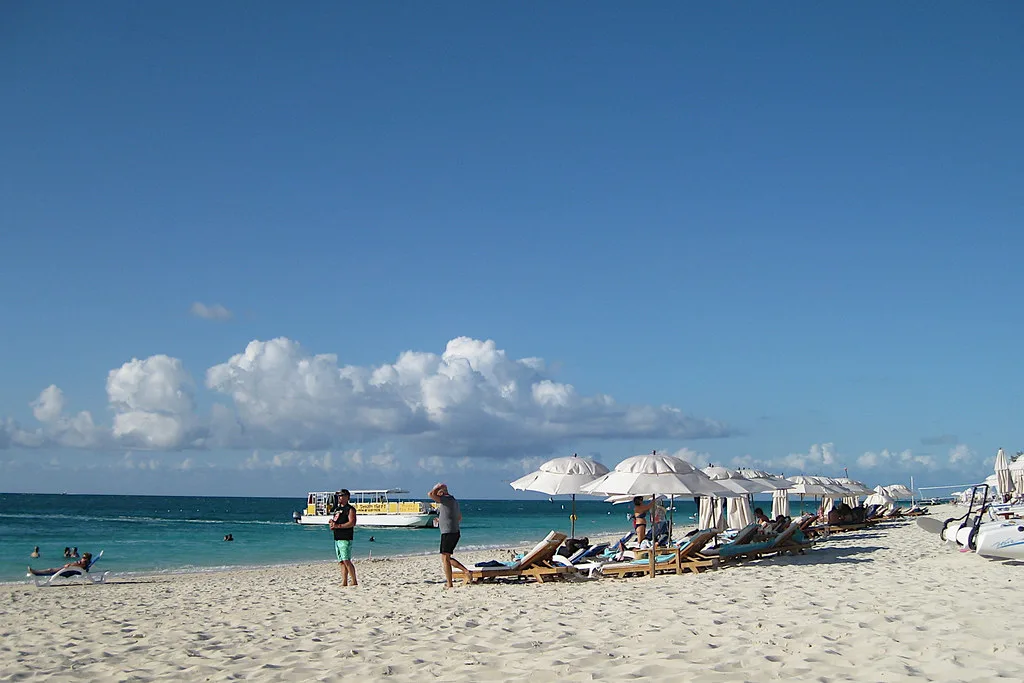
A good snorkeling cruise usually beats a shore reef for sheer reef quality. Visibility is generally better offshore, the coral formations are more defined, and your odds of seeing larger animals improve. The trade-off is cost and schedule: a beach entry is free and flexible, while a boat locks you into a departure time and a route.
Dedicated snorkel trips run by dive companies tend to deliver more time in the water than combination beach-and-snorkel cruises, which split the day between swimming and sand. Many cruises include complimentary gear, but quality varies, so bring your own mask and fins if you have them. If you want to see the barrier reef properly, book a dedicated trip rather than a party cruise.
Grand Turk: Boat Territory
Grand Turk has excellent reefs, but they are not easily reached from the shore. Aside from a simple rock patch, a boat cruise is the practical way to explore the island's underwater terrain. That makes Grand Turk a boat-first destination rather than a shore-snorkel base, and it is the right island for travelers who want reef walls and the chance of whales rather than an easy beach entry.
Grand Turk's position beside the deep Turks Island Passage is the reason to go. The channel funnels migrating humpbacks past the island, and the reefs offshore are healthy and varied. Book a snorkel cruise rather than expecting to walk in from the beach, and plan your day around the boat's schedule.
North and Middle Caicos: Mudjin Harbour and Conch Bar Beach
On North and Middle Caicos, Mudjin Harbour and Conch Bar Beach sit close to the vibrant barrier reef, but the ocean conditions at both are often too rough for comfortable snorkeling. Three Marys Cays is usually calmer and offers a bit of reef, though it is limited in size and variety. Treat these as fair-weather options rather than reliable shore entries.
If you are staying on North or Middle Caicos, use Three Marys Cays for an easy swim and save the bigger reef ambitions for a boat or a day trip back to Provo. The crossing between the islands adds time, so plan your snorkeling around where you are sleeping rather than trying to cover both groups in one day.
Salt Cay: Cockburn Town Beach and North Bay
Salt Cay is a small island with several small but interesting snorkeling sites. Cockburn Town Beach offers a sheltered coast that is interesting to explore even if the reef is not the most vibrant. North Bay is more exposed to the constant east-southeast trade winds and holds many small reefs, so pick your side according to the wind on the day.
Salt Cay suits travelers who want quiet water and do not mind modest reef. The trade winds dictate the day's best side, so check the wind direction before you set out. A boat trip is still the way to reach the island's better coral, and the Turks Island Passage puts whales within reach on the right day.
Northwest Point and Malcolm Roads: Remote Provo Reefs
Northwest Point and Malcolm Roads hold some of Provo's healthiest reef, but getting there is the trade-off. The reefs at Northwest Point start well offshore and the coast is exposed, while Malcolm Roads Beach sits at the end of a rough dirt road. Both are worth the drive for strong swimmers who want better coral than the Grace Bay shore reefs offer.
Plan these as half-day trips rather than quick stops. The entry at Northwest Point is over rock and reef, so wear booties and enter carefully. Go with a buddy, carry water, and tell someone where you are parked, because the beaches here are remote and unguarded.
Gear: Renting, Buying, and Bringing Your Own
Bring your own mask and snorkel if you can. Visit Turks and Caicos recommends visiting a dive shop in person for a proper fit, and prices locally tend to run a bit higher than equivalent gear in the USA. Provo has the widest selection of shops, and the Dive Provo shop at Saltmills Plaza carries a strong range. Grand Turk has a decent selection, with dive shops offering better gear than gift shops, while the other islands have limited or no snorkel gear for sale.
Most dive shops across the country rent snorkeling gear, so you can travel light if you prefer. Rental gear is fine for a single beach day, but for a week of boat trips and shore swims it pays to own a mask that fits your face. A rashguard is worth packing alongside the mask, and it doubles as sun protection.
Rules and Reef Etiquette
The rules are simple and they are enforced by the reef itself. Do not touch or stand on coral, and do not let your fins or gear brush the reef, because contact kills the living animal. Do not take shells, sand dollars, sea urchins, starfish, or pieces of coral, and do not feed or chase any sea life.
Keep a respectful distance from turtles, rays, and sharks, and let them come to you rather than swimming after them. The roped area at Bight Reef is a regeneration zone, so stay outside the buoys. These practices protect the reef for the next visitor and keep your own swim safer.
Reef-Safe Sunscreen and Rash Guards
Sunscreen residue harms coral, so use reef-safe biodegradable lotion and apply it sparingly before you get in. A rashguard is the better answer for long snorkel days because it removes the need to reapply sunscreen over the water. Pair it with a hat and sunglasses for the boat ride out.
Avoid heavy lotions on the day you snorkel, and rinse off before entering the water if you have already applied sunscreen. The reef responds quickly to reduced chemical load, and the habit costs you nothing.
Combining Spots and Structuring Your Day
Base on Provo if you want shore snorkeling and easy logistics. You can pair Bight Reef in the morning with Smith's Reef in the afternoon, or use a boat day to reach the outer reef and Northwest Point on a separate day. If you are staying on Grand Turk, plan a boat trip rather than a beach swim, and add a whale-watching cruise if you are visiting in the right season. If you are weighing this base against another Caribbean shore-snorkeling destination, our guide to snorkeling in Belize covers the same shore-versus-boat decision.
A sensible Provo day starts early at one reef, breaks for lunch, and finishes at the other. Boat days work best when booked a day ahead so you can pick the calmest window. Either way, leave room for a second swim; the reefs look different as the light changes.
Who Should Base on Provo and Who Should Book a Boat
Provo is the right base for families, first-time snorkelers, and anyone who wants to walk off the beach into the water. It has the country's only well-developed shore reefs along with the widest choice of shops, restaurants, and rentals. Grand Turk and the outer islands suit travelers who are happy to book a boat and want bigger reef and the chance of whales.
If your group is split, spend two or three nights on Provo for shore snorkeling, then move to Grand Turk or Salt Cay for a boat day. That combination gives you both the easy beach swim and the barrier reef without expecting one island to do everything.
Plan Your Snorkel Day
Turks and Caicos snorkeling comes down to a simple choice: shore reefs on Providenciales or boat reefs everywhere else. Bight Reef is the easiest entry and the best first swim, Smith's Reef is the wilder second option for confident swimmers, and the outer islands reward a boat trip with better coral and the chance of whales. Pick your base around that split and the rest of the day falls into place.
Pack a rashguard, reef-safe sunscreen, and your own mask, then book a boat a day ahead if you want the barrier reef. Ask a local operator about conditions before you commit to a remote site, and give the reef the same care you would give any living thing. Do that and Turks and Caicos delivers some of the most accessible reef snorkeling in the Caribbean.
Explore more Turks and Caicos snorkeling
Frequently Asked Questions
Is snorkeling good in Turks and Caicos?
Yes, but the experience differs by island. Providenciales has two accessible shore reefs, Bight Reef and Smith's Reef, that suit beginners and families. The outer islands hold stronger reef but generally require a boat trip to reach it.
Which island has the best shore snorkeling in Turks and Caicos?
Providenciales, by a wide margin. Bight Reef offers a sandy entry and roped coral, while Smith's Reef gives a rockier, wilder swim over patch reef and seagrass. Other islands rely on boat access.
Can you snorkel from the beach on Providenciales?
Yes. Bight Reef and Smith's Reef both sit off Grace Bay, and all beaches in the country are public. Bight Reef has the easier sand entry; Smith's Reef requires more care over rock.
Do you need a boat to snorkel on Grand Turk?
For anything beyond a simple rock patch, yes. Grand Turk's reefs are not easily reached from shore, so a snorkel cruise is the practical choice. The island's position by the Turks Island Passage also gives a chance of seeing humpback whales in season.
What will I see snorkeling in Turks and Caicos?
Expect French grunts, parrotfish, queen angelfish, trumpetfish, barracuda, spiny lobster, and eels on the Provo reefs. Green turtles are most often seen at Smith's Reef, and eagle rays and nurse sharks are possible on the sand flats.
When is the best time to snorkel in Turks and Caicos?
Mornings are usually calmest on Provo, before the trade winds build. Winter brings windier boat conditions but also the humpback whale season in the Turks Island Passage, while summer tends to be calmer on the Caicos side.
Should I bring my own snorkel gear or rent on the islands?
Bring your own mask and snorkel if you have them. Provo has the widest selection of dive shops for fitting and rental, Grand Turk has a decent range, and the smaller islands have limited gear for sale.
Sources
Snorkeling notes for your next trip
Optional updates to our snorkeling guides.
You might also like
Continue reading
More guides you'll find useful