Kapalua Bay Snorkeling: Right-Side Reef, Entry and Parking
Kapalua Bay snorkeling is calm, sandy and beginner-friendly. Enter left for the gentlest bottom, then work the right rocky point for coral and fish.
On this page
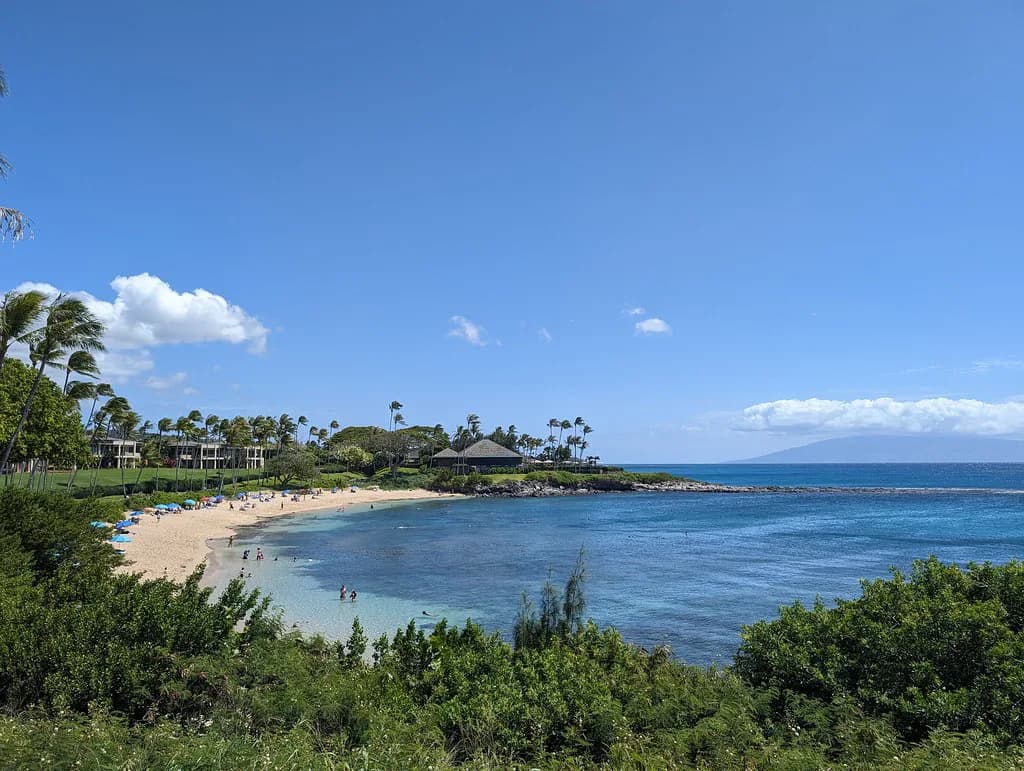
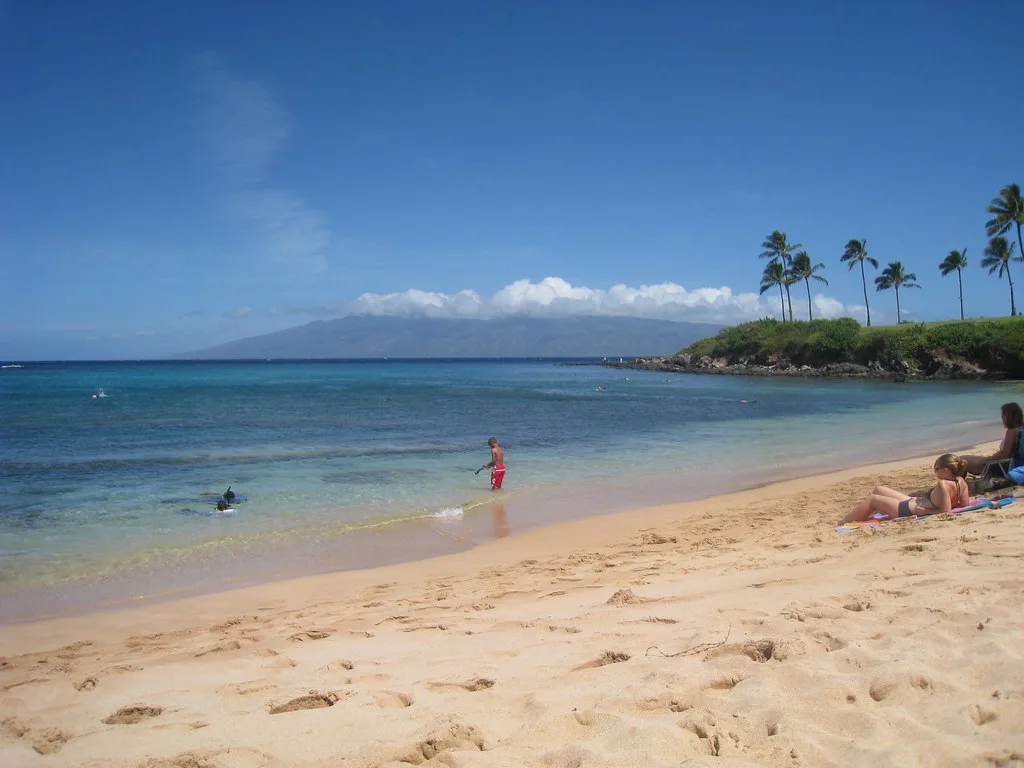
Kapalua Bay is a small crescent of sand on Maui's west shore where the water starts at wading depth and the reef sits within an easy swim of the beach. That combination makes it one of the most forgiving places on the island to learn, and also a genuinely rewarding stop for anyone who wants turtles and reef fish without booking a boat.
The layout is simple once you see it: two rocky arms wrap the sand, the middle stays shallow and mostly empty, and the coral and fish concentrate along the right-hand point. Families tend to stay left and close; stronger swimmers head right and follow the rocks.
Why Kapalua Bay Suits Beginners and Families
Two natural reef arms shelter the bay, so the water inside stays gentler than the open coast and the bottom begins at roughly two feet deep. The gradation is gradual, which means a nervous first-timer can stand, adjust a mask and try again without swimming out of comfort range.
It is a compact bay, not a long beach, so you can read the whole scene from the sand and pick your side before you get wet. That matters with kids: you can point out the calm left corner and the rockier right point and decide together which swim suits the group.
Getting There and Where the Beach Sits
From South Maui, the drive runs north on Highway 30 past Lahaina and Ka'anapali, then turns onto Napilihau Street into the Kapalua and Napili area; follow it to the end and turn right onto Lower Honoapiilani Road. The parking entrance is marked by a Kapalua Resort sign and a yellow fire hydrant, and the beach is a short walk from the lot.
The bay sits just south of Napili, which makes it easy to pair with a second swim or a meal in the same outing. Allow 45 to 60 minutes from Kihei or Wailea depending on traffic, and plan to arrive early rather than racing the lot before a mid-morning swim.
Getting In
Enter on the left-hand side of the bay as you face the ocean, where the sandy bottom is broadest and the water is calmest. Wading in barefoot works well, but keep an eye out for the occasional rock mixed into the sand, and walk to the stretch you intend to snorkel before you get wet.
Wade out until you can float, then put your fins on in the water; walking over uneven ground with fins on is how ankles and fin straps get damaged. If you want the right-hand reef, walk to the end of the beach nearest the rocky point and enter there instead of finning across the whole bay.
Right Side vs. Left Side
The right arm holds the healthier coral and the greater variety of fish, with visibility that improves the farther out you swim along the rocks. The trade-off is a rockier entry and less forgiving water, so it rewards confident swimmers more than first-timers.
The left arm is the easier swim and the better choice with children, but expect fewer corals and often murkier water because that side takes more of the prevailing wind and wave direction. Many snorkelers work the left only about 500 feet out, even though the point itself sits roughly 1,000 feet from the sand.
Depth and Layout
Depth runs from about two feet at the shoreline to 15 to 20 feet along the rocky points, so the bay covers both a stand-up session and a proper reef swim. The sandy center stays shallow and calm but holds little coral, and it clouds quickly once the wind picks up.
Use the points as your turn-around markers: about 900 feet from the beach on the right and roughly 1,000 feet on the left. Past those tips the protection of the bay ends and stronger currents and rougher water take over, so swim back toward the sand instead of rounding the point.
What You Will See
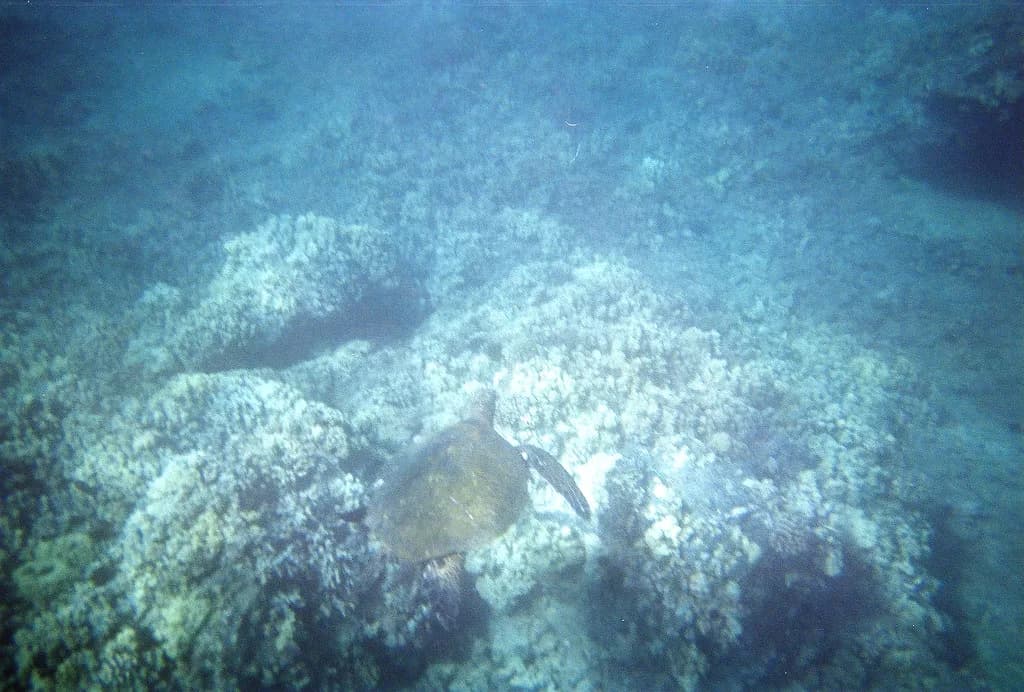
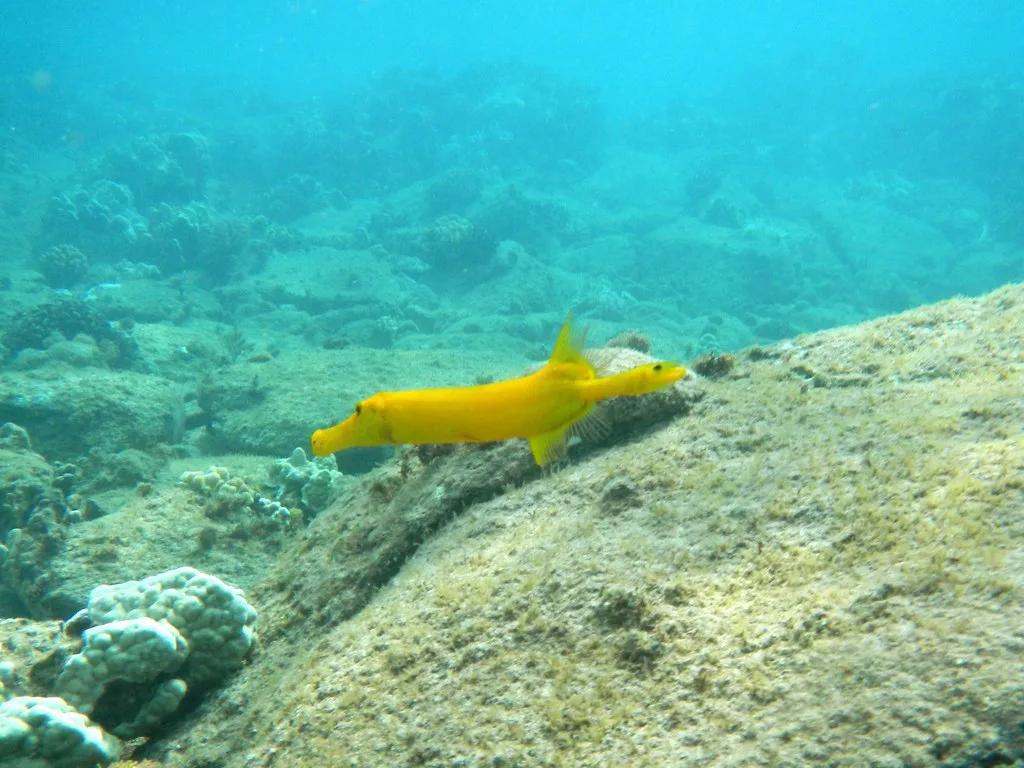
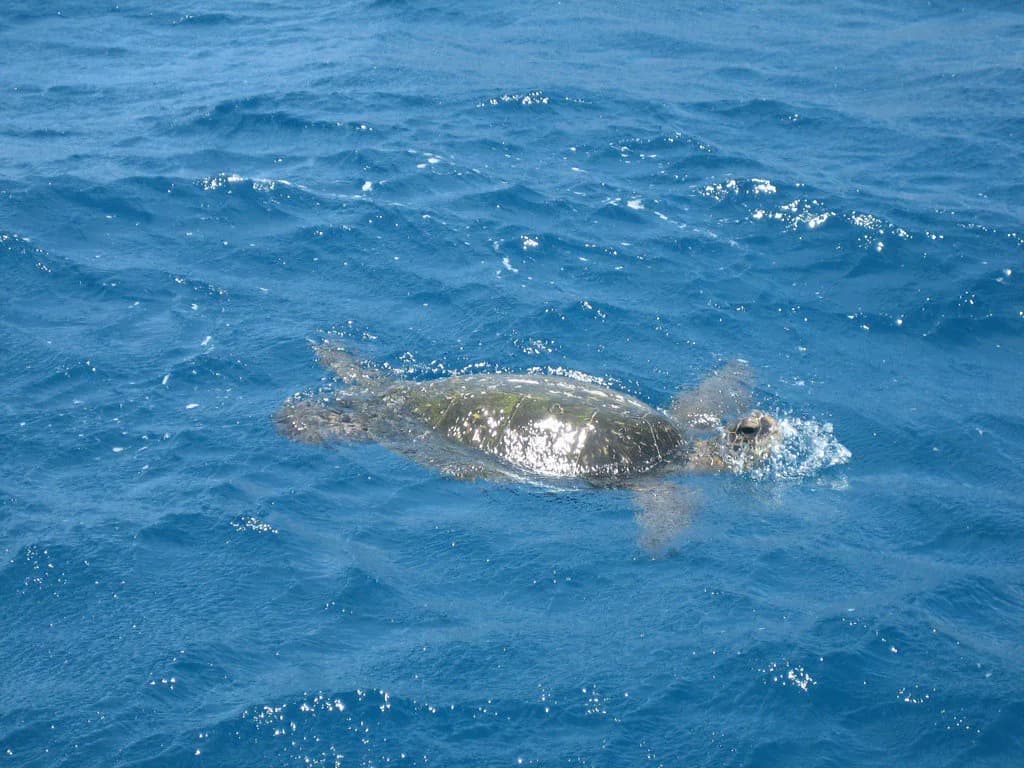
Hawaiian green sea turtles are regular residents, often seen gliding over the reef or grazing on algae, though a sighting is never guaranteed. Reef fish are the reliable draw: Moorish idols, triggerfish including the humuhumunukunukuāpuaʻa, butterflyfish in pairs, parrotfish scraping algae, yellow tangs and unicornfish.
Coral along the bay includes antler, cauliflower and lobe types, and patient snorkelers sometimes turn up an octopus or a spotted eagle ray. Smaller life rewards a slow pace too: sea cucumbers and several kinds of urchins sit among the rocks and rubble.
Keep the viewing distances in mind while you watch. Stay at least 10 feet from sea turtles in the water and on land, keep 50 yards from spinner dolphins within 2 nautical miles of the main islands, and give humpback whales 100 yards in every direction during their December-to-April season.
Where the Fish Concentrate
Hug the rocky edge on the right and the reef improves as you go: coral heads get larger, fish gather along the structure, and the water clears. The stretch closest to shore looks fairly bare at first, so don't judge the swim from the first minute.
On the way back in, look for the band of mostly rock running parallel to the beach in 3 to 5 feet of water, where small fish congregate. That shallow strip is a good option for nervous swimmers and kids who want to stay within sight of the sand.
Best Time to Go
Mornings are the reliable window, before the trade winds build and while the water is at its calmest and the beach is quietest. Summer generally brings the gentlest ocean, which helps if you are introducing children to snorkeling.
Winter changes the picture: north swells from December through April can make the bay rough and unsuitable, particularly for beginners. Because the bay is fairly protected from the usual trade winds, an afternoon swim can still work when the wind is up, but a building north swell is the signal to pick another spot or another day.
Hazards to Expect
Currents strengthen near the tips of both arms, especially with a larger swell running, which is why the points work as turn-around markers rather than goals. The right side also has sharp rock at the entry, so water shoes or careful footwork help on the way in and out.
Wind chop is the other common nuisance: the sandy center turns cloudy first, cutting visibility even while the water stays shallow. Snorkel with a buddy, watch where other swimmers and any boats are, and stay aware of how far you have drifted from your entry point.
Parking and Facilities
The public lot is small and fills fast, so aim to arrive well before 8 a.m. on busy days. Parking in that lot has been reported at roughly $29 per day, but rates change, so check the current fee with the Kapalua Bay Beach Crew or Kapalua Resort before you budget on it.
If the lot is full, limited street parking along Lower Honoapiilani Road may be available. Restrooms and outdoor showers sit at the beach, and a beach crew kiosk near the sand sells limited snacks and beverages and rents snorkel gear for short sessions.
For multi-day trips, renting from a shop outside the bay usually gives a better fit and value than a same-day beach rental. Bring water, a towel, sun protection and reef-safe sunscreen; food options at the bay itself are limited.
For a rental stop before you drive out, gear shops around West Maui stock snorkel sets and beach equipment, and picking up gear the evening before lets you reach the lot early.
Rules and Sunscreen
Maui County restricts sunscreen to mineral formulas containing zinc oxide or titanium dioxide; non-mineral products are not permitted for sale, distribution or use without a prescription. Plan to buy your sunscreen before the trip so you are not caught out on the sand.
Do not touch, stand on or collect coral, and never feed, chase or pursue marine animals. Watch turtles and dolphins from the surface at the distances above, and pack out everything you bring to the beach.
Who It Is For
Kids and first-timers belong on the left, with the sandy entry, the shallow band near the beach and an easy exit close at hand. Strong swimmers and repeat visitors get more from the right point, where the coral is healthier and the fish more varied, as long as they respect the turn-around and the rockier entry.
Nearby Spots to Combine
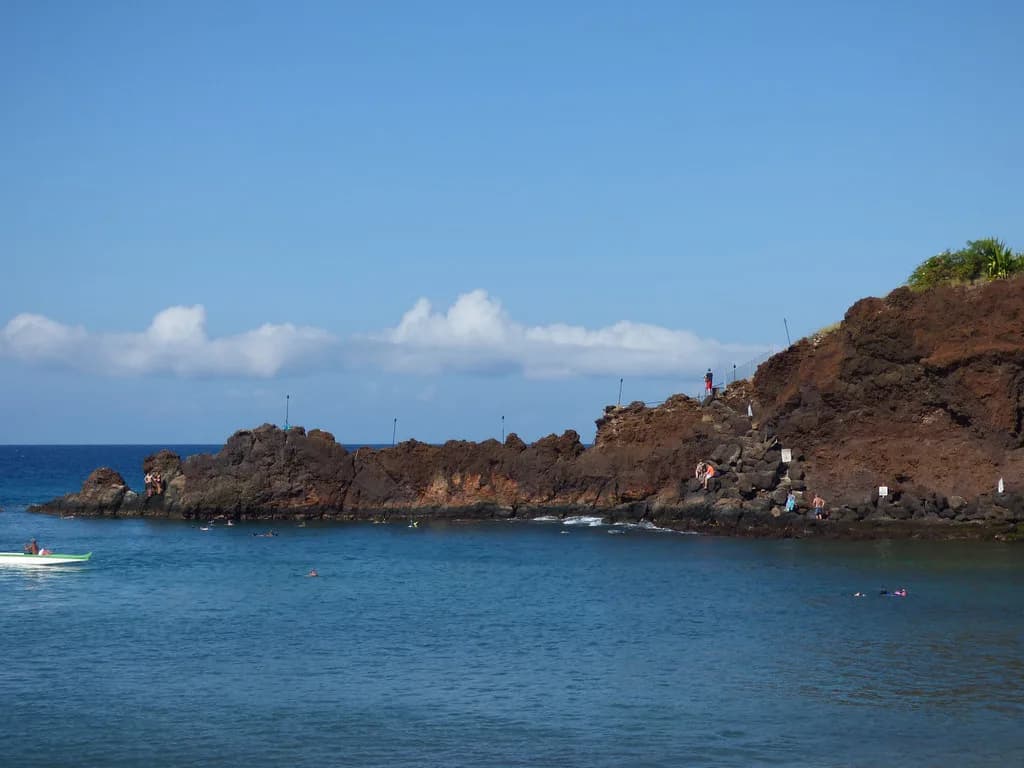
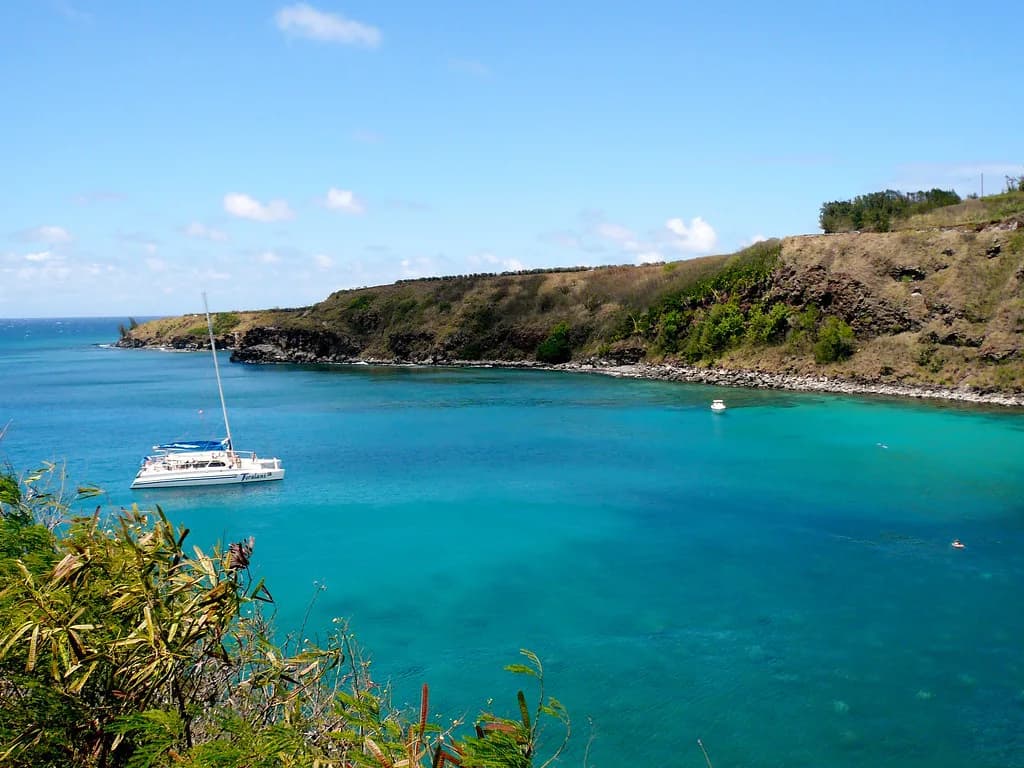
Napili Bay sits just up the road and makes an easy second stop for a swim and a snack. Honolua Bay, farther north, is a different kind of day: a rocky entry and a marine reserve feel rather than a sandy family beach, so compare it on a separate morning. If you are weighing shore entries further afield, our guide to snorkeling in Oahu covers similar bay-by-bay decisions on another island.
If you want guaranteed depth and clarity, a boat trip to Molokini Crater trades shore access for a partially submerged crater reached only by boat, with visibility that often exceeds 100 feet. Kapalua wins on flexibility and cost of access; Molokini wins on clarity and a sense of seclusion.
Closer to Ka'anapali, Black Rock offers another shore entry with a different reef profile and easier logistics from the resort strip.
Plan Your Kapalua Bay Snorkel Day
Build the day around an early arrival: park before the lot fills, enter on the left with the family or walk the beach to the right point for the reef, and turn back at the 900-foot mark rather than rounding the tip. Summer mornings give you the calmest window; in winter, watch the north swell before committing.
Check the day's ocean conditions with Maui County ocean safety or a local operator before you drive out, and keep your plan flexible enough to switch to a more sheltered bay if the swell is up.
Frequently Asked Questions
Does Kapalua Bay have good snorkeling?
Yes, especially for a shore entry. The right-hand rocky point holds the healthiest coral and the most fish, with depths reaching about 20 feet, while the sandy center stays shallow and calm. Turtle sightings are common but never guaranteed, and summer mornings give the clearest, calmest water.
Is Kapalua Bay good for kids and beginners?
It is one of Maui's best introductions to snorkeling. The water starts around two feet deep off the sand, and the left side of the bay has the gentlest entry and calmest water. Enter there, float before putting fins on, and keep younger swimmers inside the shallow band near the beach.
Where do you enter the water at Kapalua Bay?
Most people enter on the left-hand side as they face the ocean, where the sandy bottom is widest. For the right-hand reef, walk to the end of the beach nearest the rocky point and enter there; expect a rockier footing and wear water shoes.
Which side of Kapalua Bay has the best coral?
The right side, along the rocky point. Coral health and fish variety improve the farther you swim along the rocks, but the entry is rockier and currents strengthen near the tip. Stop around 900 feet from the beach rather than rounding the point.
How much does parking cost at Kapalua Bay?
The public lot is small and fills quickly, and a daily fee applies; ask the beach crew at the lot entrance for the current rate when you arrive. Arrive well before 8 a.m. on busy days, and look for limited street parking along Lower Honoapiilani Road if the lot is full.
How does Kapalua compare to a Molokini boat tour?
Kapalua offers shore access, flexible timing and a gentle sandy entry, which suits families and casual swimmers. Molokini is boat-only, with clarity that often exceeds 100 feet and a more secluded reef, so choose it when visibility and a boat day matter more than convenience.
What should I bring to Kapalua Bay?
Bring a mask and fins that fit, water, snacks, a towel, a hat and UV clothing, plus mineral sunscreen with zinc oxide or titanium dioxide as Maui County requires. Water shoes help on the right-hand entry, and a buddy should always be part of the plan.
When is the best time to snorkel Kapalua Bay?
Mornings, before the trade winds build and the beach fills up. Summer brings the calmest ocean overall, while north swells from December through April can make the bay rough, especially for beginners. The bay's shelter means afternoons can still work when only the usual wind is up.
Sources
Snorkeling notes for your next trip
Optional updates to our snorkeling guides.
You might also like
Continue reading
More guides you'll find useful