Thunderball Grotto Snorkeling: Entering the Exuma Cave
Snorkel Thunderball Grotto in the Exuma Cays: how you enter the cave, what swims inside, and the tide window that makes the swim through work.
On this page
Thunderball Grotto is the rare snorkel that works as a room rather than a reef: a hollow rock chamber in the Exuma Cays where sunlight drops through openings in the ceiling and schools of fish drift between the walls. It suits confident swimmers who are comfortable in deep water and happy to duck under to get inside, and it is the wrong choice for a family expecting a shallow lagoon you can wade into. Plan the swim around tide state rather than clock time, because the current at the mouth of the cave is what decides how easy the entry feels.
Where the Grotto Sits in the Exuma Cays
Thunderball Grotto lies in the Exuma Cays of the Bahamas, a short boat ride from Staniel Cay and roughly 0.4 nautical miles from the island according to charter guides. Big Majors Spot, the anchorage known for its swimming pigs at Pig Beach, sits about 0.6 nautical miles away, which makes the grotto a natural second stop on a morning run. Pipe Creek, with its clear protected water, lies about 4.8 nautical miles off, so the four stops form a tight half-day circuit rather than a full-day expedition.
That compact geography matters when you are choosing where to stay or which charter to book: Staniel Cay is the hub of the central Exumas, with the amenities and provisioning a day on the water needs, while the grotto itself has nothing ashore. Treat the cave as a destination you reach by boat and the rest of the day as a series of short hops. If you want the broader map of island reefs before you commit, this guide to snorkeling in the Bahamas sets out how the Exuma chain fits with the rest of the country.
Getting There by Boat, Dinghy, or Guided Tour
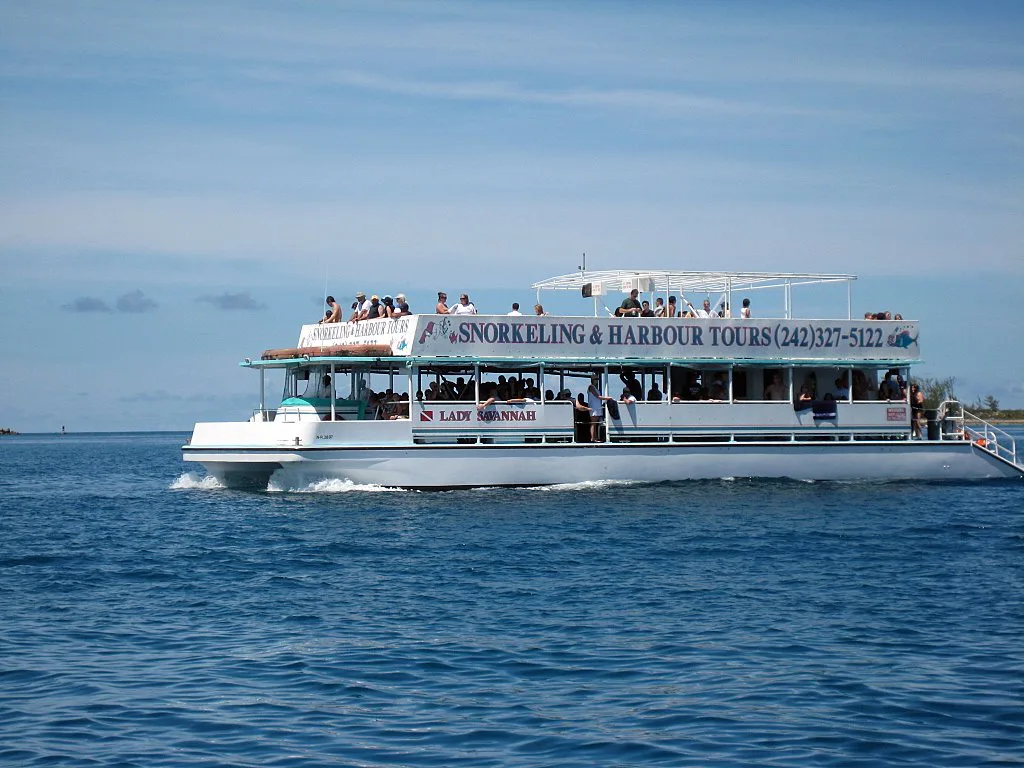
There is no beach walk-in. The grotto is accessible by boat, with visitors climbing down a ladder to enter the water, according to a Staniel Cay operator that runs trips there. That means your day is built around a vessel: a private charter, a small dinghy from a nearby mooring or anchorage, or a seat on a guided snorkel tour out of Staniel Cay.
Handling a dinghy around the grotto takes more judgment than following a guide boat in, because you are managing an anchor or mooring near a cave entrance while other traffic moves through the same water. If you are unfamiliar with the area, going with a local guide is the low-friction option, and it also puts someone with local knowledge in charge of timing the tide window. Private charters from Staniel Cay combine the grotto with the pigs and the surrounding cays in a single outing. For operators working the wider country, these bahamas snorkeling tours give a sense of how Exuma trips are typically structured.
Getting In: Ladder, Swim Through, and the Cave Mouth
The entry is a ladder descent from the boat into open water, followed by a short swim to the cave opening. Once inside, you surface into the cavern itself, where the rock walls rise around you and the ceiling openings let light down into the water. The approach is the part to think about: you are swimming at the mouth of a sea cave, not stepping off sand, so a mask that seals and fins you trust matter more than usual.
Tide state changes both the height of the entrance and the depth inside. At low tide the entrance is easier to access but the water can run shallow in places inside the cave, while at high tide the water is deeper and the entrance may be harder to reach. Slack tide is the sweet spot, with minimal current so you can swim through and explore without fighting moving water. Ask your captain or guide which state you will hit before you commit the day.
What You Will See Inside
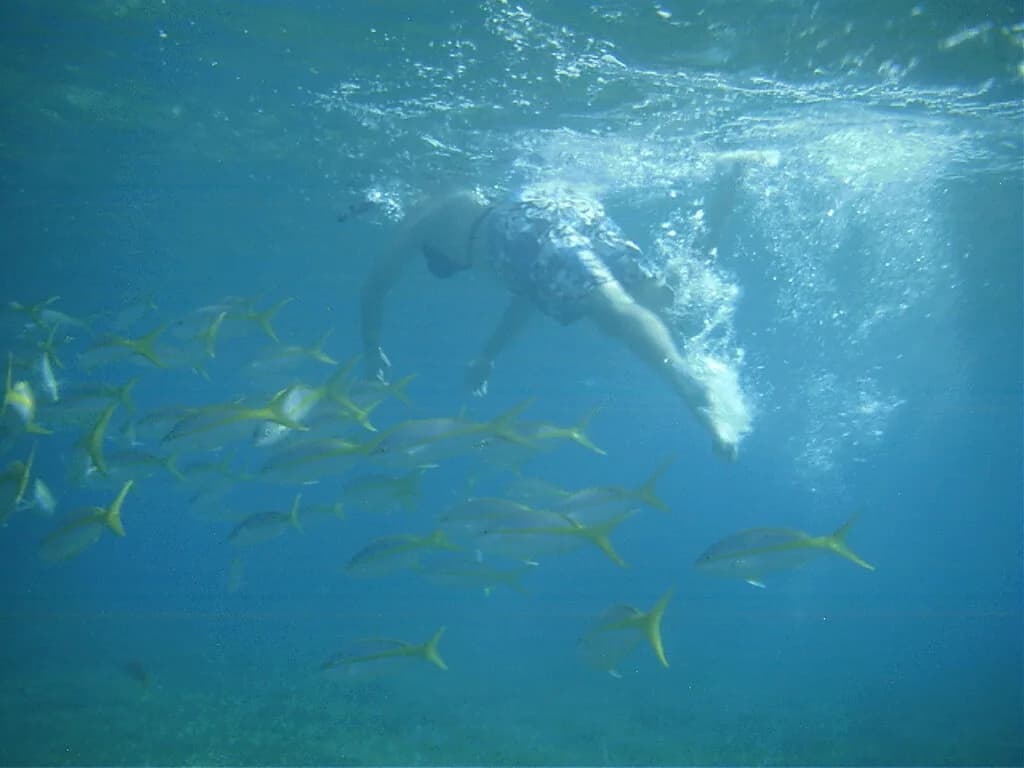
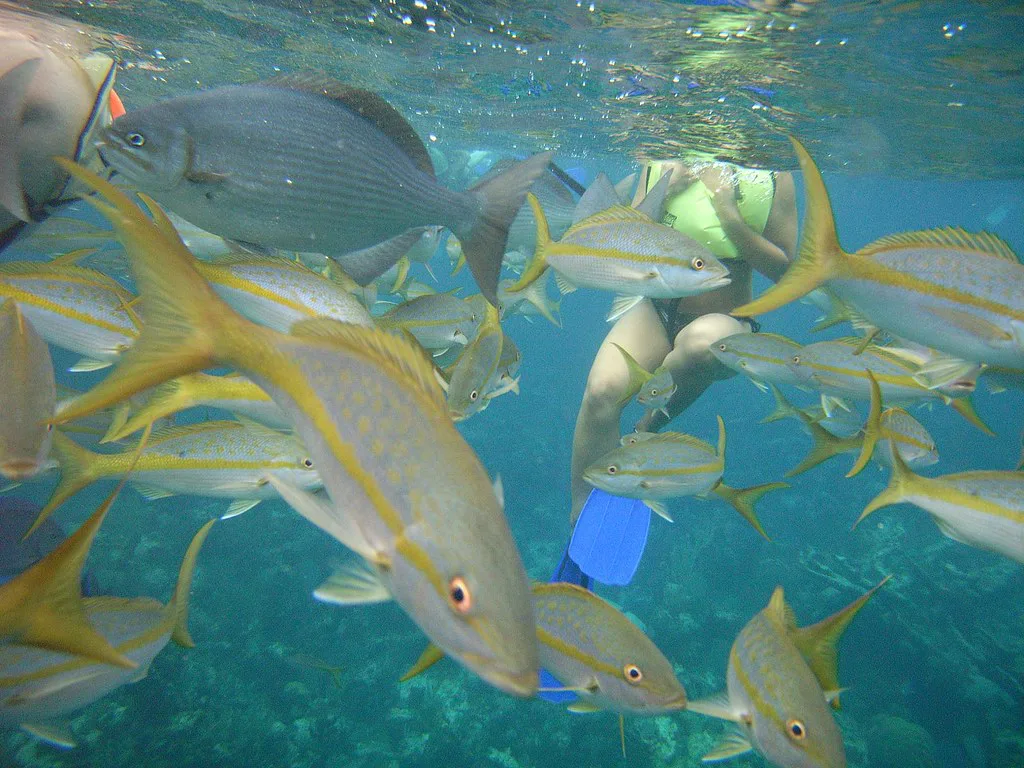
This is a fish-watching snorkel rather than a coral-garden one. Angelfish, sergeant majors, and yellowtail snapper are the species named as common inside the grotto, with coral formations on the rock and, for those who dive, more dramatic formations in the deeper parts of the cave. Look along the shaded walls and under overhangs where fish hold station, and watch the shafts of light from the ceiling openings, which is where the smaller fish tend to gather.
Wildlife here is wild: sightings vary with the day, the tide, and how much traffic the cave has seen. Keep your distance, never touch or feed the fish, and leave the coral alone so the formations stay intact for the next boat.
Light, Depth, and How the Ceiling Openings Shape the Snorkel
The cave ceiling has several openings, and those holes are what turn a dark rock chamber into a snorkel worth the trip. Light filters through and plays across the water and walls, so the inside reads as a luminous, shadowed landscape rather than a flat reef. The practical consequence is that the grotto looks and photographs best when the sun is high enough to reach through the openings, and it looks flat and gray under heavy cloud.
Depth inside is not uniform: there are shallow shelves and deeper pockets, and confident divers can drop into the deeper sections where the rock formations are at their most spectacular. Snorkelers who stay at the surface still get the full effect of the light and the fish, so there is no need to dive unless you want to. Bring a mask, snorkel, and fins, and a waterproof camera if you want to carry the light home.
Best Time to Go: Slack Tide and the Crowd Question
Slack tide is the single most useful thing to plan around, because that is when the currents at the cave are minimal and the swim through is easiest. Tide state, not time of day, should drive your schedule: build the rest of your Staniel Cay stops around the slack window rather than squeezing the grotto in at a convenient hour. Your captain or guide should be able to tell you when that window falls for your date.
The cave is popular, and it can be crowded during peak tourist season, so the experience inside varies with how many boats arrive at once. An early slot on the water gives you a better chance of a quieter chamber, and pairing the cave with Pig Beach and Pipe Creek spreads your day so you are not queuing for the same entry ladder. The grotto is a short, high-impact stop, so treat it as one piece of a half-day rather than a destination you linger in for hours.
Skill Level and Who It Suits
This suits confident swimmers and comfortable snorkelers. You need to descend a ladder, swim to the cave mouth through open water, and be at ease in a confined, shaded space with other snorkelers moving around you. A life vest is a sensible choice if you are not a strong swimmer, but keep in mind that you may need to duck underwater to get into the cave, which is awkward in bulky flotation.
Families with young children and swimmers who prefer a shallow, sandy entry will get more out of a beach reef elsewhere in the islands. If your group is split, the cave works well as a stop for the strong swimmers while others stay aboard, then regroup for the pigs and the sandbar. Set expectations up front: this is a cave swim, not a lagoon paddle. For a shallower alternative built around reefs and shore entries, see this guide to snorkeling in Key Largo and compare how the two days are structured.
Nearby Spots to Combine
Staniel Cay itself is the hub: dining, provisioning, and the base for most trips to the grotto. From there, Pig Beach at Big Majors Spot is the obvious next stop, and Pipe Creek adds clear, protected water and marine life a few nautical miles on. Compass Cay offers a marina for servicing if your charter needs it, which makes a loop of the central Exumas practical in a single day.
If your Bahamas trip includes a cruise call, the private cays run their own snorkel circuits that are easier to fit around a ship schedule, and Half Moon Cay is one of the established options. On the other side of the country, castaway cay snorkeling covers a similar private-island setup for families who want a beach entry. Neither substitutes for the cave, but they are sensible additions if the Exumas are only part of your itinerary.
Rules and Reef Etiquette in the Exuma Cays
Bahamas snorkeling around the Exumas runs on the same basic etiquette everywhere: no touching or standing on coral, no feeding fish, no chasing wildlife, and no taking shells or coral from the water. Inside a cave, that extends to keeping your fins off the walls and giving other snorkelers room at the entrance. Marine protections in the wider Exuma chain are administered through the Bahamas government, and a guide or captain working the cays can tell you what applies on your route.
Fees, mooring charges, and any landing rules at the grotto and the neighboring cays are set by the tour and charter companies and the relevant Bahamian authorities, so ask directly what is included and what is collected on the day; prices and dates are worth checking before you book with the company running your trip.
Plan Your Exuma Cave Swim
Thunderball Grotto rewards planning more than most snorkel stops: pick your tide window first, secure a boat or a guide second, and let the rest of the day fall around it. Confident swimmers get a light-filled cave and a cast of angelfish, sergeant majors, and yellowtail snapper; families wanting a gentle wade should look elsewhere. Pair it with Staniel Cay, Pig Beach, and Pipe Creek for a compact, memorable half-day on the Exuma Cays.
Frequently Asked Questions
How do you enter Thunderball Grotto?
You arrive by boat and climb down a ladder into the water, then swim a short distance into the cave opening. There is no beach entry, so you need to be comfortable in open water and in a confined, shaded space.
What tide is best for snorkeling Thunderball Grotto?
Slack tide is the best window, because the currents are at their weakest and the swim through is easiest. Low tide makes the entrance easier but can leave shallow water inside, while high tide brings deeper water and a harder entrance.
What will I see inside Thunderball Grotto?
Angelfish, sergeant majors, and yellowtail snapper are the species most often named inside the cave, along with coral on the rock and deeper formations for divers. Sightings vary by day, so treat any list as a guide rather than a guarantee.
Do you need a guide to snorkel Thunderball Grotto?
You can reach the grotto by private boat or dinghy from nearby moorings, but a local guide is the easier option if you do not know the area. A guide also handles tide timing and boat handling near the cave entrance.
Sources
Snorkeling notes for your next trip
Optional updates to our snorkeling guides.
You might also like
Continue reading
More guides you'll find useful