Bahamas Snorkeling Tours: Nassau Boat Trips vs Shore Reefs
Compare Bahamas snorkeling tours: Nassau reef and wreck boat trips with hotel pickup versus shore entries you swim yourself at Paradise Cove and Clifton.
On this page
The appeal of a Bahamas snorkel day is how little separates you from living coral: in places you wade off sand and the reef is a short swim out, and in others a boat covers the distance to reefs and wrecks the beach cannot reach. The choice between a guided boat trip and a shore entry is the decision that shapes everything else about the day, including cost, schedule and how much water you actually cover. This guide splits the two models, then matches each to the swimmer you are.
Boat tours concentrate the payoff in a half day: operators run to the clearest, calmest sites they can find that morning and stack two or three stops into one outing. Shore entries cost less and let you set your own pace, but the reef you reach is the reef in front of you. The trade-off is access versus freedom, and both are legitimate ways to spend a morning.
Why Bahamas snorkeling tours split into two models
Guided boat trips solve a logistics problem: the best reef is often beyond a comfortable swim from the beach, or sits in a section of coast exposed to swell on the day you are there. A captain can relocate to the lee side, pick a shallow site with the most marine life, and put you in the water from a platform built for it. That flexibility is what you pay for, and it is why boat days are less weather-fragile than shore plans.
Shore entries invert the trade. You keep your own schedule, bring your own gear or rent nearby, and swim out from the sand as far as you are comfortable. The Bahamas rewards this approach more than most destinations because so many reefs sit within swimming distance of a beach, but the reef you get is fixed by where you stand. Pick the model that matches your tolerance for planning and your appetite for variety in one day.
Nassau boat tours: how the Stuart Cove's half-day trip runs
Stuart Cove's, based at Coral Harbour on the southwest side of New Providence, runs its Snorkel Bahamas Adventure every morning and afternoon, seven days a week, with a 9:00 AM departure and a 1:30 PM departure from the dock. The trip includes round-trip hotel transfers, plus mask, fins, snorkel and a snorkel vest; a full wetsuit can be rented on site for cooler winter water. Children under four are not permitted on the boats, which makes this a family trip only once kids are old enough to handle a boat and open water.
The published adult snorkeler rate is $118.80, with children aged 4 to 11 at $70.80, and a bubble-watcher passenger who stays aboard pays $81.60 adult and $68.40 child. Booking online advertised a per-person saving over the on-island rate. Pickups run across downtown and the cruise ship terminal, Paradise Island, Cable Beach, Orange Hill and Lyford Cay, starting around 7:45 AM for the morning trip, so the day is a genuine half-day rather than a quick hop.
Where a Nassau snorkel trip actually goes
The itinerary is structured rather than fixed. The first stop is a shallow reef where the bottom typically sits at 10 to 25 feet, a depth that keeps fish and coral within easy view from the surface. The captain chooses the exact site each day based on conditions and guest requests, aiming for the calmest water with the most marine life.
The second stop is either a different shallow reef or one of Stuart Cove's shallow shipwrecks, chosen for whichever gives the better experience that day. Popular reefs named on Stuart Cove's site include Nari Nari, the Sculpture Garden, Little Elvis, Goulding Cay and School House. A wreck stop puts you over structure rather than coral, which changes what you see: expect fish clustered around the hull instead of a reef flat.
The third stop is optional and weather-dependent: snorkeling above Caribbean reef sharks, with a bait box lowered to about 40 feet so the animals stay near the bottom while snorkelers observe from the surface. Anyone who would rather not get in can watch from the upper deck. Treat this as a wildlife-viewing stop, not a guarantee, and keep hands and fins to yourself if you do enter.
What is included, what costs extra, and how departure times shape your day
Included in the fare are the transfer, the mask, fins, snorkel and vest, and fresh drinking water and ice on board. Extra costs on the published list are a wetsuit rental at $14.40 per person for a full-body suit, snacks and other beverages from the boutique, and crew tips. The boat carries a large rear platform for entry and exit, fresh-water showers and storage for gear, which matters if you are coming straight from a cruise ship with luggage in tow.
Departure time drives the shape of the day more than anything else. The morning trip leaves the dock at 9:00 AM and returns around 12:30 PM, with buses back to hotels by about 1:00 PM. The afternoon trip leaves at 1:30 PM and returns at 4:30 PM, which suits cruise passengers whose ship is in port through the afternoon. Pickup times are approximate and can run a few minutes early or late depending on the number of stops, so build a buffer rather than planning a tight connection.
Cancellation terms are strict enough to plan around. Cancellations made more than 24 hours before a snorkel activity are refunded less an 8% administrative processing fee, and cancellations inside 24 hours or no-shows are non-refundable. If your trip depends on a cruise schedule or a flight, book with that cutoff in mind rather than hoping for a same-day exception.
Nassau's shore alternatives: Cabbage Beach, Cove Beach and the Clifton sculpture garden
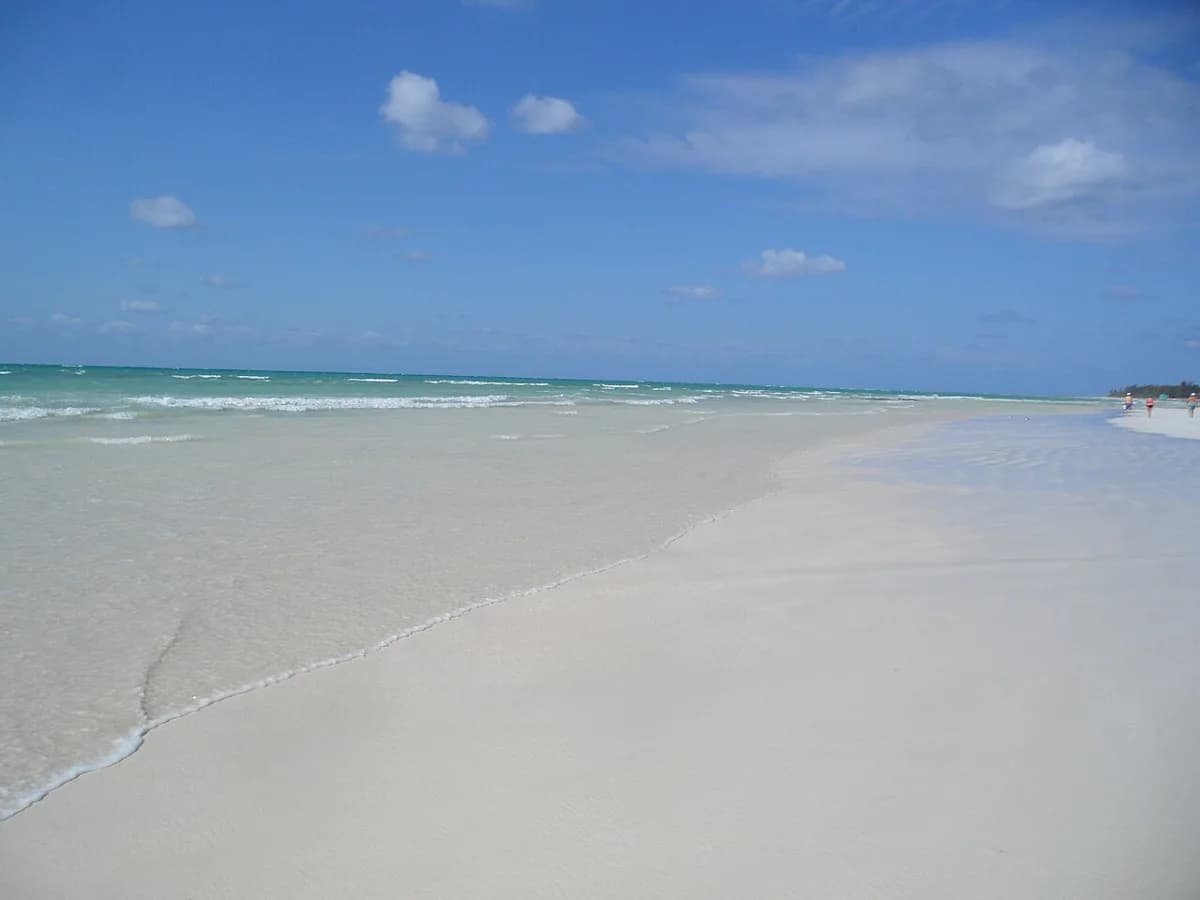
On Paradise Island, Cabbage Beach, Cove Beach and Paradise Beach on the northern coast are the most recommended shore snorkeling options, with Cabbage and Cove sitting beside the Atlantis resort. On New Providence itself, Love Beach and Cable Beach give you sand entries without a boat. These are swim-yourself sites: you walk in from the beach, so pick your day for calm water and stay inside your comfort zone rather than chasing the reef offshore.
The standout shore dive on New Providence is at Clifton Heritage National Park, where Snorkel Beach gives access to the Sir Nicholas Nuttall Coral Reef Sculpture Garden. The underwater gallery includes Ocean Atlas, described as the largest underwater statue in the northern hemisphere. Because the installations sit in open water off a beach, this suits a confident swimmer who can navigate out and back without a guide.
For boat-based variety without committing to a full-day charter, day-trippers from New Providence and Paradise Island favor the Rose Island reefs about six miles off Nassau and Goulding Cay just west of Clifton Bay, both with shallow reefs that put marine life within easy viewing range. These are shorter hops than an out-island expedition and pair well with an afternoon on the beach.
Grand Bahama: Paradise Cove and Deadman's Reef as a shore-entry day
On Grand Bahama's southwest side, Paradise Cove gives direct access to Deadman's Reef, which the Bahamas tourism board rates as the best reef on the island and places within swimming distance of the beach. That combination, a sand entry and a reef close enough to reach without a boat, is the clearest example of the shore model working. A snorkel tour is available that bundles transportation, equipment and flotation belts for anyone who wants the logistics handled.
The rental inventory is broader than most beach operations: snorkel gear, wetsuits, ocean kayaks, glass-bottom kayaks, sea scooters and floats with windows, so a non-snorkeling companion can still see the reef from a glass-bottom boat. Facilities include restrooms, a fresh-water shower, lounge chairs, umbrellas, a covered deck, a bar and grill, and a gift shop, which turns a snorkel outing into a full beach day. Contact details published by the tourism board go to the cove's own line and email.
Out-island tours worth building a trip around
The Exumas deliver some of the most iconic stops in the country. From George Town on Great Exuma, Stocking Island is less than a mile offshore, with reefs along Stocking Island Beach and shallow Starfish Beach where cushion sea stars lie in the sand. Farther north at Staniel Cay, Thunderball Grotto is a submerged cave of shaded water with tropical fish and stingrays, with Not The Grotto nearby as a second option. Compass Cay, further north still, is known for nurse sharks in the marina's turquoise water, and nearby Pig Beach has become its own attraction.
On Eleuthera, a 105-mile sliver of pink sand and wild coast, the recommended sites are Devil's Backbone, a shallow reef strewn with wrecks, Gauldings Cay for soft corals, and Current Cut, where you drift through a pass surrounded by tropical fish. Current Cut is the one to weigh carefully: a drift in a pass rewards strong swimmers and is not a beginner's first site. Rock Sound's Ocean Hole, a seawater hole connected to the ocean by underground caves and filled with schools of grunts and large gray angelfish, is an odd, memorable alternative when visibility offshore is poor.
Bimini, about 50 miles off Miami, is the closest Bahamian island to Florida and offers shallow reefs, with Rainbow Reef the best known for hard corals, gorgonians and sponges. Two singular sites stand out: the Wreck of the Sapona, a steamer once used as a floating warehouse during Prohibition, and the Bimini Road, a cluster of large flat stones in roughly 20 feet of water. The stones demand only a modest swim and reward anyone interested in the Atlantis legend.
Andros claims the world's largest concentration of blue holes and a barrier reef running more than 186 miles along its east coast, one of the largest in the world. The popular reef sites, including Tiamo, China Point, Red Shoal, Trumpet Reef, Central Park and Liben's Point, are reachable only by boat, so this is a guide-or-operator island rather than a wade-in one. On South Andros, operators such as Andros Beach Club run catamaran trips to tidal blue holes where cool fresh water flows out of the sea floor twice a day and draws fish to the outflow.
In the Abacos, Marsh Harbour offers Mermaid Reef off the town's northern shore, reachable without a long boat ride. Elbow Cay, across the lagoon, is known for stellar visibility and shallow reefs and sits about 30 minutes from Great Abaco by boat, while Sandy Cay further north is a favorite day-trip destination. In the southern Bahamas, San Salvador is nearly ringed by coral, with Bamboo Point, Fernandez Bay and Long Bay near Cockburn and Grotto Bay and Sandy Point at the southern tip. Long Island's Dean's Blue Hole is more spectacle than reef: more than 200 yards deep, with little life inside but a surreal drop beneath you.
Depth, entry type and swim distance for each option
On the Nassau boat trip, expect a shallow first reef with the bottom at 10 to 25 feet, entry from a rear platform with a ladder or step-down, and no swimming required to reach the reef because the boat anchors over it. The shark stop, when it runs, is a surface observation above a bait box at about 40 feet. That combination is the easiest entry profile in this guide for a nervous first-timer.
Shore entries vary more. At Paradise Cove, you swim out from the beach to Deadman's Reef, so the swim distance is the deciding factor and a flotation belt is worth taking. At Clifton's sculpture garden, the installations sit in open water off Snorkel Beach and the entry is a shore wade. At Stocking Island, Mermaid Reef and the Bimini Road, the sites sit close enough to shore or in shallow enough water that a moderate swim gets you there, but each rewards a check of the day's water before you commit.
Marine life to expect and how to view it responsibly
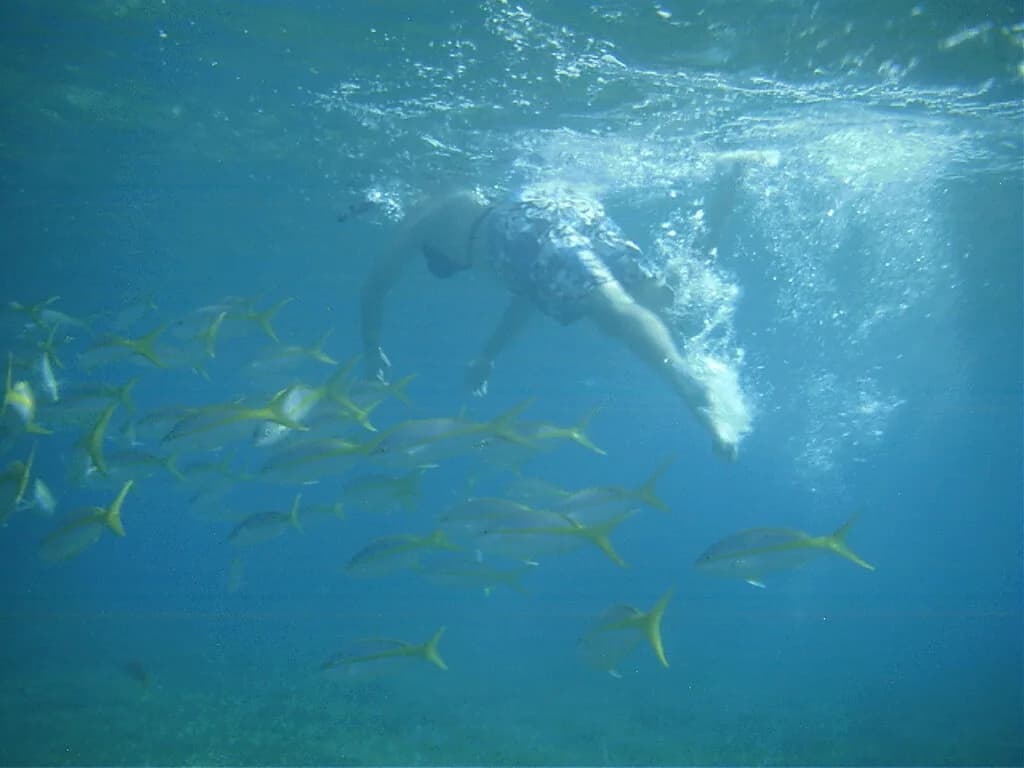
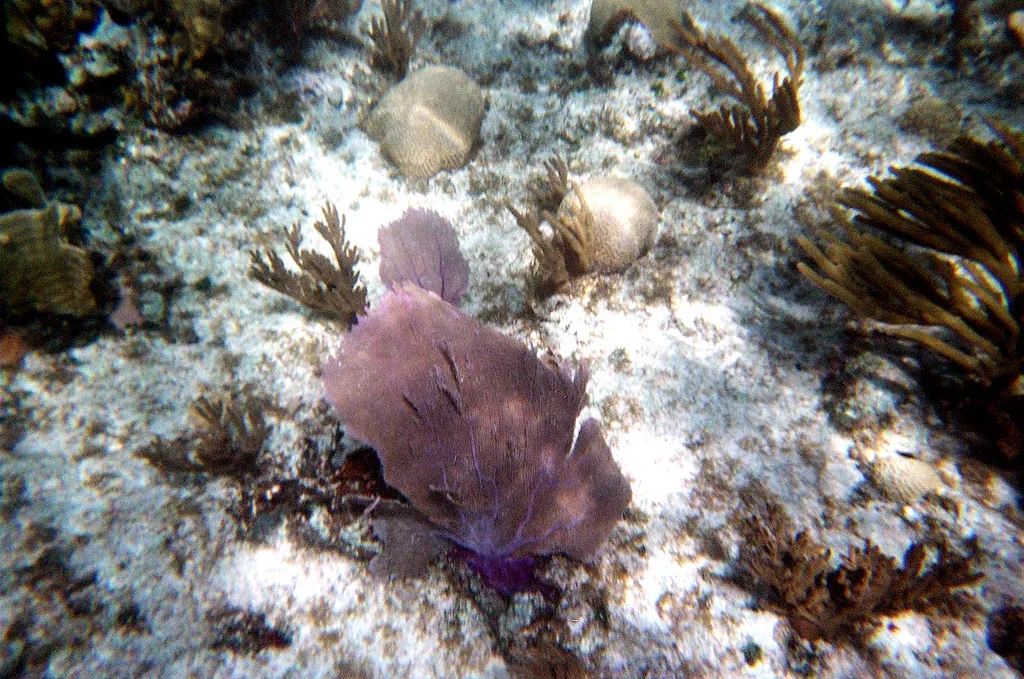
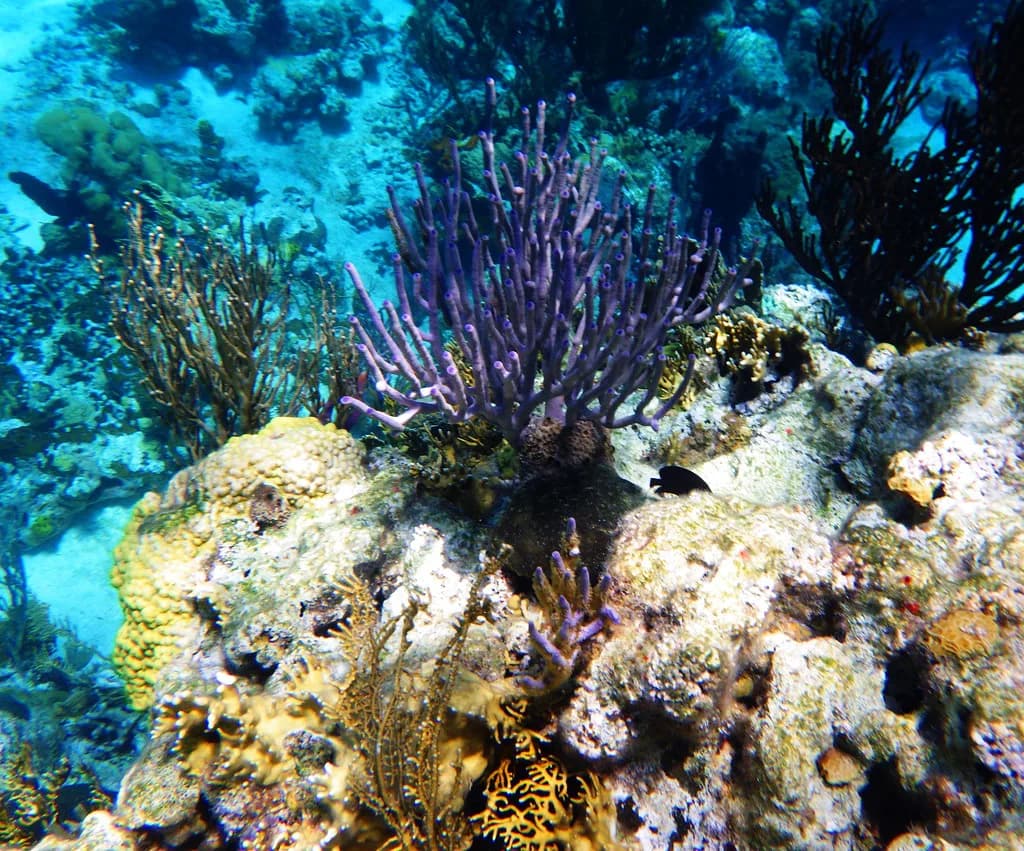
More than ten shark species live in Bahamian waters, though the ones you are most likely to see at snorkeling depth are nurse sharks, Caribbean reef sharks and lemon sharks. Southern stingrays are common, spotted eagle rays and green and hawksbill turtles turn up around reefs, and the shallow reefs hold angelfish, butterflyfish, triggerfish, grunts and parrotfish in easy view. The Bahamas sits on one of the planet's larger coral reef systems, with hard corals, soft corals and gorgonians on the healthiest sites.
Viewing rules matter more where animals are habituated. At Compass Cay, nurse sharks gather in the marina; at Pig Beach, pigs swim out to visitors. Keep your distance, let animals approach on their terms, and never touch, feed or chase wildlife, even where the animals seem tame. On the Nassau shark stop, stay at the surface as Stuart Cove's crew directs and watch from above rather than dropping toward the bait box.
Skill level and age fit
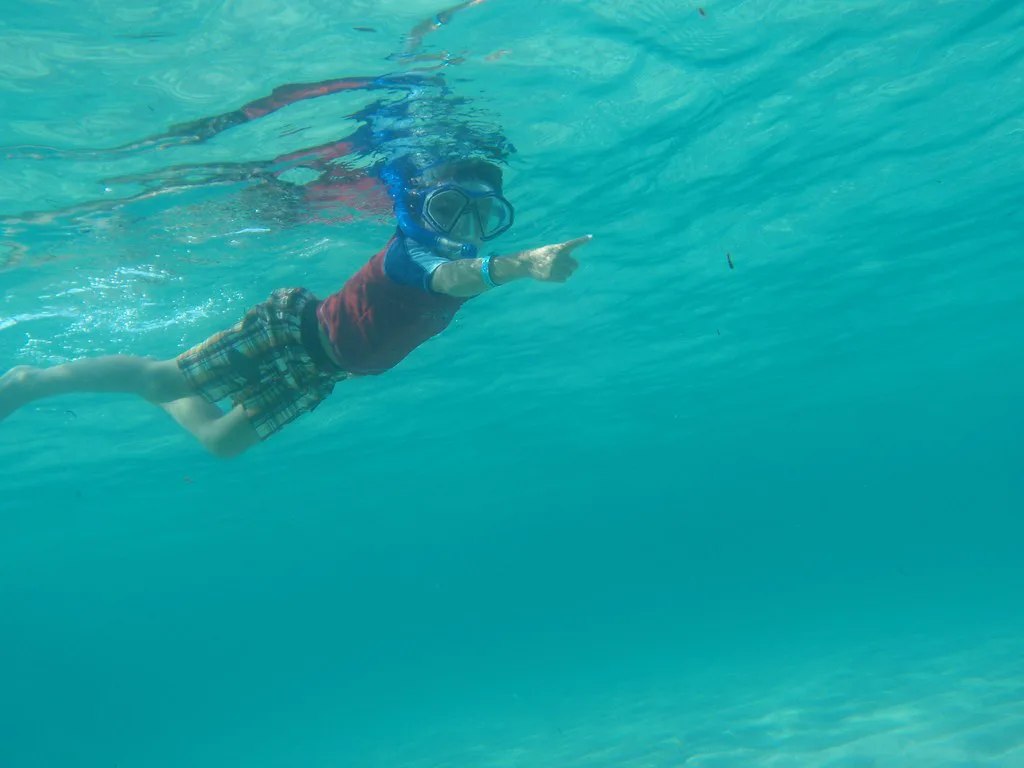
Beginners and families with kids old enough to board a boat do best on a guided trip: the guide picks the calmest site, gear is included, a vest is standard, and the boat is right there if you want out. Stuart Cove's minimum age of four rules out toddlers entirely, so plan a beach day instead for the youngest swimmers. A shore entry like Paradise Cove, with rentals on site and a beach to retreat to, is the better fit for a family that wants to split up.
Strong swimmers and confident snorkelers get more from the shore and out-island sites: Current Cut's drift, the open-water sculpture garden at Clifton, the blue holes of Andros and the longer swims at Deadman's Reef all reward water comfort. Anyone new to drift entries should build experience on a shallow reef first. Kids on a boat trip should be comfortable in deep water with a vest, since the reef sites are not standing depth.
Best months and time of day for calm water
The Bahamas is a year-round snorkel destination thanks to warm temperatures tempered by trade winds. Winter is dry and sunny with the best underwater visibility and land temperatures around 73 to 82 F, with water near 75 F on average, which is why a wetsuit rental earns its keep on a winter boat trip. Summer pushes land temperatures toward 93 F with water around 84 F, but showers roll through from time to time.
For time of day, the morning boat has the advantage of calmer winds before the afternoon build, and it gets you back to the beach by early afternoon. A shore entry is best done early for the same reason: fewer boats, softer light and flatter water. On New Providence, the southwest side of the island, where the Stuart Cove's facility sits, benefits from natural protection from wind and storms, which makes it a sensible pick when the north shore is rough.
Rules, reef-safe practice and protected areas
The Bahamas has no blanket ban on shore access, but individual sites carry their own rules, and the ones you are most likely to encounter are wildlife-distance norms around habituated sharks and pigs and no-touch practice on coral. Ask at the site or with your operator what applies where you are swimming, and keep fins off the reef. Reef-safe sunscreen is the easy default; apply it well before you get in the water so it has time to absorb.
Protected areas deserve a specific plan rather than good intentions. Clifton Heritage National Park is a national park, so treat the sculpture garden as a site with its own rules and check park information before you go. On the shark stop, the crew's direction is the rule: stay on the surface, and if you opt out, watch from the boat.
Combining a tour with nearby beaches and other stops
A morning Nassau boat trip leaves the afternoon free, and the return drops you near Cable Beach or Paradise Island, where Cabbage Beach and Cove Beach give you a low-effort afternoon swim. Pair the boat day with a separate beach day rather than trying to do both before noon. If you are on a cruise ship, the afternoon departure fits a port day that runs late.
On Grand Bahama, Paradise Cove is a day in itself: reef, rentals, bar and grill, and a covered deck mean you can stay through lunch and swim again in the afternoon. Adding a second stop is easy because the cove sits on the island's southwest side, so you can work it into a loop with the rest of the island rather than treating it as a quick detour.
Cruise passengers with a private-island stop often ask how those compare. Half Moon Cay and Castaway Cay are beach days with snorkel areas rather than reef tours, so they suit travellers who want a swim from the sand without a boat ride. If your itinerary includes the Blue Lagoon, treat it as a beach-and-lagoon day with snorkeling on site rather than a reef expedition.
How to pick and book
Match the trip to the island first. If you are based on New Providence or Paradise Island, a Nassau boat trip gets you to reefs and wrecks a beach cannot reach, and the shore alternatives at Cabbage, Cove and Clifton cover the days you want to swim on your own schedule. On Grand Bahama, Paradise Cove covers both a reef and a beach day in one. Out-island trips only make sense if you are already on that island or willing to fly there. The same boat-versus-shore trade-off shapes snorkeling in Key Largo, where reefs and shore spots sit in similar reach of each other.
Then check the mechanics that actually bite: group size and boat features, whether transfers are included, minimum ages and cancellation cutoffs. Stuart Cove's terms, 24 hours for a refund less an 8% administrative fee, are the kind of detail to read before you pay. Booking online saved a per-person amount over the on-island rate on Stuart Cove's own site, and Stuart Cove's direct line and WhatsApp are published for questions.
Plan Your Visit
Start with the island you are on, then choose the model. A Nassau boat trip gives you a shallow reef, a wreck or second reef and an optional shark stop in a half day, with transfers and gear handled. A shore entry such as Paradise Cove or Clifton's sculpture garden gives you your own pace and a beach to retreat to.
Book with the specifics in hand: departure times, the minimum age, what is included and the cancellation cutoff, and apply reef-safe sunscreen before you leave the hotel. If a storm is forecast, call Stuart Cove or ask the site what the day looks like rather than guessing from a webcam.
Frequently Asked Questions
What is included in a Nassau snorkeling tour?
Stuart Cove's half-day trip includes round-trip hotel transfers, plus mask, fins, snorkel and a snorkel vest, with fresh drinking water and ice on board. A full wetsuit can be rented on site, and the boat carries a rear platform for entry and exit, fresh-water showers and gear storage. Snacks, other beverages and crew tips are extra.
How much do Bahamas snorkeling tours cost?
Stuart Cove's published rates on its own site list a fare for an adult snorkeler, a lower child rate for ages 4 to 11, and a bubble-watcher rate for passengers who stay aboard. A wetsuit rental is a separate cost on site. Book online for the advertised saving over the on-island rate; check the page for current figures.
Do you need to book Bahamas snorkeling tours in advance?
Booking ahead is the safer choice on a tight schedule, because Stuart Cove's refunds only apply to cancellations made more than 24 hours before the activity, less an 8% administrative processing fee. Inside 24 hours, or a no-show, is non-refundable. Reserve once your cruise or flight schedule is confirmed rather than hoping for a same-day seat.
Can you snorkel from the beach in the Bahamas without a tour?
Yes, in the right places. On Paradise Island, Cabbage Beach, Cove Beach and Paradise Beach are the most recommended shore options; on New Providence, Love Beach, Cable Beach and Snorkel Beach at Clifton Heritage National Park put you in the water without a boat. On Grand Bahama, you swim out to Deadman's Reef from Paradise Cove beach. Each is swim-yourself, so pick a calm day.
What is the best time of year to snorkel in the Bahamas?
Snorkeling is possible year-round. Winter is dry and sunny with the best underwater visibility and water near 75 F on average, which is why a wetsuit earns its keep. Summer brings warmer water around 84 F but more passing showers, and a morning slot beats the afternoon breeze on either side of the calendar.
Is the shark stop on a Nassau snorkel trip safe for beginners?
The shark stop is optional and weather-dependent, and snorkelers observe from the surface above a bait box lowered to about 40 feet, so the animals stay near the bottom. Anyone uncomfortable can watch from the upper deck instead. Treat it as a wildlife-viewing stop rather than a swim, and follow the guide's direction on where to stay in the water.
Sources
Snorkeling notes for your next trip
Optional updates to our snorkeling guides.
You might also like
Continue reading
More guides you'll find useful