Frederiksted Pier Snorkeling, St. Croix: Reef & Entry Tips
Snorkel the Frederiksted Pier on St. Croix: where to enter, how deep the pilings run, what gathers on them, and when the pier is closed to swimmers.
On this page
The Frederiksted Pier rewards slow swimmers. Decades of sponges and soft corals have coated every concrete piling, turning an ordinary dock into a vertical reef you inspect up close rather than glide over. It suits snorkelers who like looking at structure, not just covering distance.
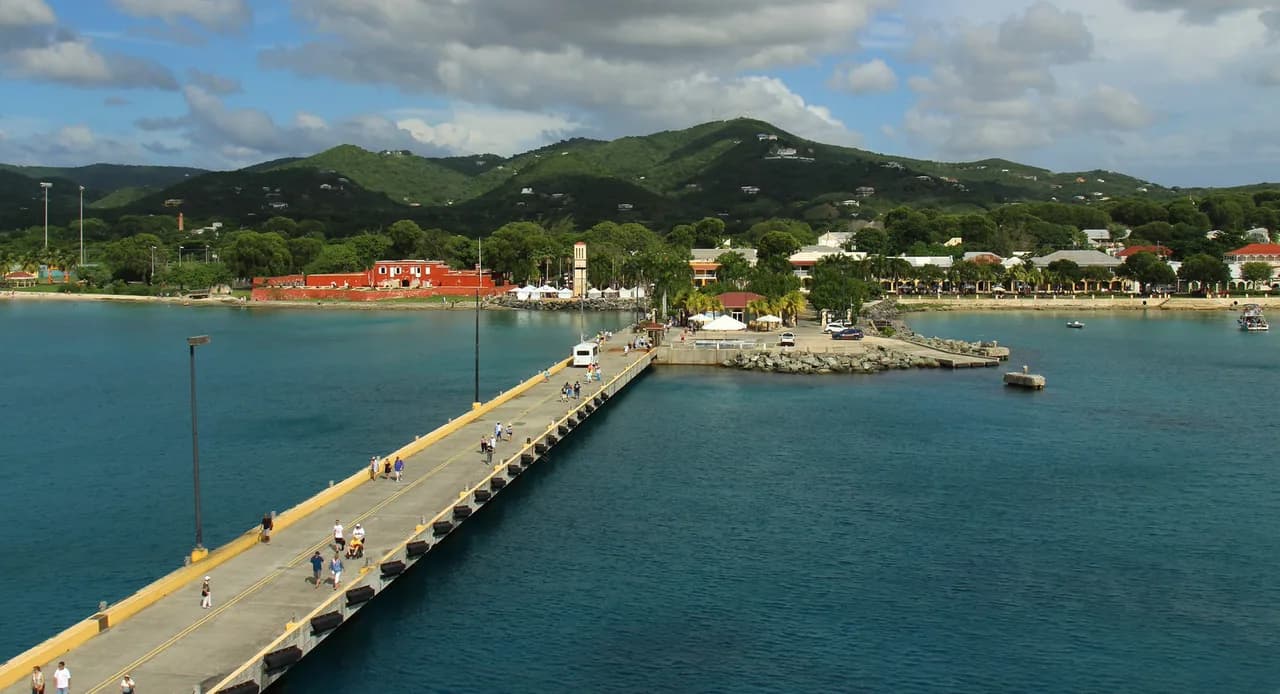
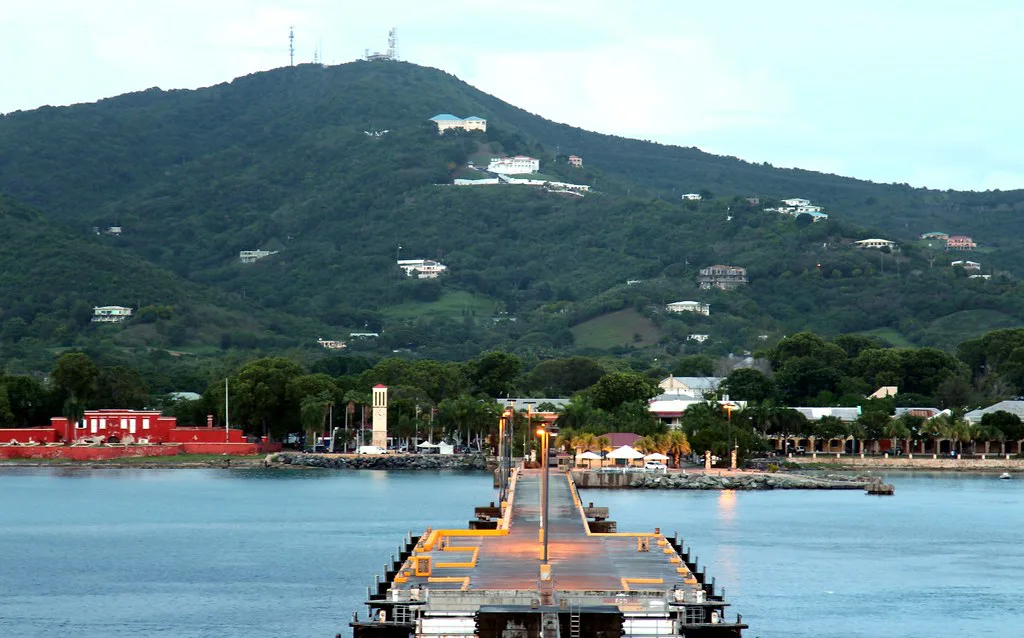
The site sits in the heart of Frederiksted, across from the Customs House, with parking on Strand Street and along most streets in town, so you walk in from shore rather than booking a boat. That town-center location also means restaurants and dive shops are steps away for after the swim.
Where the Pier Is and How to Find the Entry
Frederiksted Pier runs out from the waterfront in downtown Frederiksted, on the west end of St. Croix. Use the Customs House as your landmark; the pier is directly across from it, and the town grid around Strand Street puts you within a short walk of the base.
Entry is from shore anywhere along the pier or the surrounding shoreline, so there is no boat, ladder or ticket involved in reaching the water. Park in town, gear up at the car, and walk to the water's edge to start.
Getting In and the Swim Out to the Pilings
You enter over sand and swim out beneath and beside the pier deck, so the first minutes are shallow and protected. That makes it easy to sort out mask and fins before you commit to the longer stretch toward the deeper end.
Snorkelers commonly work the nearer rows of pilings and turn back, while divers continue to the far end where the bottom drops away. Treat the pilings as a series of short stations: pause at each one, look at the encrusted surface, then move on rather than sprinting the length of the pier.
Depth and Layout: Shallow Near Shore, Deep at the Far End
The pier starts at sea level and averages about 25 feet for most of its length, with roughly 20 feet at the usual entry point and as much as 90 feet at the very end. For snorkelers that means the near and middle pilings are the working zone, and the deep end is where the bottom leaves you behind.
Conditions are typically calm with visibility running up to about 80 feet, though the water near shore can cloud after storm runoff. Plan your route around the shallow pilings first and save any push toward the deep end for a day when the water is clear and flat.
What You Will See on the Pilings
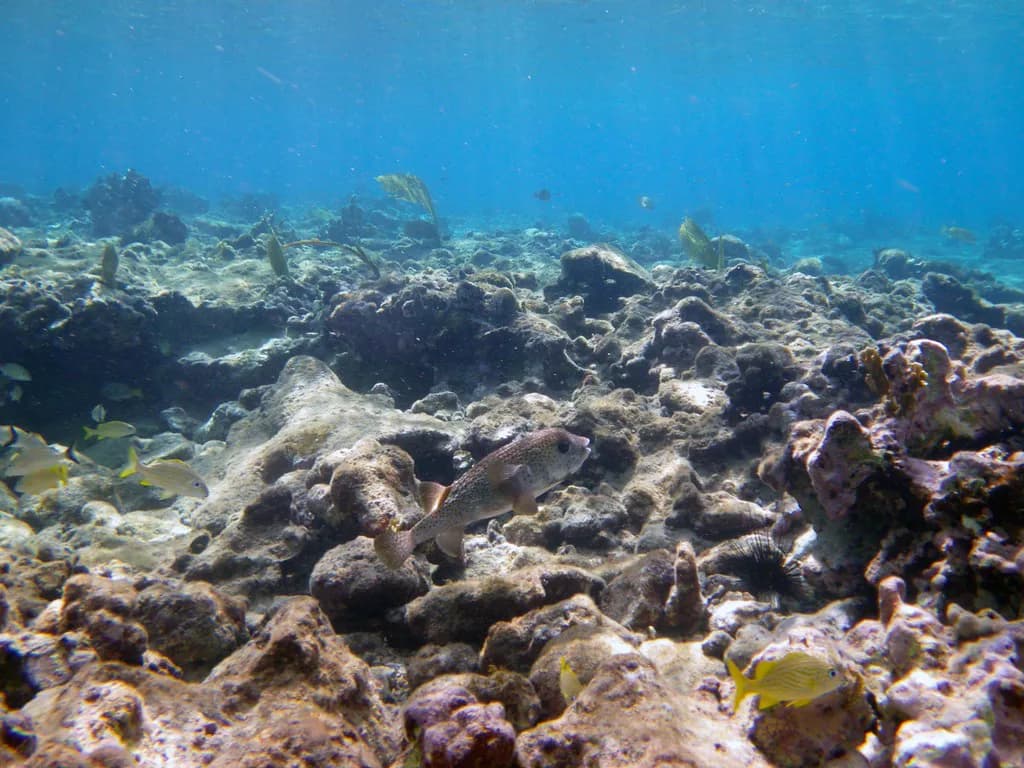
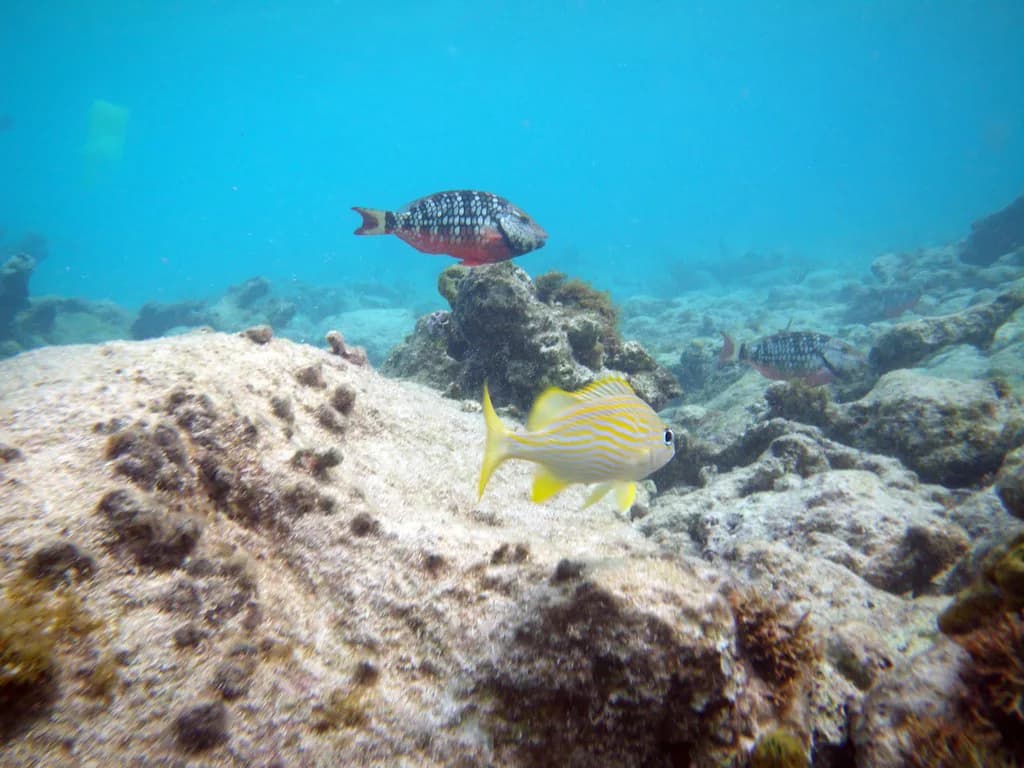
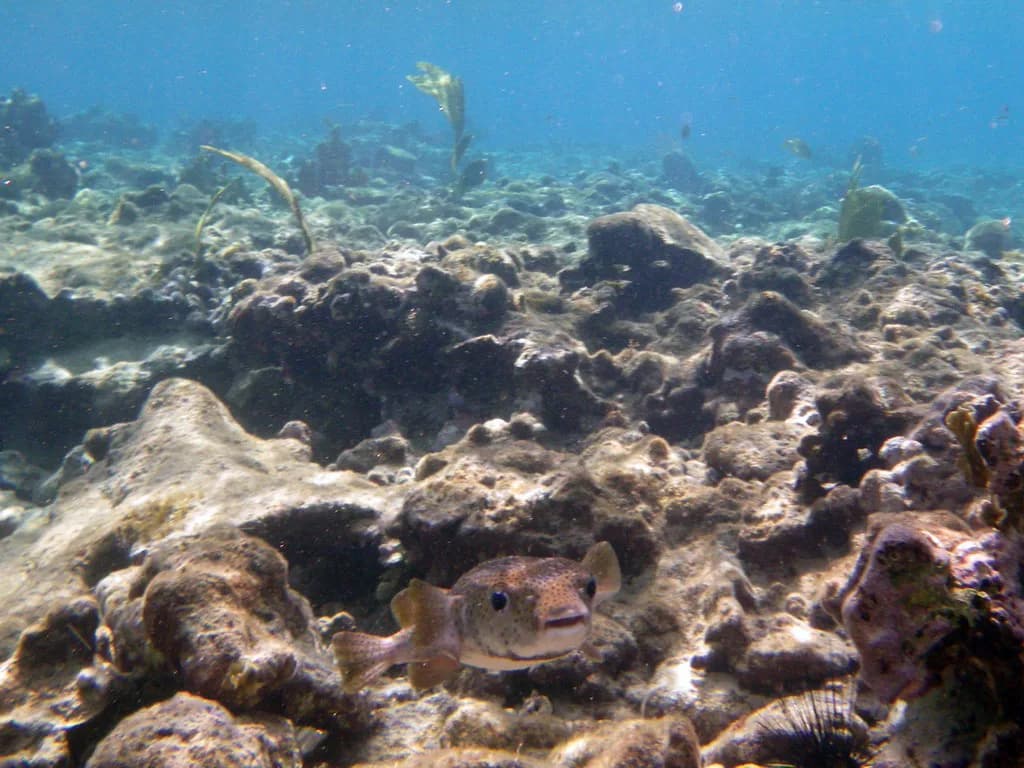
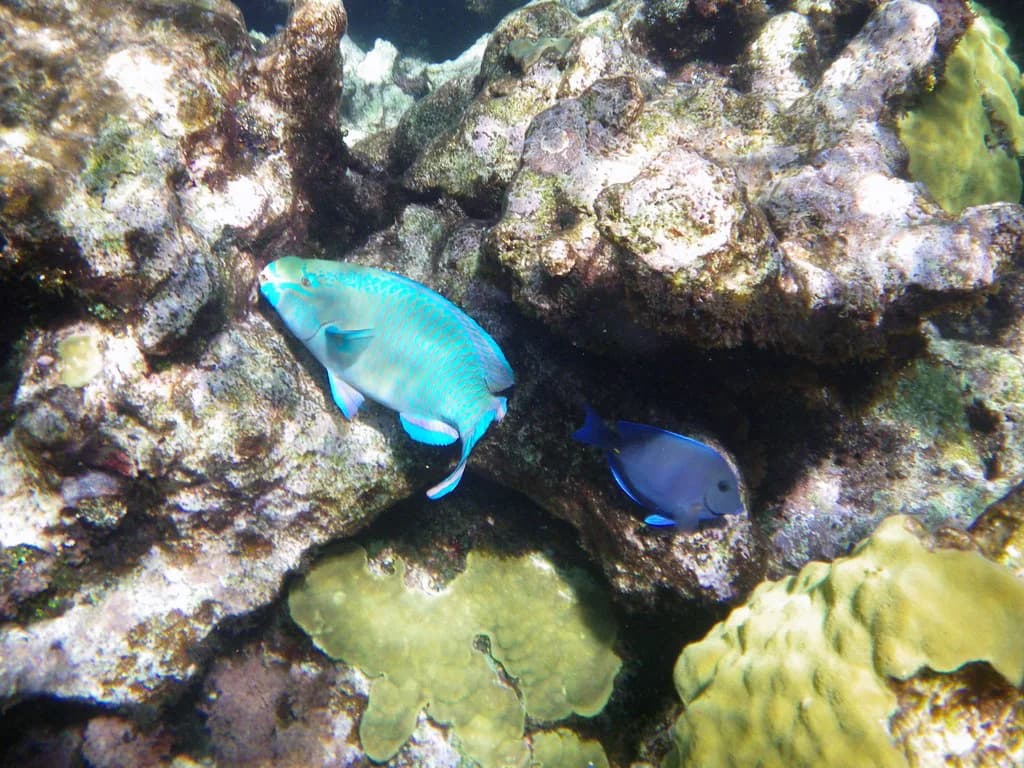
Each piling is a vertical wall of soft corals and sponges in many colors, and the fish gather around that structure. Expect schools of sergeant majors, tangs and soldierfish weaving between the pilings, plus parrotfish-type reef grazers and pufferfish working the edges.
This is a macro site, so bring a torch even in daylight and look at the shaded side of each piling. The pier is known for seahorses, octopi, frogfish, juvenile trunkfish, trumpetfish, porcupinefish, brittle stars, arrowcrabs and fireworms, all of which reward a slow, close inspection instead of a fast pass.
Turtles, Stingrays, Barracuda and Bait Balls
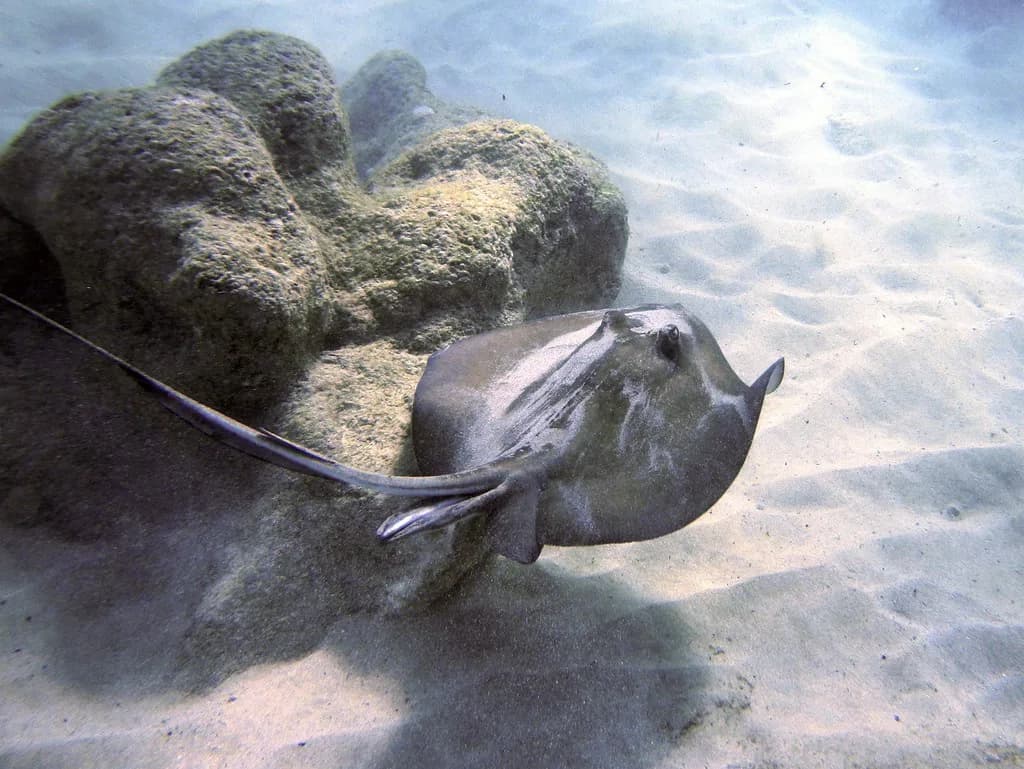
Larger animals patrol the sand and open water around the structure. Keep an eye out for barracuda, sea turtles and stingrays, and watch for huge bait balls that compress and shift as predators move through them.
Give turtles and rays room to swim away on their own terms, and never chase, touch or block an animal's path. A slow approach at the edge of visibility usually produces a longer look than a direct swim.
The Dolphins and Three Amigos Structures
Two free-standing concrete moorings just south of the pier, known as the Dolphins, are also covered in living coral and sponges and draw sea turtles, stingrays, lobster and reef fish. Look out into the surrounding sand for garden eels, and check the scattered debris between the two moorings for scorpionfish and octopi.
Three Amigos is the cluster of three large pilings at the far end of the pier, where the depth starts around 90 feet and rises to about 30 as you swim back toward town. That is deep diving territory rather than a snorkel target; snorkelers get the most from the shallow rows and the Dolphins on calm days.
Skill Level and Who It Suits
The near-shore pilings are a good fit for confident beginners and older kids who are comfortable in open water, because the entry is over sand and the shallow rows are close at hand. Strong swimmers who want more structure can work the mid-pier rows and the Dolphins on a flat day.
Weak swimmers and young children should stay along the shallowest pilings with a buddy and a float. The swim out and the return to shore are open water, so plan to stay within sight of your exit point rather than drifting along the pier.
Best Time of Day and Weather
Morning light is the easiest time to read the encrusted pilings, and calmer mornings make the swim out less work. The site is swimmable day or night, but a night snorkel here needs a guide, a strong torch and a buddy system, and it is not a casual first-timer outing.
Storm runoff is the main visibility factor, clouding the water near shore. After heavy rain, plan on working the outer pilings where the water clears, or shift the day and snorkel elsewhere on the island.
Hazards and Vessel Closures
You cannot dive the pier when a cruise ship or military vessel is docked there, so check the Frederiksted port schedule before you commit to a pier day and keep an alternate plan ready.
When the pier is open, the swim is still open water with boat traffic and the usual surge around pilings. Stay close to the structure, keep a surface flag visible, and avoid the deep end and the outer channel where the bottom drops away.
Parking and Facilities in Town
Parking is available on Strand Street and along most streets in town, which puts you a short walk from the base of the pier. Restaurants, shopping and several dive shops are nearby, so plan lunch and gear stops around the swim rather than carrying everything to the water.
Lifeguard coverage, showers and restroom facilities are not something to count on here, so bring water, a changing towel and your own rinse gear. If you want a guided intro to the pier, St. Croix snorkeling tours run by local operators can pair a guided swim with gear and a boat backup.
Nearby Spots to Combine with the Pier
The pier works well as one half of a day, with Frederiksted's waterfront walk and town lunch filling the other. For a second snorkel on a different scale, Buck Island Reef National Monument off the north shore of St. Croix is the island's signature reef trip and pairs naturally with a pier day.
If you want to compare the pier with the rest of the island's shore entries, the wider St. Croix guide covers the alternatives before you commit a day to the dock. Snorkelers weighing a Caribbean trip can also compare this shore-entry setup with snorkeling in St. Thomas, where boat reefs round out the shore spots. Build in a buffer so a port call does not wipe out your plan.
What to Bring and How to Snorkel the Pilings Without Damaging Them
Bring a mask that fits, fins for the swim out, a rash guard for sun and a small torch for the shaded piling faces. Reef-safe sunscreen is the standard choice in the U.S. Virgin Islands, and a surface flag makes you visible around the pier.
Never stand on, kick or hold the pilings; the sponges and soft corals are living animals and decades of growth, and fin contact breaks them. Buoyancy control and a hands-off hover give you a better look at seahorses and frogfish than grabbing at the structure ever will.
Plan Your Pier Day
Frederiksted Pier is a town-center shore snorkel built around structure, so give it a slow morning instead of an hour between other stops. Check the Frederiksted port schedule for docked vessels before you drive over, and pick the shallow pilings and the Dolphins when the water is calm and clear.
Pair it with lunch on Strand Street, a look at the rest of the island's snorkeling options, and a hands-off approach to the pilings. That combination gets you the macro life the pier is known for without adding pressure to a fragile, slow-growing reef.
Frequently Asked Questions
Is the Frederiksted Pier good for snorkeling?
Yes. Decades of sponges and soft corals coat the pilings, and the shallow rows near shore put sergeant majors, tangs, soldierfish and macro life within easy swimming distance of a sand entry in town.
How deep is the water at the Frederiksted Pier?
The bottom starts at sea level, runs about 20 feet at the usual entry point and averages around 25 feet along most of the pier, reaching roughly 90 feet at the far end. Snorkelers should work the shallow rows and leave the deep end to divers.
Can you snorkel the pier when a cruise ship is in port?
No. The pier cannot be dived when a cruise ship or military vessel is docked there, so check the Frederiksted port schedule before you go and keep an alternate shore entry in mind.
Do you need a boat to snorkel the Frederiksted Pier?
No. You enter from shore along the pier or the surrounding shoreline, so the swim is entirely self-guided from town. Park on Strand Street and walk to the base of the pier.
What marine life can you see snorkeling the Frederiksted Pier?
Expect sergeant majors, tangs, soldierfish, pufferfish, octopi, seahorses, frogfish, juvenile trunkfish and porcupinefish on and around the pilings, with sea turtles, stingrays and barracuda in the open water. Sightings vary, so treat the list as a guide to look for, not a promise.
Is the Frederiksted Pier snorkel suitable for beginners?
Confident beginners and older kids do well on the shallow pilings close to the entry, where the swim is short and the structure is close at hand. Weak swimmers and young children should stay near shore with a buddy and a float.
Where do you park for the Frederiksted Pier?
Park on Strand Street or along most streets in Frederiksted town, then walk to the pier across from the Customs House. Restaurants and dive shops are within a few minutes of the waterfront.
Sources
Snorkeling notes for your next trip
Optional updates to our snorkeling guides.
You might also like
Continue reading
More guides you'll find useful