Casino Point Snorkeling: Catalina Island Dive Guide
Casino Point snorkeling at the Avalon Dive Park gives stair entry, kelp forest and Garibaldi minutes from downtown Avalon. Here is how to plan your swim.
On this page
Casino Point is the rare Catalina snorkel site where you walk down a staircase into a protected marine park and are over giant kelp and bright orange Garibaldi within a few kicks. It suits swimmers who are comfortable off a rocky shoreline and want to be in the water minutes after leaving Avalon's waterfront, without a boat ride or a long hike. The trade-off is a shoreline that shelves quickly into deep water, so this is a spot to plan around your comfort level rather than a shallow wading pool.
Where the dive park sits in Avalon
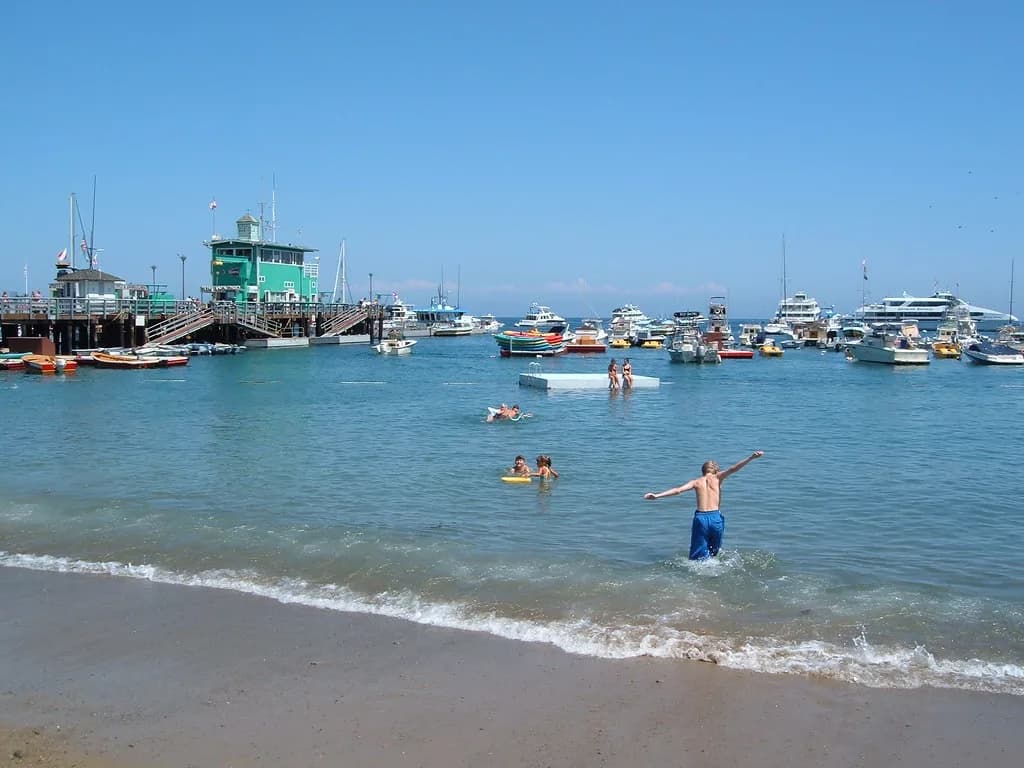
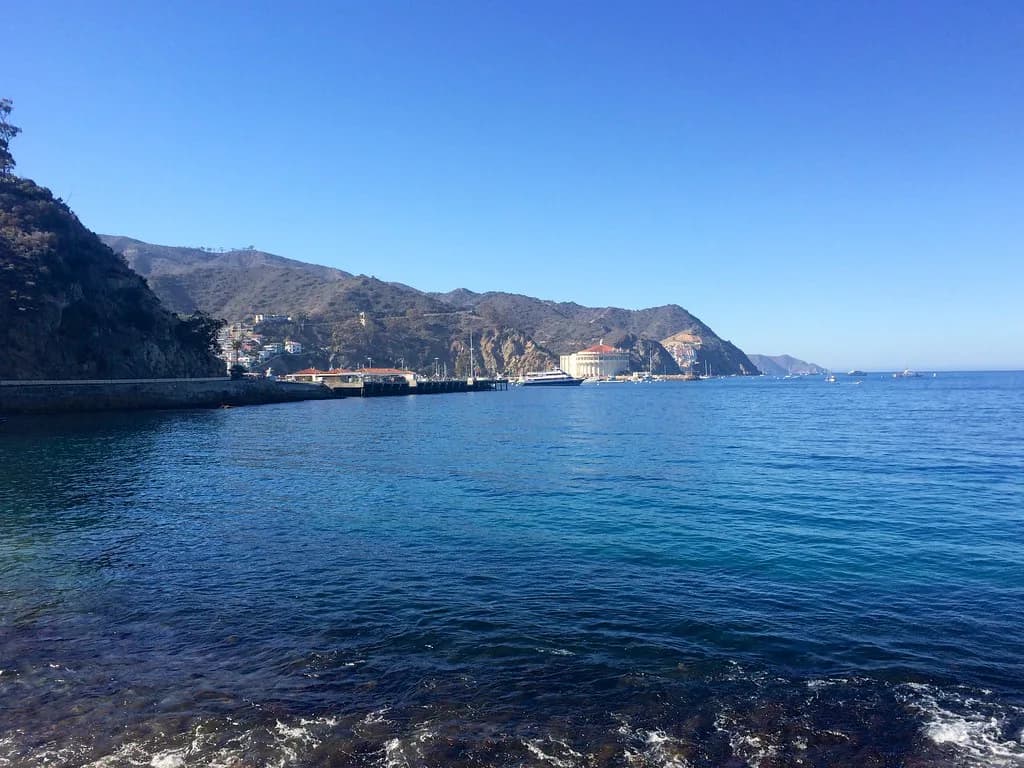
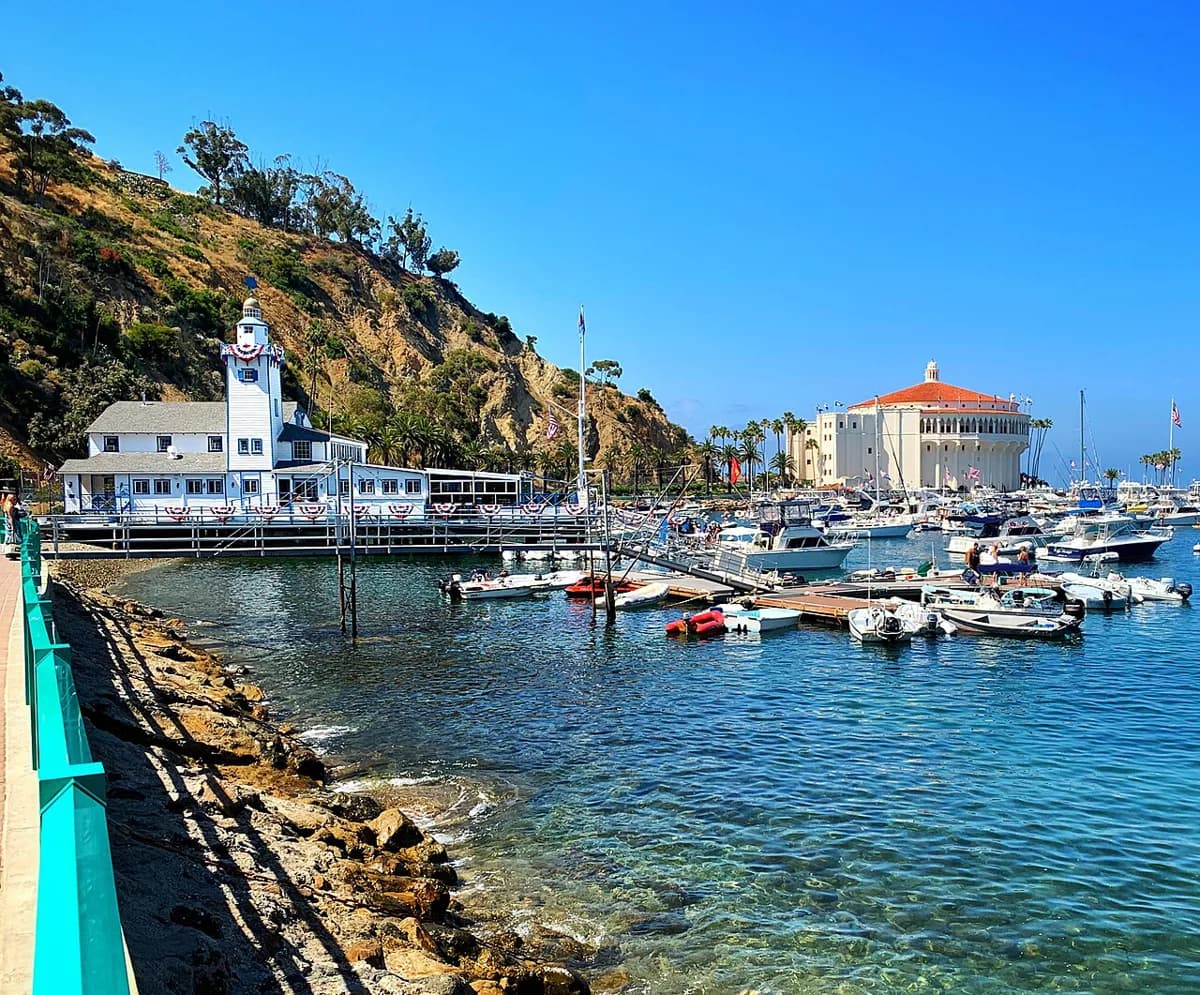
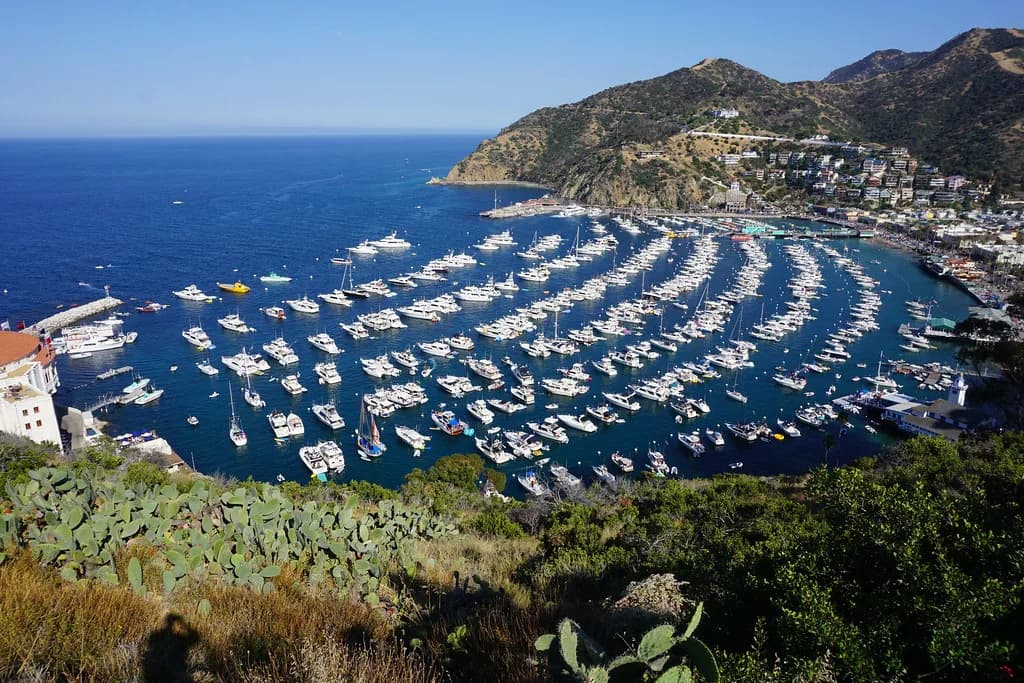
Casino Point Dive Park is at the tip of Avalon Bay, right behind the landmark Casino Building, and the guided snorkel tours meet at the Catalina Divers Supply booth on Saint Catherine Way. From the Green Pleasure Pier, allow about ten minutes on foot; from Descanso Beach, about five. That short walk makes Casino Point the easiest add-on to a ferry day from Long Beach or San Pedro.
The park is a protected marine area, and the Casino Point name is often used for the whole rocky point rather than a single beach. There is no sand beach to spread out on, so plan on gearing up on the paved areas and using the stairs as your entry and exit. If you want a beach club and a sandy lounging spot nearby, Descanso Beach is the next cove around.
Getting in: the Casino Point stairway
Entry is by a set of stairs behind the Casino, with handrails for the descent; the last steps are slippery and the number of steps changes with the tide. Put your fins on at the bottom, then kick out. The Catalina Tours snorkel tour pages note roughly one to two dozen steps depending on tide, and guests must be ambulatory and able to use one set of stairs.
Water shoes or sandals help on the wet steps, and a light sweatshirt is worth carrying for the walk back. Because you enter from a fixed stairway rather than a beach, keep your hands free for the handrail and carry gear in a bag until you reach the bottom landing. Groups should set a meeting point at the top of the stairs in case anyone turns back early.
How the park is laid out
The dive park is roughly rectangular, with the entry steps in the middle, so you can pick a direction and follow the rocky edge rather than crossing open water. Water is shallow in the first few yards, then drops steeply; snorkelers report depths starting around 15 feet and falling toward 100 feet within about 30 feet of the stairs. That means you can hover over the shallow shelf and kelp without ever being far from the exit.
The practical line is the kelp edge: stay on the shallow side if you want to keep your feet in sight of the rocks, and use the drop-off as a wall to swim along rather than a place to descend. Because the bottom falls away fast, surface snorkelers see the kelp canopy and the fish that hang around it, not the wrecks and objects mapped for divers. Snorkeling the perimeter at surface level gives you the most variety per breath.
What you will see
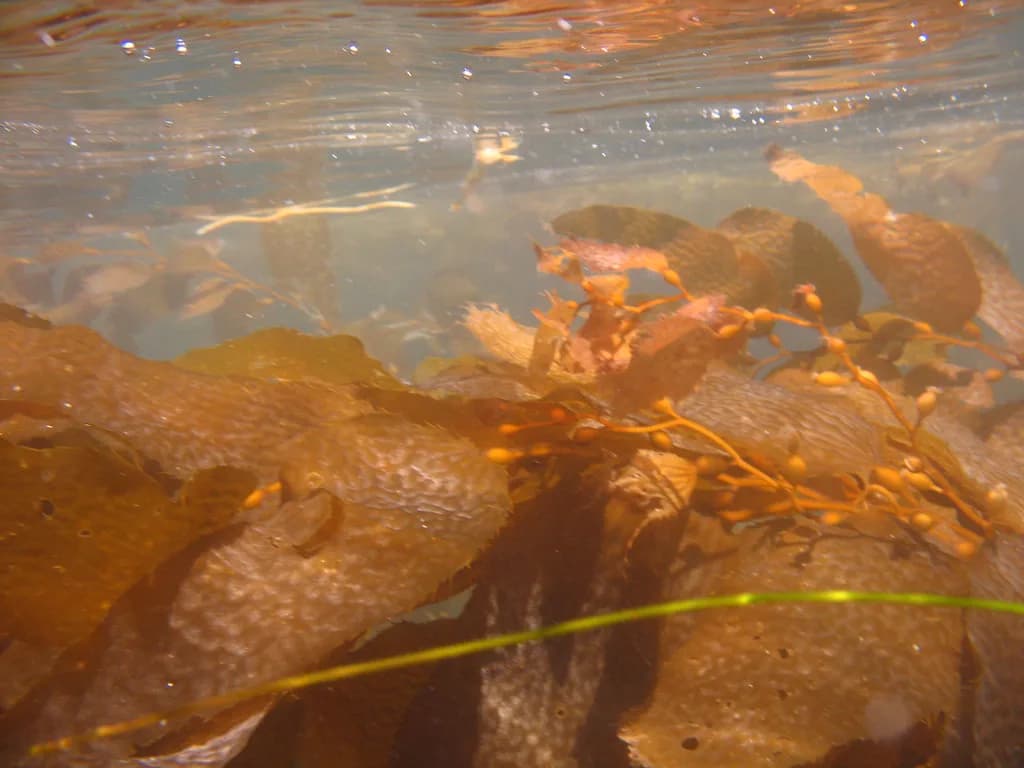
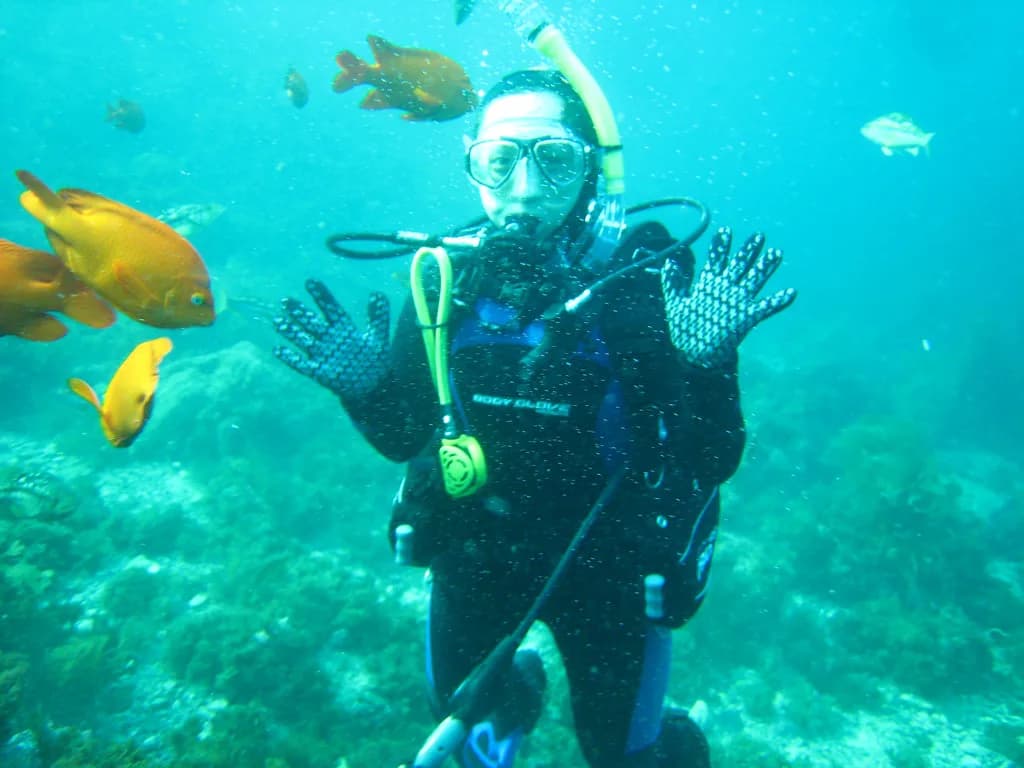
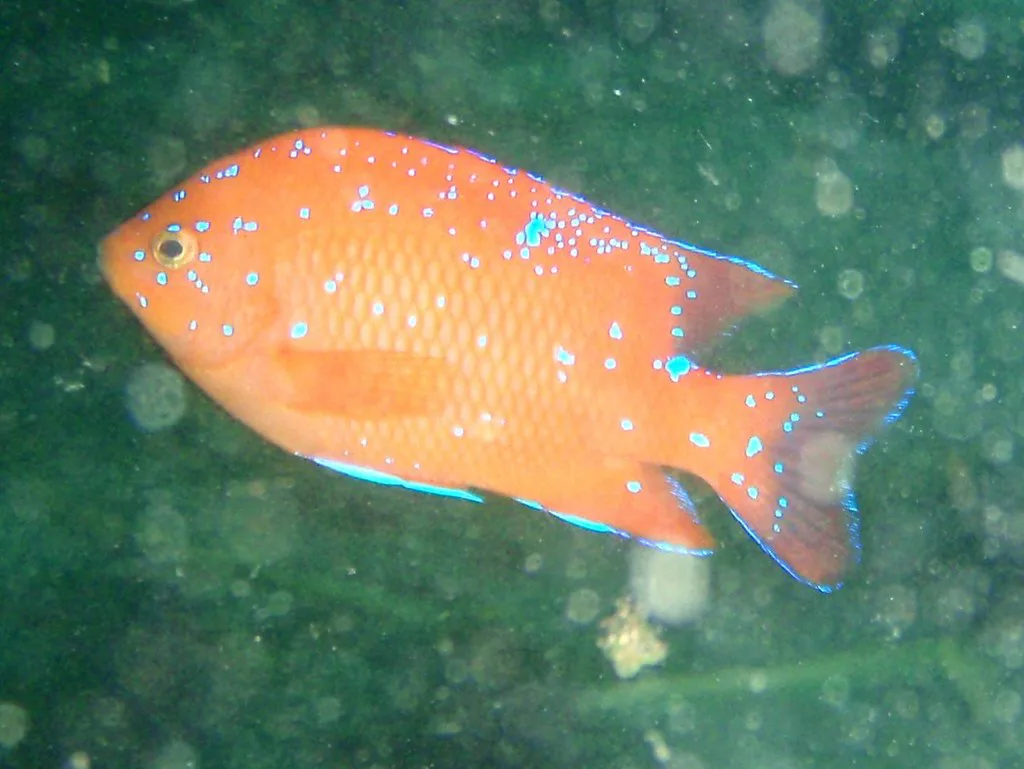
Expect Garibaldi, California's state marine fish, along with kelp bass, sheephead and schooling blacksmith, and watch for bat rays passing over the sand patches. The giant kelp forest is the main scenery, with sea fans and other plant life on the rocks. PADI lists the site for kelp, Garibaldi and sheephead, and the guided tour page mentions bat rays and occasionally a giant black sea bass.
Fish around the park are used to people, and some behave boldly near snorkelers. Keep your hands to yourself and give animals space; touching, feeding or chasing wildlife is not part of visiting a protected marine area. A calm, slow swim usually brings more fish close than splashing does.
Depth and visibility
Visibility at Casino Point is often reported around 50 feet or better on calm days, and on very clear days divers report visibility near 80 feet with water around 60 degrees Fahrenheit. Treat those as observations rather than promises: wind, swell and recent weather can cut visibility sharply. For a snorkeler at the surface, clear water means the kelp and fish are visible from above without diving down.
The depth profile is the point to understand before booking: the bottom is not a shallow reef flat, so you will be floating over deep water for much of the swim. That is fine for a confident snorkeler with a wetsuit, but it is not the spot to introduce a nervous child to the water. Snorkelers who want a shallower, more gradual bottom will prefer the rocky shore at Lover's Cove.
Skill level: who it suits
Casino Point suits swimmers who can handle deep water, a stair entry and a wetsuit; the guided tour requires guests to be able to swim and comfortable in the water, with no bottom to stand on except at the stairs. Ages 8 and up are accepted on the tour. The shallow shelf near the entry gives newer snorkelers a place to settle before kicking out along the kelp.
The park is also a busy scuba training site, so classes and divers can be in the water below you. Keep an eye out for bubbles and give divers room. If you want a quieter first swim or you are bringing young children, Lover's Cove is the gentler alternative, with a rocky beach entry and shallow water in the cove.
Best time of day and season
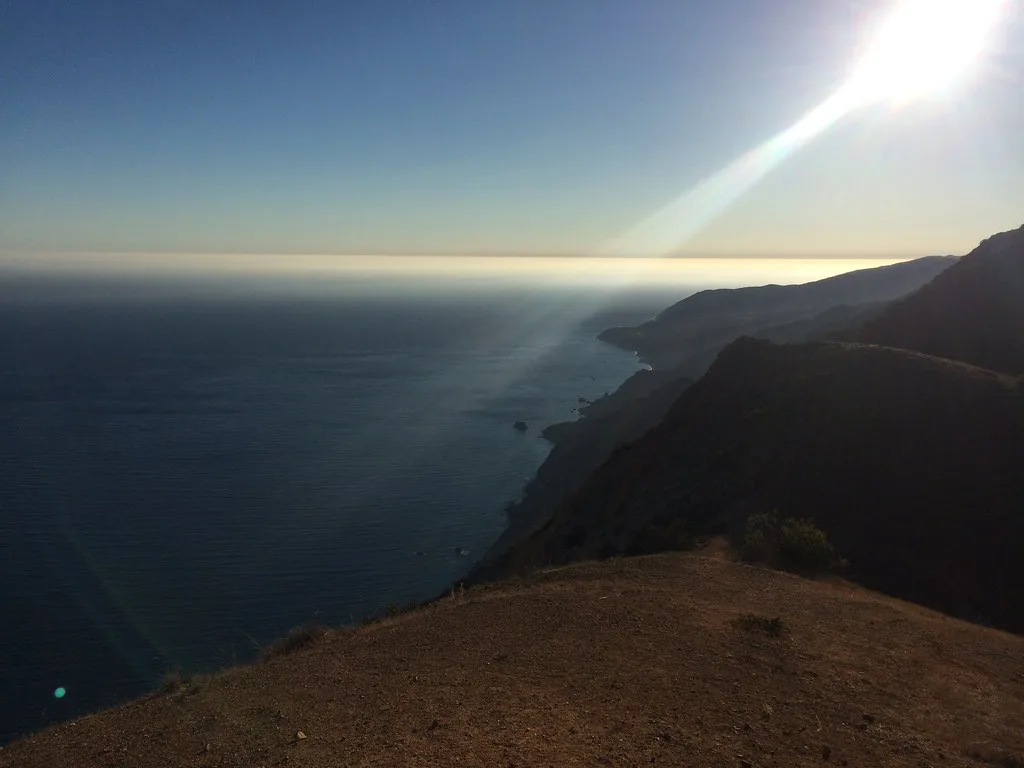
Late summer and early fall generally bring the warmest water and the best visibility, with temperatures often in the upper 60s to low 70s. Spring offers fewer crowds, while winter water is colder and a full wetsuit becomes more important. The park is a popular dive site, so early morning tends to be calmer before classes and tour groups arrive.
Afternoon wind is the usual spoiler on Catalina, kicking up chop and surge along the point. If you have one shot at the water, take it in the morning and keep the afternoon for the town, the beach or a dry activity. That also leaves buffer if the ferry crossing runs late.
Swell, wind and surge
When swell runs against the point, the stairs get awkward: the last steps can be wet and the landing surges, which makes timing your exit the hardest part of the swim. Snorkelers who visited in early September described swells noticeably larger on some days but visibility still good, and others found clarity reduced when swell picked up. The shape of Avalon Bay gives some shelter, but the point is exposed enough to feel a west or northwest swell.
On surge days, watch the rhythm before you step down: count the sets, then enter and exit on the calm interval. If the stairs are washing out, call the swim and use a calmer cove instead. Lover's Cove is the usual fallback because the cove is more enclosed.
Hazards: boat traffic, divers and cold
Small boats and tour vessels use the water around Avalon, so surface swimming is best kept close to the kelp edge and away from open channels. Divers and scuba classes share the park, and it gets crowded on busy days; surface snorkelers should stay aware of what is happening below and around them. Carry a surface float or bright fins if you have them, and never swim off alone.
The water is cold by tropical standards, and a full wetsuit is the norm here; snorkelers who went without one reported chilling quickly. In winter, water around 58 degrees Fahrenheit makes a suit essential. Look out for sea lions around the point as well, and give them room rather than swimming toward them.
Wetsuit and gear: what to rent in Avalon
A full wetsuit, mask, snorkel and fins are the standard kit; booties help on the stairs. The guided tour includes mask, snorkel, fins and a wetsuit, and a wetsuit is required for the duration of the tour. If you are snorkeling independently, the lower level of the Casino Building has a dive shop where gear can be fitted and rented.
Pack a towel, dry clothes, sunscreen and a bag for valuables; the tour page notes limited storage at each location. Bring a rash guard if you tend to chill, and carry water for the walk back to town. If you are deciding between buying and renting, a properly fitted mask matters more than any other piece of gear.
Guided snorkel eco tour at the dive park
The guided snorkel eco tour runs about two hours, including gear fitting and roughly an hour in the water, starting on land at the Dive Park rather than from a boat. It costs 71.50 US dollars per person, ages 8 and up, and a two-person minimum applies. The price includes the City of Avalon Harbor Use Fee and processing fees, and a single snorkeler fee of 20 dollars may be added if you are the only person on tour.
A waiver is required, and the tour may reschedule or refund if only one person books. Reservations are recommended because times and guides are limited and do sell out. Weather can affect the tour, so confirm the day before you travel.
Costs and logistics
Ferries from Long Beach, San Pedro and Dana Point run multiple times a day and take about an hour; check the ferry schedule for the date you plan to travel. A snorkeler in 2013 reported a round-trip ferry fare of 75 dollars per person, useful as a historical reference only. Current fares vary by operator and date, so look them up when you book.
Avalon is compact, so a hotel or rental near the green pier puts the Casino and the dive park within a short walk. If you stay at Descanso Beach or Hamilton Cove, you are even closer to the water at the Casino Point end. Allow a full day if you are coming over and back on the ferry, and book a late return so you are not racing the boat after a swim.
Combining spots: Lover's Cove and Descanso Beach
Two more snorkel sites sit within walking distance of the dive park. Lover's Cove has a rocky shore entry and shallow depths to about 20 feet, with fish that are used to tour boats; Descanso Beach has calmer water and rentals on the sand. A sensible Avalon day is a morning swim at Casino Point, then a walk to Lover's Cove or Descanso for a second look. If you are weighing how island sites compare, snorkeling in Channel Islands is another shoreline-and-kelp option worth reading about.
If you are staying multiple days, Two Harbors on the island's west end is another base with its own snorkeling, though it is a separate trip by boat or shuttle. The trade-off is time: Avalon's three sites can fill a day without a vehicle.
Rules and etiquette at the marine preserve
Casino Point Dive Park is a well-established marine preserve, and Lover's Cove is a protected marine reserve where fishing is prohibited. Treat both as no-take areas: no collecting, no feeding fish, no touching kelp or animals, and no chasing. Stay on the surface, keep your fins off the bottom, and give wildlife space.
Use reef-safe sunscreen if you plan to be in the water for long, and pack out everything you bring down to the stairs. Since this is a shared site with divers and boats, keep your group together and stay close to the rocks rather than crossing the open water. If someone in your group is not a confident swimmer, put them on the guided tour where an instructor can manage the entry and exit.
When Lover's Cove beats Casino Point
Lover's Cove is the better pick for a first-time snorkeler or a family with young children: the cove is shallow to about 20 feet, the shore is rocky but protected, and fish gather close in. Casino Point wins for anyone who wants stair entry, deeper water and the chance to swim along a kelp wall, and for snorkelers joining a guided tour with gear included. Plan according to who is in your group rather than trying to do both in one swim.
If visibility is poor or swell is up at the point, Lover's Cove is the usual backup because its shape breaks the swell. Neither spot is a guarantee of clear water or wildlife, so keep your expectations flexible.
Plan Your Visit
Casino Point is the spot to choose in Avalon when you want a stair entry, a kelp forest and deep water within a few kicks of the Casino. Book the guided eco tour if you want gear and a guide, or rent a wetsuit in town and swim independently on a calm morning. Pair it with Lover's Cove for a second, shallower swim, and check the day's swell and ferry schedule before you commit.
Frequently Asked Questions
Can you snorkel at Casino Point Dive Park?
Yes. The park is a protected marine area behind the Casino Building in Avalon, with a stairway entry and a kelp forest close to shore, and guided snorkel tours run from the Dive Park.
How deep is the water at Casino Point?
Snorkelers report the bottom starting around 15 feet near the stairs and dropping toward 100 feet a short distance out. Treat that as a guide and stay on the shallow side if you prefer to keep the bottom in view.
How do you get into the water at Casino Point?
Entry is by a set of stairs behind the Casino with handrails; the number of steps changes with the tide and the last steps are slippery. Put your fins on at the bottom and kick out.
Do you need a wetsuit to snorkel at Casino Point?
A full wetsuit is the norm because the water is cold; the guided tour includes one and requires it for the duration. Independent snorkelers can rent a suit from the dive shop in the Casino Building.
What does the guided snorkel tour at Casino Point include?
The tour lasts about two hours, including gear fitting and roughly an hour in the water, and includes mask, snorkel, fins and wetsuit. It starts on land at the Dive Park and does not include boat time; a waiver is required and a two-person minimum applies.
Is Casino Point better than Lover's Cove for snorkeling?
Casino Point suits confident swimmers who want stair entry, kelp and deeper water. Lover's Cove is shallower, with a rocky shore entry, and better for first-timers and families with young children.
What fish will you see at Casino Point?
Garibaldi, kelp bass, sheephead and schooling blacksmith are common, with bat rays over the sand and a chance of a giant black sea bass. Sightings vary, so treat any list as a possibility rather than a promise.
When is the best time of year to snorkel Catalina Island?
Late summer and early fall generally bring the warmest water and best visibility, while spring has fewer crowds. Winter water is colder and a full wetsuit becomes more important.
Sources
Snorkeling notes for your next trip
Optional updates to our snorkeling guides.
You might also like
Continue reading
More guides you'll find useful